Westwood | Kawakubo: Two Fashion Revolutionaries, One Unprecedented Dialogue
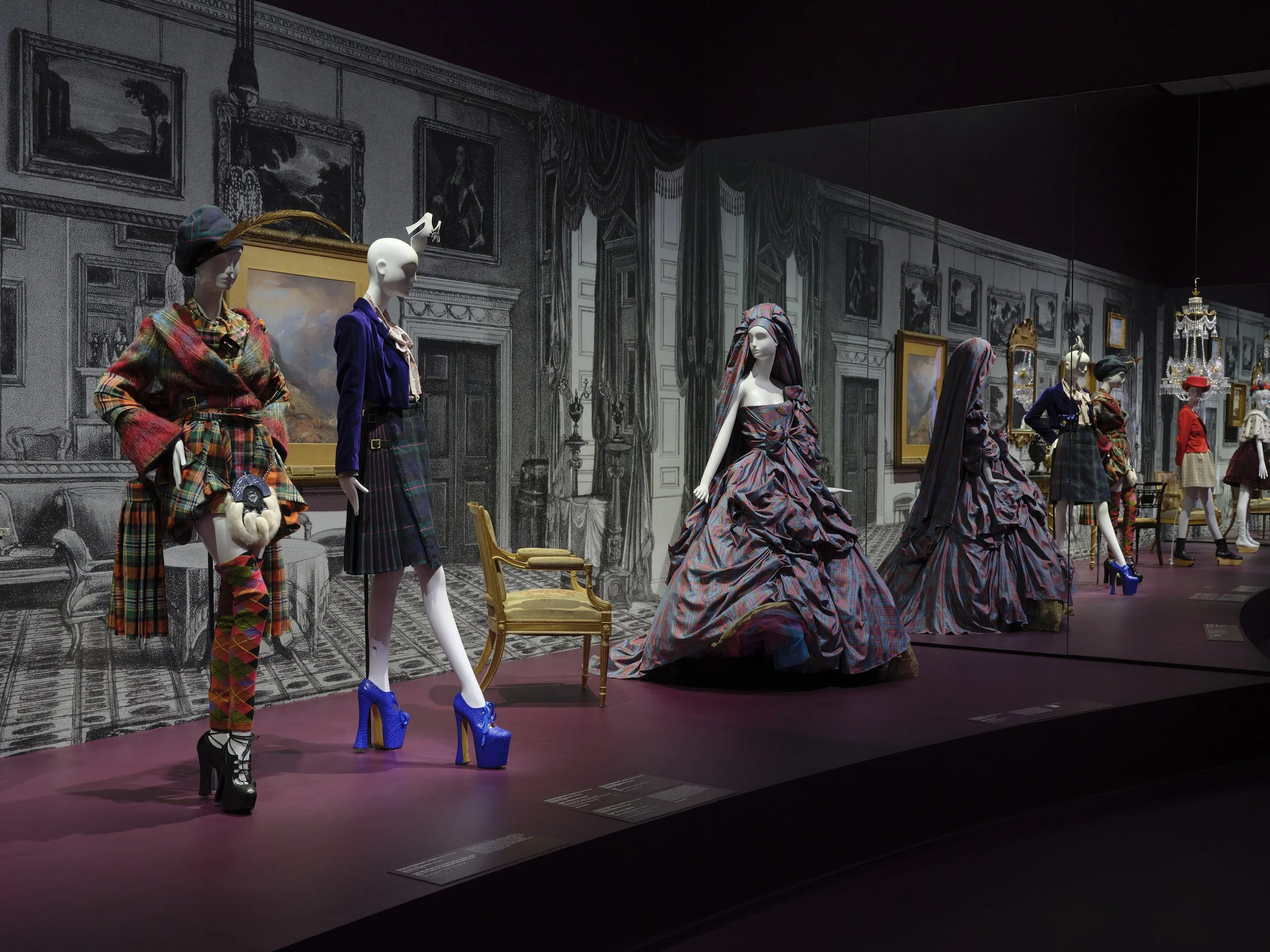
Installation view of Westwood | Kawakubo on display from 7 December 2025 to 19 April 2026, at NGV International, Melbourne. Photo: Sean Fennessy
Westwood's clothes still bite. Even decades after they first shocked the streets of London, her tartans, tulle and bondage trousers hang in the NGV galleries like a challenge: they demand attention, forcing you to look twice. In the same space, Rei Kawakubo's garments—slices of folded fabric, brocades that swirl around volume, abstract silhouettes that resist the expected form—stand quietly, but with an insistence of their own. Rebellion, in two languages, side by side.
Running 7 December 2025 to 19 April 2026, the exhibition Westwood | Kawakubo at NGV gathers nearly 150 pieces from institutions and private collections worldwide, and is presented thematically, charting the defining collections and concerns of the two designers’ practices – from the mid-1970s to the present day.
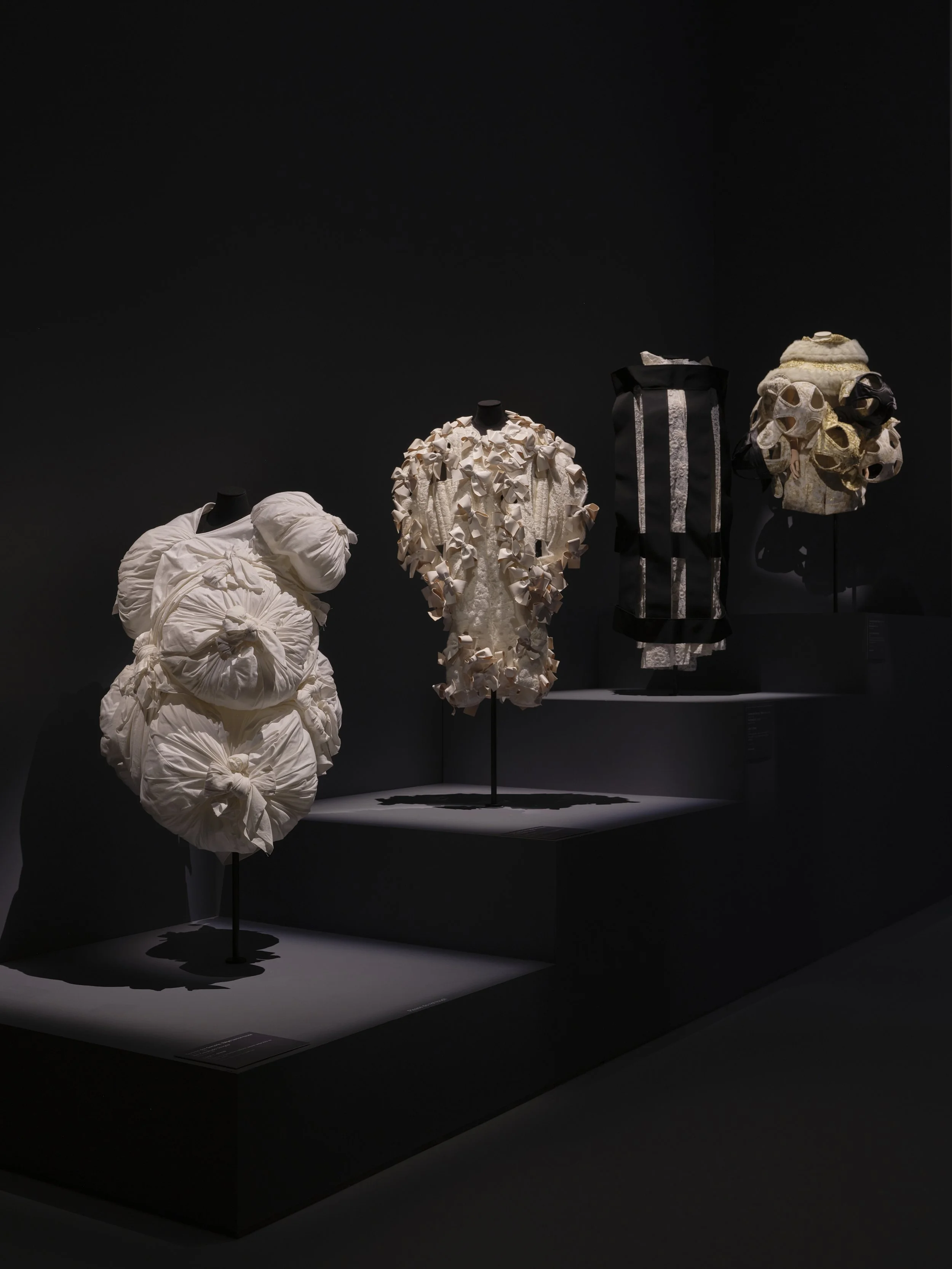
Installation view of Westwood | Kawakubo. Photo: Sean Fennessy
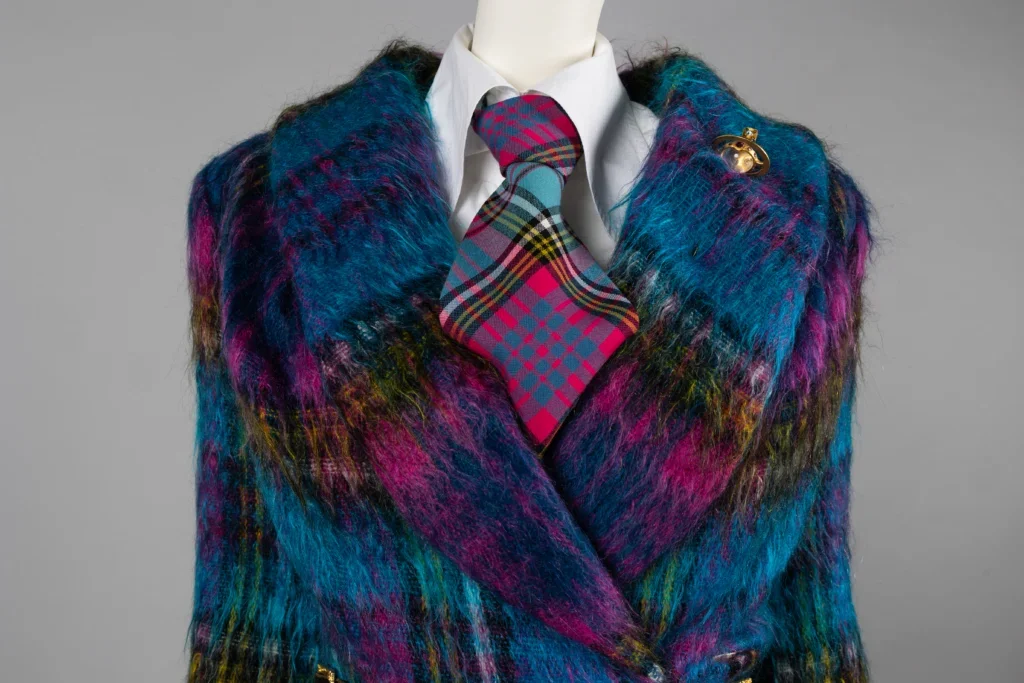
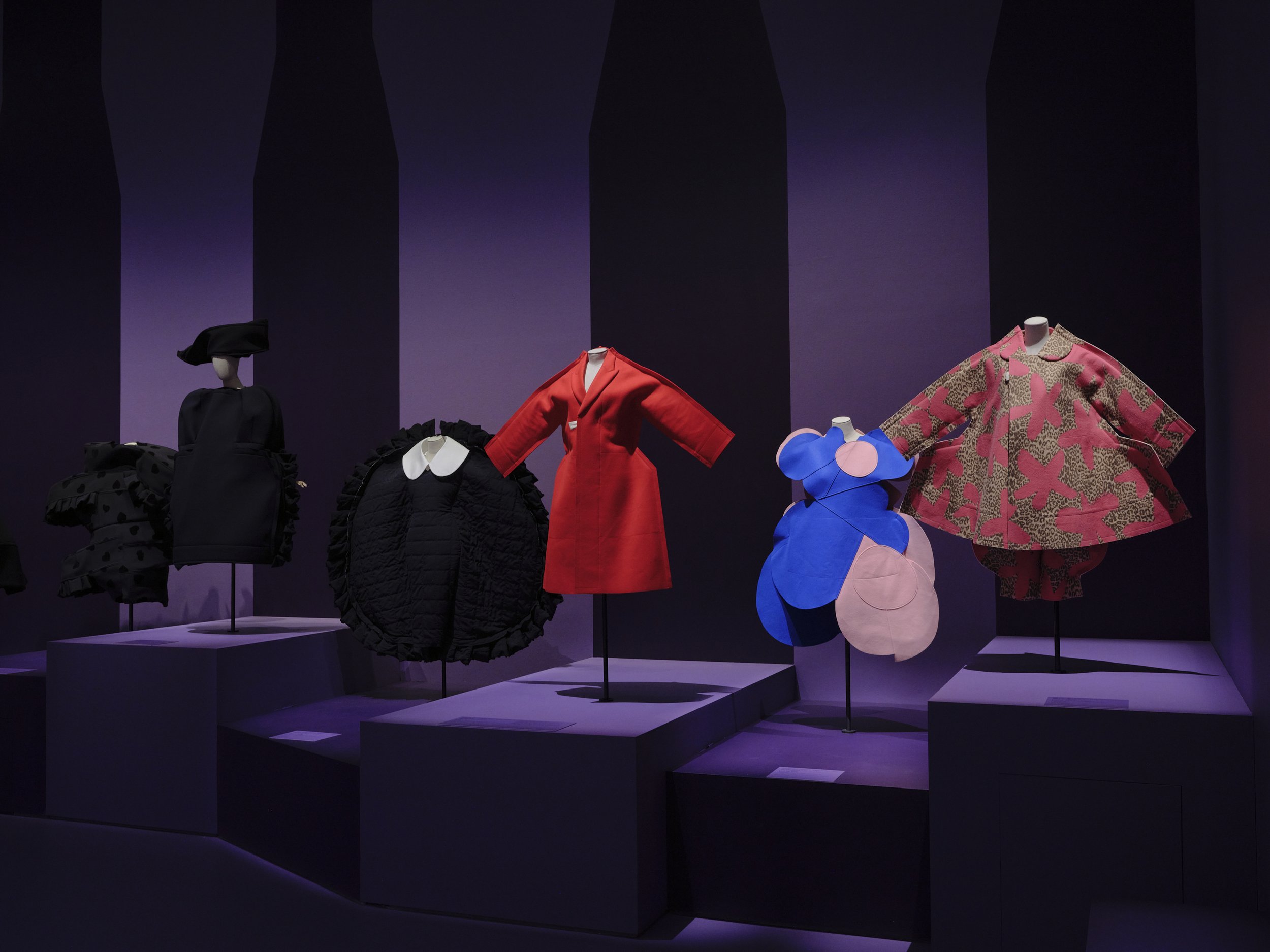
The first gallery traces Westwood's earliest insurgent steps: safety-pinned trousers, tartan skirts pinned on mannequins as though frozen mid-protest, leather jackets stitched in haste. Some of these pieces carry the weight of 1970s London—raw moments of shock and satire rendered in cloth. Across the room, Kawakubo's folded and deconstructed volumes take over: black shapes that refuse definition, collars that turn inside out, hems that flatten or flare in ways that make the human figure optional. It's not contrast for the sake of spectacle, but contrast that makes each approach legible.
The exhibition's design uses symmetry as its organising principle: Westwood and Kawakubo are displayed on parallel tracks, gallery layouts mirroring each other so that visitors can encounter one designer as a counterpoint to the other—similar but not identical.
In the section titled Rupture, Westwood's 1980s Pirate and Nostalgia of Mud works offer theatrical layers and romantic decay — a vivid rewriting of costume codes. Beside them, Kawakubo's "Not Making Clothes" series and later wearable sculptures challenge the very idea of what a garment should do: some pieces hover, some distort proportion, some foreground voids as much as fabric. Together, they demonstrate how both designers repeatedly rejected the conventional boundaries of dress.


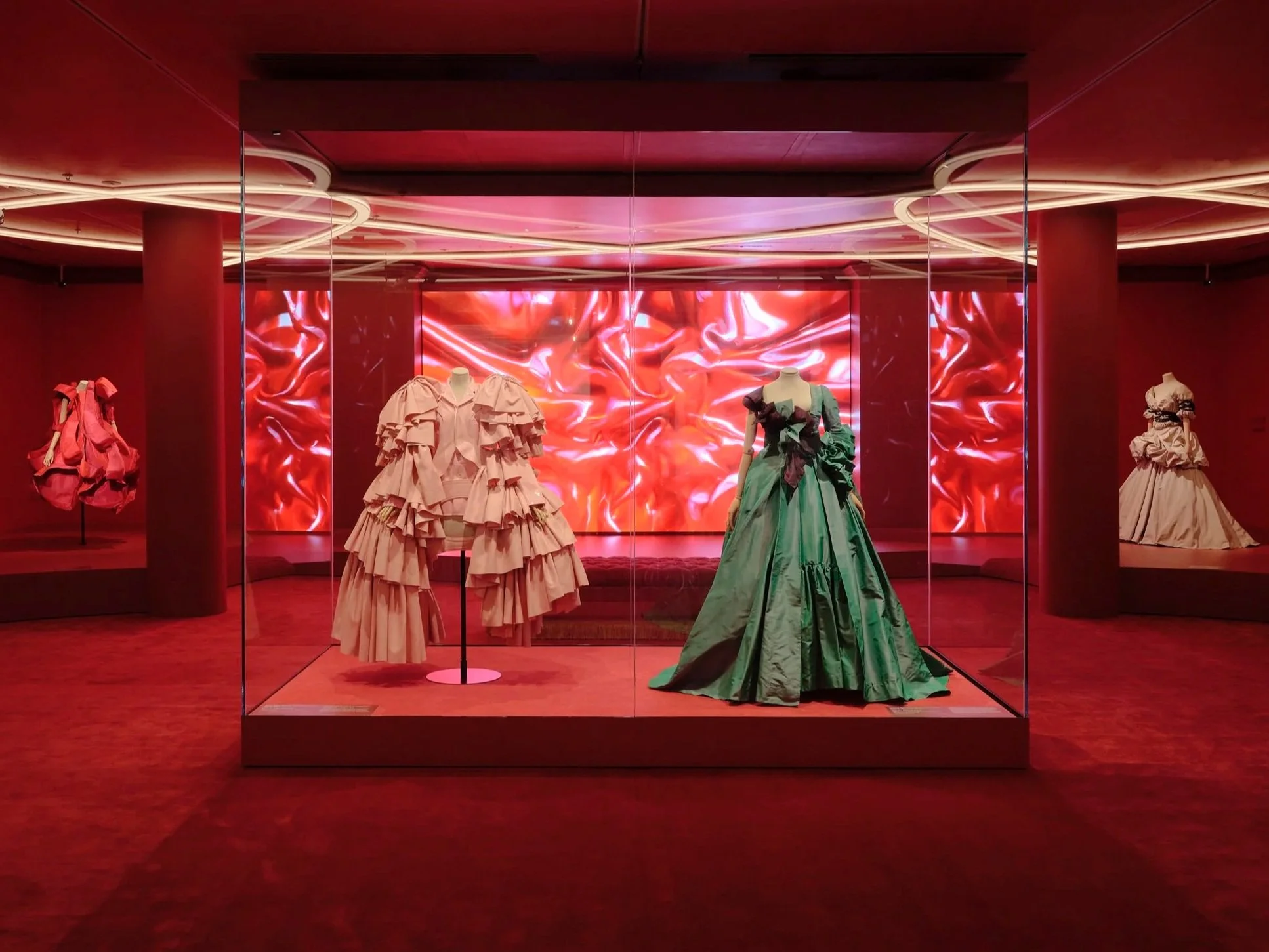
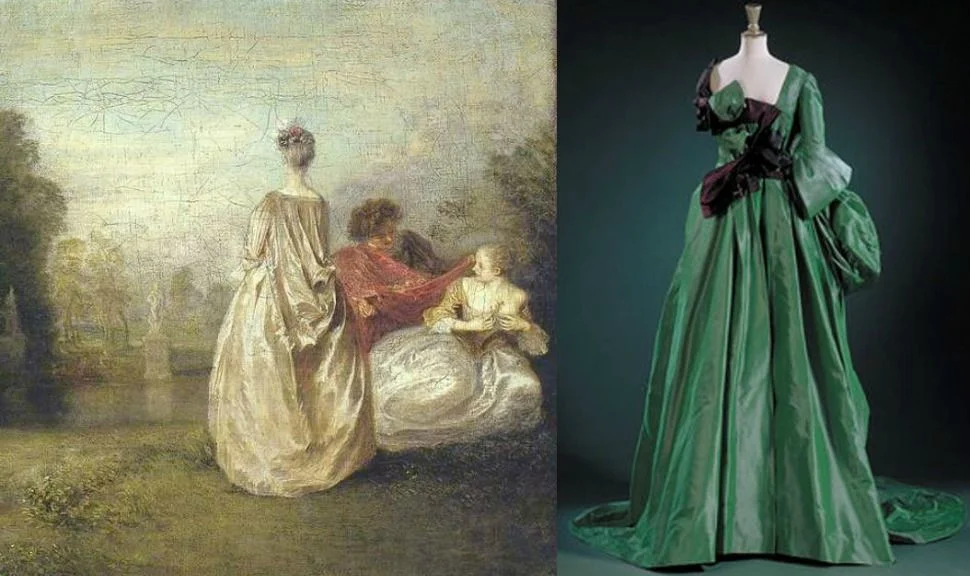
Reinvention reveals a dialogue with history and tradition. Westwood's Portrait corsetry revives 18th-century portraiture, transferring ornate paintings onto tight bodices — a daring conflation of art and attire. Her tailored jackets rework British sartorial heritage into shapes that are simultaneously familiar and destabilised. Kawakubo counters with her experiments in ruffles, volume, and texture — frills and distortions that discard classical taste without descending into chaos.
In The Body: Freedom and Restraint, the exhibition explores how both women reimagined flesh's relationship to cloth. Westwood's Erotic Zones corsetry cinches and exaggerates; Kawakubo's Future of Silhouette garments inflate and flatten, forcing reflection on what "the body" can mean. Together, they map not only clothing's potential, but its politics.
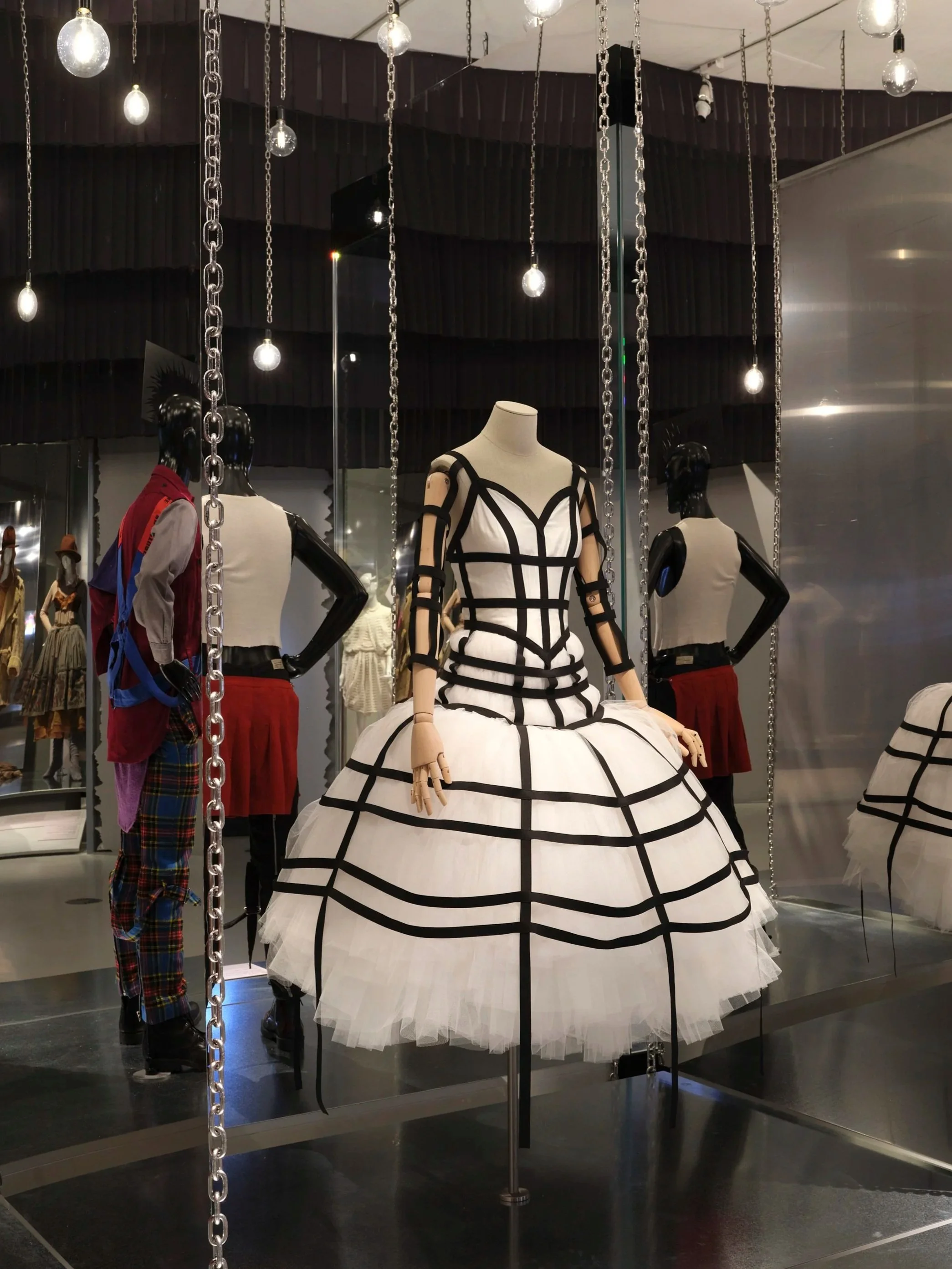


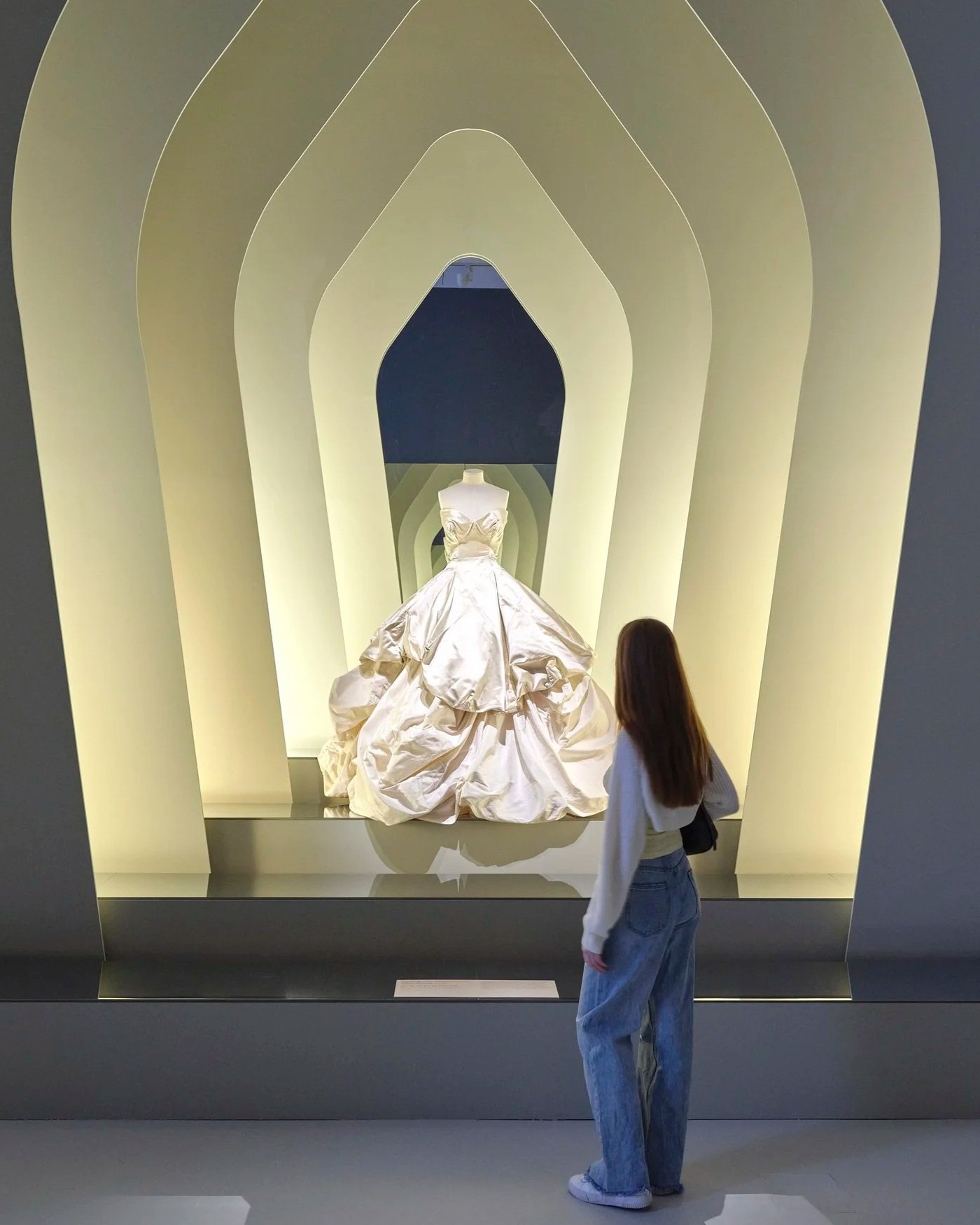
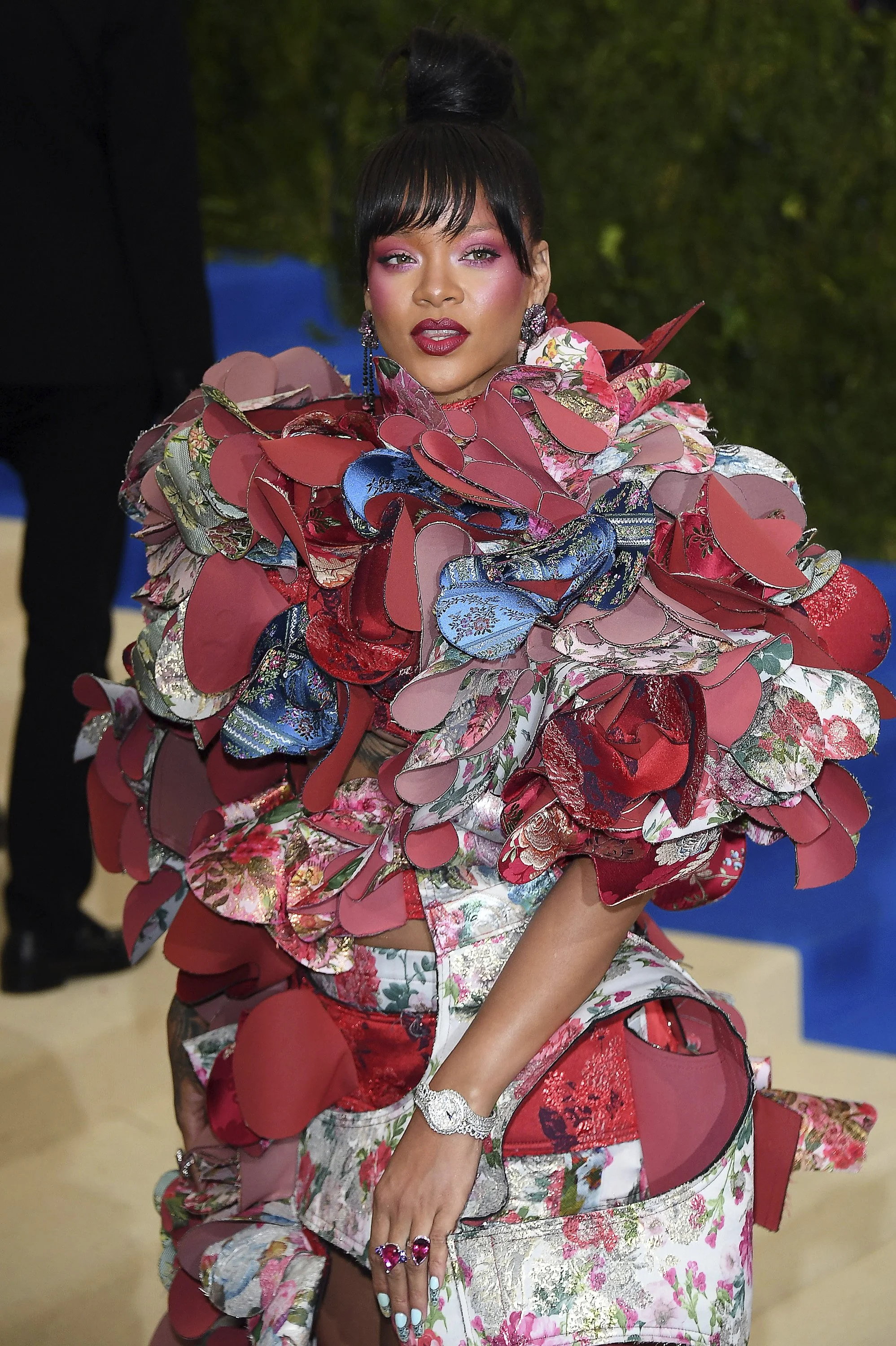
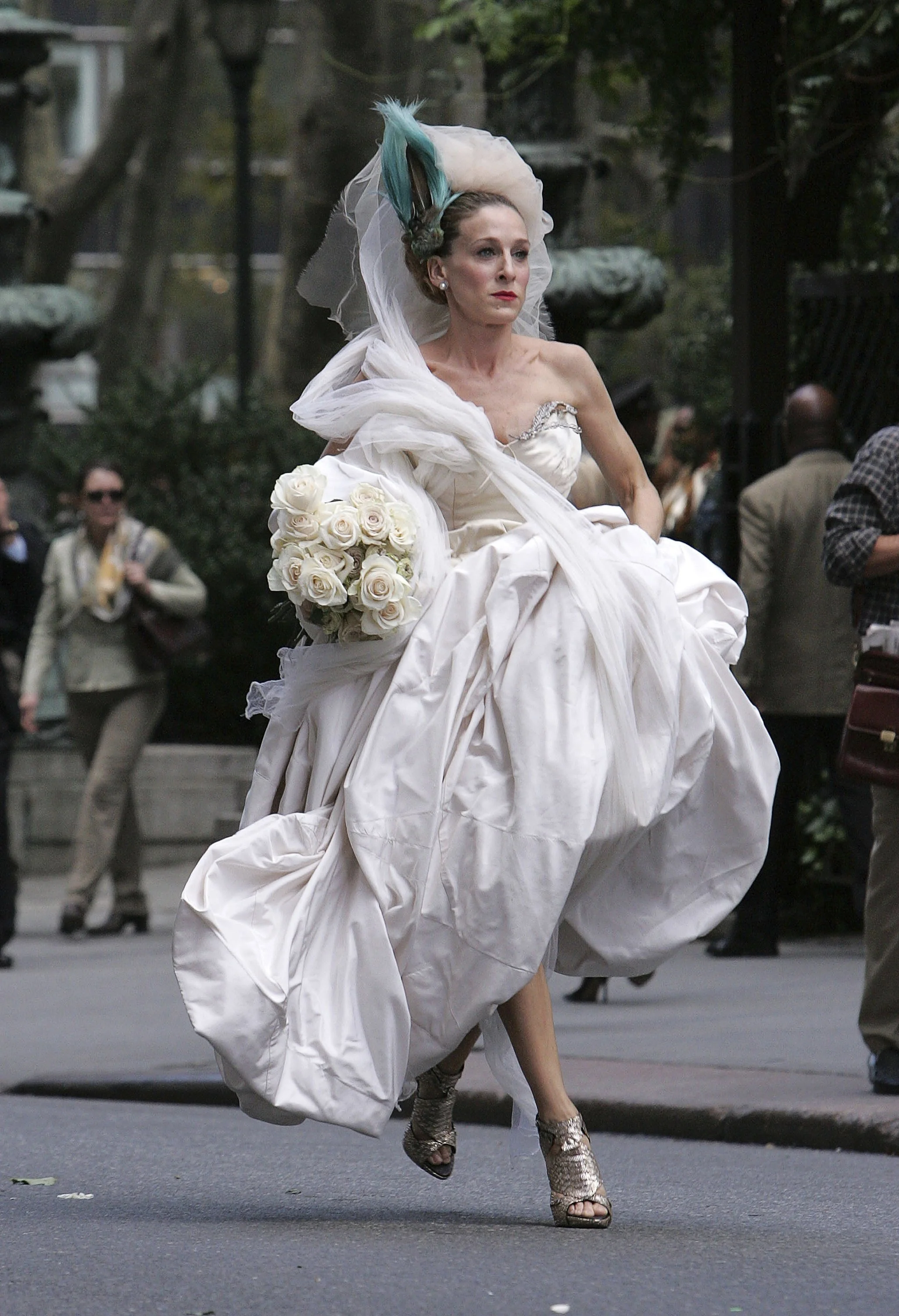
The final gallery, The Power of Clothes, presents Westwood's politicised late works — including Propaganda and Chaos Point — alongside Kawakubo's spring-summer 2025 Uncertain Future. Where Westwood deploys cut, graphic, and slogan as activism, Kawakubo drapes oblique prints and sculptural forms around anxiety, identity and instability. Side by side, the works register fashion as argument, as commentary, as provocation.
The exhibition is punctuated with landmark pieces familiar from runway and popular culture — the 1993–94 MacAndreas tartan gown once worn by Kate Moss, the corseted wedding dress from Sex and the City, and Rihanna's sculptural petal ensemble from the 2017 Met Gala. Kawakubo's archive contributes sculptural gingham from 1997 and the sharply flattened silhouettes of 2012.
Westwood and Kawakubo never collaborated, rarely moved in the same circles, and seldom drew from the same references. Yet here, their garments articulate something shared — a refusal to be decorative or behave.


DISCOVER MORE ABOUT VIVIENNE WESTWOOD