Vivienne Westwood: The Rebel Who Found Her Revolution in the Past
Vivienne Westwood built her career on the principle of never standing still. Vivienne Westwood: Rebel – Storyteller – Visionary, opening at The Bowes Museum in March 2026, will focus on a decisive phase in that evolution: the period from the early 1980s through to the 2000s, when the British designer moved beyond punk’s raw confrontation and began a sustained engagement with historical dress, tailoring and couture.
The exhibition will pick up in the aftermath of Westwood’s partnership with Malcolm McLaren. That collaboration had placed her at the centre of Britain’s punk movement in the 1970s, but by the turn of the decade, she was already looking elsewhere. Punk was no longer an endpoint, but a conceptual starting line, informing a broader examination of how clothing communicates power, status and cultural memory.
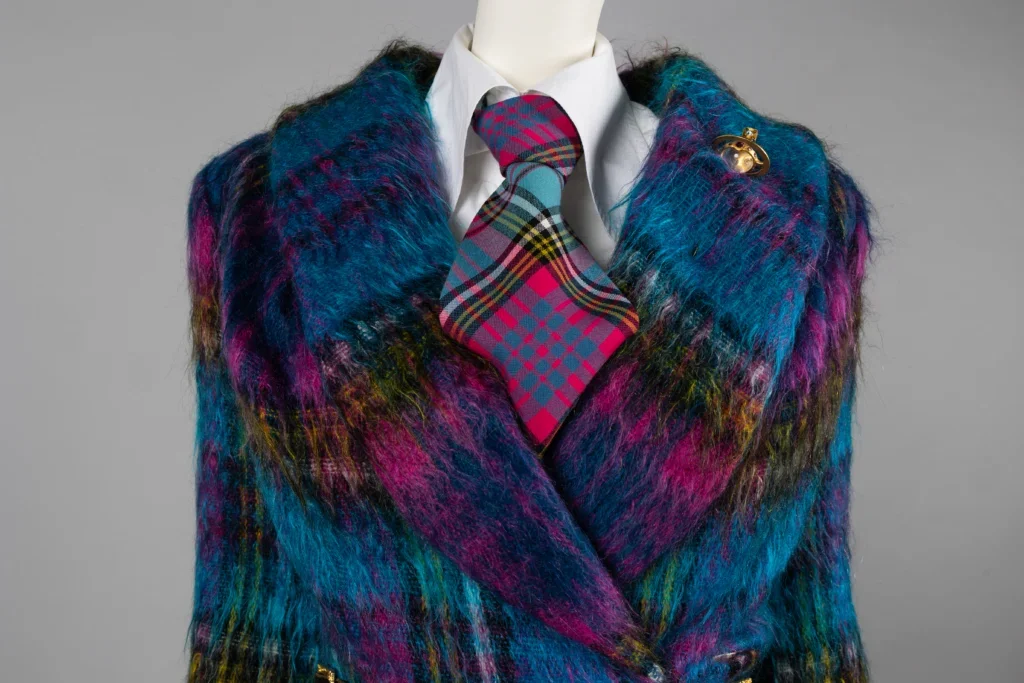
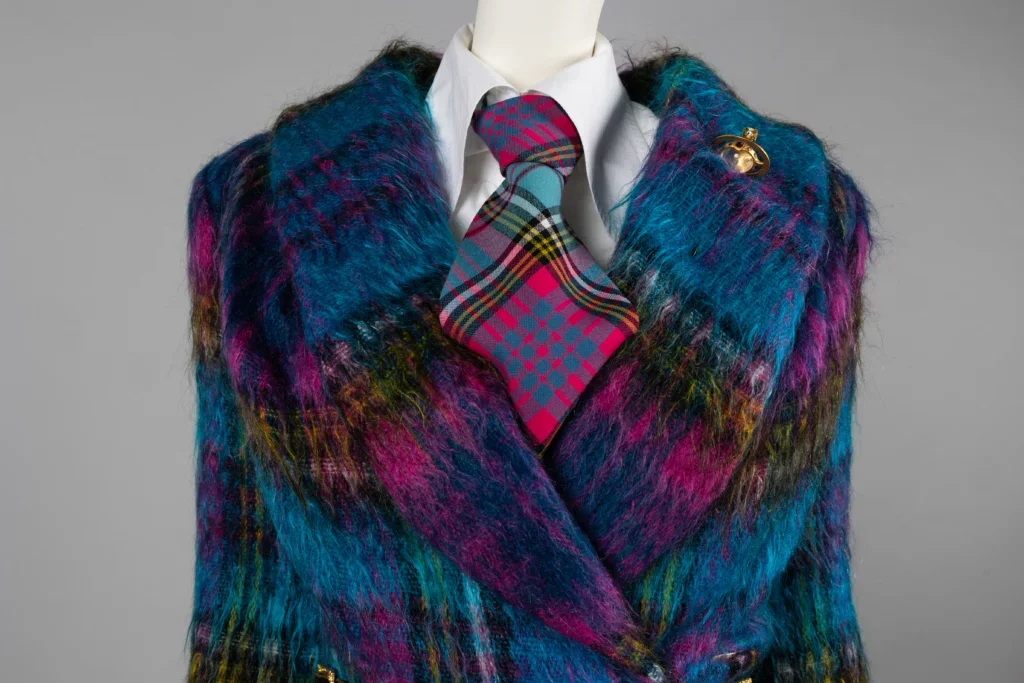
Pirates (1981) signalled that shift. Drawing on 18th-century dress and theatrical silhouettes, the collection introduced historical reference as a structural tool rather than surface decoration. Throughout the 1980s and 1990s, this approach hardened into a recognisable methodology. Corsetry, crinolines, bustles and tailoring were reworked into contemporary garments that addressed proportion, sexuality and social convention. These were not costumes, but clothes designed to provoke discussion as much as gather attention.
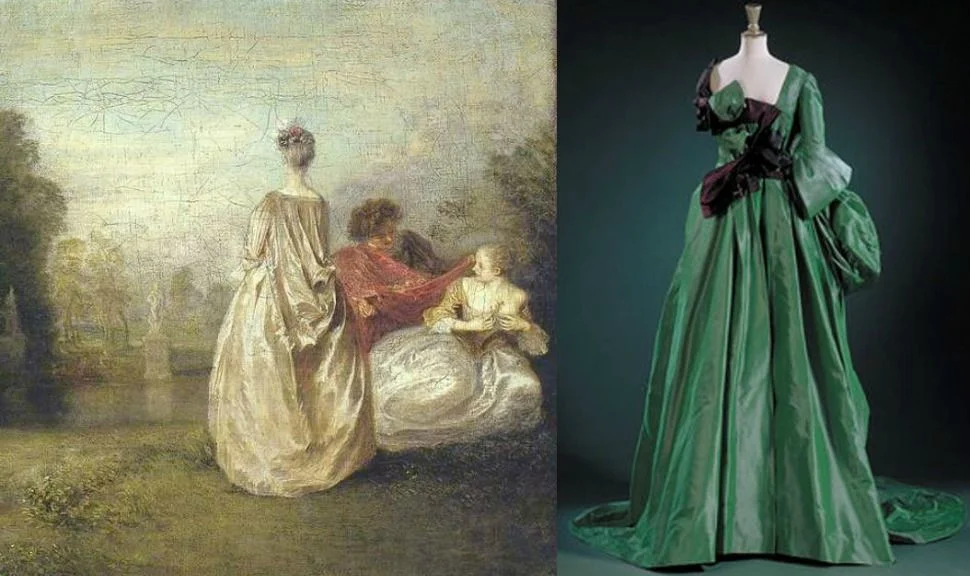
Rebel – Storyteller – Visionary will trace this progression across multiple galleries, allowing visitors to follow how Westwood’s relationship with the past became increasingly specific. By the 1990s, her collections frequently cited identifiable moments in European dress history, from Rococo court attire to the discipline of Savile Row tailoring. Yet the references were never literal. Distortion and exaggeration remained central, ensuring that historical forms were reinterpreted rather than reproduced.
One of the exhibition’s strengths lies in its emphasis on process. Alongside complete ensembles, visitors will encounter calico toiles, working patterns and digitally deconstructed garments. These materials will reveal the technical foundation behind designs often discussed primarily in visual or symbolic terms, underscoring Westwood’s seriousness about construction and cut.
The Bowes Museum’s own collection will provide further context, with historic objects shown alongside Westwood’s work to highlight points of reference. The pairing will reflect her long-documented use of museum collections and art history as research tools, rather than as distant sources of inspiration.
This is the museum’s third Westwood exhibition in as many years, following A Collector’s Story (2023–2024) and Framing Fashion (2024–2025), and its most ambitious to date. Rather than attempting a comprehensive retrospective, it concentrates on the period when Westwood established the intellectual and technical framework that would define her later work — demonstrating how rebellion, once refined, became a method rather than a posture.
Vivienne Westwood: Rebel – Storyteller – Visionary 28 March 2026 – 6 September 2026, The Bowes Museum.
DISCOVER MORE ABOUT VIVIENNE WESTWOOD