Fashion as Diplomacy: The Queen of Thai Silk’s Legacy at the Musée des Arts Décoratifs
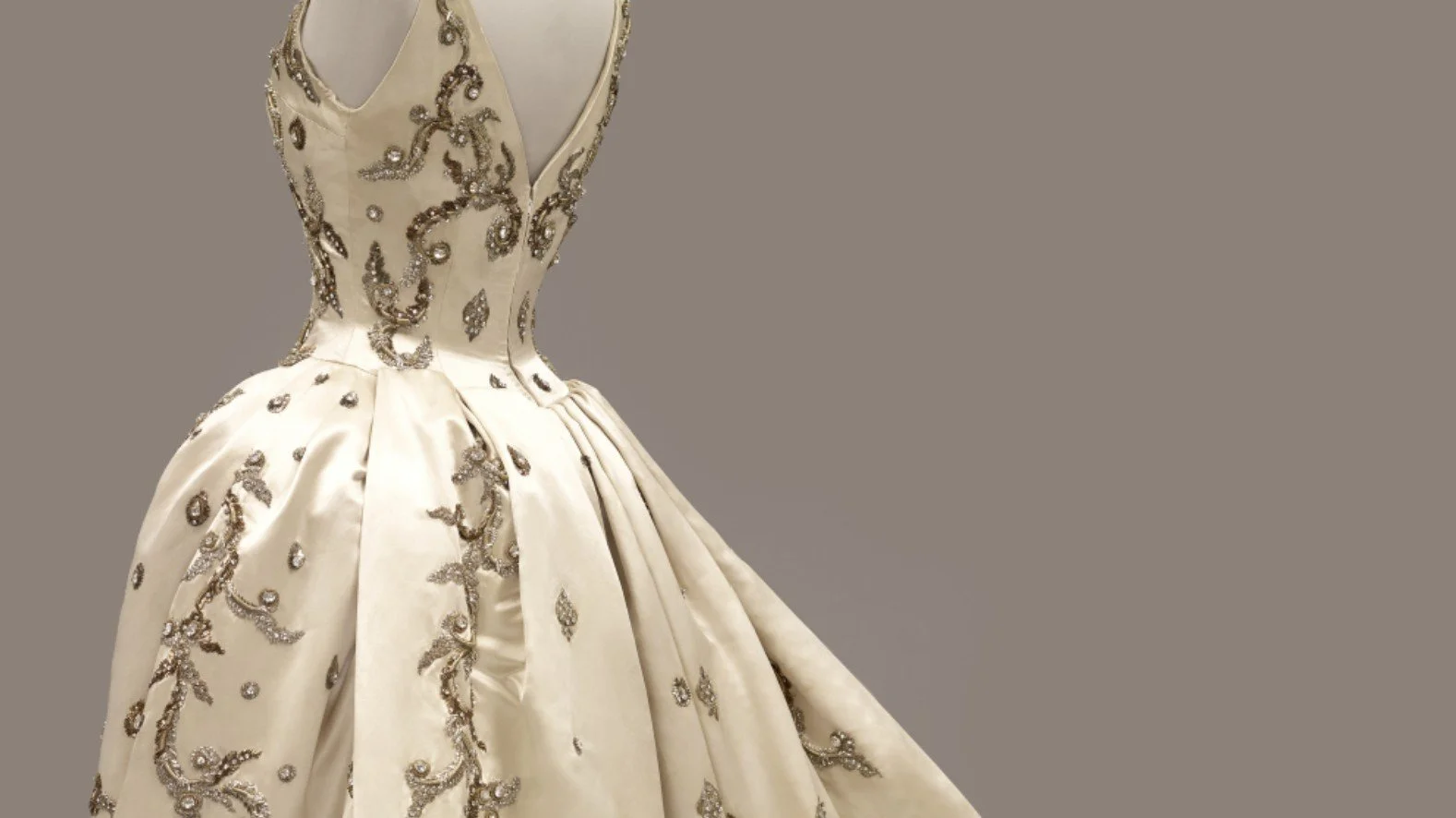
An evening dress by Pierre Balmain, 1960, Collection of Her Majesty Queen Sirikit, Queen Sirikit Museum of Textiles. COURTESY OF MUSÉE DES ARTS DÉCORATIF
Pierre Balmain
When Queen Sirikit wore hand-woven Thai silk onto the world stage in the late 1950s, she was making a calculated gamble. Thailand meant beaches and temples to most Westerners; its textiles were village craft, not international currency. She set out to change that, working with local weavers and Parisian couturiers to turn rural fabric into diplomatic armour. The silk of her gowns carried the hands of artisans, the memory of village looms, and the quiet assertion that tradition could be elevated without being altered beyond recognition.
From 13 May to 1 November 2026, Paris will see that vision come alive in Fashion in Majesty: Haute Couture and Tradition at the Court of Thailand at the Musée des Arts Décoratifs. Over a hundred garments and accessories from the royal collection will showcase how these clothes functioned as instruments of diplomacy, designed to impress heads of state while preserving the subtleties of national identity.
One of the exhibition’s standout pieces will be an early-1960s silk ikat gown, hand-woven in Thailand’s northeast and then structured by Pierre Balmain in Paris. The fabric retains the irregular rhythm of village looms, while the tailoring gives it the precision and polish of Parisian haute couture — a dress that belongs neither solely to Europe nor Thailand but exists in a rare space between. Its subtle gold embroidery catches light across the pleats, suggesting both the quietude of the palace and the ambition of global diplomacy.
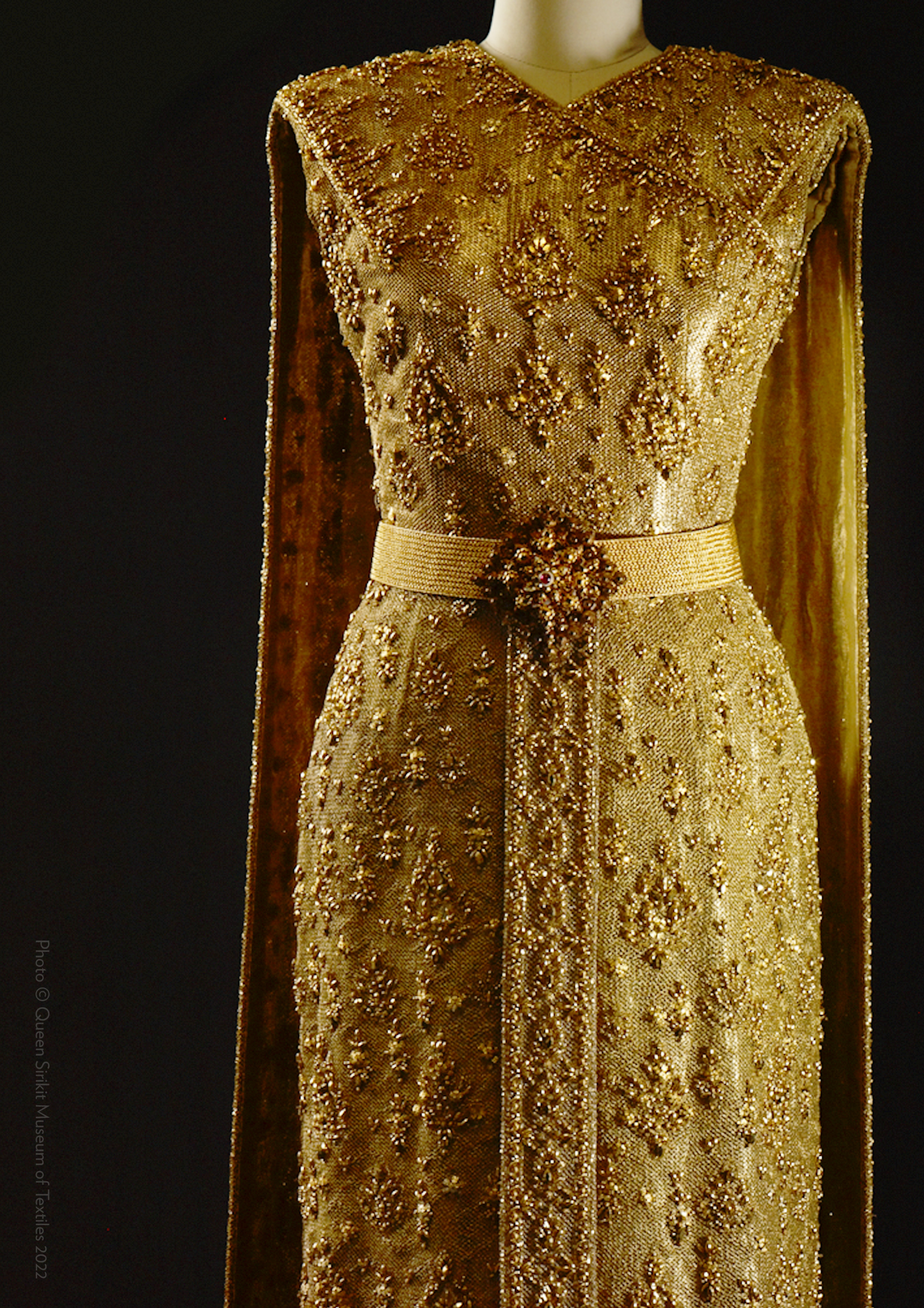
That balance between preservation and innovation will run through the exhibition. The Queen devised eight canonical formats for Thai court dress, and the gallery will display them in all their restrained elegance: the sabai drape, phaa nung wrap, hand-dyed brocades, and embroidered panels. Each garment demonstrates a dialogue between centuries-old techniques and the logic of modern tailoring, whether in Paris, London, or Washington. The juxtaposition of shapes, colours, and textures reveals the intelligence of their construction — a visual negotiation of heritage and international visibility.
The exhibition will also celebrate the SUPPORT Foundation, which the Queen founded in 1976 to ensure that weaving villages could survive and thrive in a modern economy. Several gowns on display were produced through that network, linking the quiet discipline of rural craftsmanship to the polished theatre of international fashion. It is a reminder that these silks were not mere decorations; they were tools of preservation, empowerment, and cultural assertion.