Time Stitched in Gold: Tiffany Reimagines Jean Schlumberger’s Croisillon as a Watch
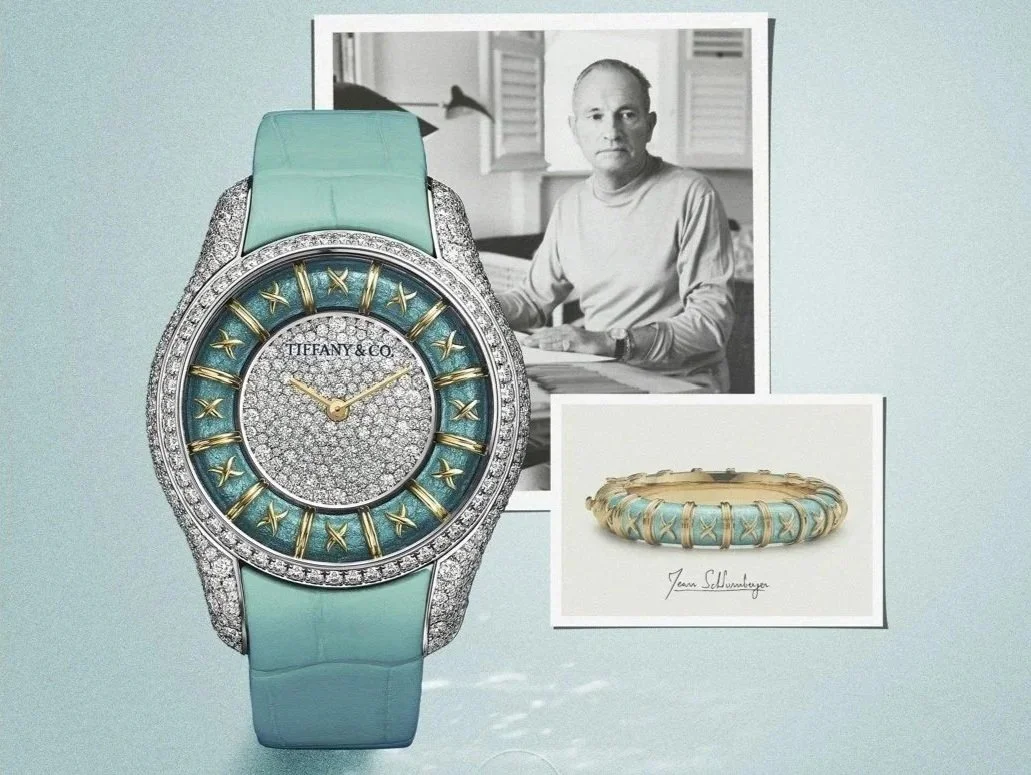
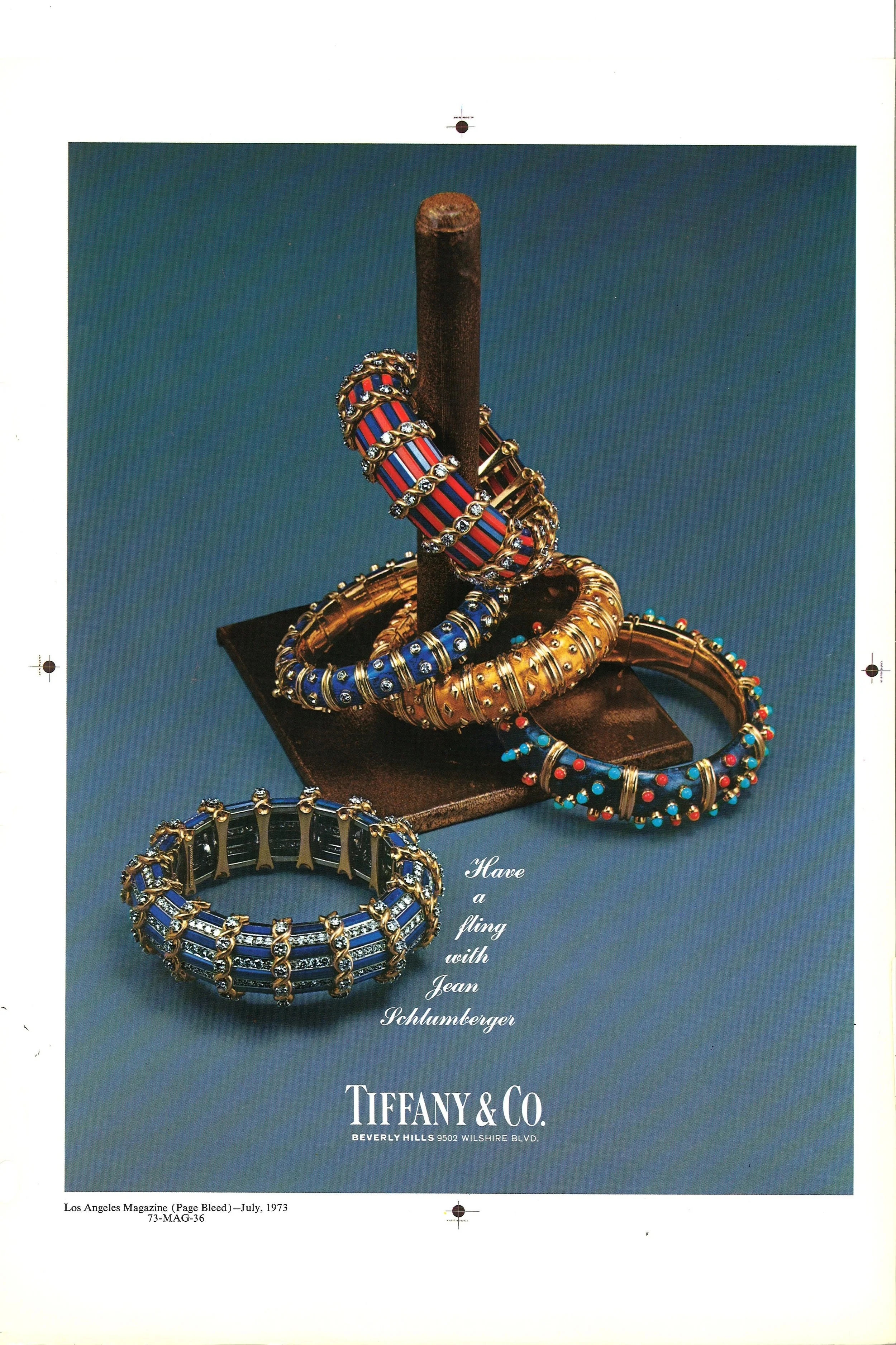
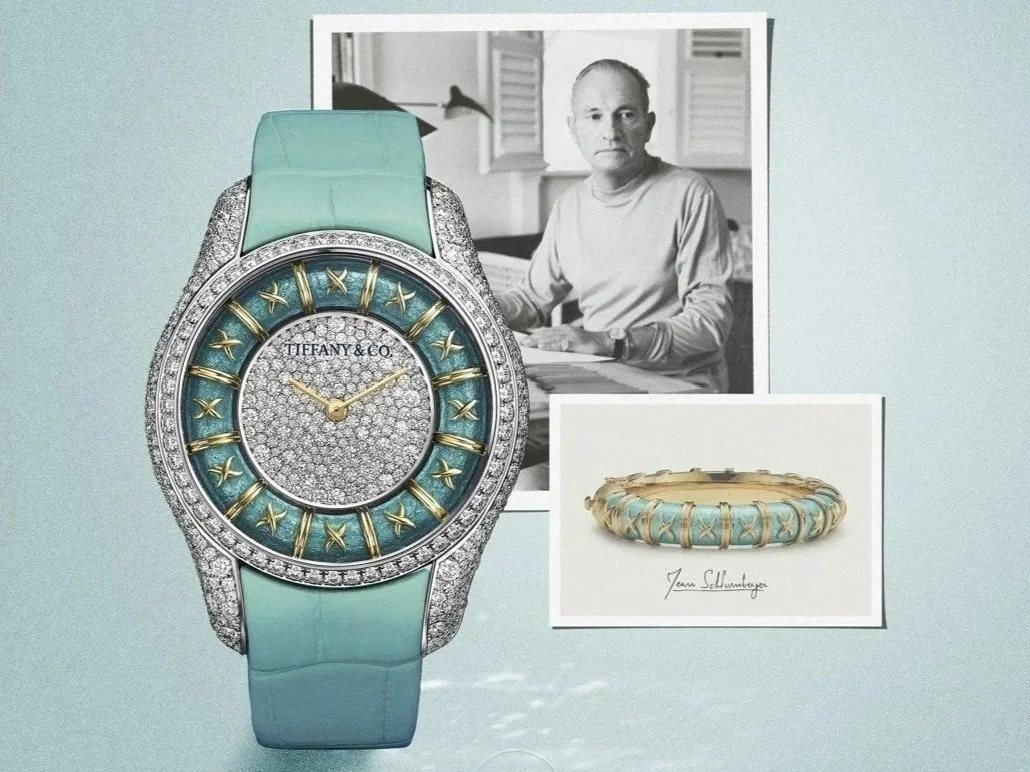
Jean Schlumberger was not a minimalist. When he arrived at Tiffany & Co. in 1956, he brought a European eye shaped by textiles and ornament, along with a gift for pushing traditional techniques somewhere unexpectedly modern. His Croisillon bangles, introduced in 1962, remain among his most recognisable designs—bands of saturated enamel crossed with gold “stitches,” worn stacked high on the wrists of society’s most photographed women.
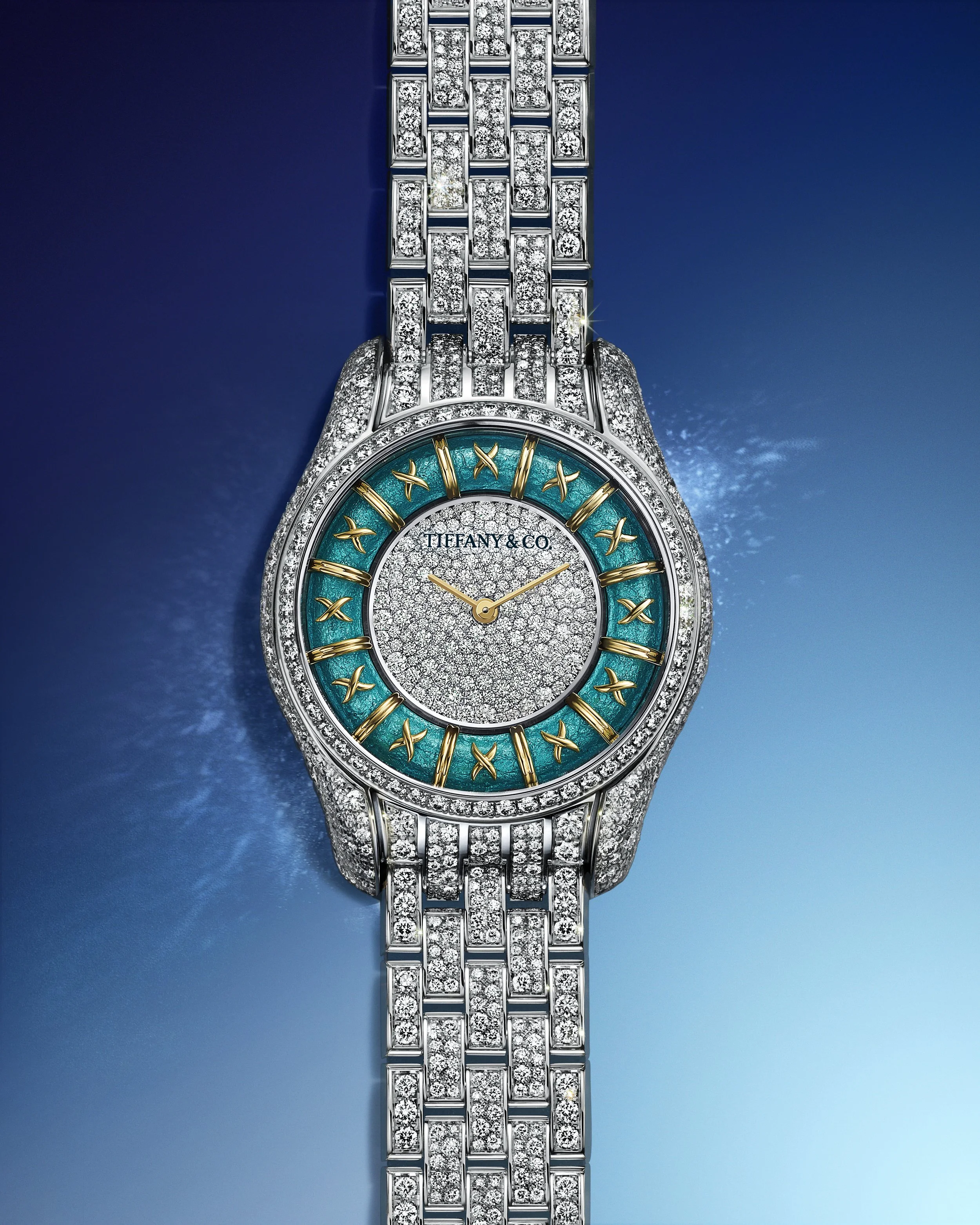
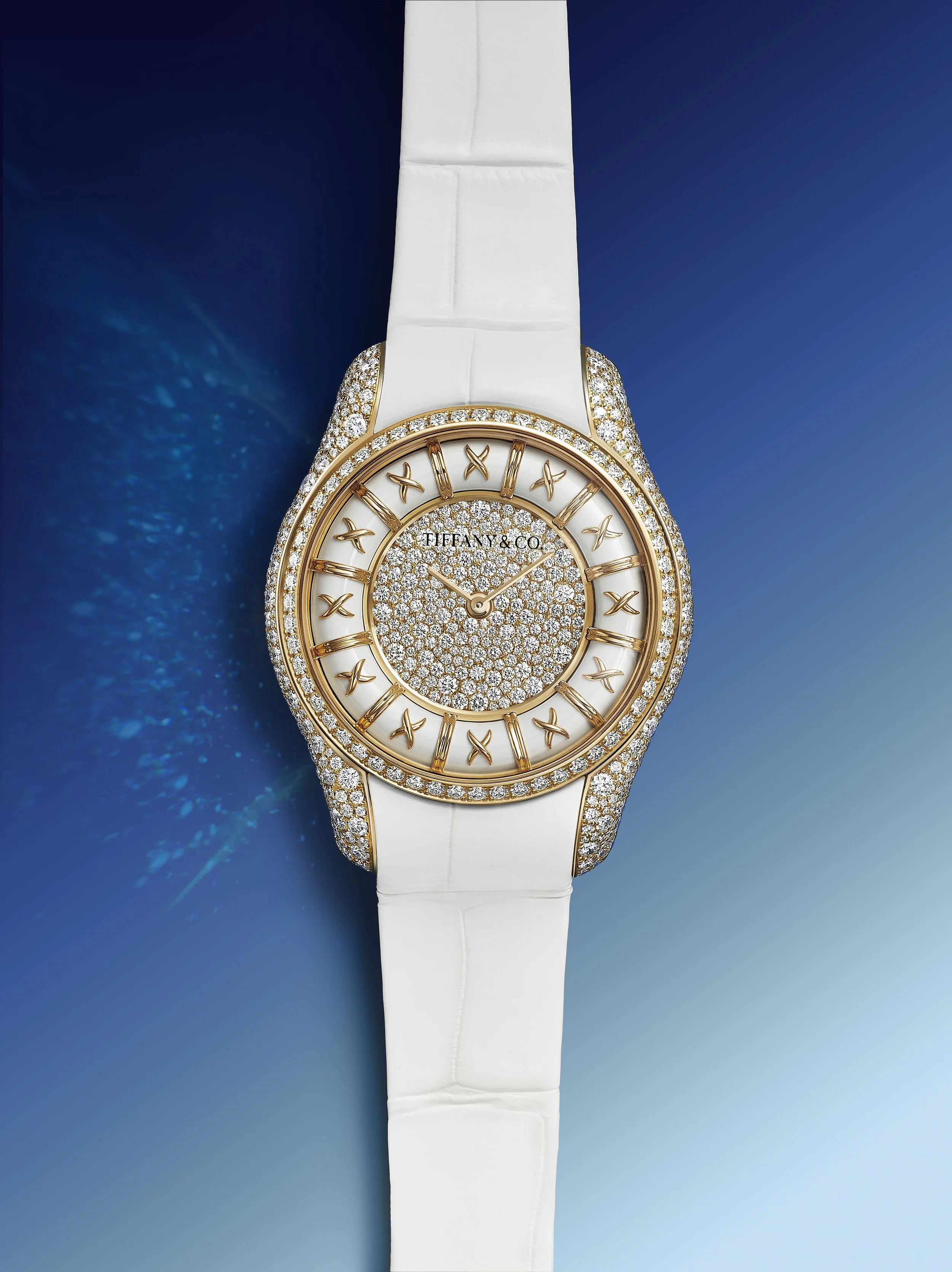
This season, the house revisits that flourish of colour and craftsmanship—not as a jewel, but as a timepiece. The new Enamel watch lifts the Croisillon’s architecture—enamel, gold stitches, unapologetic colour—and sets it in motion as a rotating ring encircling a snow-set diamond dial glittering with 204 stones. Twelve gold cross-stitches mark the hours, yet they refuse to sit still. The ring shifts with the wrist, allowing the hours to drift before realigning. Time becomes adornment rather than instruction.
Enamelling at Tiffany dates back to the 1870s, when the firm presented enamelled works at the 1878 Exposition Universelle in Paris and went on to produce decorative watches and clocks that treated timekeeping as an aesthetic exercise. These were never simply instruments; they were surfaces on which colour and craft could unfold.
By reviving paillonné in 1962, Schlumberger reclaimed a technique on the brink of disappearance. The process—laying fragments of gold or silver leaf beneath layers of translucent enamel, fired repeatedly to build depth and light—had largely fallen out of use by the mid-20th century. Schlumberger reintroduced it with assurance, applying it to jewellery with the same structural sensitivity he had absorbed from the world of textiles.
The Croisillon motif itself—18k yellow gold cross-stitches alternating with pairs of straight stitches—grew directly from his Alsatian upbringing. As the son of a textile manufacturer, he understood how structure underpins beauty. The X-stitch stabilises the design even as it decorates it, echoing the woven frameworks he grew up around. That underlying discipline is why his jewels never feel fragile, even at their most delicate.