An Interview with Lê Thanh Hòa
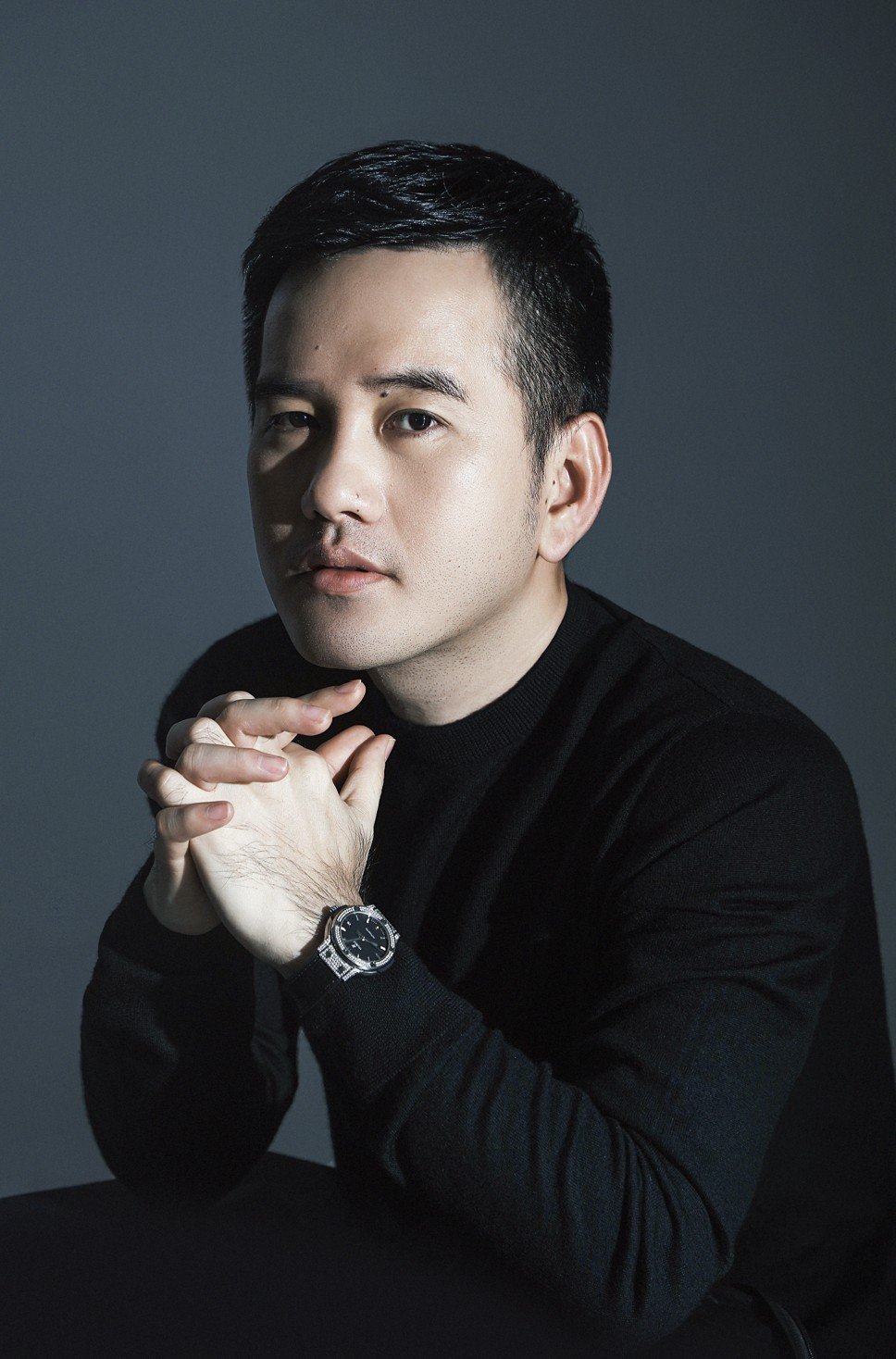
Lê Thanh Hòa’s couture practice is built on structure, craftsmanship, and cultural inquiry. Over more than a decade, the Ho Chi Minh City–based designer has earned a reputation dressing Vietnam’s beauty queens and cultural elite, while steadily refining a design language rooted in sculptural silhouettes and meticulous construction.
“At this stage of my career, my design philosophy is increasingly guided by intention and clarity,” Lê says. “I am far less concerned with decoration for its own sake, and more invested in exploring how form, structure, and cultural memory can coexist in a way that feels both meaningful and contemporary.”
That philosophy recently led him back to university. Last January, Hoa graduated as valedictorian from his Master’s programme in Applied Fine Arts at Van Lang University—more than a decade after founding his eponymous luxury house. His thesis explored applying Champa sculptural art to eveningwear, a research that formed the conceptual foundation of his Fall 2025 couture collection, Golden Heritage.
Returning to academia mid-career was not about running out of ideas. “After more than a decade working professionally in fashion, I reached a moment where intuition alone no longer felt sufficient,” he explains. “I wanted to examine the deeper structures behind my creative instincts—to understand their origins, cultural grounding, and long-term relevance.”
What started as visual fascination with Champa sculpture became rigorous study. “What initially captivated me on an aesthetic level gradually revealed itself as a sophisticated system of symbolism, proportion, and spiritual philosophy,” he says. Academic research, he adds, gave him a framework to engage with this heritage responsibly, beyond surface inspiration.
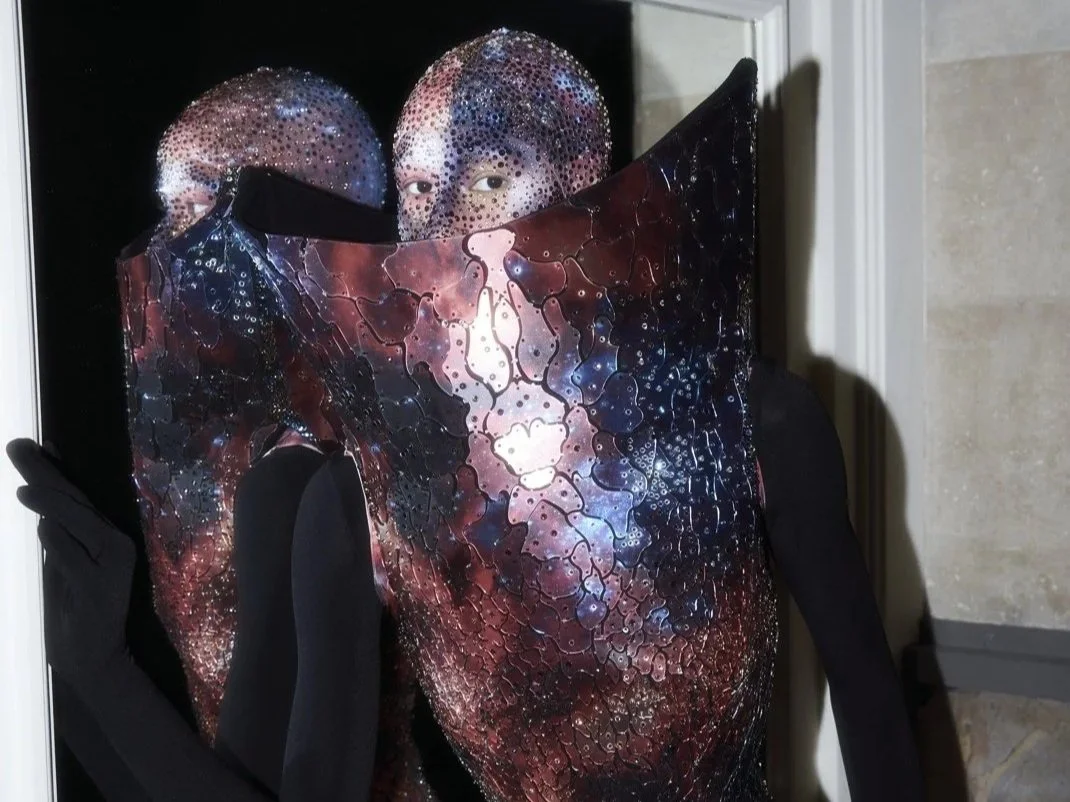
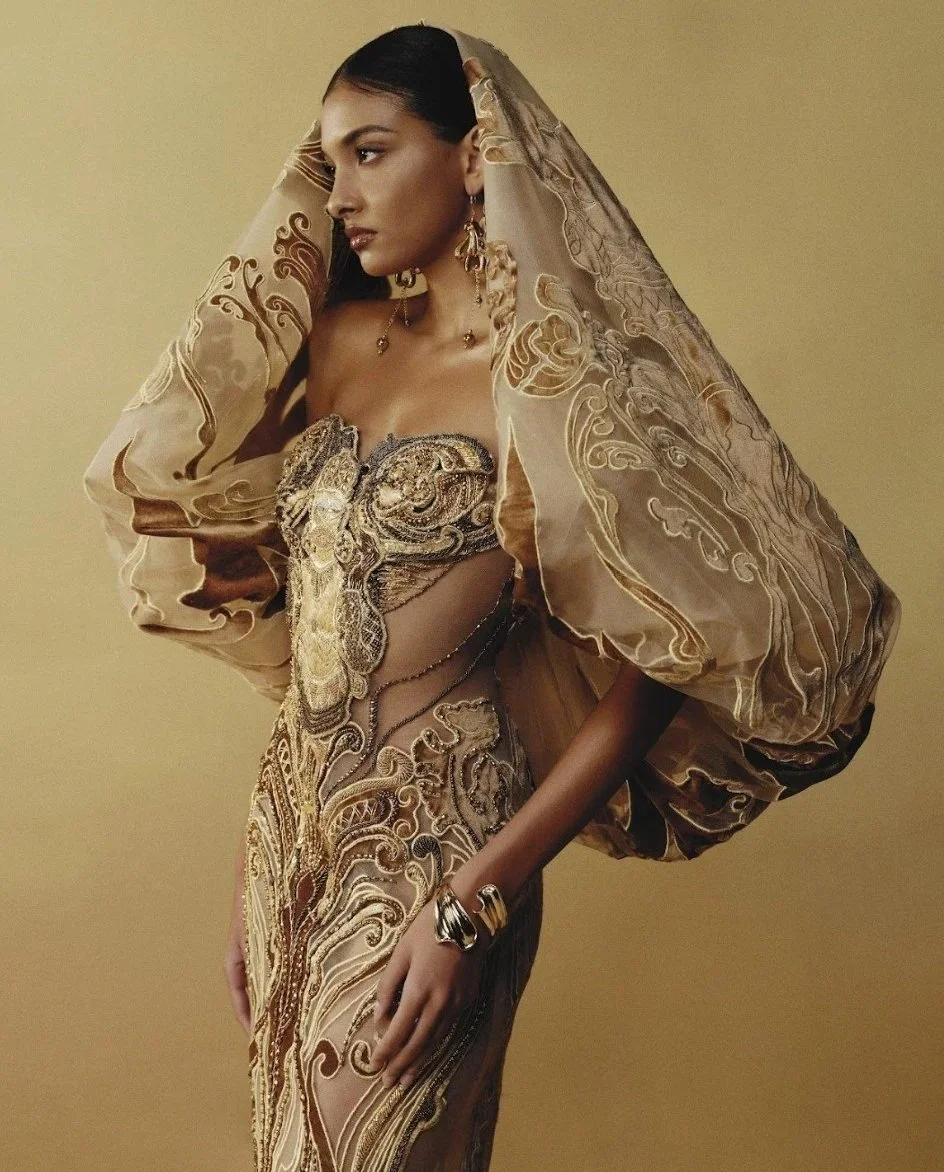
That shift is most visible in Golden Heritage, his latest couture collection unveiled in December. Instead of treating heritage as ornament, Hoa approached Champa as a system to be translated into contemporary couture. “Design has become an act of translation from historical and cultural context into contemporary expression,” he notes, adding that research and critical inquiry now precede decisions around form and material.
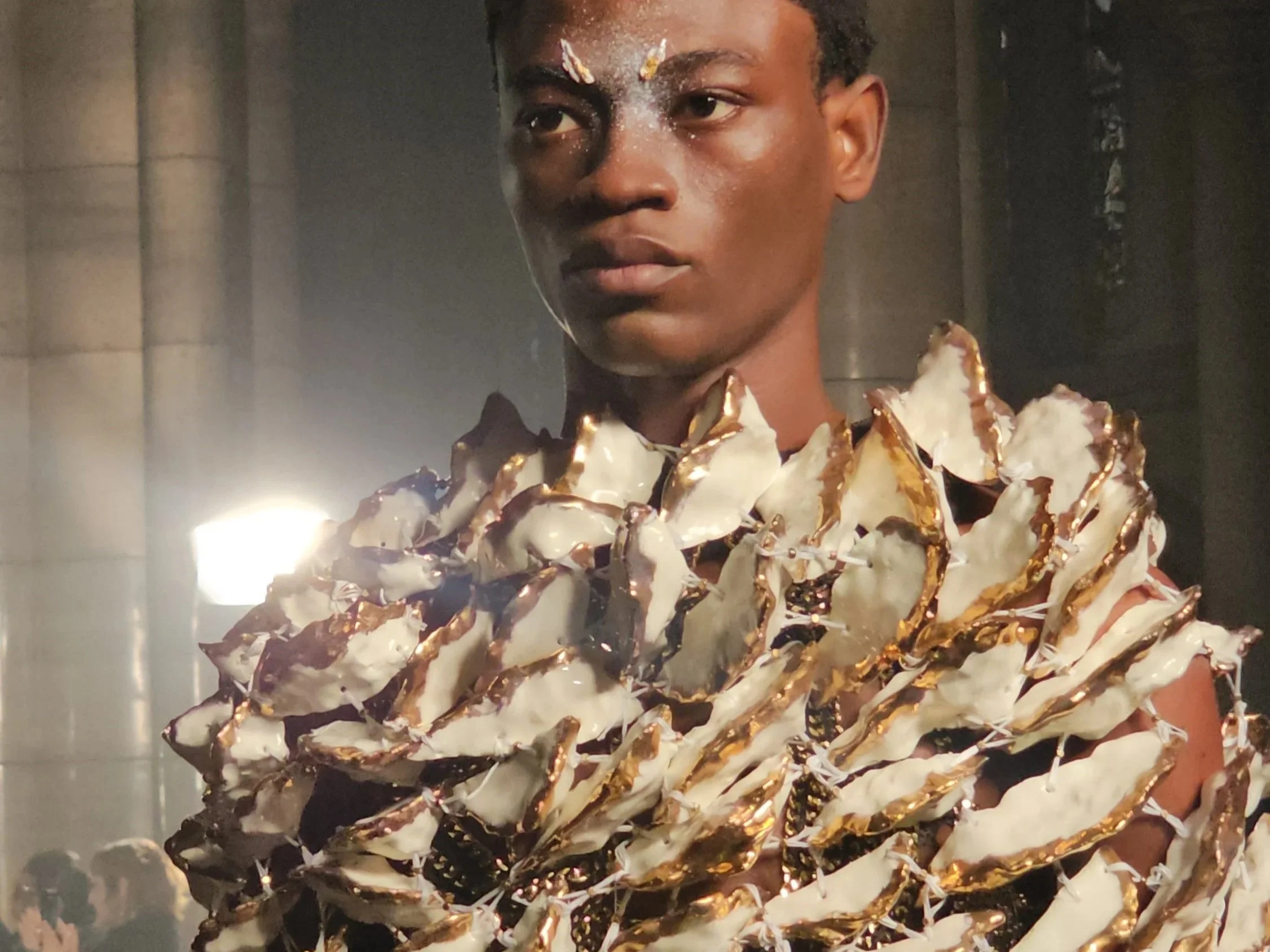
The collection opened with the sacred Garuda motif, traditionally carved at temple gateways as a symbol of divine protection. Reinterpreted through sculptural hand embroidery, it rises from the surface of the garment with what Hoa describes as “a sense of grandeur and quiet power,” allowing the wearer to feel a real connection to the culture it references.
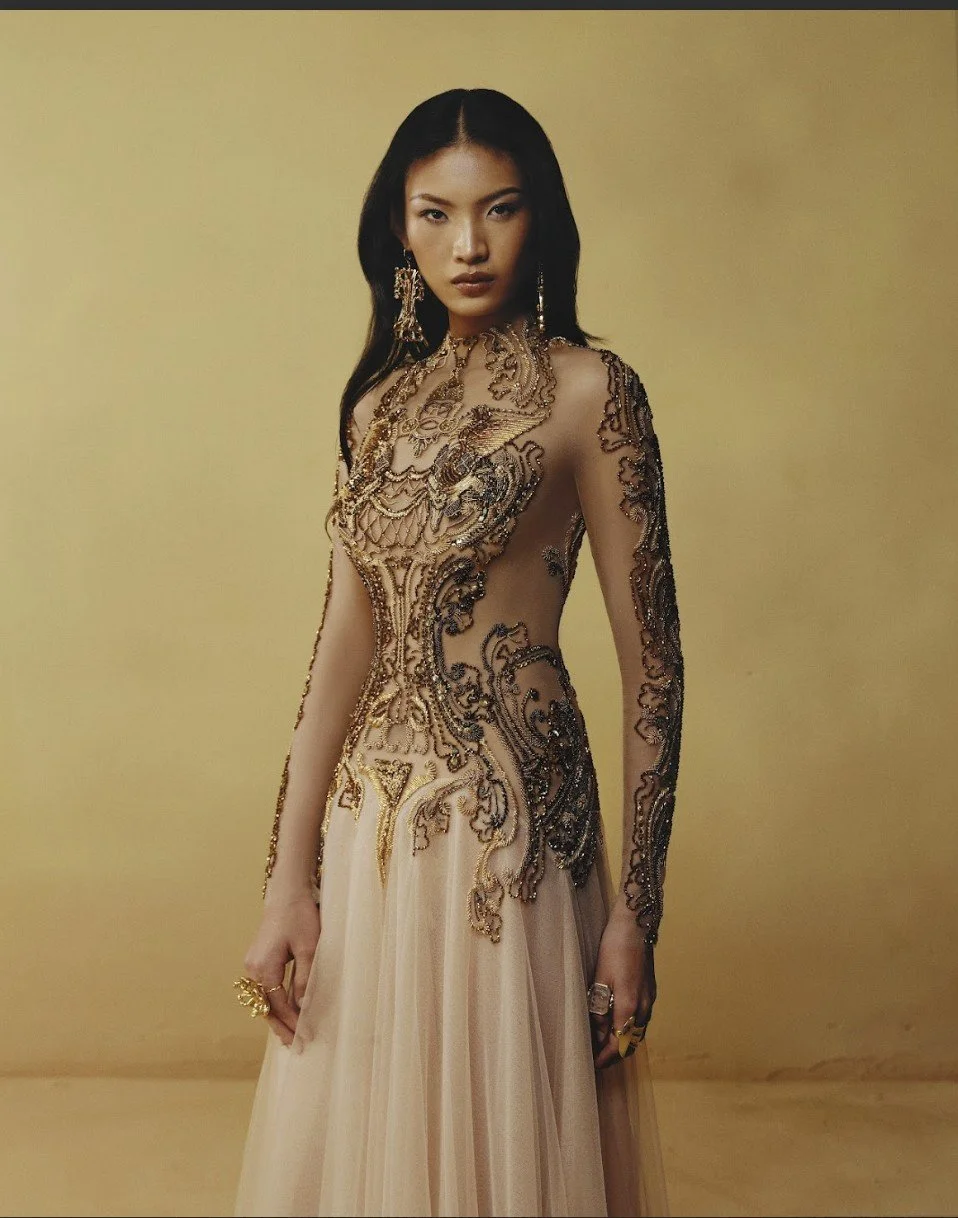
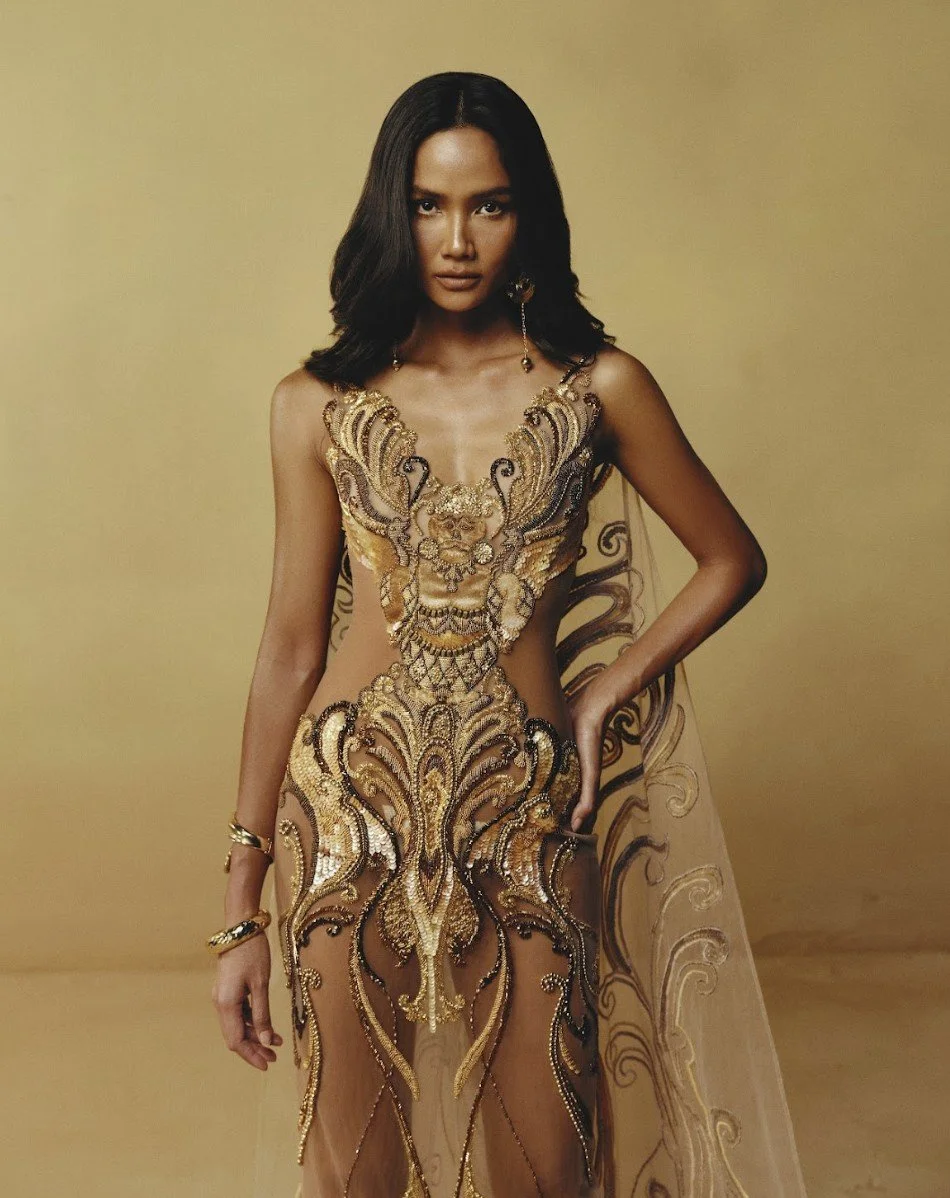
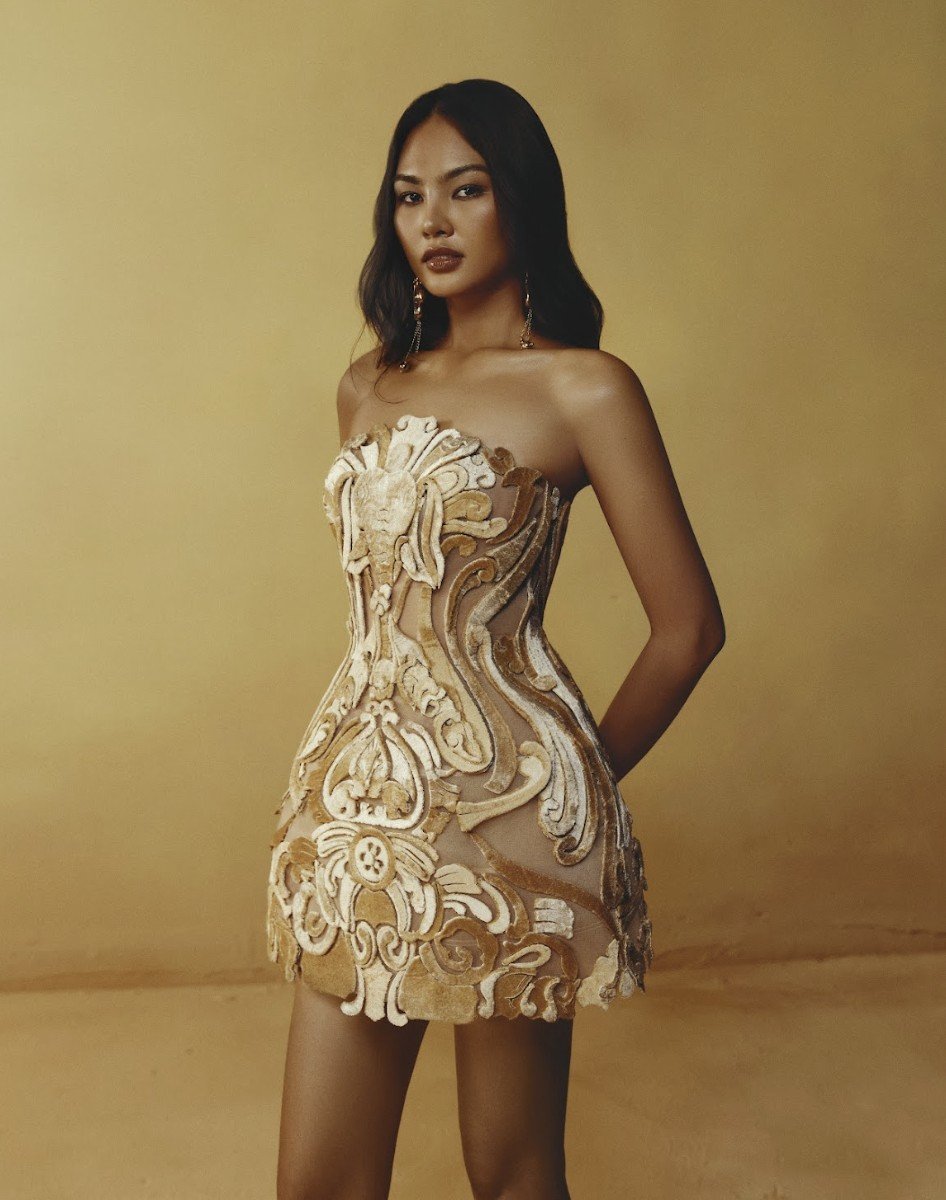
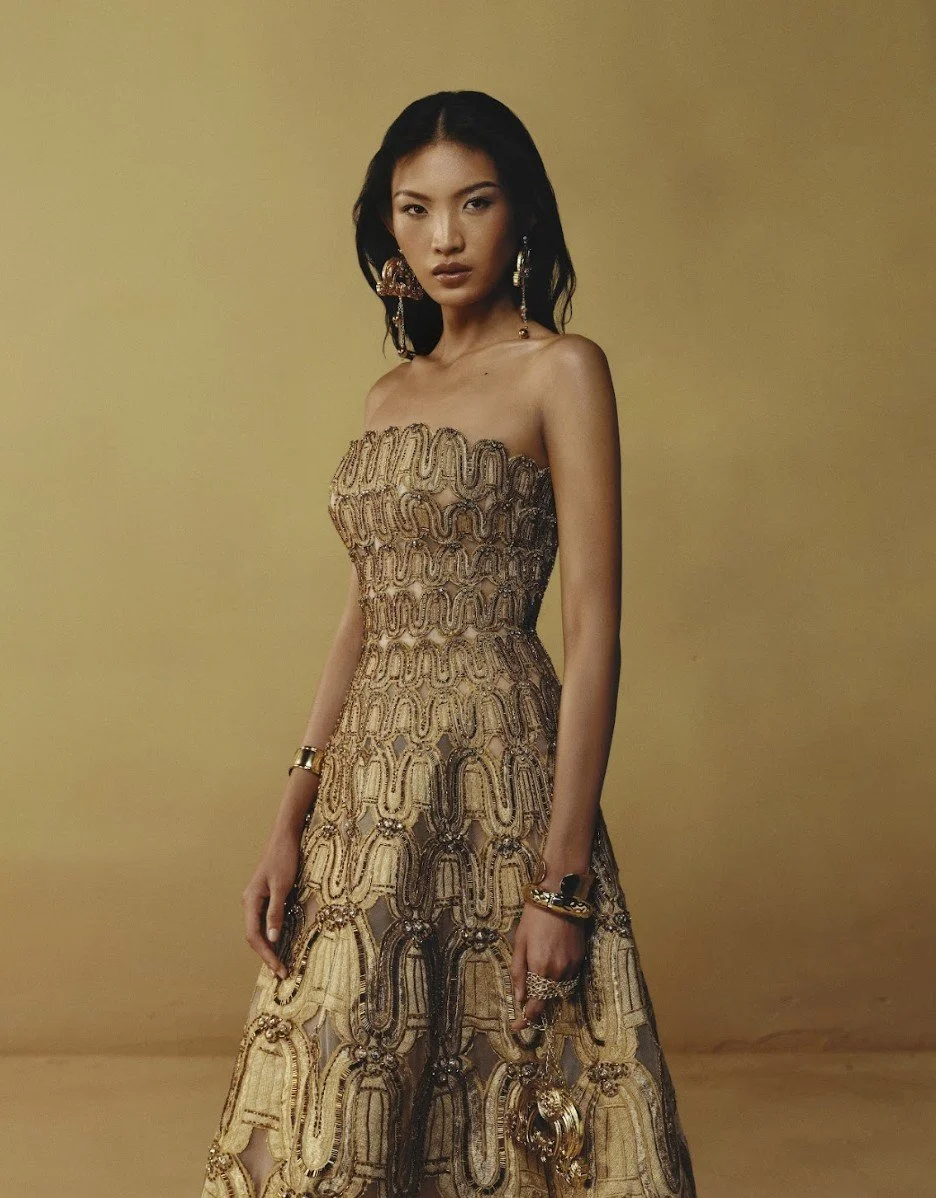
Geometric motifs from Hoa Lai art followed, shaping embroidery and silhouette. “The silhouettes are conceived from geometric inspiration,” he explains, resulting in gowns defined by architectural lines and structural clarity.
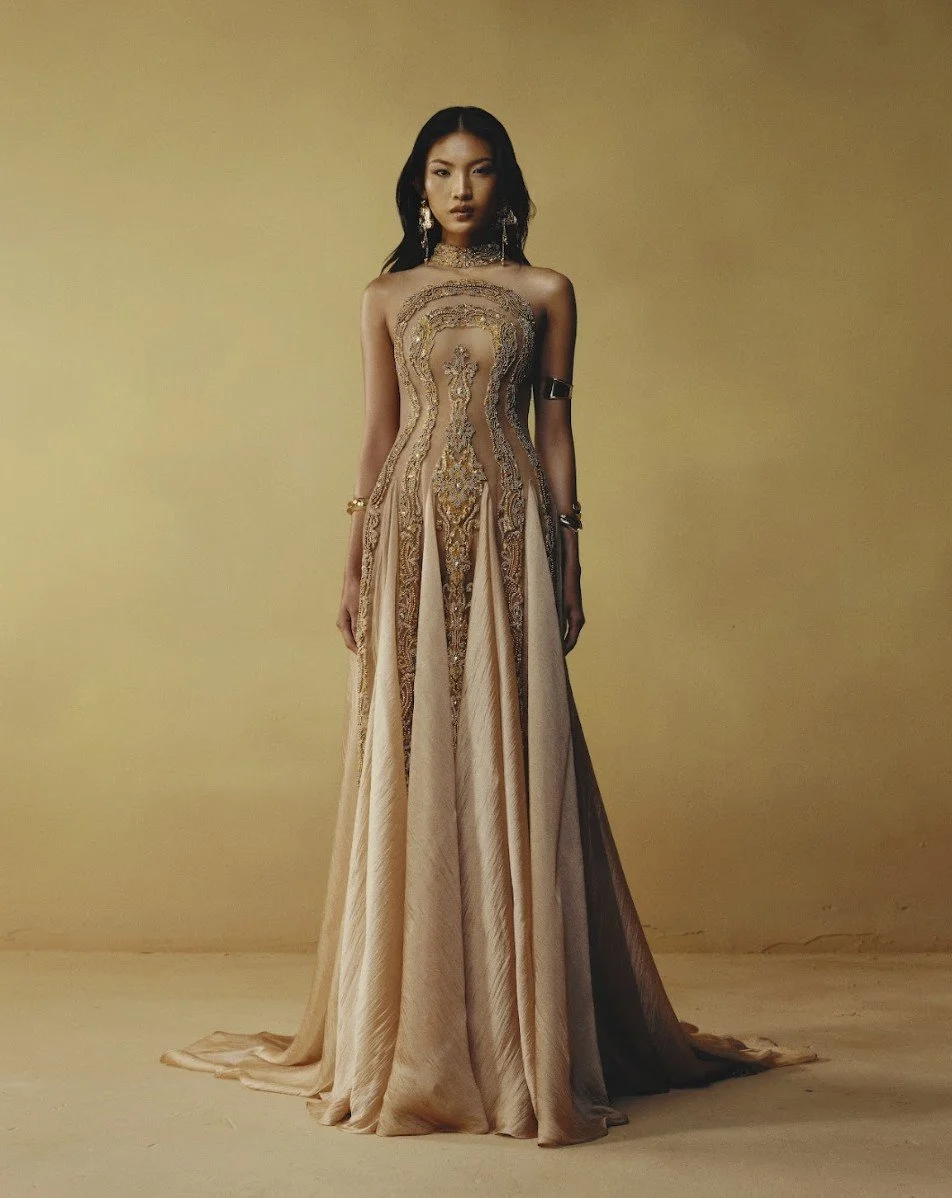
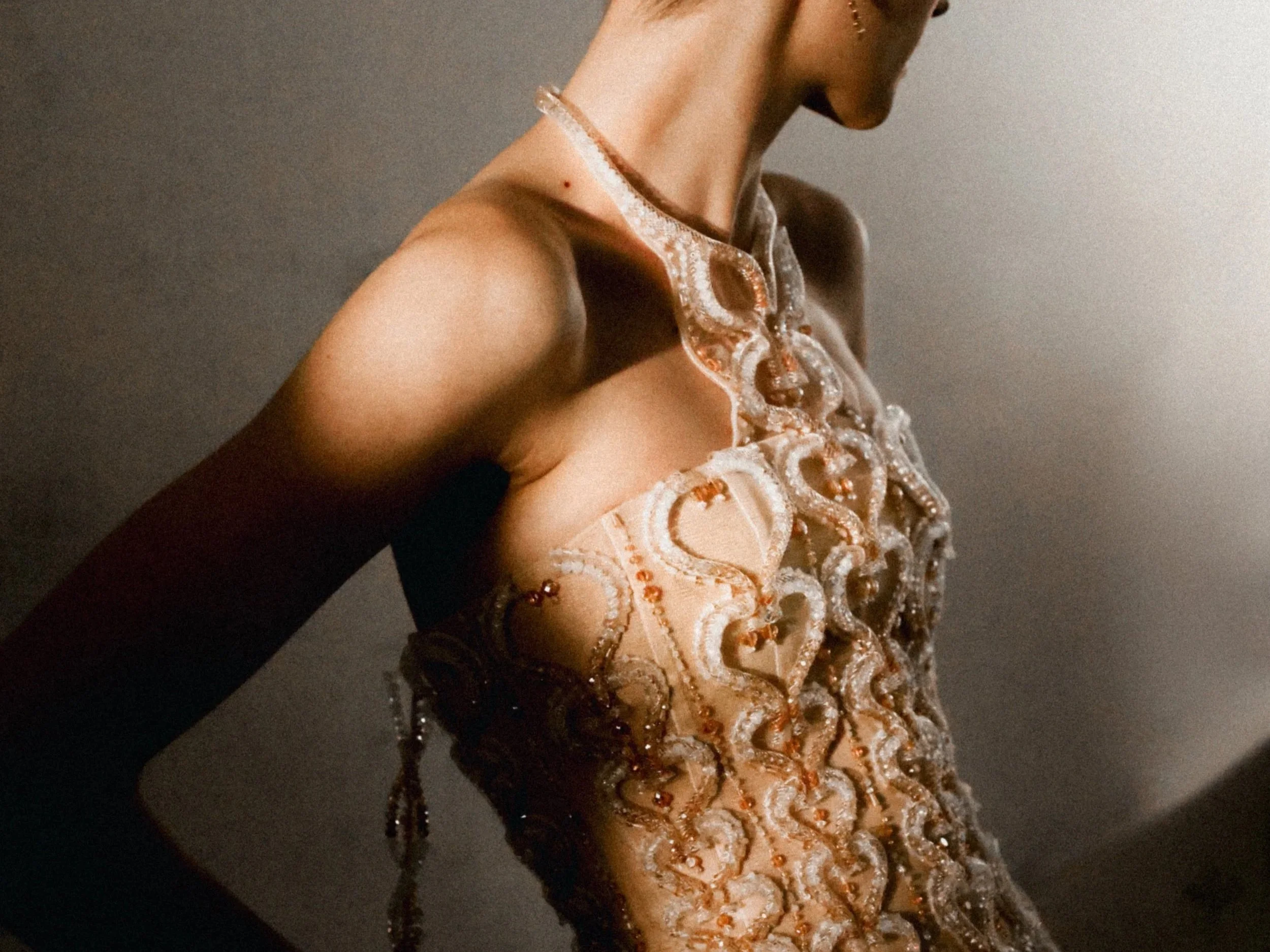
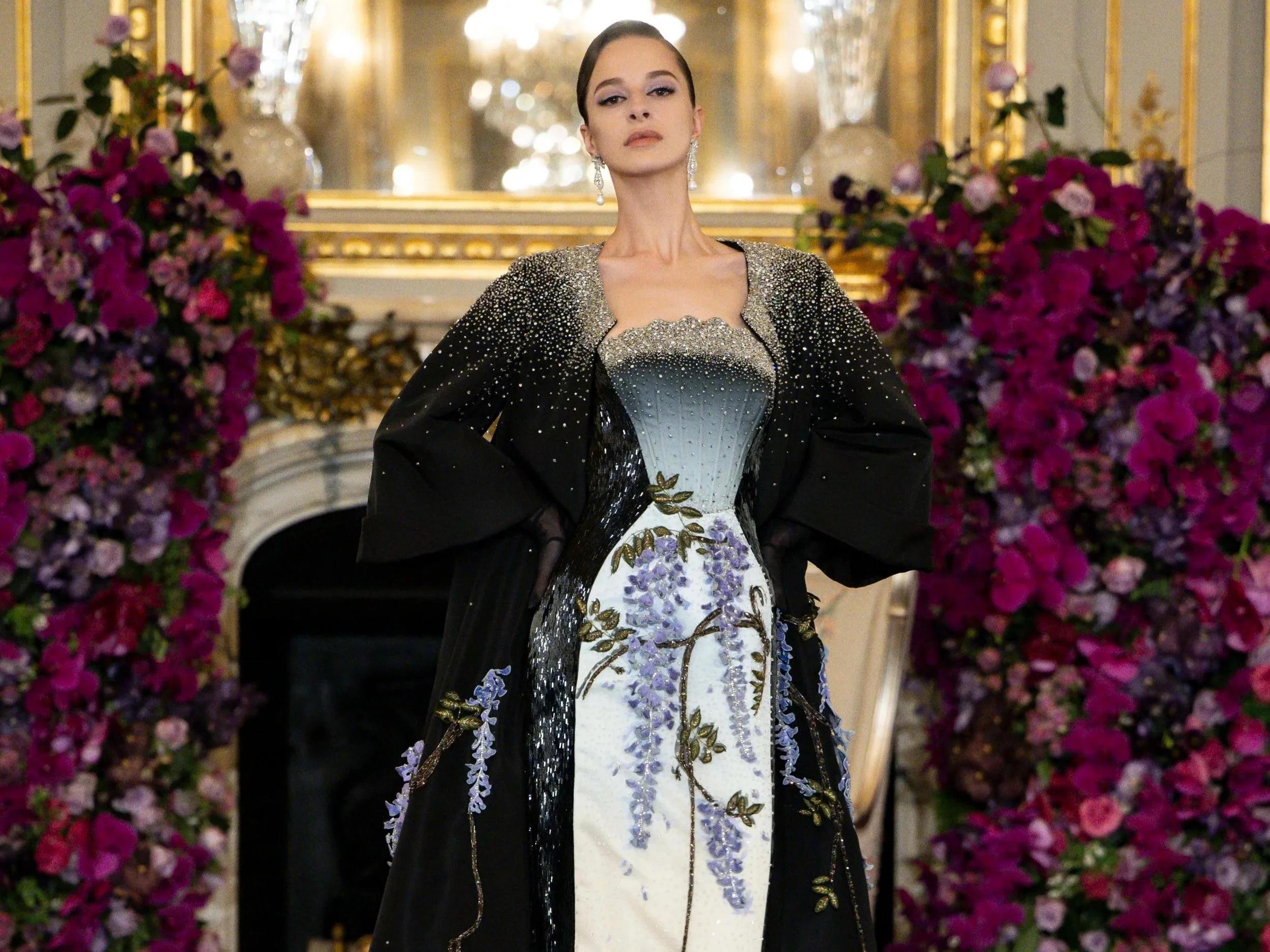
Elsewhere, the elephant and the Naga serpent—symbols of authority, protection, water, and prosperity—curve along necklines and borders. The lotus appears in delicate embroidery on fluid silk. “The lotus stands as a quintessential symbol within Champa sculptural art,” he says, “its softly flowing lines creating a sense of balance, grace, and serenity.”
For Hoa, this was new territory. “Architecture, by contrast, demanded discipline, restraint, and precision,” he acknowledges. “It required me to think in terms of structure, proportion, and spatial logic. This shift has been both challenging and transformative.”
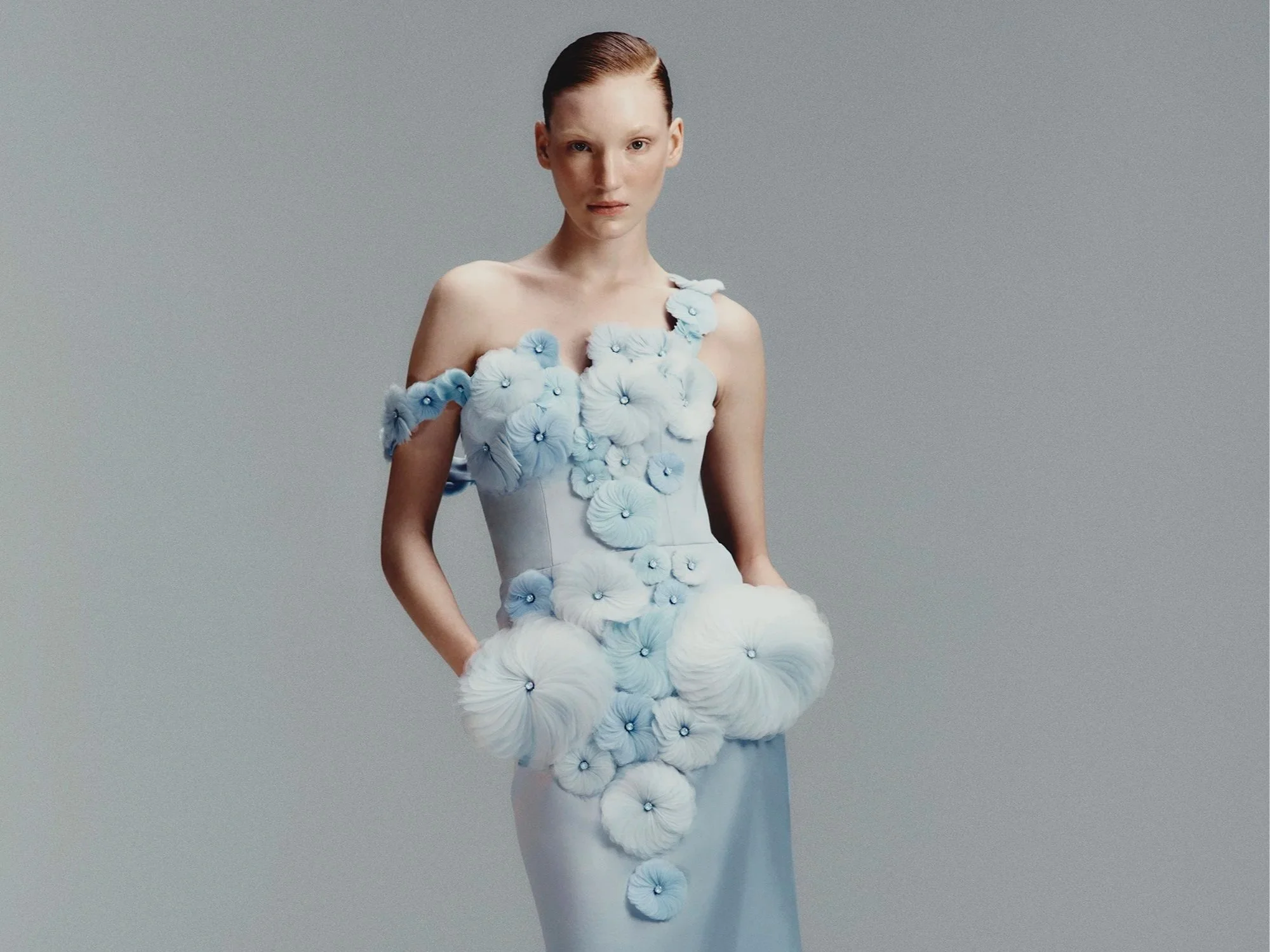
His next couture collection, Spring/Summer 2026, is slated for mid-2026. “For me, couture demands time,” he says. “Not only in the making of each garment, but in the thinking that precedes it. Slowness is part of the process.” The collection will keep heritage at its core but approach it with a lighter, airier hand, exploring movement and material sensitivity.
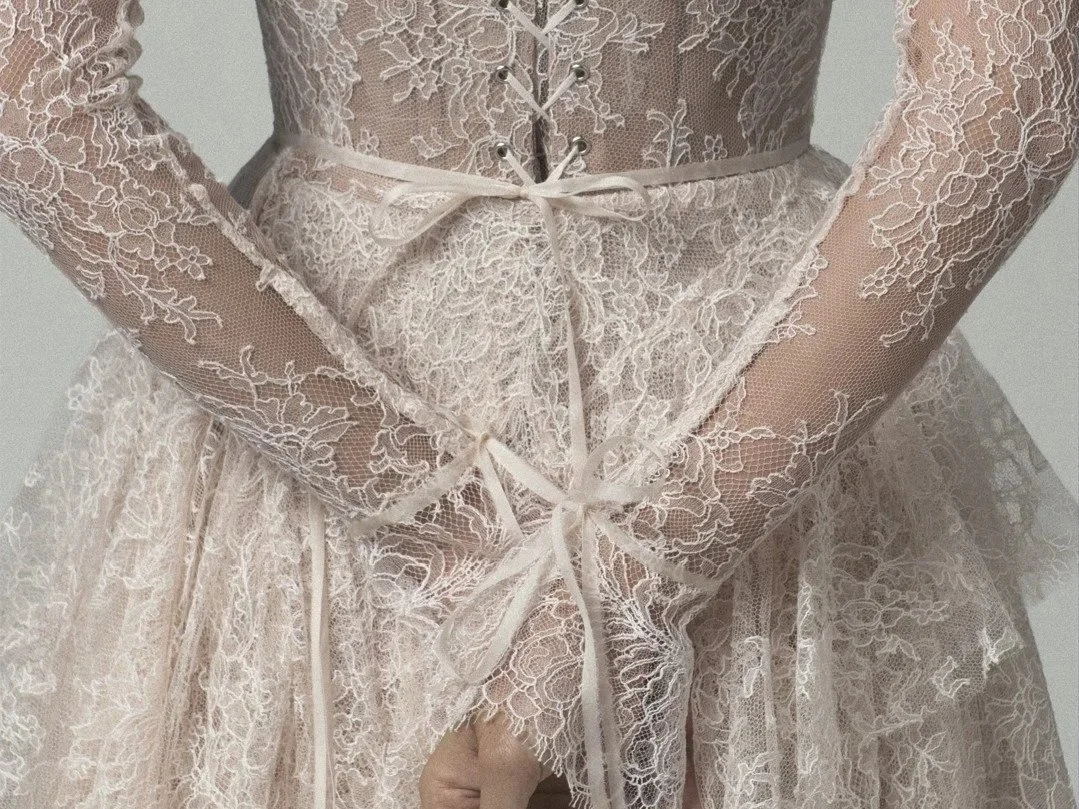
Traditional Vietnamese crafts are essential to Hoa’s work. He works with silk weavers, embroiderers, and dyers, valuing techniques that embody time and human skill. “Vietnamese silk possesses a natural rhythm and imperfection,” he explains, “qualities that align with my belief in garments as living entities rather than static objects.” Embroidery, for him, functions like drawing or low-relief sculpture, capable of carrying memory and symbolism stitch by stitch.
This philosophy extends to sustainability. “For me, sustainability is never a trend or a box to be checked,” Lê says. “It is a conscious ethical stance and a long-term responsibility—towards culture, craftsmanship, people, and the passage of time itself.” He designs fewer pieces, lets ideas mature, and works at a scale that allows care and accountability. “A garment becomes truly sustainable when it is designed to last, not only in its construction, but in its emotional and cultural relevance.”
In an industry obsessed with speed and visibility, Lê’s house moves at its own rhythm. “Ultimately, sustainable fashion, to me, is about creating work that truly deserves to exist,” he concludes. Garments that carry responsibility, memory, and relevance over time. His SS26 collection will be unveiled mid-2026, and it promises to continue this quiet, thoughtful path.