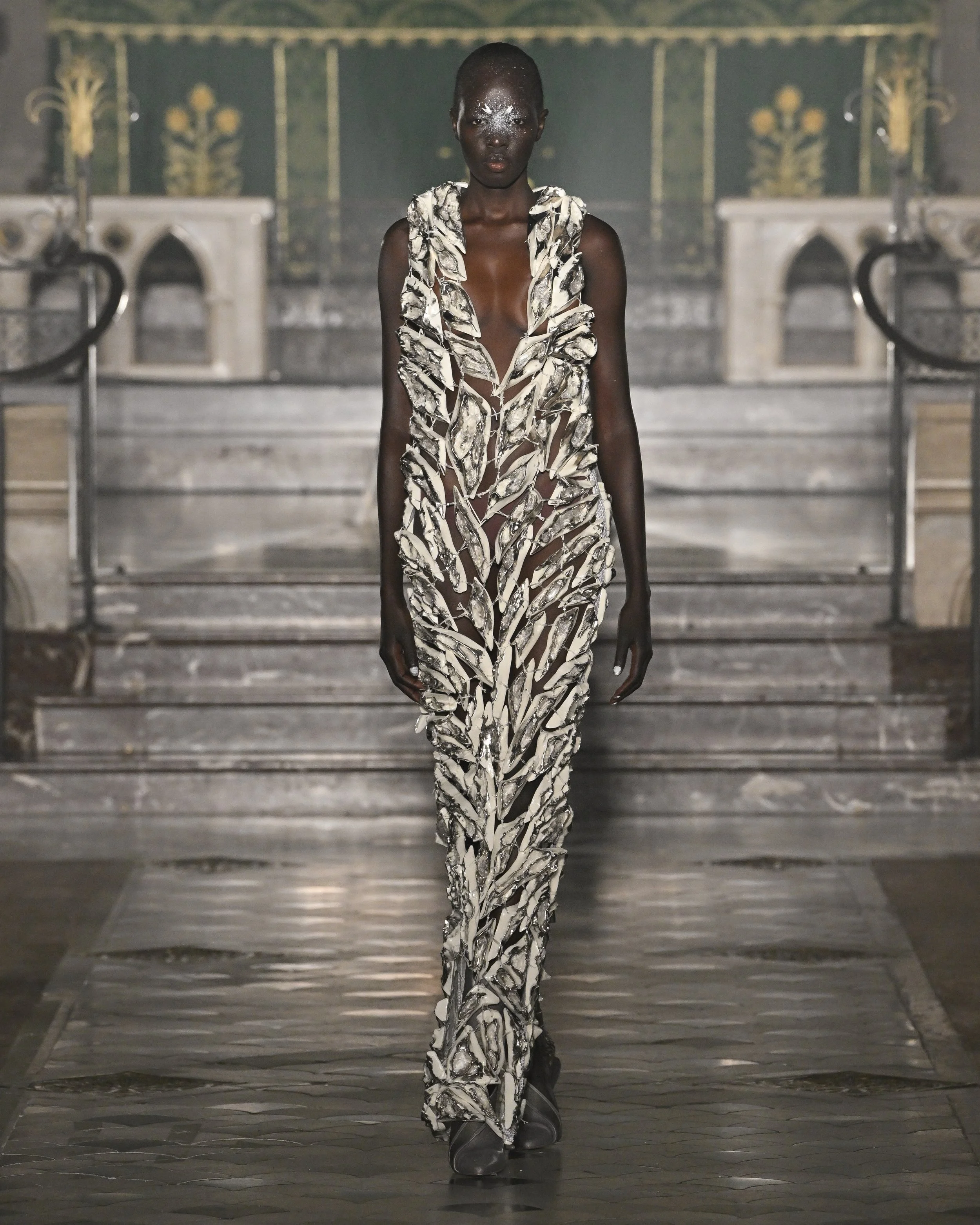
Spring 2026 Haute Couture: Yuima Nakazato’s Study in Time, Material and Sound
Photos credit: Mika Inoue)
Yuima Nakazato's Spring 2026 collection began far from the runway, on the island of Yakushima — home to some of the most famous yakusugi, endemic Cryptomeria cedars that have lived for at least a millennium. There, Nakazato confronted what he describes as "the immense span of time that transcends human intellect."
It was not nature as image that struck him, but nature as process: erosion, accumulation, repetition. Touch became essential. "Under the moonlight, I touched the streamlined stones carved by river currents and the tree rings of driftwood," he recalls. From that encounter grew a desire "to replicate these forms with my own hands."
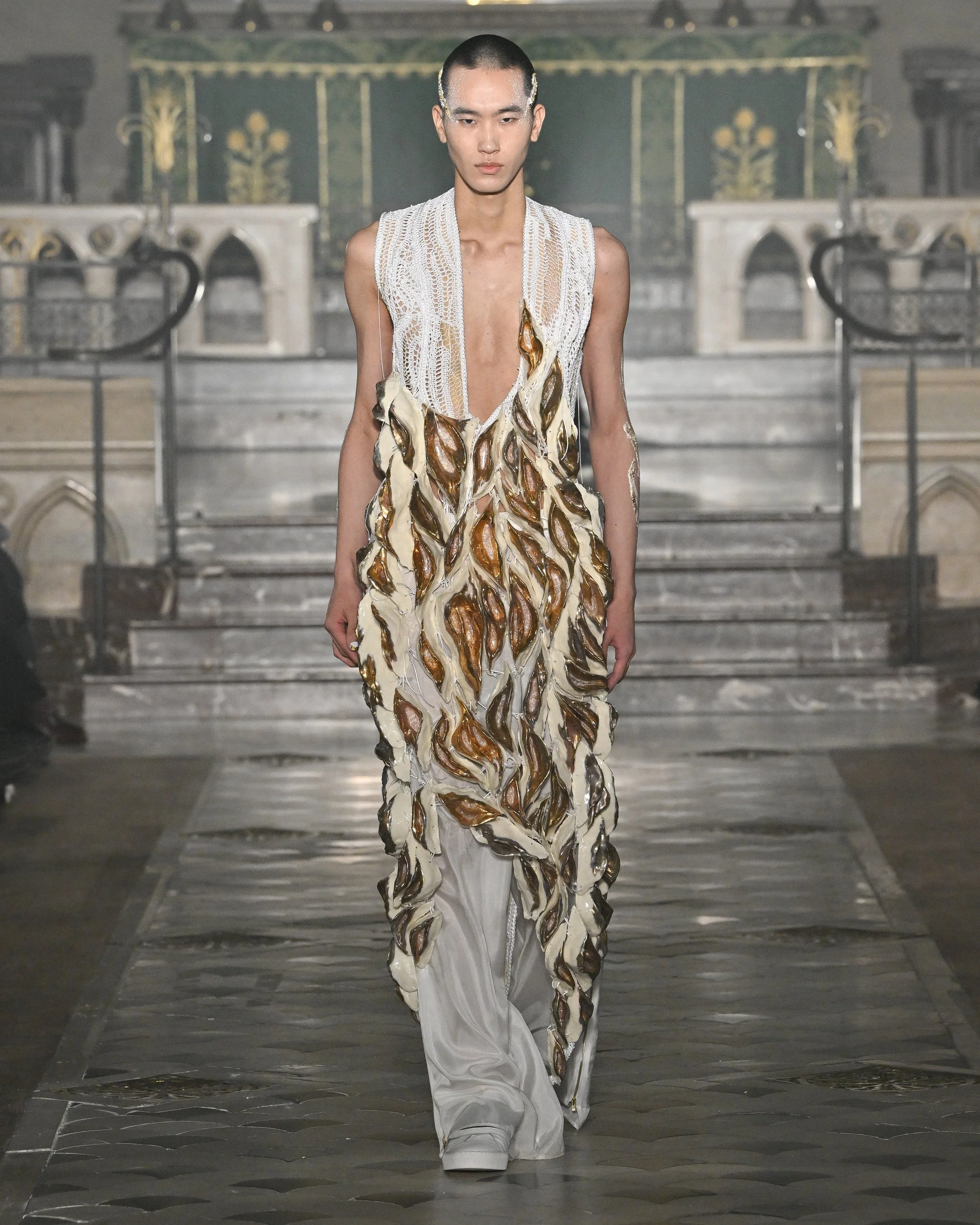
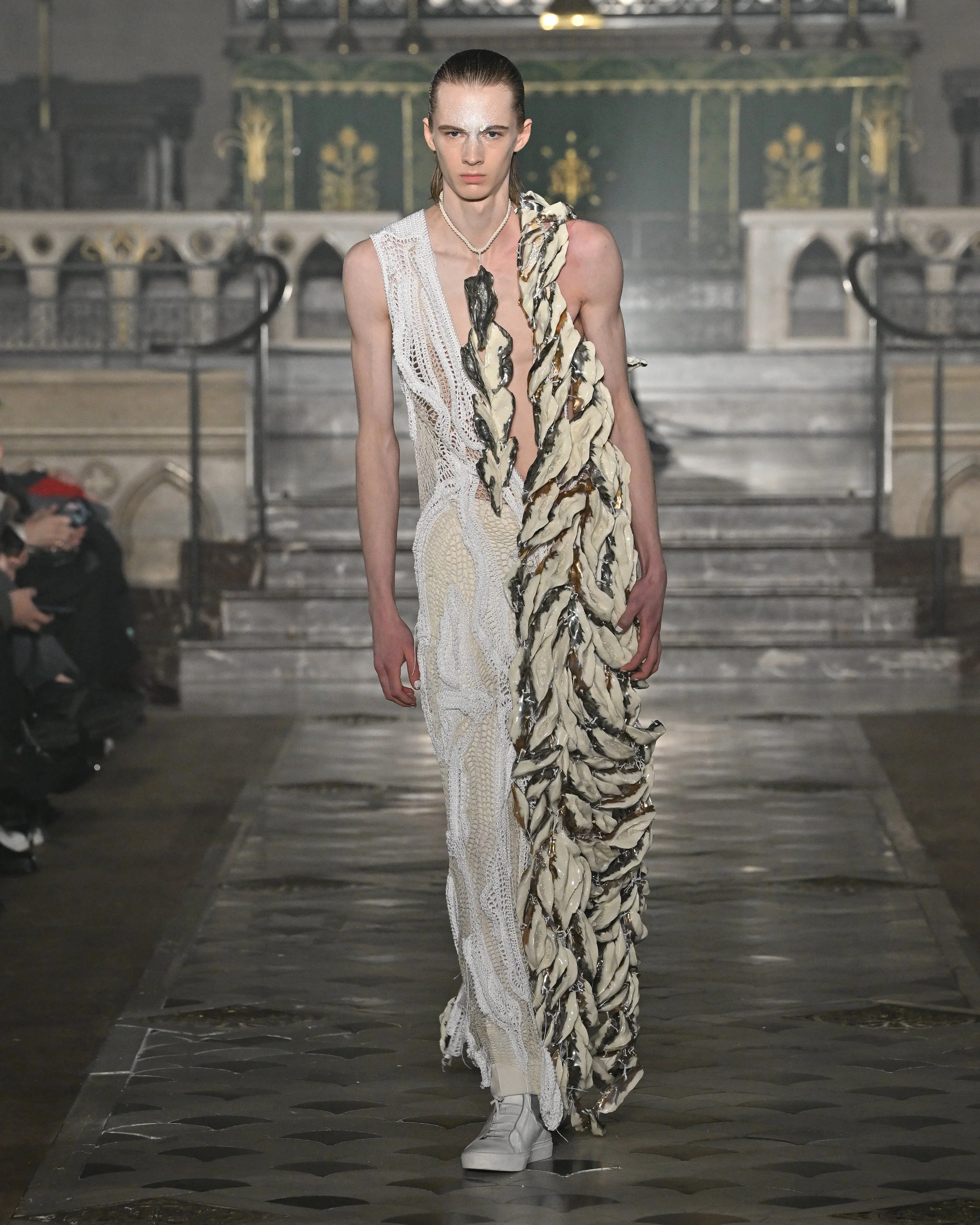
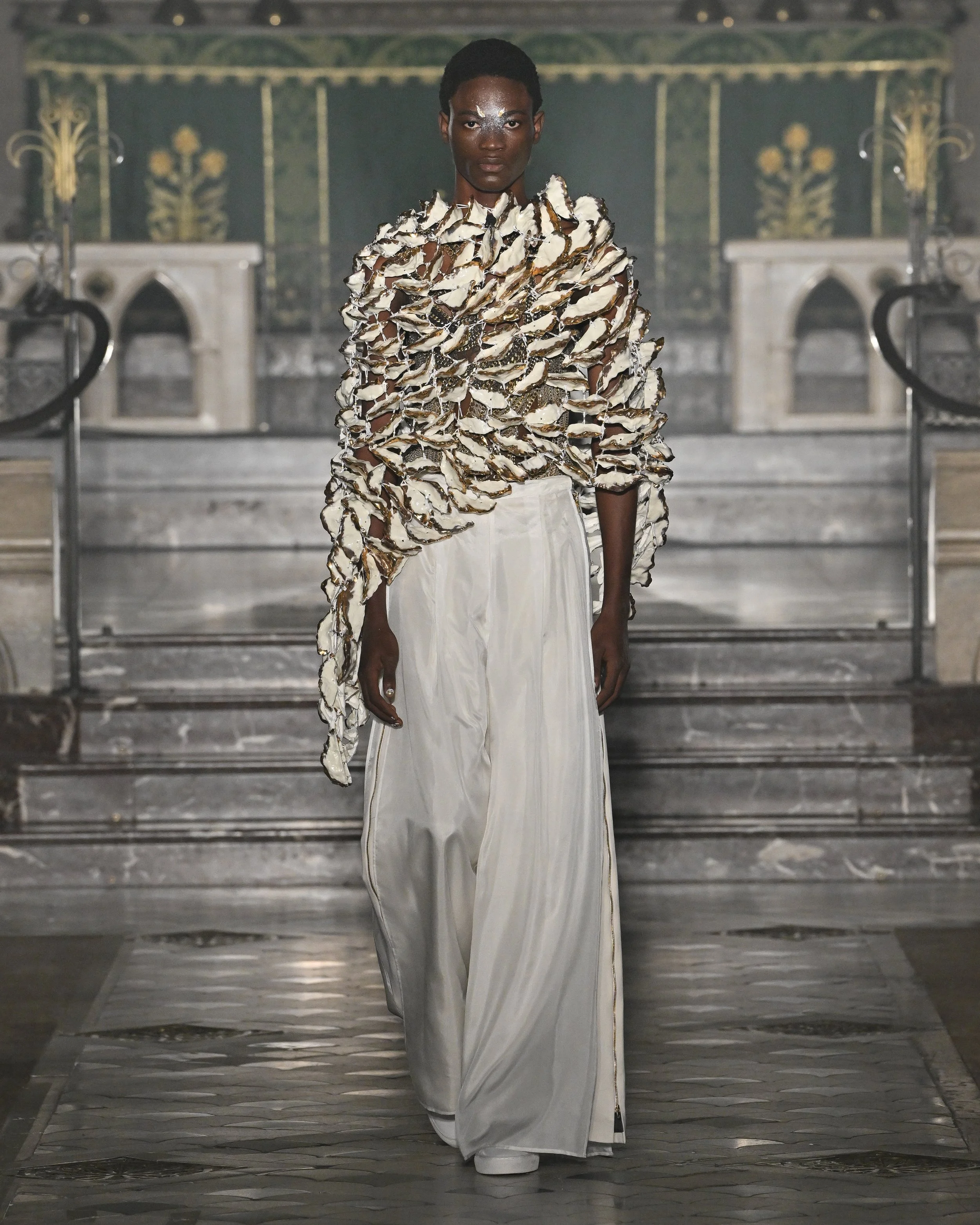
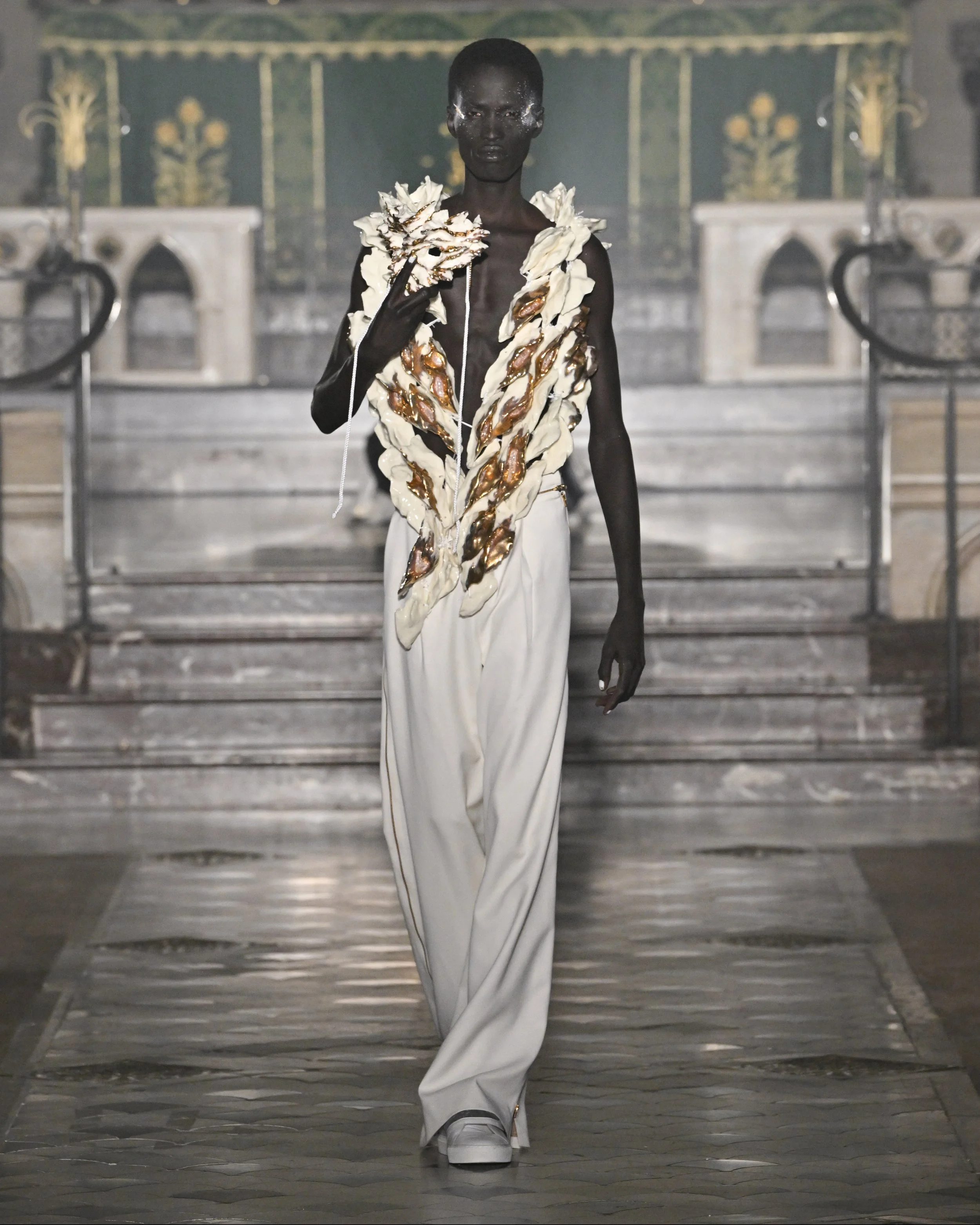
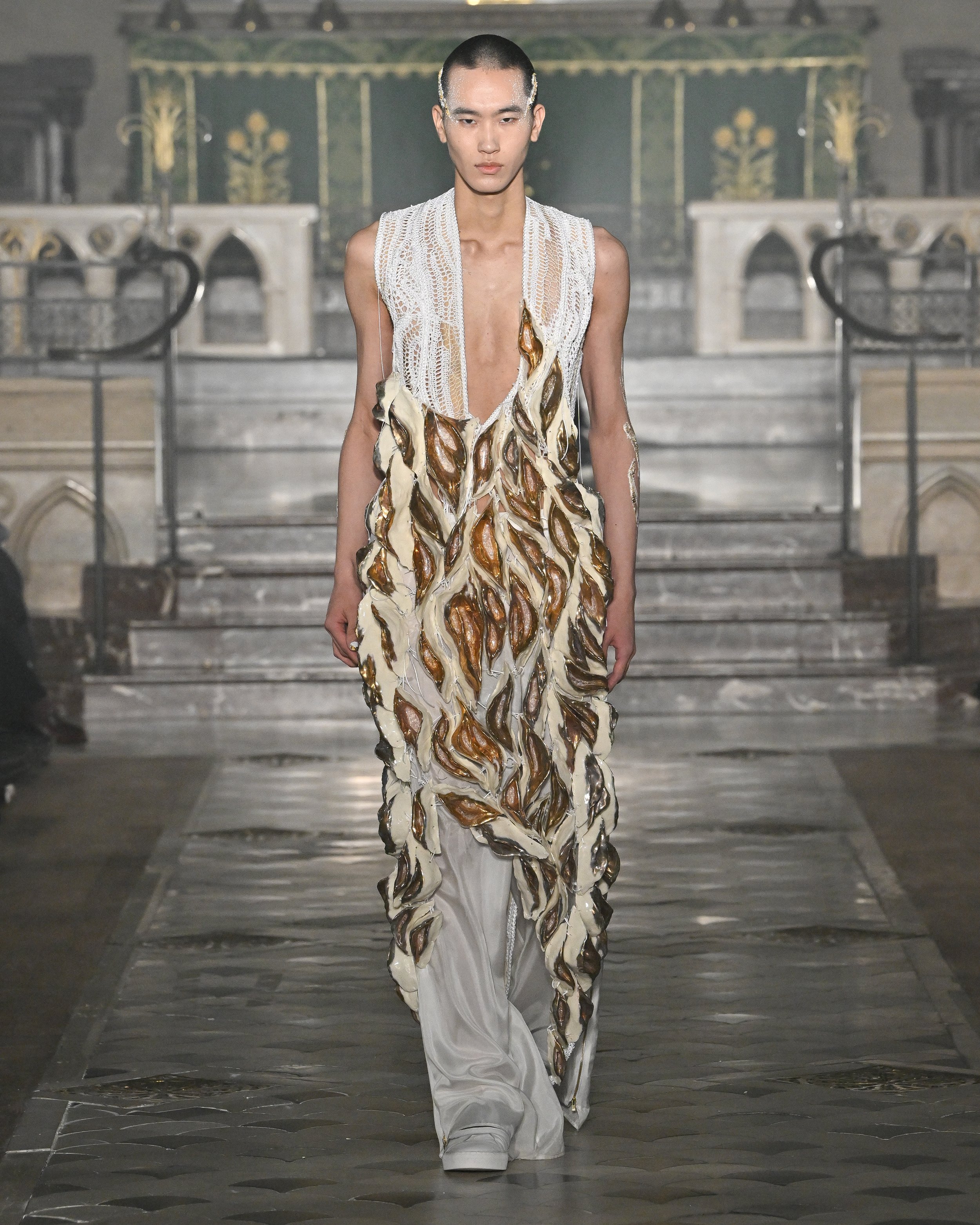
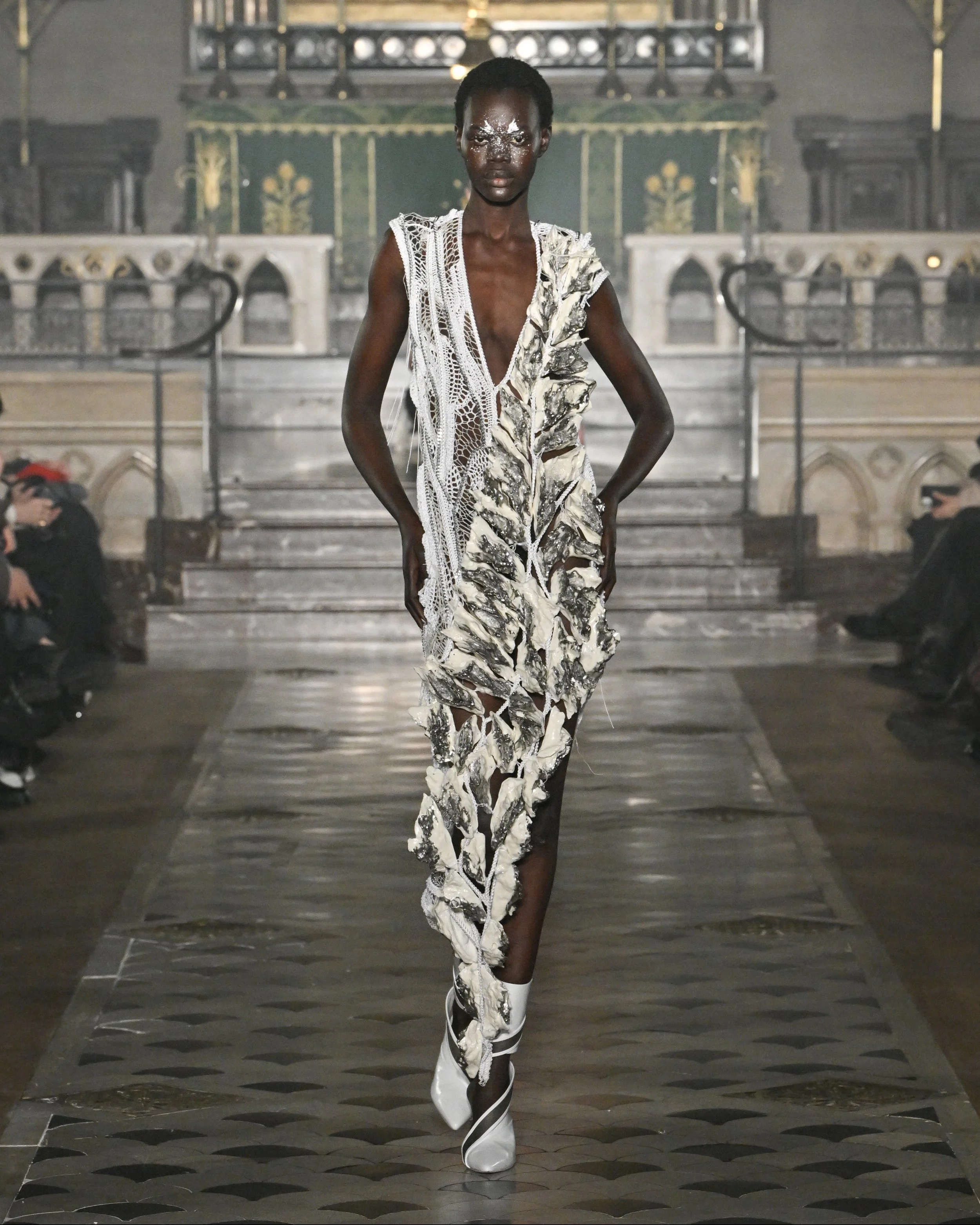
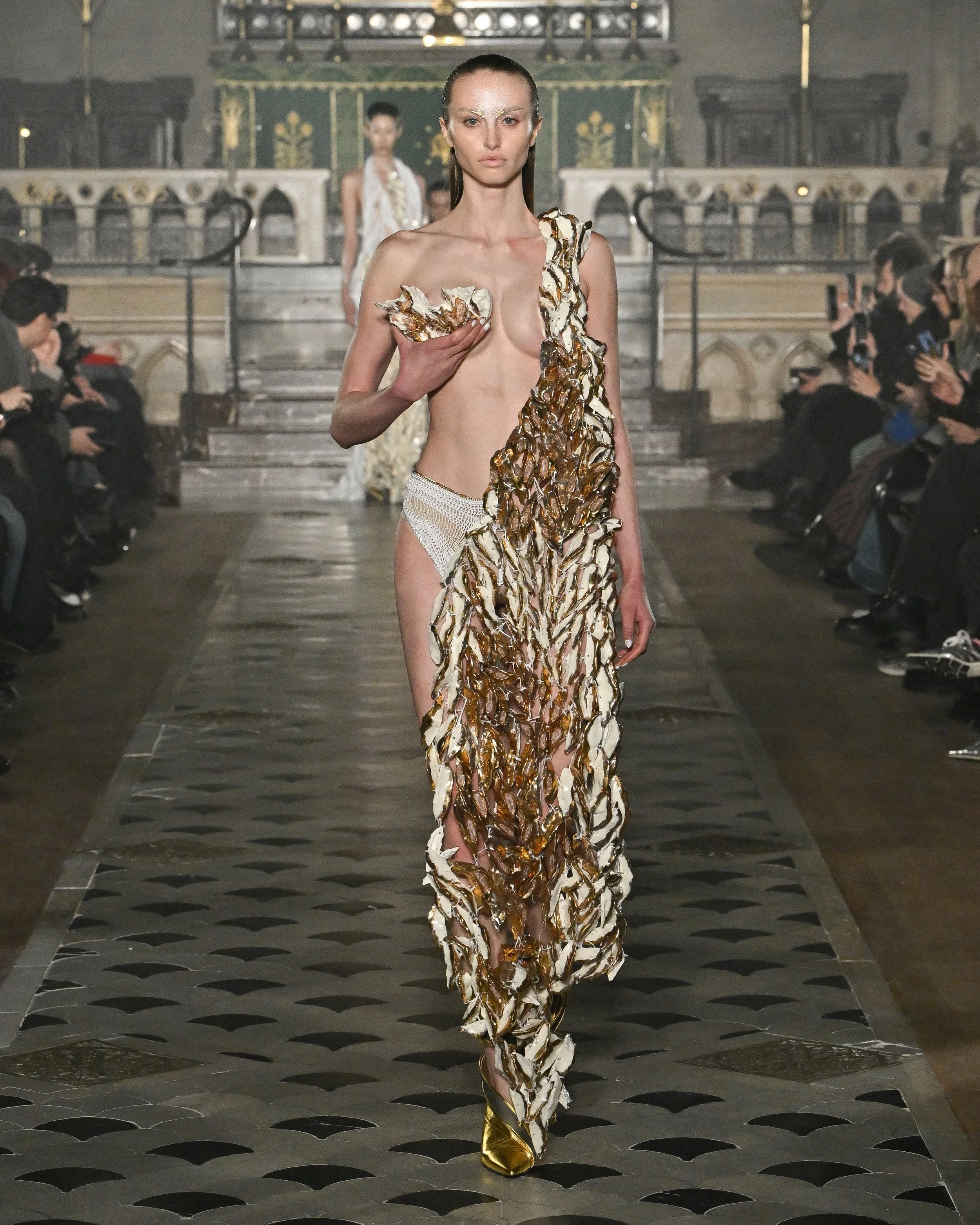
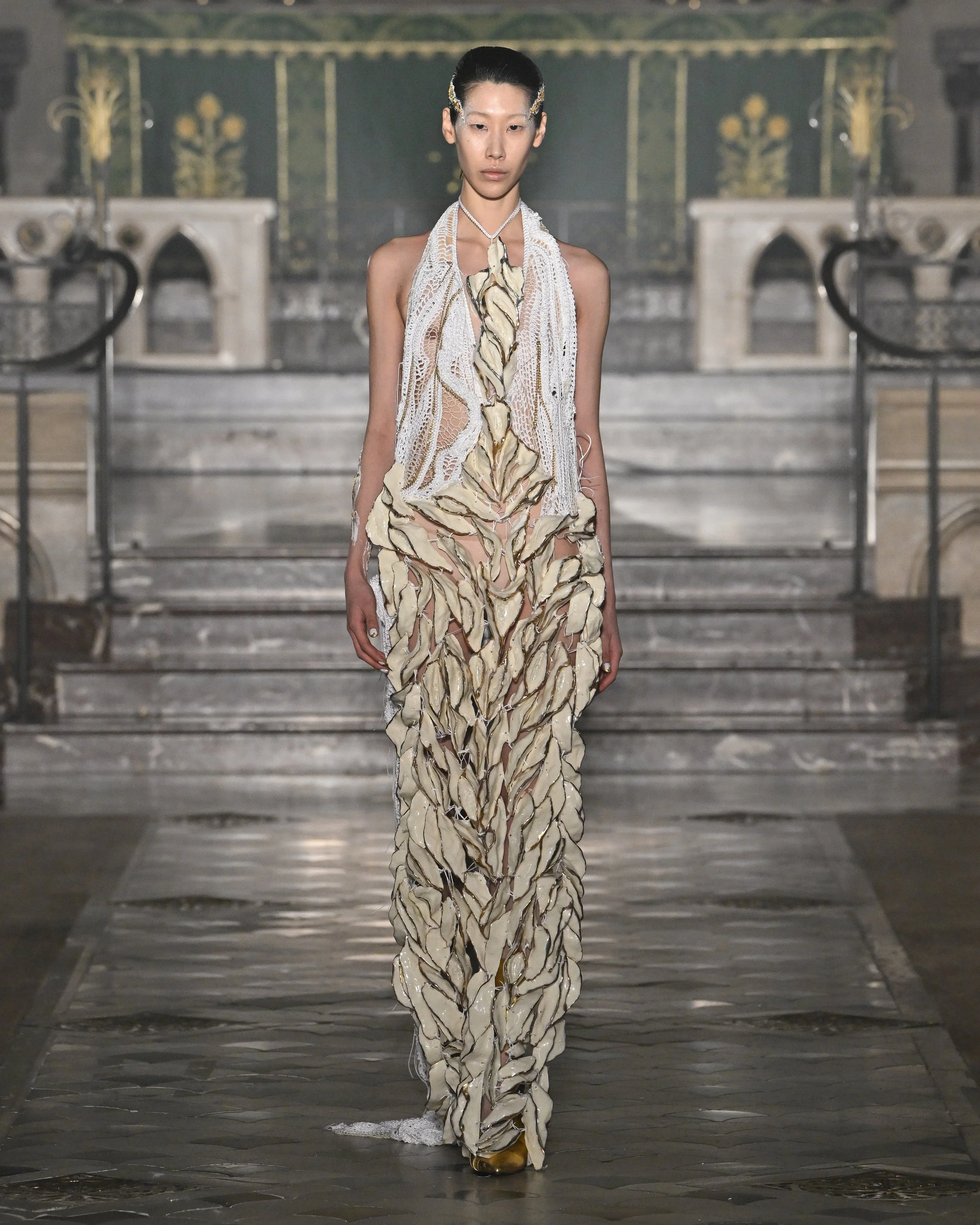
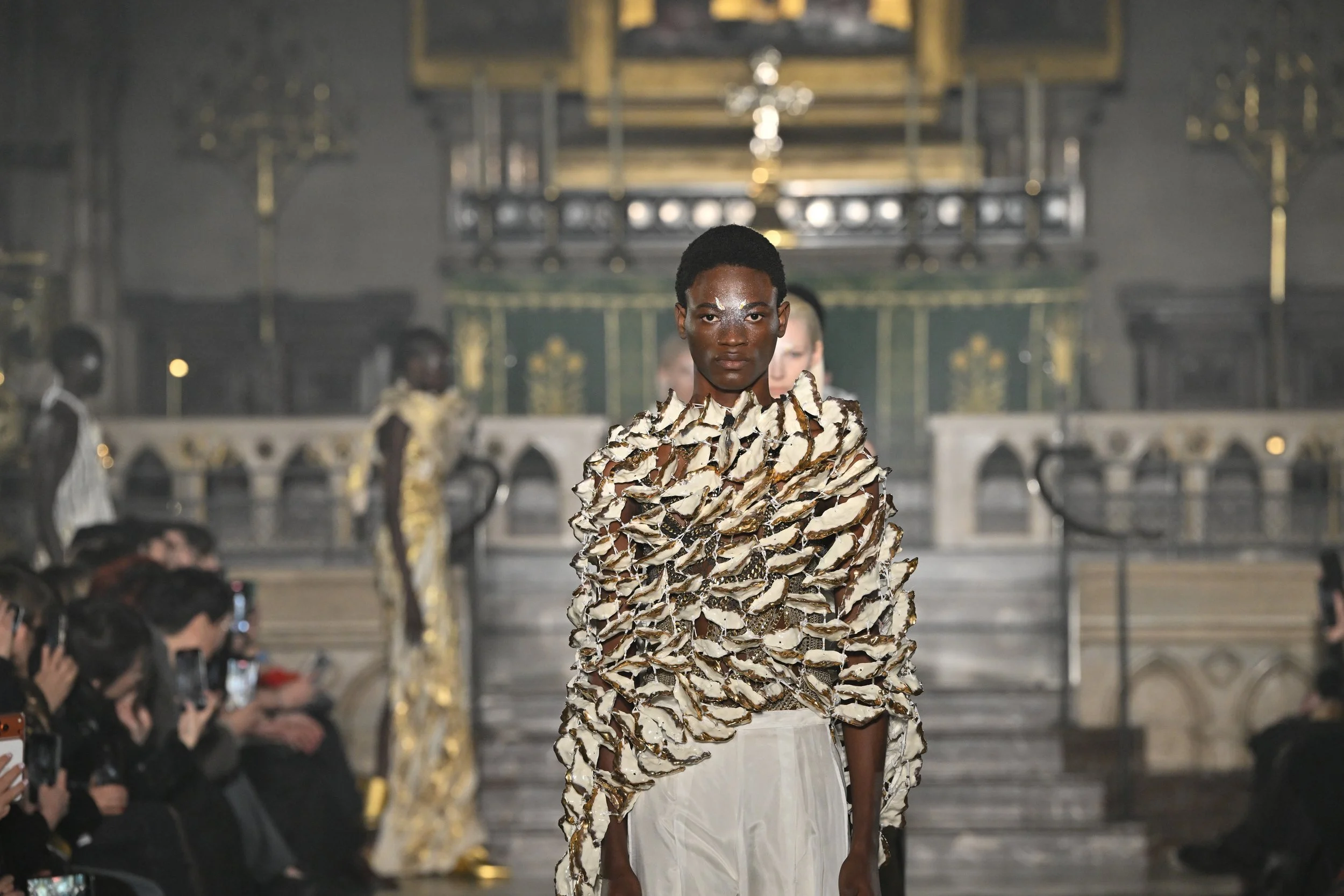
The collection is built on that impulse, translated through a genuine commitment to craft. Over six months, the Japanese designer worked extensively with clay, personally devoting more than 1,500 hours to shaping thousands of ceramic elements. This was not an outsourced gesture, but a physical apprenticeship.
"As I crafted thousands of ceramic pieces, my fingers gradually learned the movement of the earth," he says, "and streamlined shapes began to emerge naturally from my hands." What emerged were ceramic forms that feel neither ornamental nor illustrative, but geological — worn, rounded, and subtly irregular, as if shaped by forces rather than design.
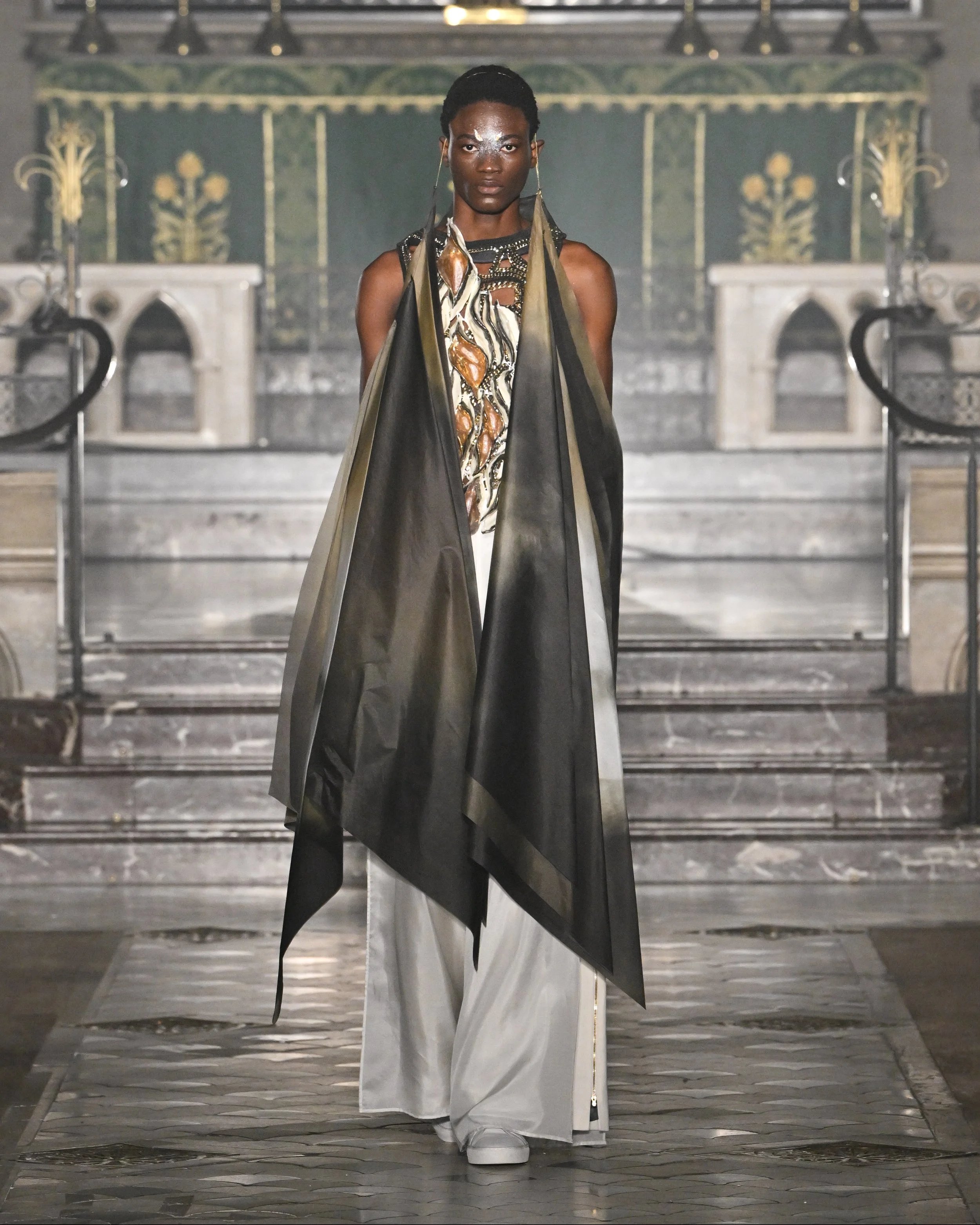
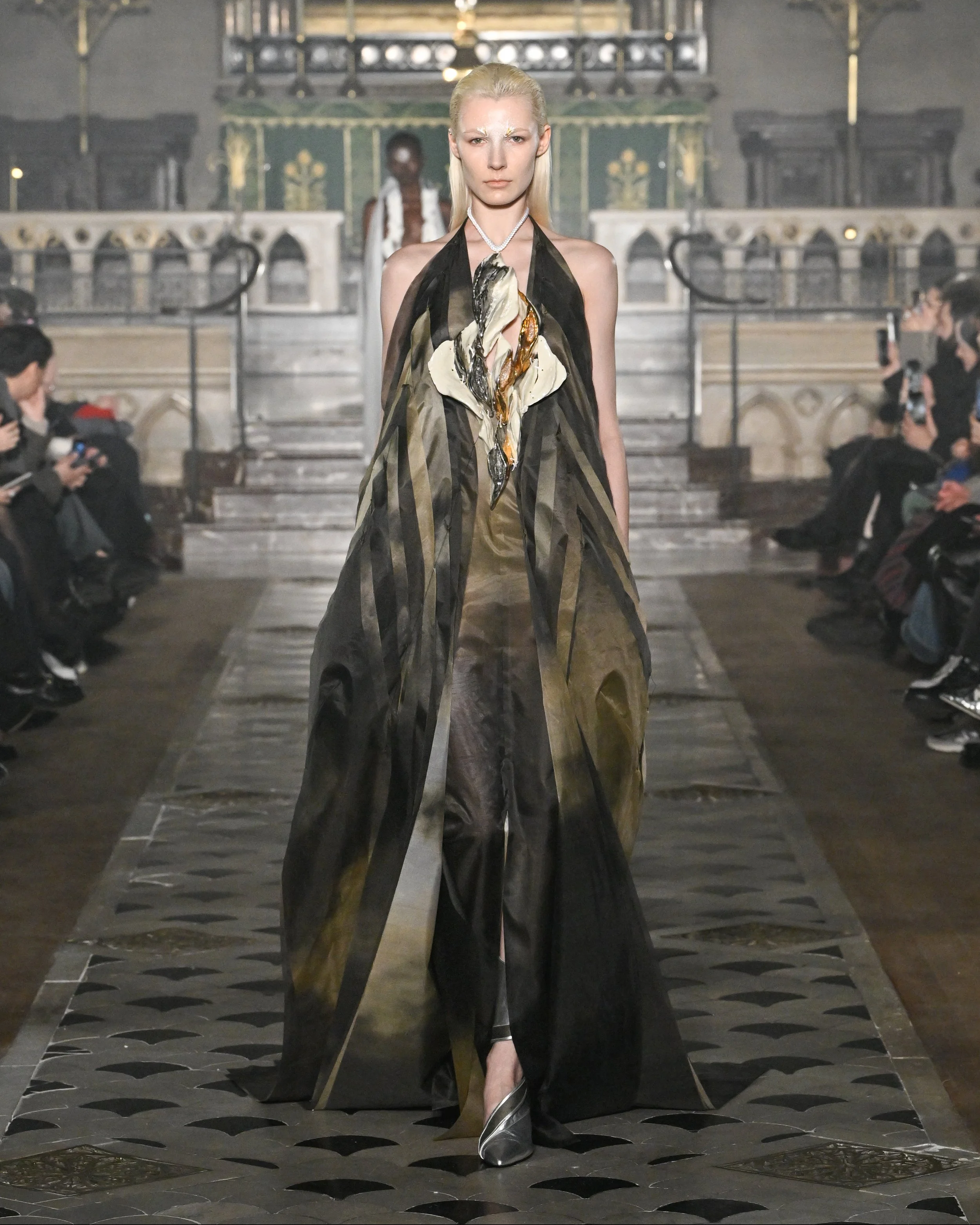
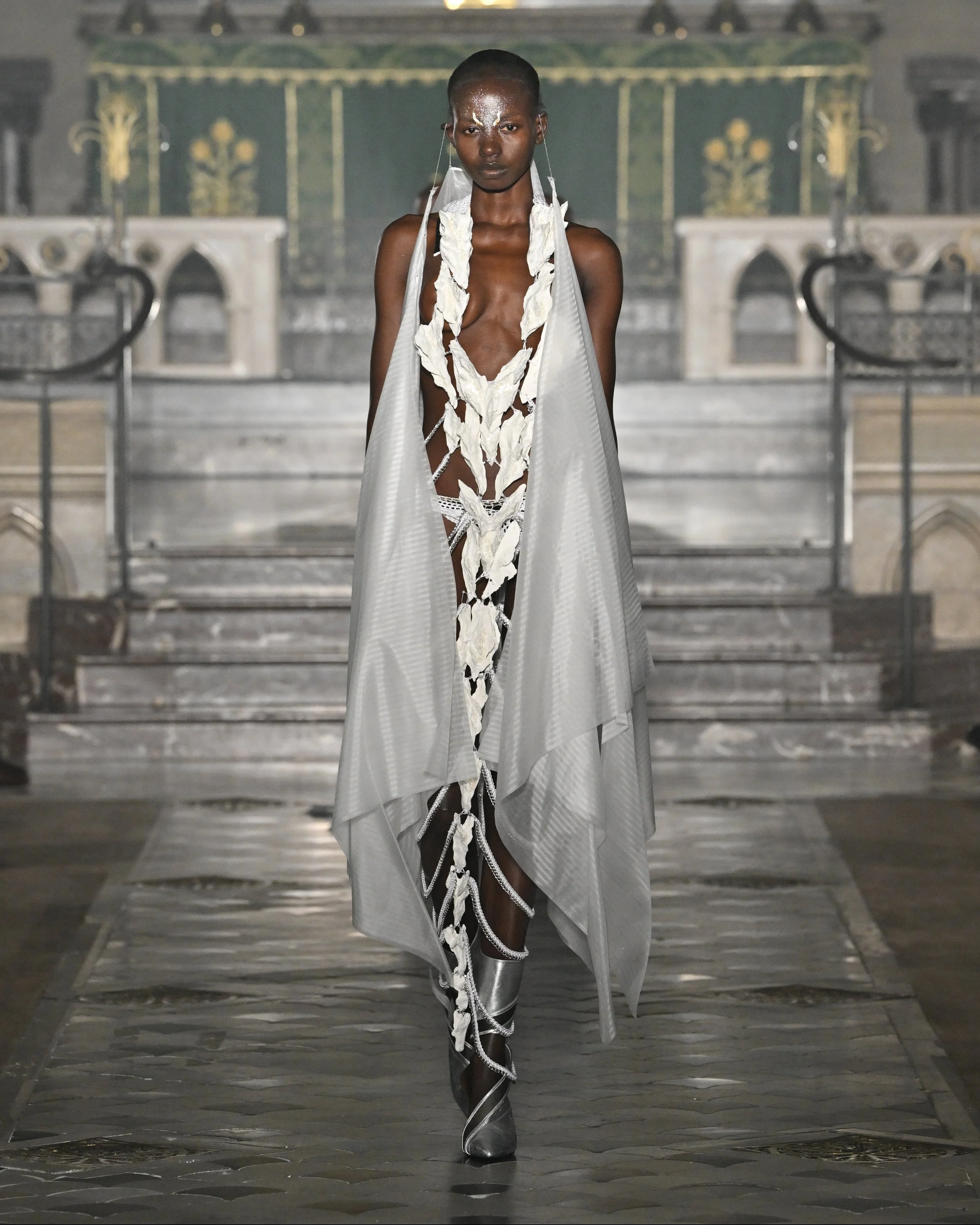
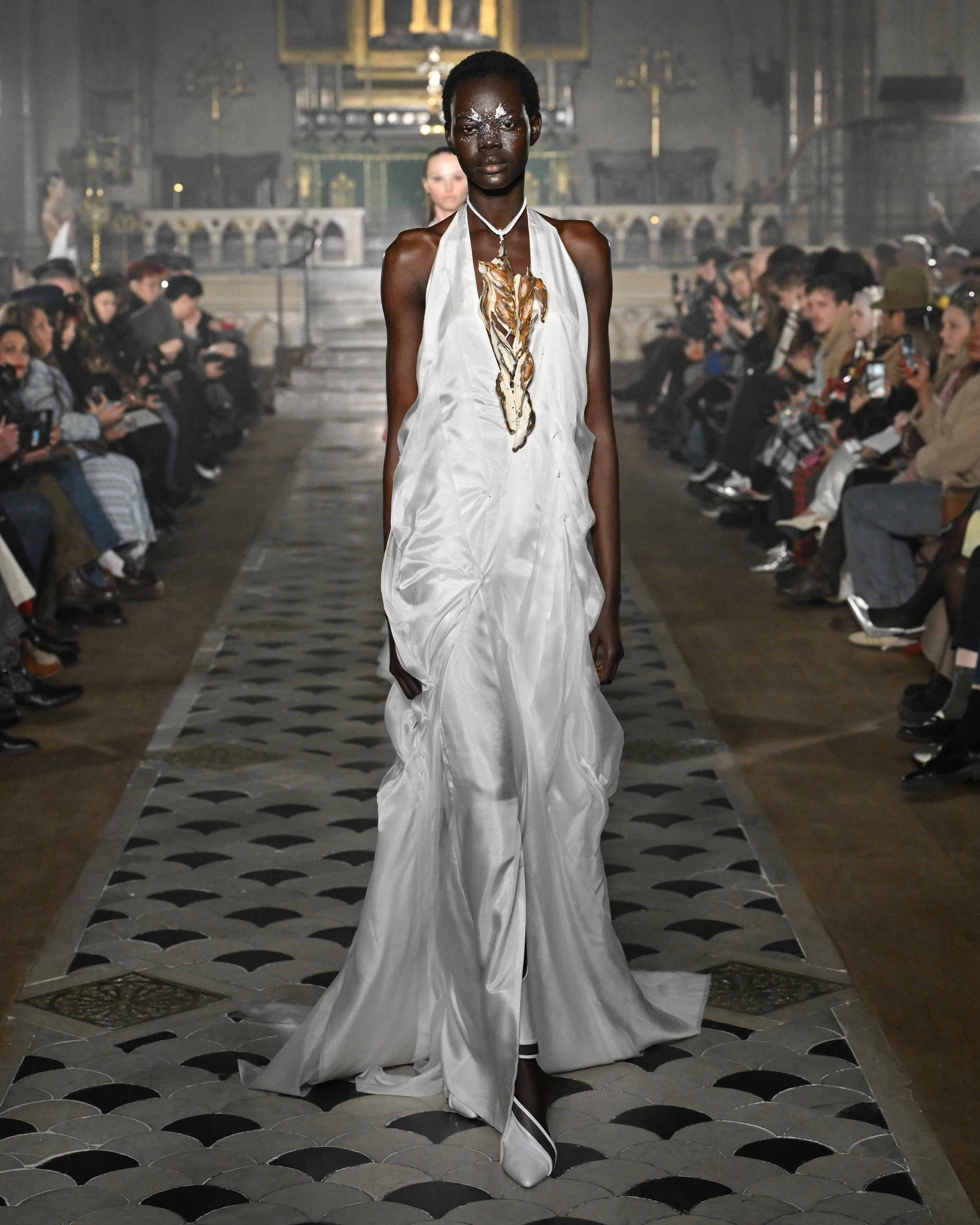
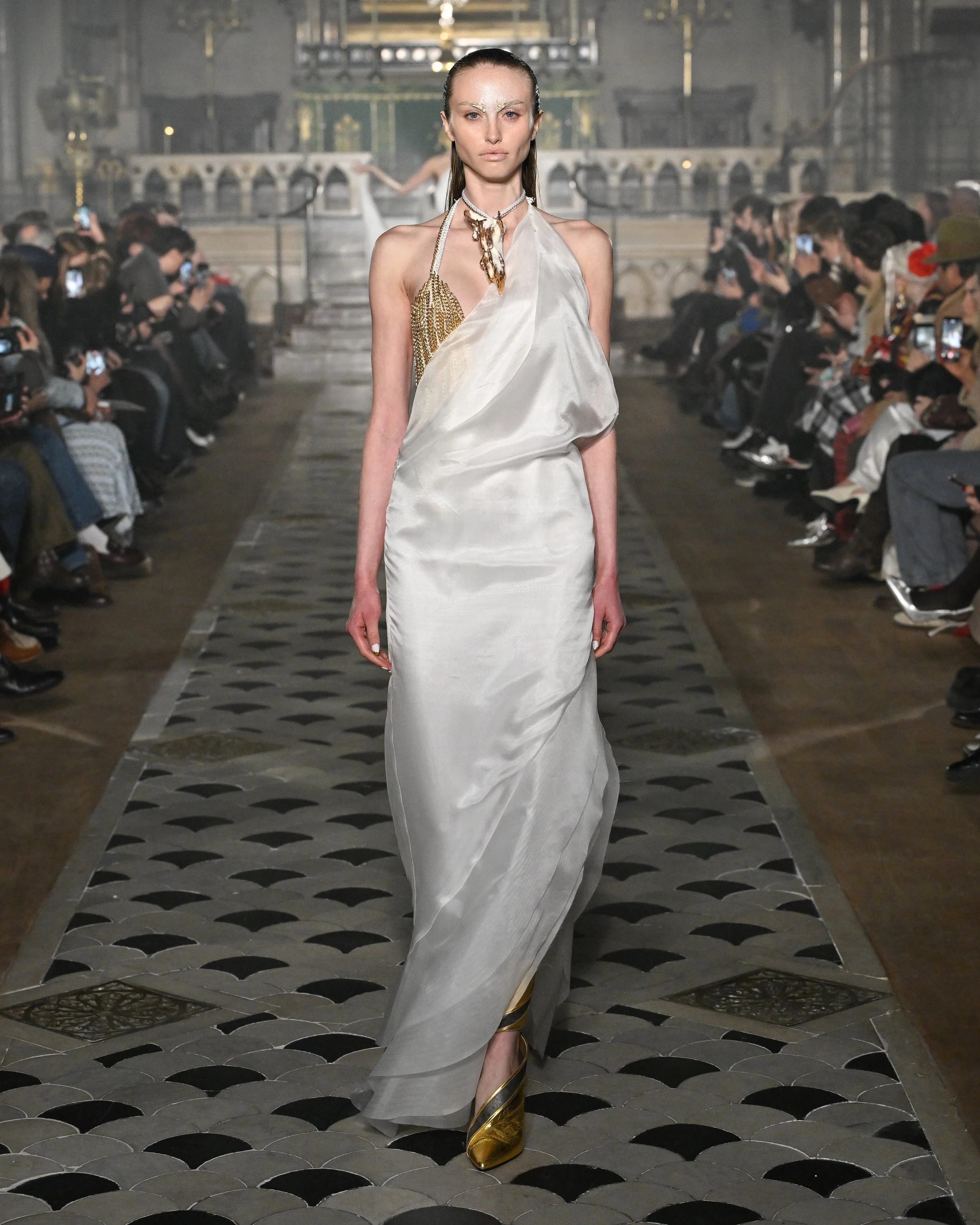
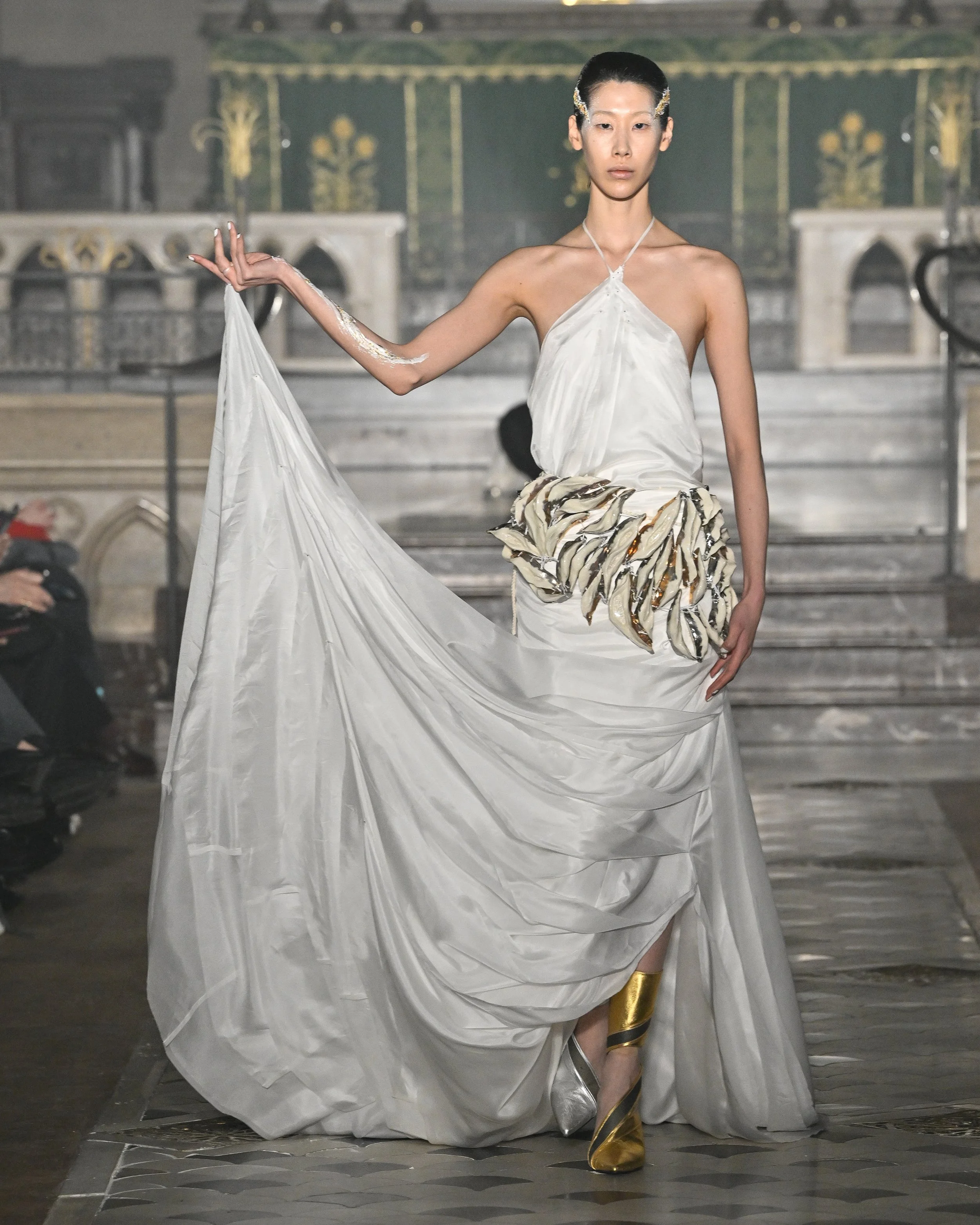
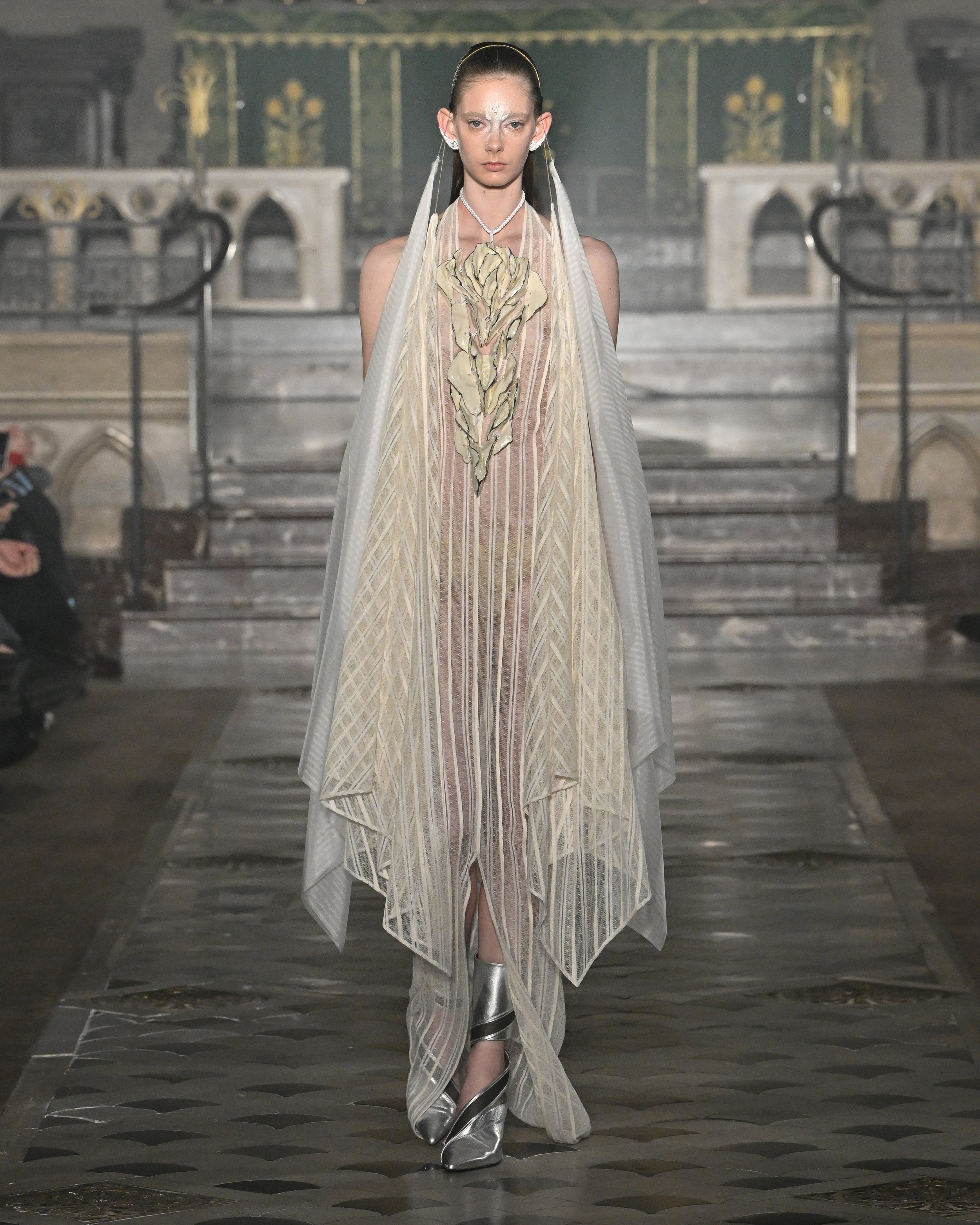
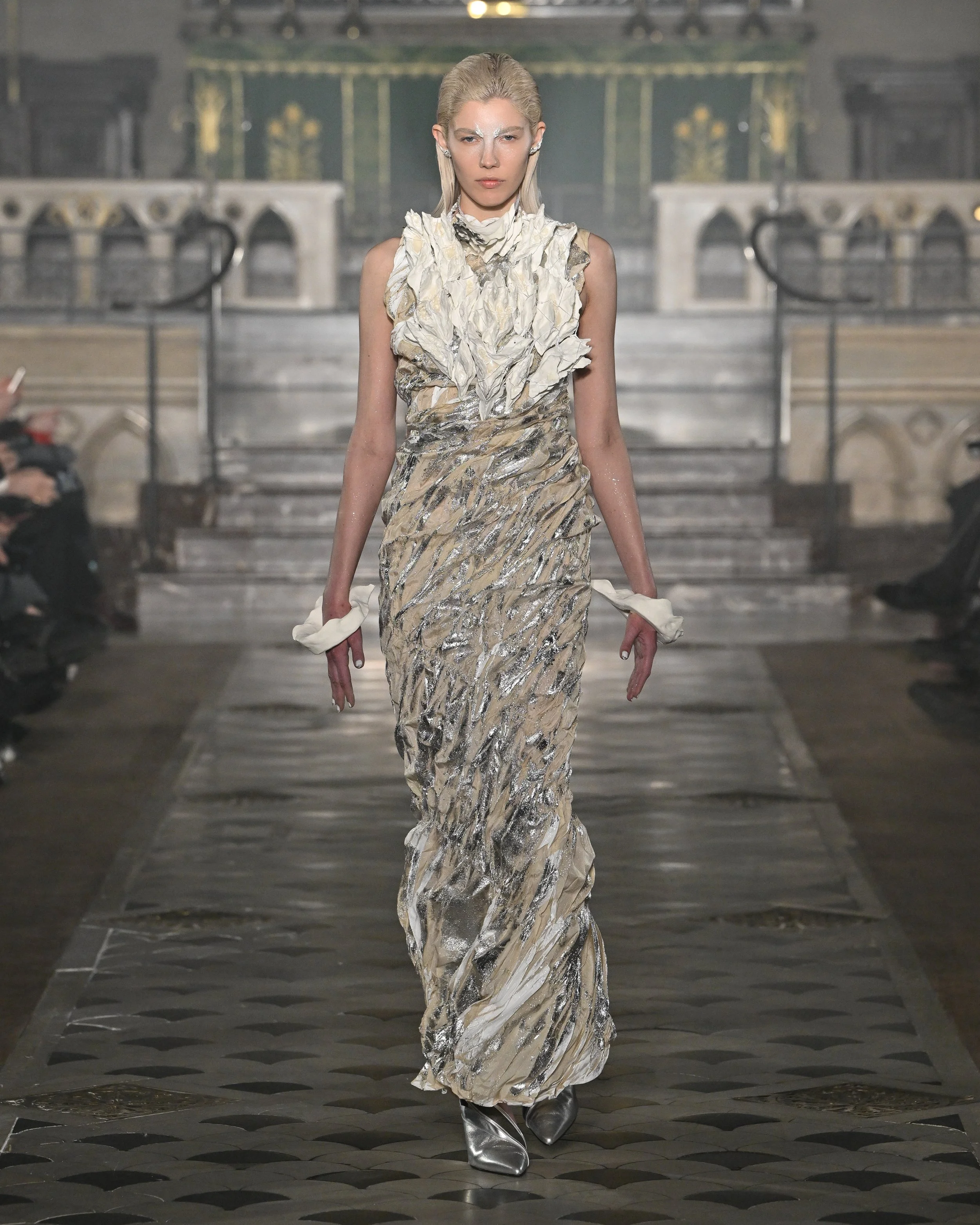
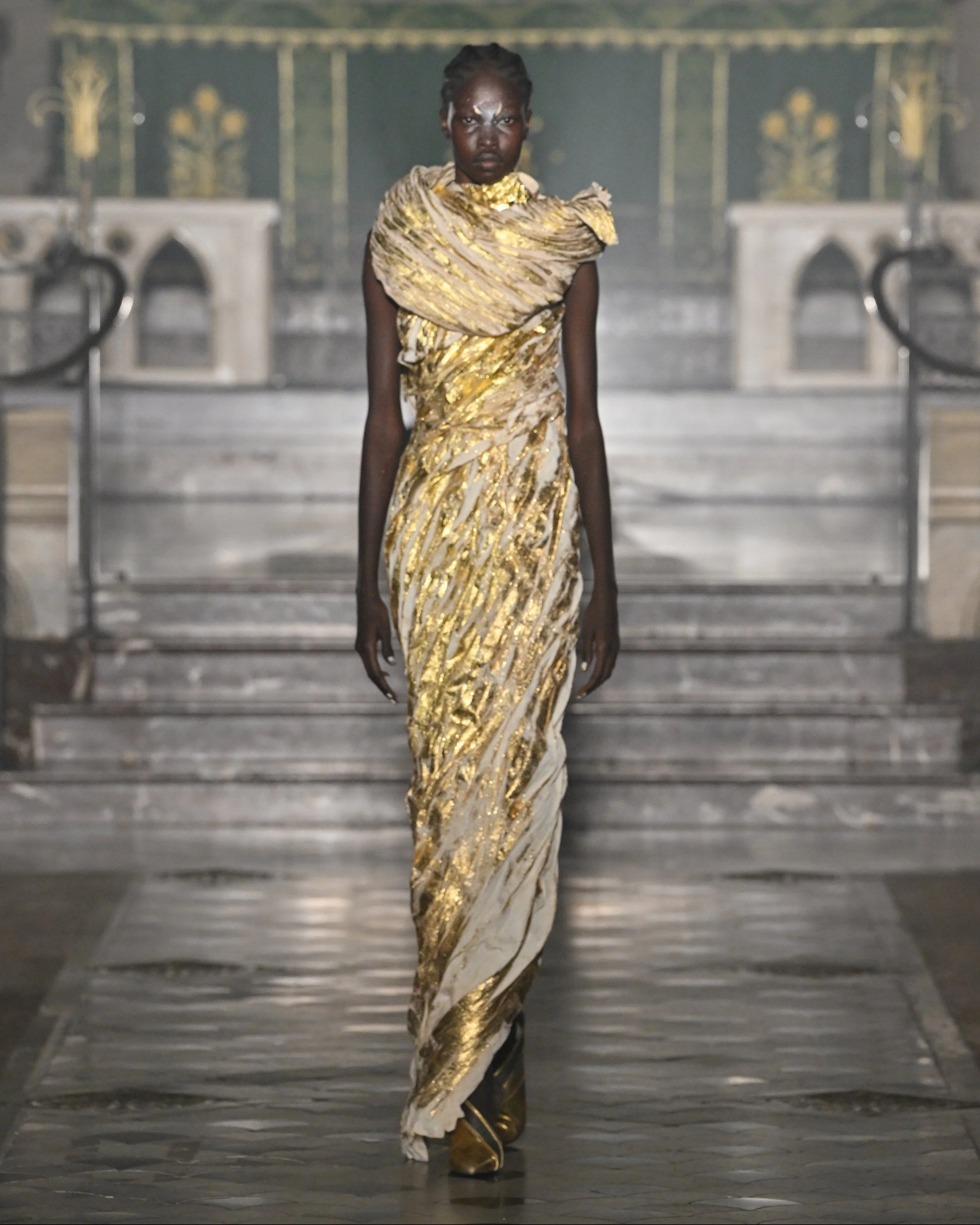
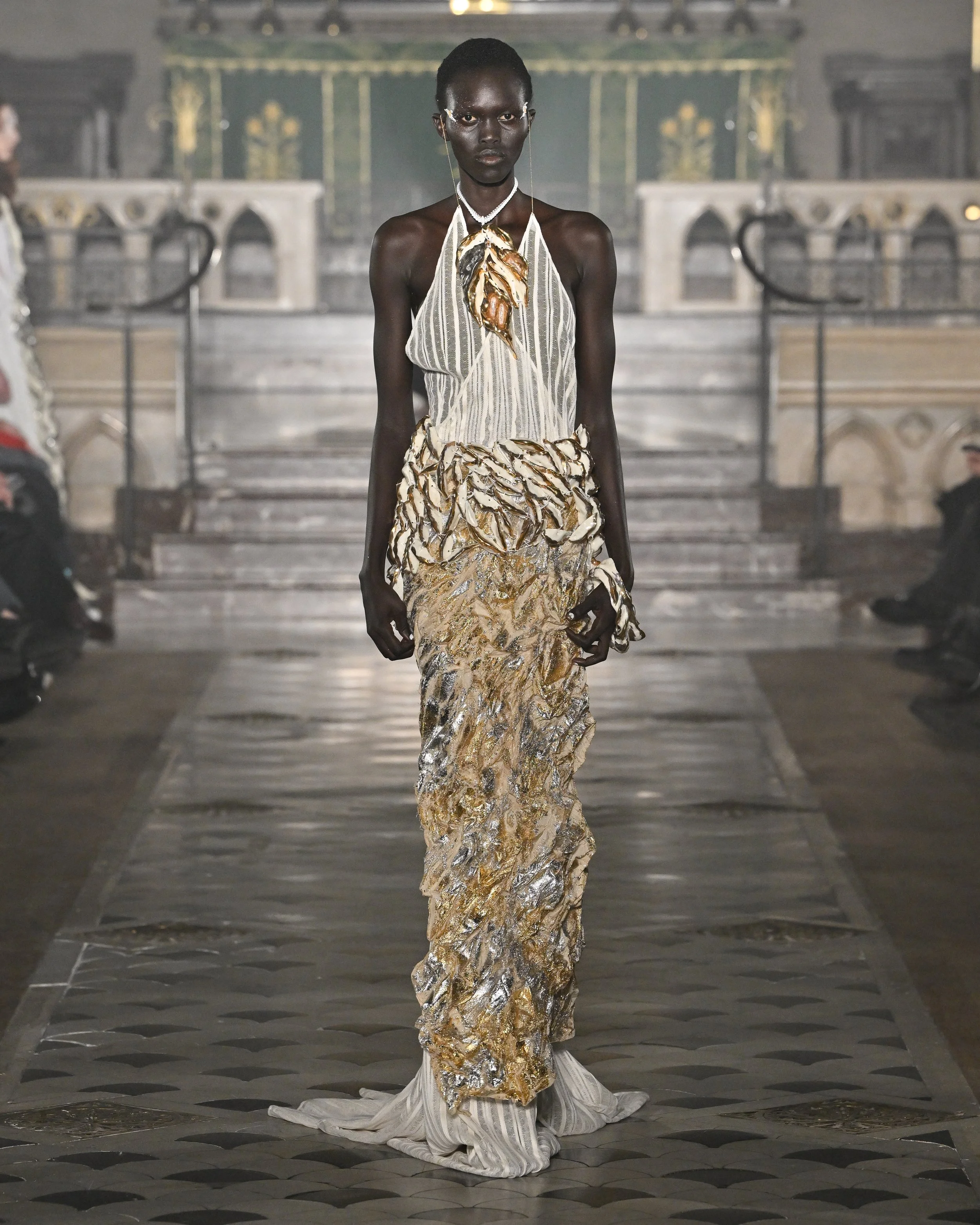
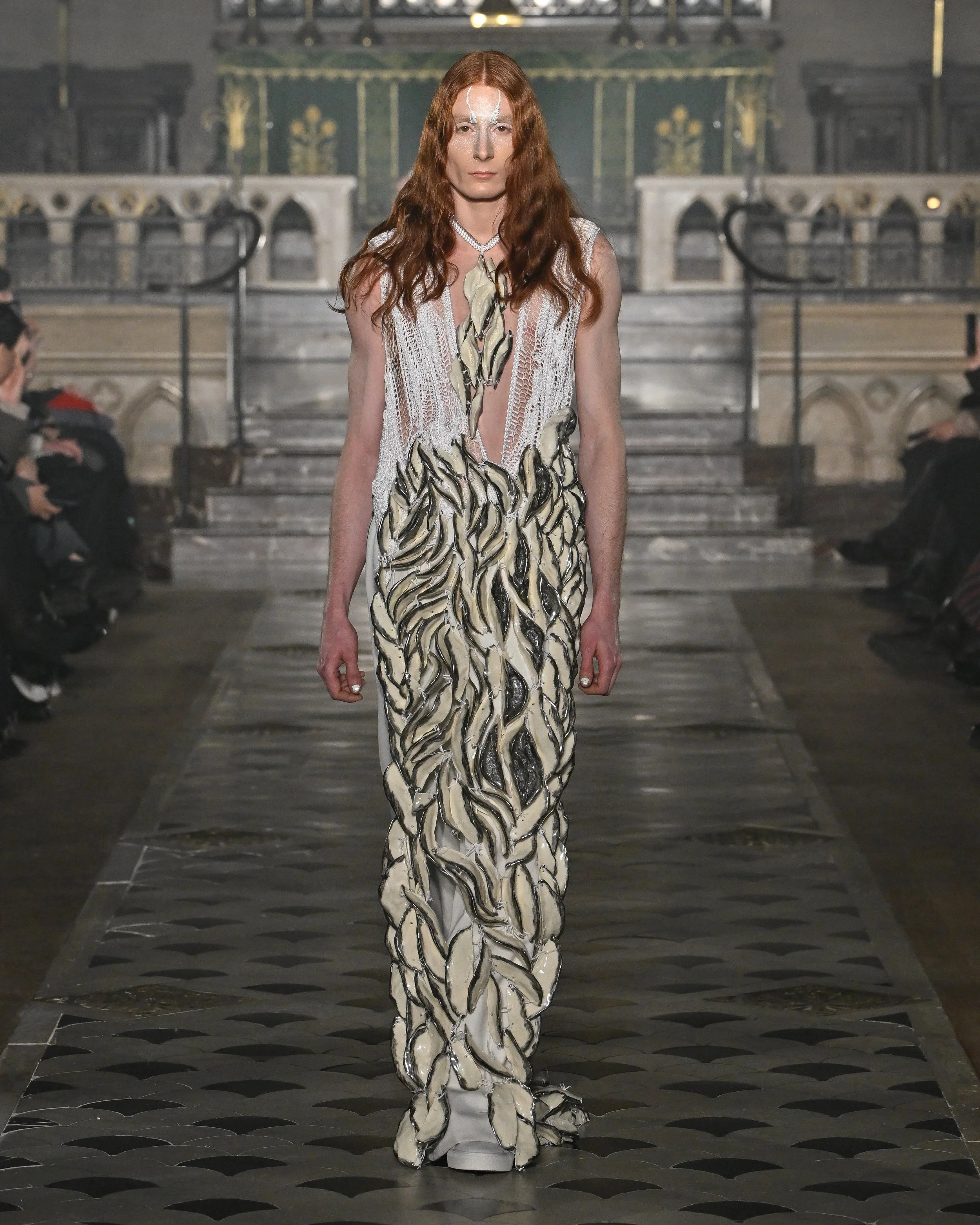
These ceramic components are integral to the collection's garments. They articulate the surface of dresses and coats like sedimentary layers, sometimes dense, sometimes sparse, always responsive to movement. Sheer textiles are used to counterbalance the solidity of the clay, allowing the body to remain present beneath the construction. The designer chose to forego music during his presentation, letting the audience focus on the sound made by his garments as the models walked — the sound of swaying ceramics. The ceramics gently collided, producing a soft clinking, which Nakazato poetically describes as "the sound of the earth itself, as if awakening memories from the time when soil first came into being on this planet."
Nakazato's Spring 2026 functioned less as a narrative collection than as a study in process and perception. Through an emphasis on handwork, material discipline and controlled presentation, the designer framed couture as a means of engaging with time and making — not as abstraction, but as a tangible, physical reality shaped by sustained attention.