The Biba Story in Scotland: Glamour, Colour and the Legacy of Barbara Hulanicki
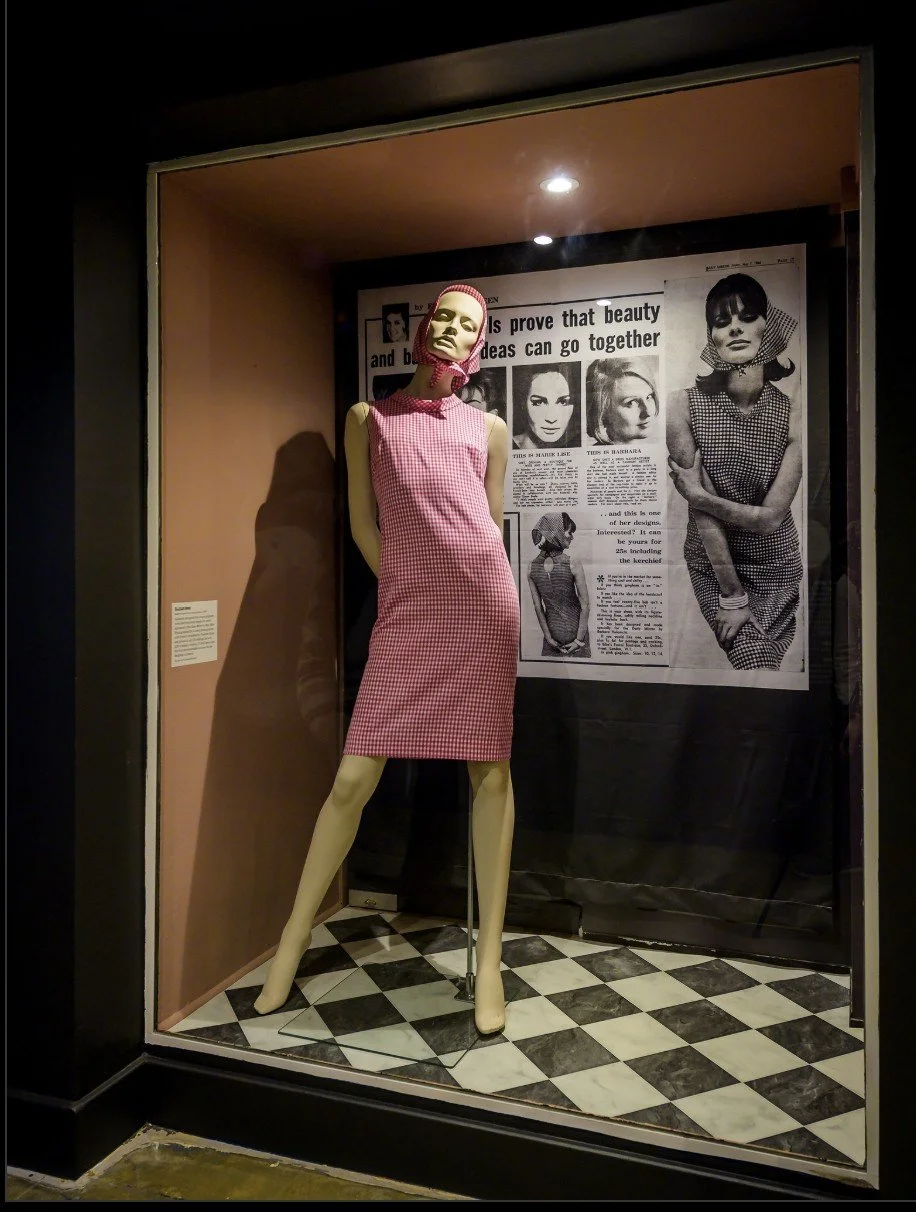
Biba changed how Britain dressed — and how it shopped. Between 1964 and 1975, Barbara Hulanicki transformed a modest mail-order business into an immersive retail experience whose influence outlasted its financial success. The label’s catalogue covers, cosmetics counters and seven-storey Big Biba on Kensington High Street weren’t window-dressing: they were a proposition about how a city might look, feel and move.
The wardrobe made that proposition persuasive. Think of the early 1964 pink gingham smock — the design that launched the business and sold in astonishing numbers — alongside sequinned evening wraps, leopard coats and streamlined trouser suits. Hulanicki favoured dusky, autumnal hues — olive, rust, that bruised purple people still try to name — and elongated silhouettes that put the leg, not the bust, at the centre of the look. The result was glamorous without being exclusive: clothes that worked for a Saturday night at a club, and for a secretary’s weekday commute.
“It isn’t just selling dresses, it’s a whole way of life,” Hulanicki said in 1970. Big Biba stocked cosmetics and canned soups, furniture and catalogue-led fantasies; it had a restaurant, rooftop gardens and, famously, flamingos. Retail was theatre, and everyone bought a ticket.
The exhibition now arriving at Dovecot Studios follows its debut in London at the Fashion & Textile Museum in 2024. It collects that theatre into a form the room can hold: more than a hundred pieces from Hulanicki’s archives, rare loans from private collectors, original Biba catalogues and lifestyle objects that show how the brand blurred commerce and culture. Seeing the garments up close is the point: the fabrics, the sequins, the way a sleeve is cut tell the story better than any label copy.
For anyone interested in how clothes made social worlds between 1964 and 1975 — and how a short, intense run of invention can influence decades after the shop shutters — this is essential viewing.
The Biba Story: 1964-1975 will run at Dovecot Studios, 6 February – 27 June 2026.