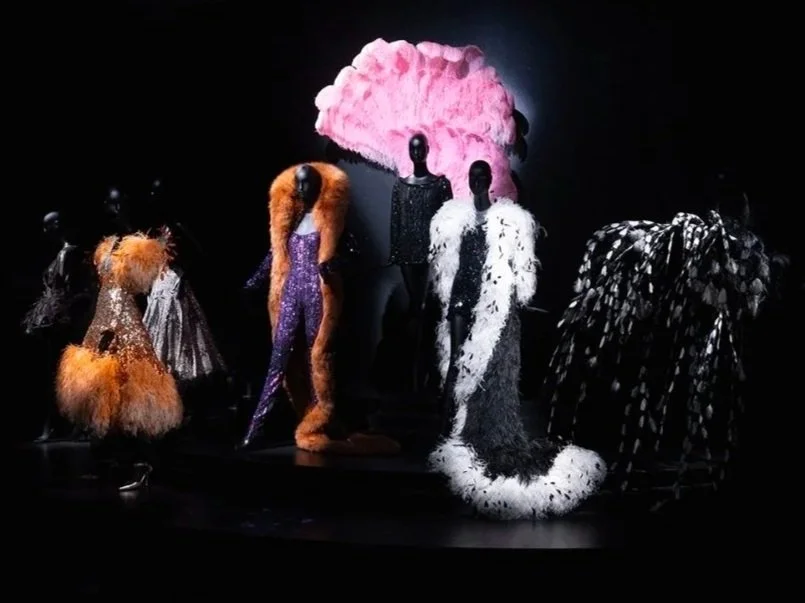
Dressing the Body in Motion: Yves Saint Laurent and the Stage
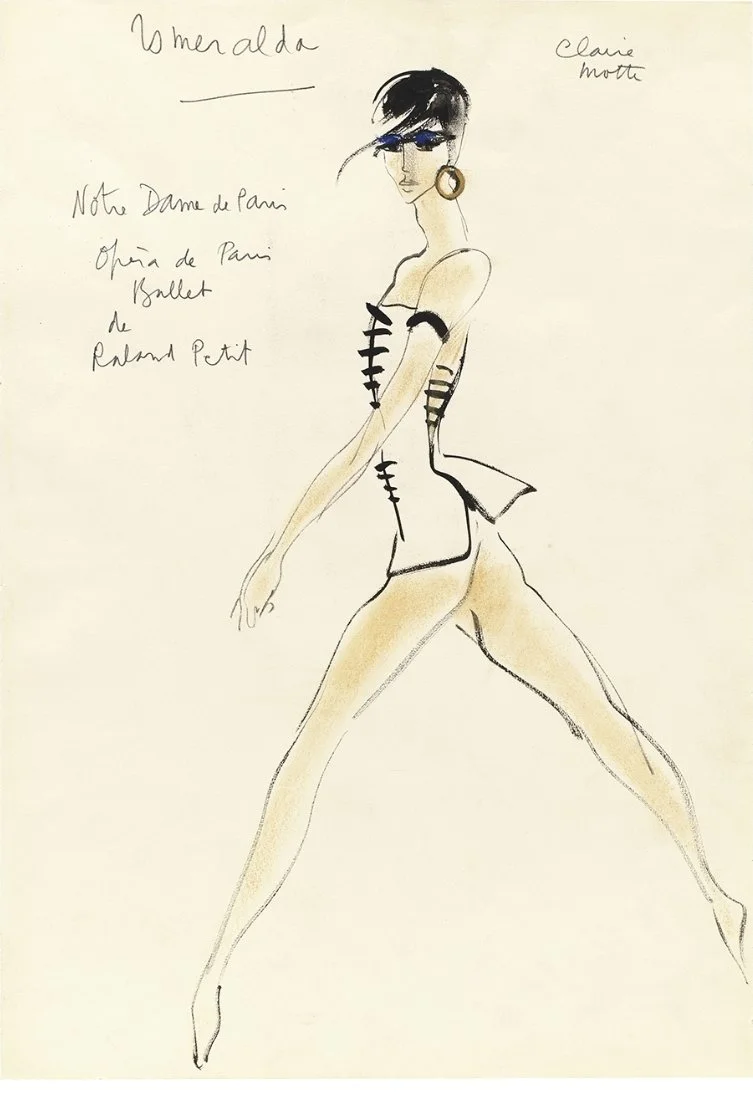
Costume for Notre-Dame de Paris, ballet choreographed by Roland Petit
Before Yves Saint Laurent ever revolutionised the modern wardrobe, he was already looking beyond fashion’s closed circuit. From his teenage years in Oran, he absorbed art, literature and theatre with the same intensity he later brought to cut and line.
The stage offered him something couture alone could not: movement, drama, and the transformation of clothes into living presences. Throughout his life, Saint Laurent supported artists not as a patron at a distance, but as an active collaborator, designing for theatre, ballet and music hall with the seriousness and respect usually reserved for haute couture clients.
It is this long, deeply rooted relationship with performance that forms the backbone of Yves Saint Laurent Onstage at the Musée Yves Saint Laurent Marrakech. Running until January 5, 2027, the exhibition brings into focus a body of work that is often overshadowed by the couturier’s fashion legacy, yet is central to understanding his creative language. Co-curated by couturier Stephan Janson and Domitille Éblé, Head of Collections at the Musée Yves Saint Laurent Paris, the exhibition traces how the stage became one of Saint Laurent’s most fertile laboratories.
The Marrakech presentation is conceived as a second act. First shown in Rome in 2024 at the Nicola Del Roscio Foundation, Yves Saint Laurent Onstage now expands significantly, both in scale and ambition. Drawing extensively from the archives of the Pierre Bergé–Yves Saint Laurent Foundation, and enriched by major international loans, this new iteration introduces works never before seen by the public. Rather than a reprise, it is an evolution—broader and closely attuned to the museum’s Moroccan setting, a place that itself played a formative role in Saint Laurent’s imagination.
The exhibition opens with the origins of a vocation. As a child, Saint Laurent constructed an “Illustrious Theatre” from cardboard at his family home, designing miniature sets and costumes long before he entered any fashion house. Those early gestures are not treated here as charming anecdotes, but as the foundation of a lifelong dialogue with performance.
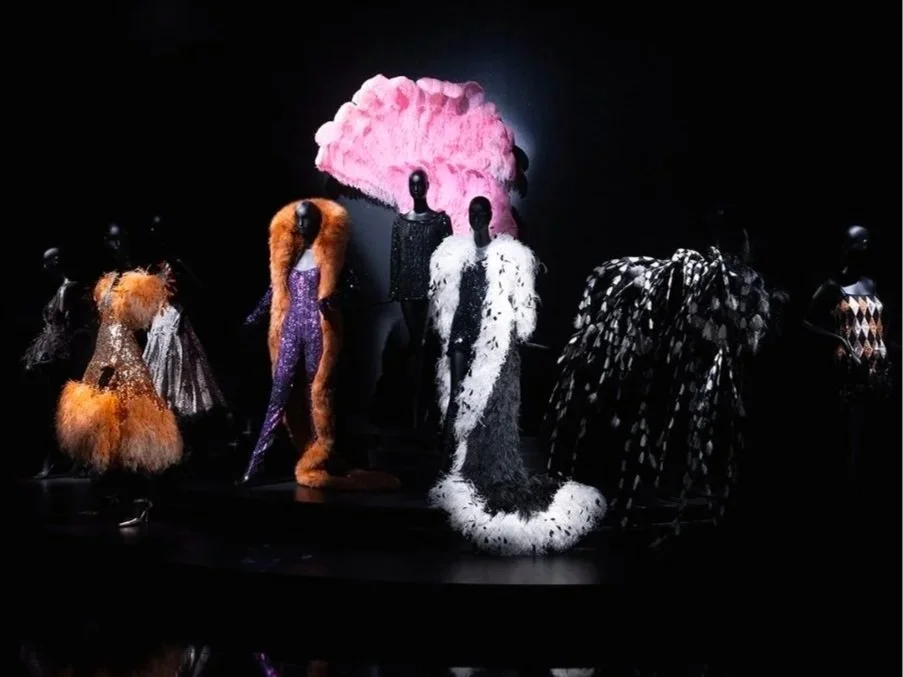
From his first professional commissions in the 1950s to his mature collaborations decades later, the exhibition shows a designer who never regarded stage costume as secondary work.
Moving through theatre, ballet and music hall, Onstage reveals how Saint Laurent approached costume as a second skin. Whether for Jean Cocteau’s Les Monstres sacrés, Roland Petit’s ballets, or the productions staged by Jean-Louis Barrault, his designs were conceived in direct response to a body in motion. Collaborations with Irène Karinska’s legendary workshops ensured that technical demands—weight, flexibility, durability—were resolved with finesse. The result was clothing that did not simply dress a performer, but amplified gesture, rhythm and presence.
The exhibition gives particular prominence to Saint Laurent’s work with Roland Petit, one of the most enduring and influential creative partnerships of his career. From Cyrano de Bergerac to Notre-Dame de Paris and La Rose malade, the costumes chart a constant exchange between couture and choreography. Colour studies, fabric samples and preparatory sketches reveal how references to painting—Mondrian, Bakst, Picasso—were translated into garments that could withstand the physical demands of dance without losing their visual power.
Music hall occupies another key chapter. Saint Laurent’s designs for Zizi Jeanmaire are among the most exuberant works on display, from feathered panaches to sharply cut tuxedo silhouettes and playful eroticism. These costumes, created for revues staged at the Casino de Paris and the Olympia, demonstrate his ability to move effortlessly between fantasy and precision. Here, glamour is never gratuitous; it is calibrated to character, timing and audience impact.
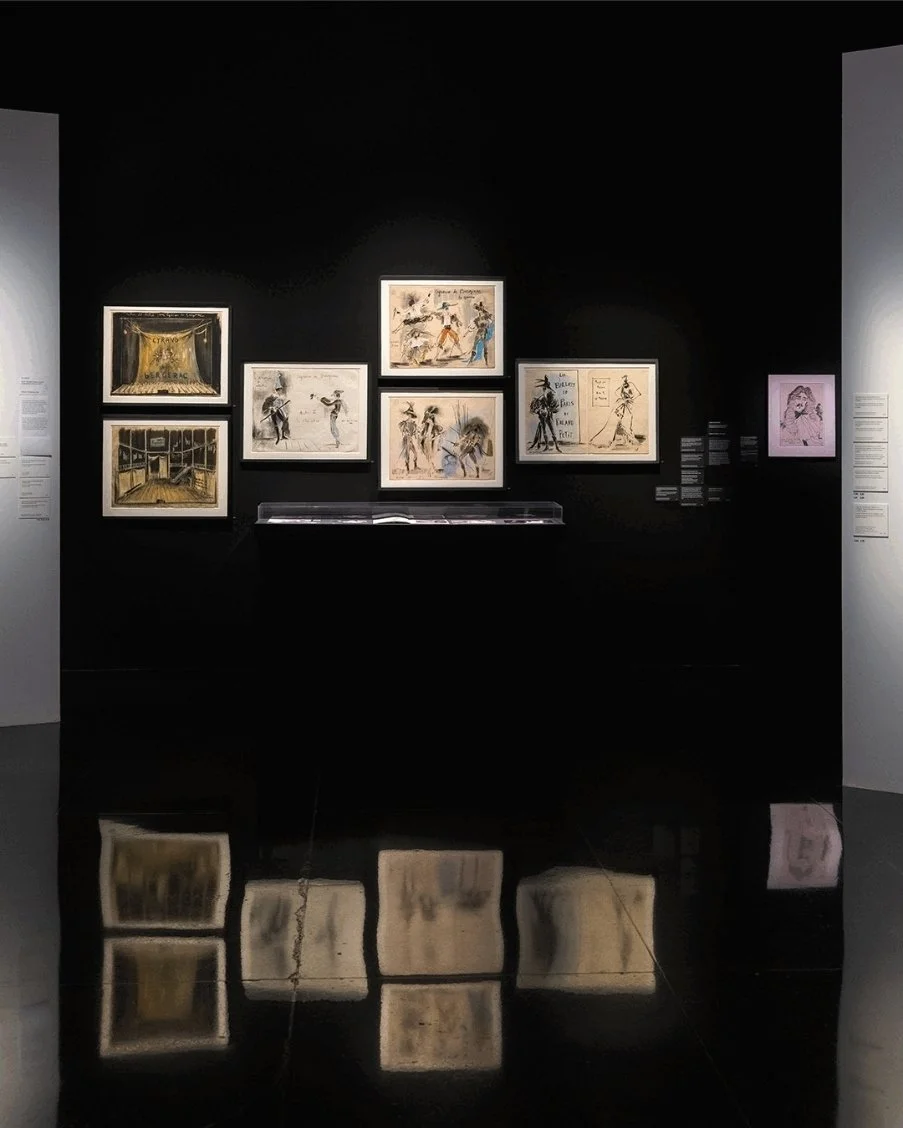
Throughout the exhibition, the scenography avoids the static museum display. Sketches are shown alongside finished costumes, archival photographs and filmed excerpts, creating a sense of backstage intimacy. Visitors follow the transformation from drawing to fabric, from idea to embodiment. This process-driven approach underscores a central point: for Saint Laurent, costume design was not an offshoot of fashion, but another expression of the same discipline, informed by the same rigor and curiosity.
By situating Yves Saint Laurent Onstage in Marrakech, the museum also subtly reconnects the work to a geography that mattered deeply to the designer. Morocco was not only a place of refuge and inspiration, but a space where color, light and theatricality merged naturally.
More than a survey, Yves Saint Laurent Onstage reframes a familiar figure. It reveals a designer who understood that clothes could tell stories beyond the runway, and who saw the stage as a place where fashion could breathe and move. .