Spring 2026 Haute Couture: Rahul Mishra Translates Elements into Form
Rahul Mishra’s couture conversation has never been about spectacle for its own sake; it has always been a study in how making can embody meaning. Across seasons, the Indian designer’s work has shown a persistent interest in narrative — previously in emotional terrains shaped like love and memory — but always through a lens of technique. Where some designers treat concept and craft as sequential, Mishra’s atelier treats them as simultaneous: idea born in stitch, form emerging from hand. Alchemy, his Spring/Summer 2026 collection, is guided more by the behaviour of natural forces than by overt emotion.
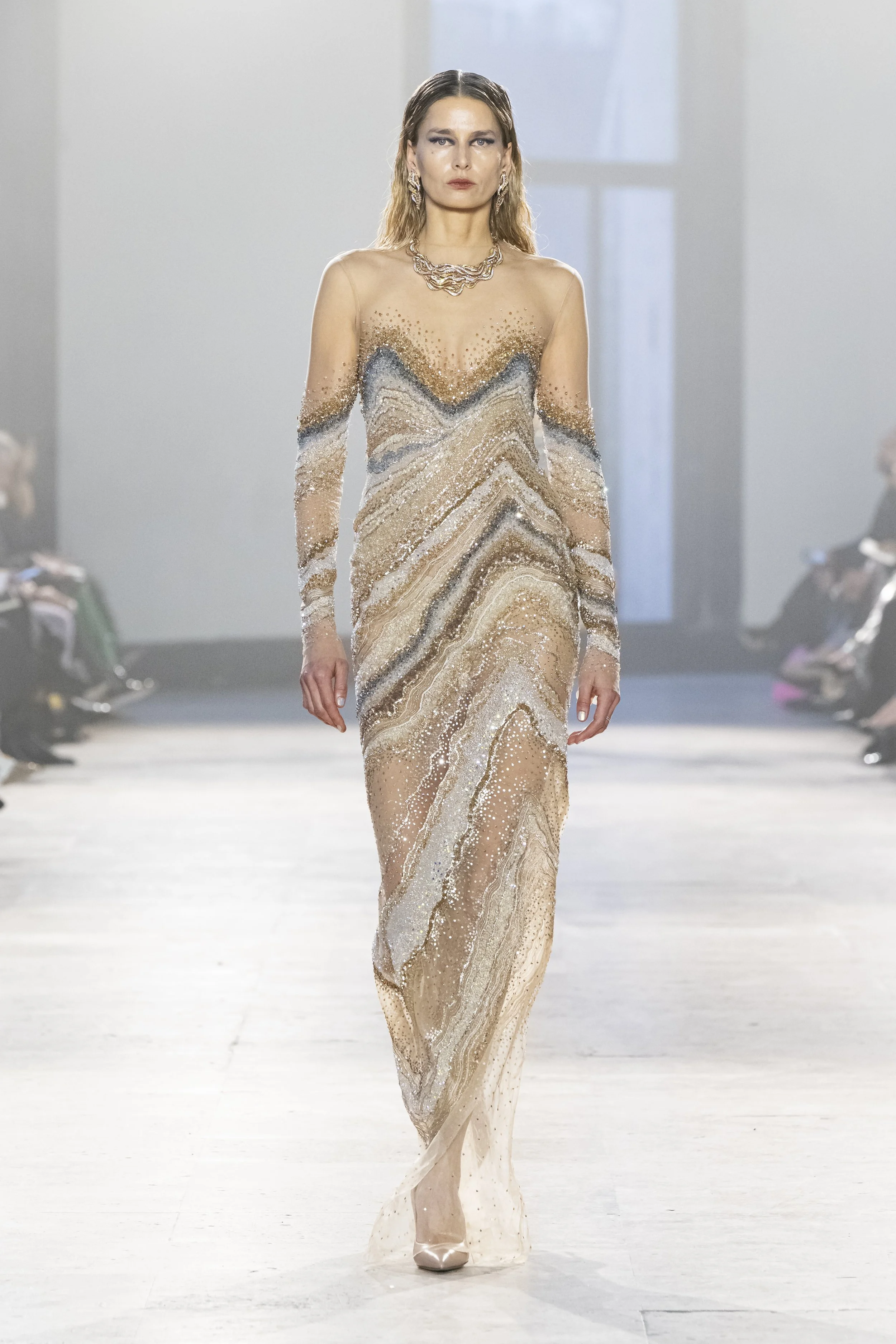
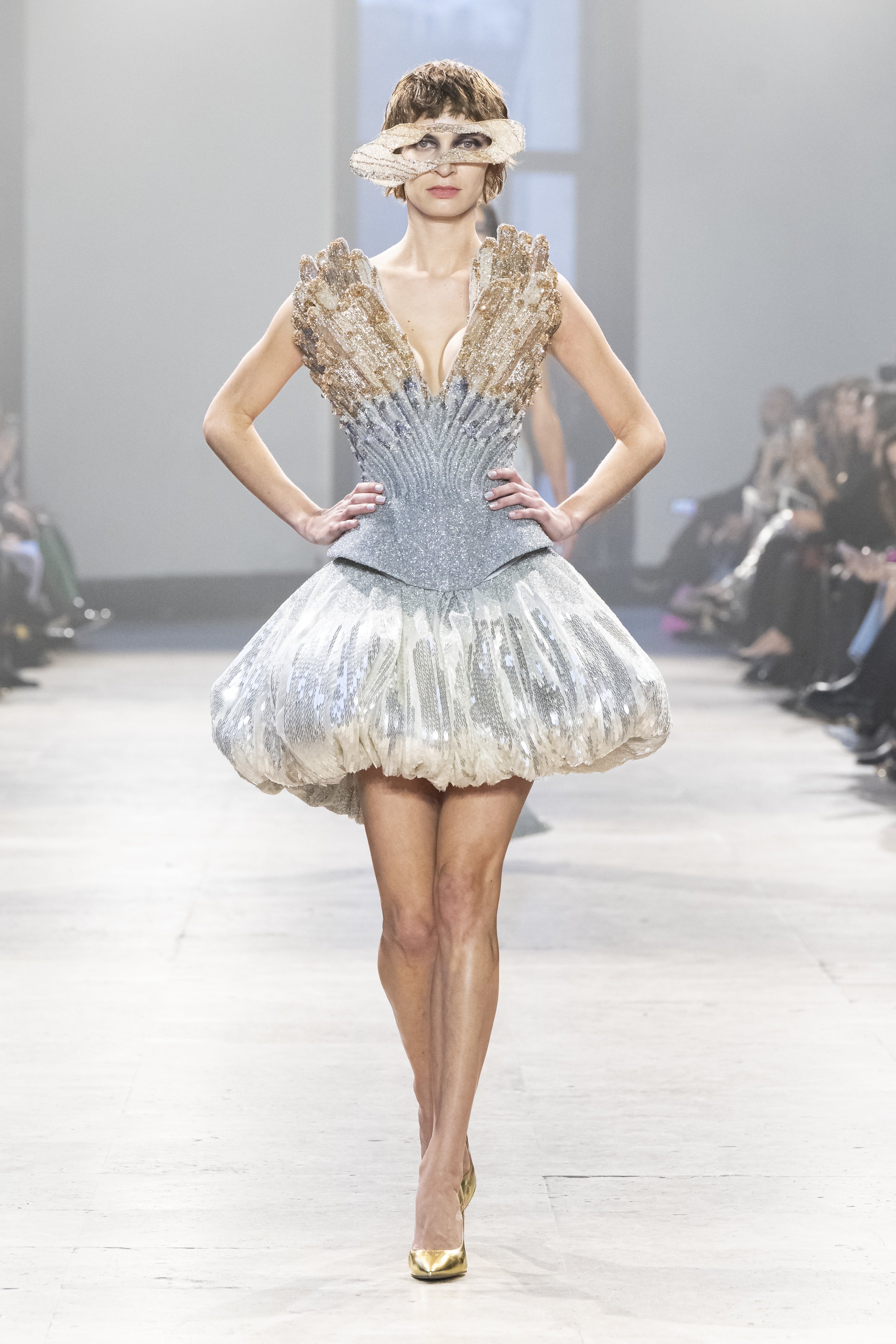
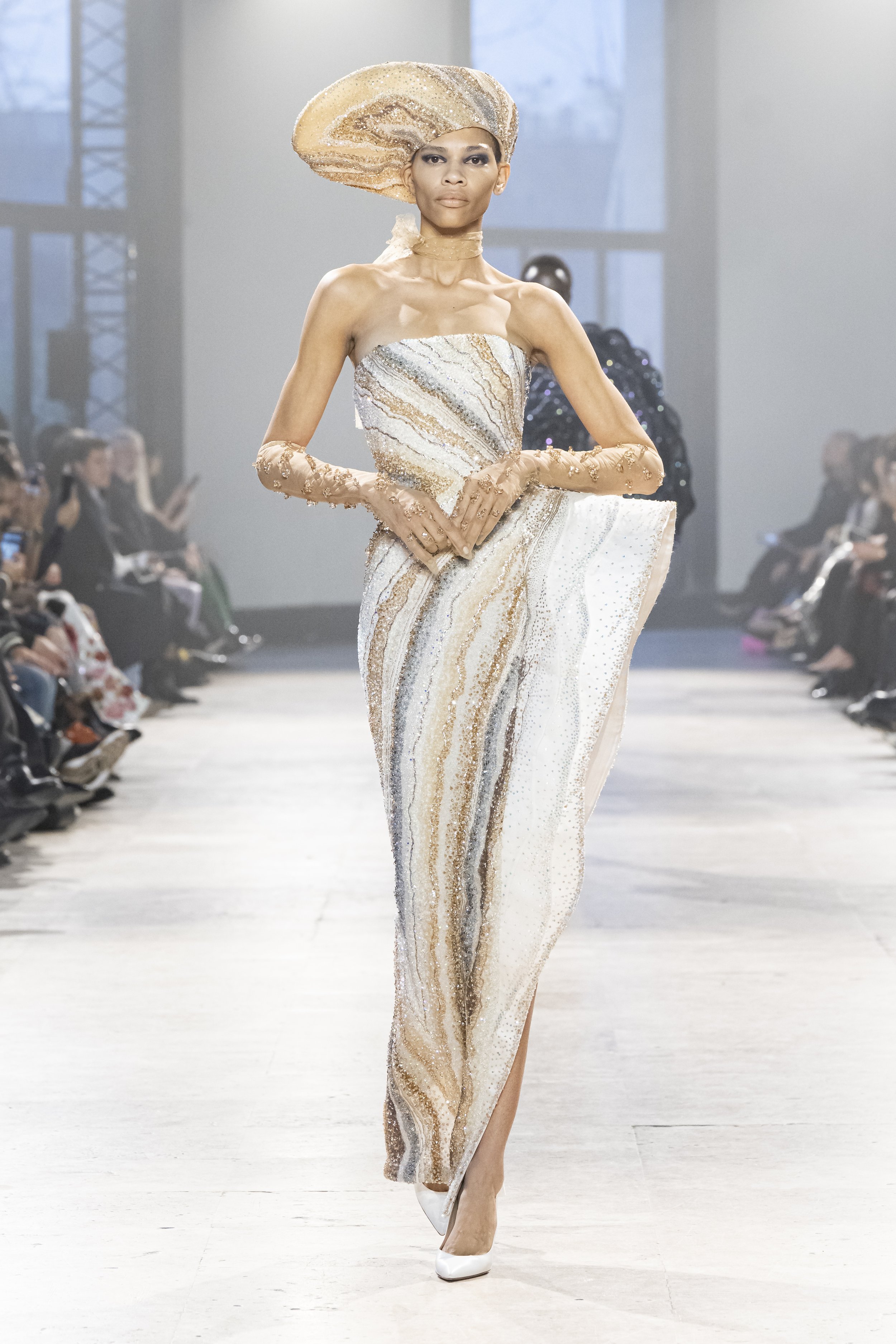
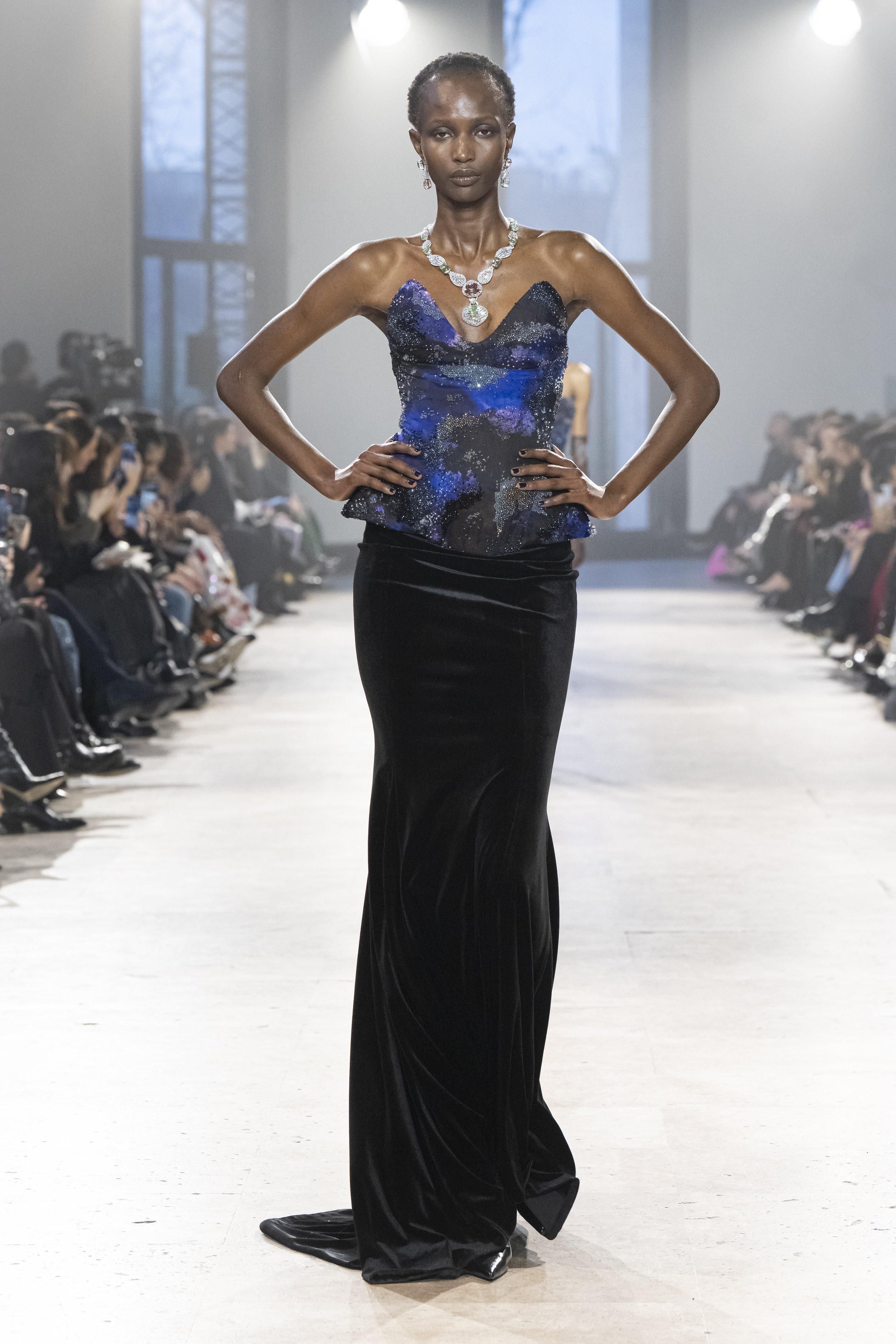
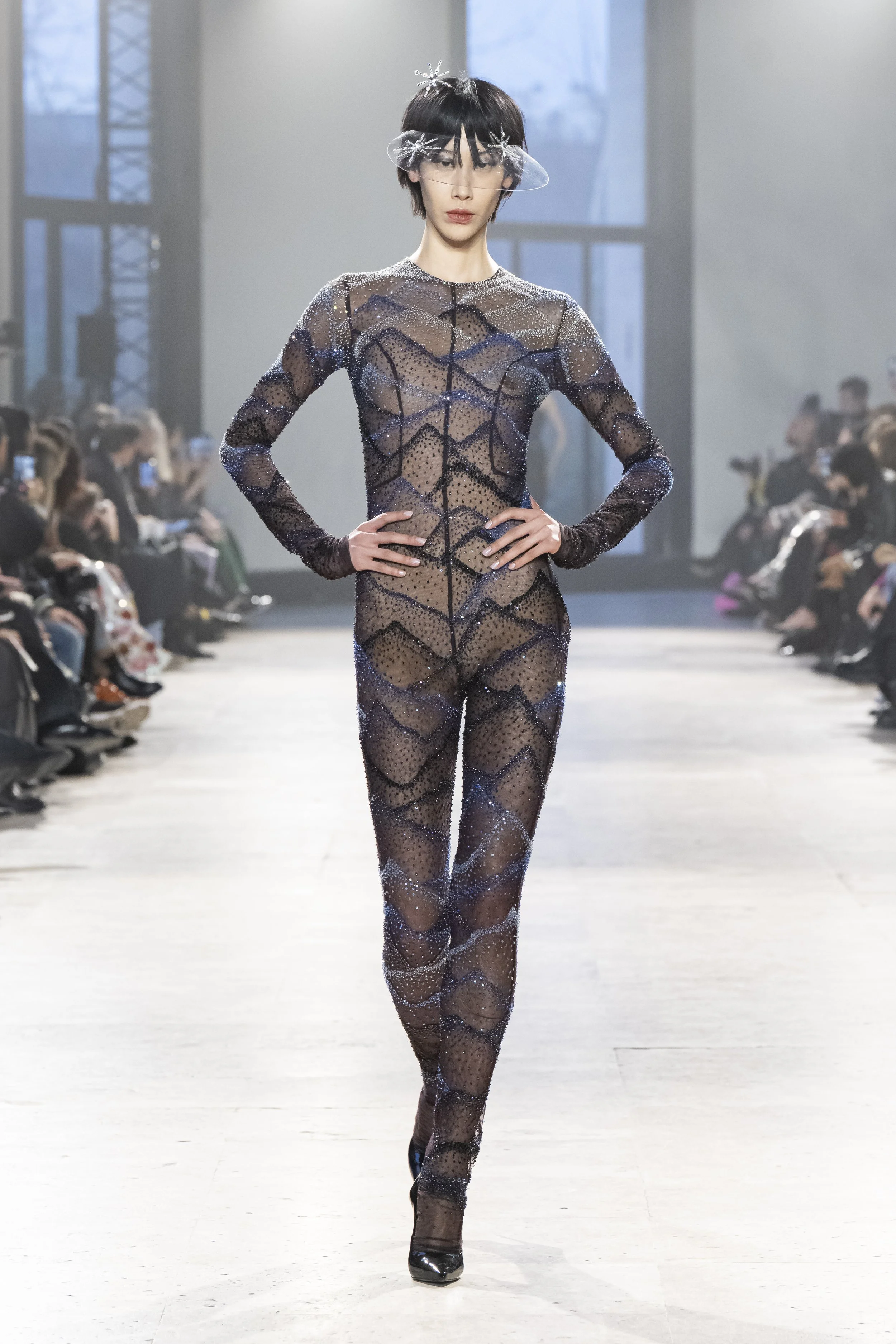
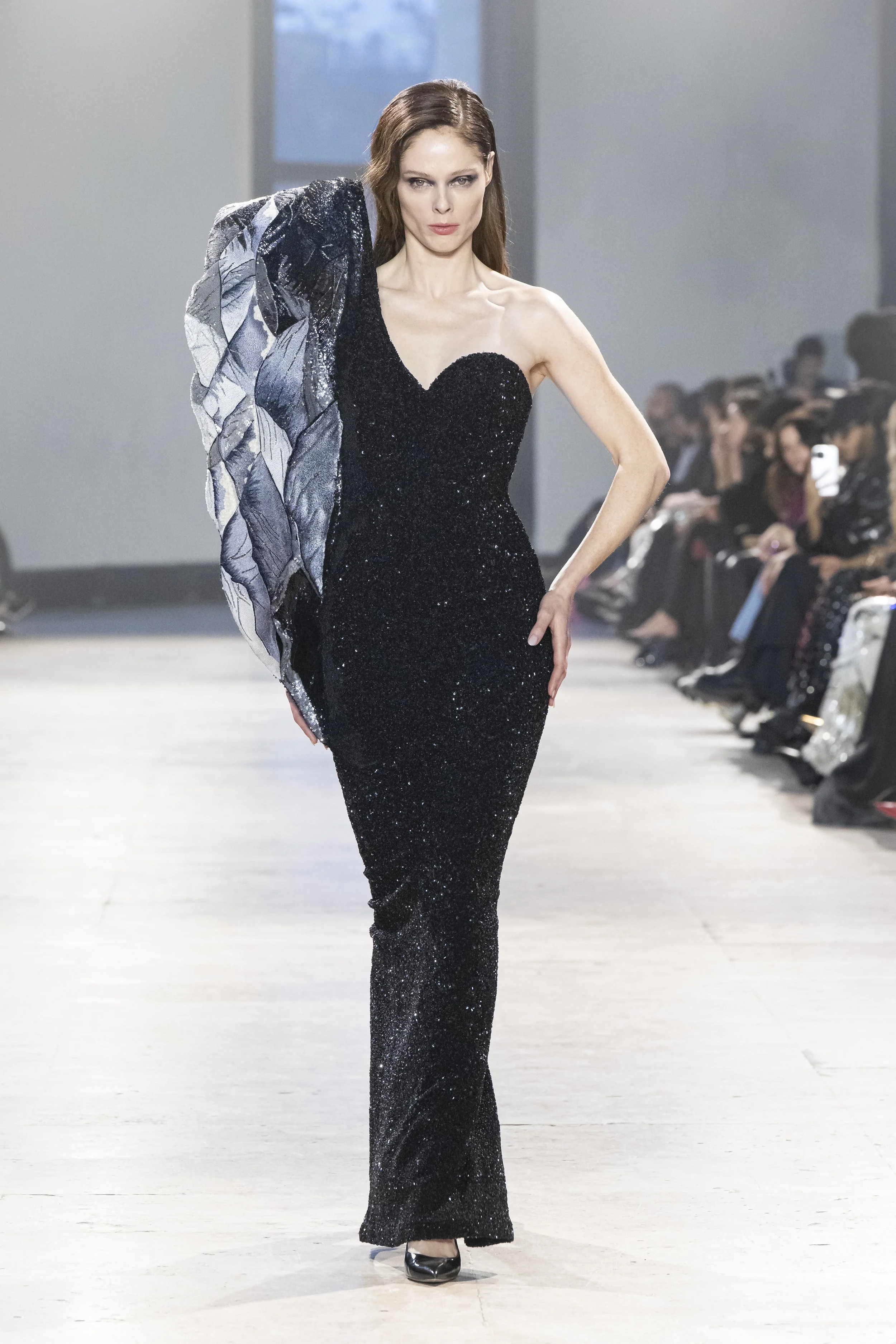
At the presentation, that intent was clear in the collection’s temperament: an almost architectural calm beneath the conceptual framework of the five elements. This was not a literal rendering of earth, water, fire, air and aether; rather, it was a couture translation of behaviour. One gown, a near‑straight silhouette in softly pleated silk, suggested air’s quiet pressure — the fabric skimming the body and falling like breath, light and responsive. Another, heavier in hand‑worked thread and bead, seemed to hold the weight of earth, its surface a tapestry of micro‑embroidery that caught light without ornamenting, giving the gown a grounded, almost mineral presence.
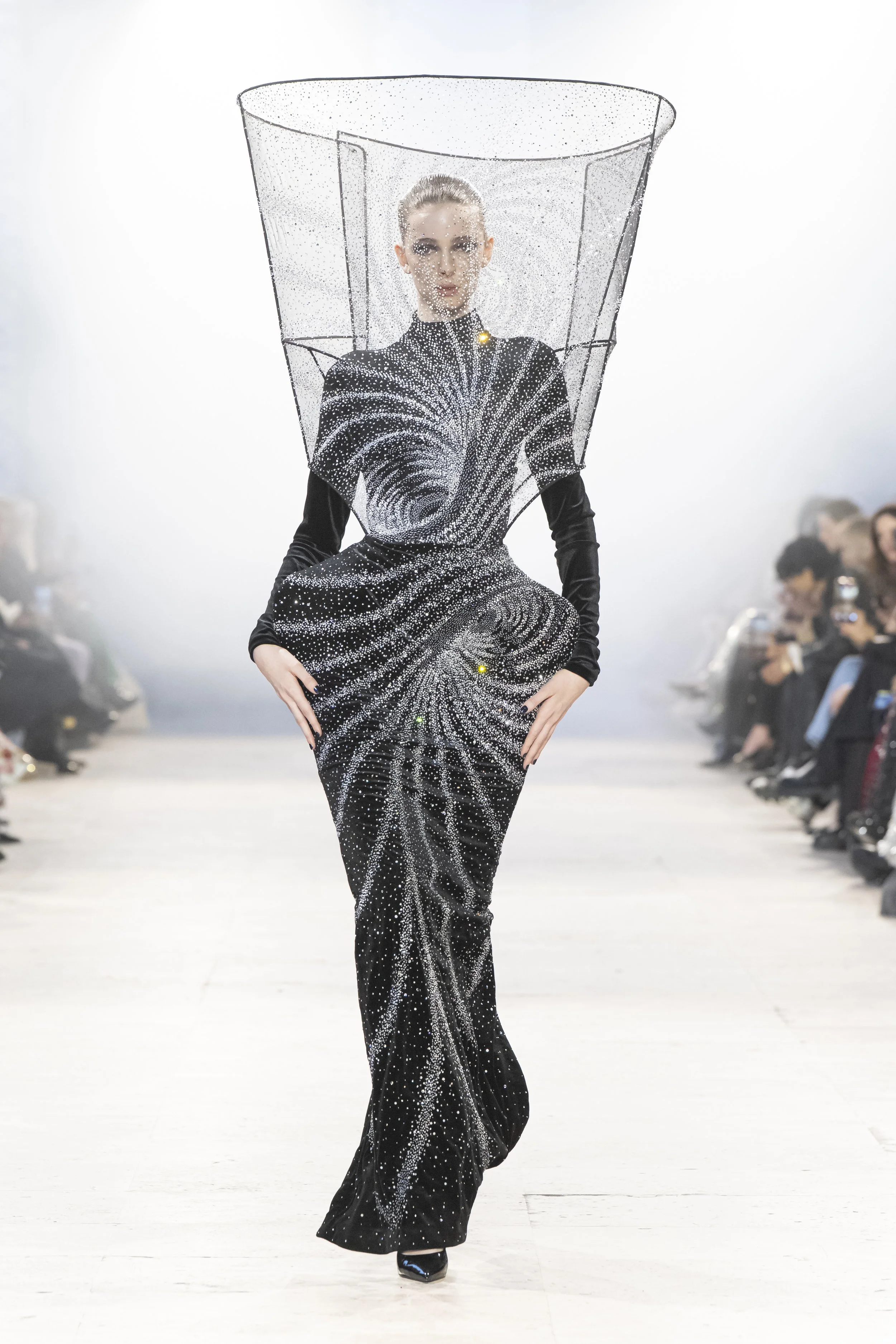
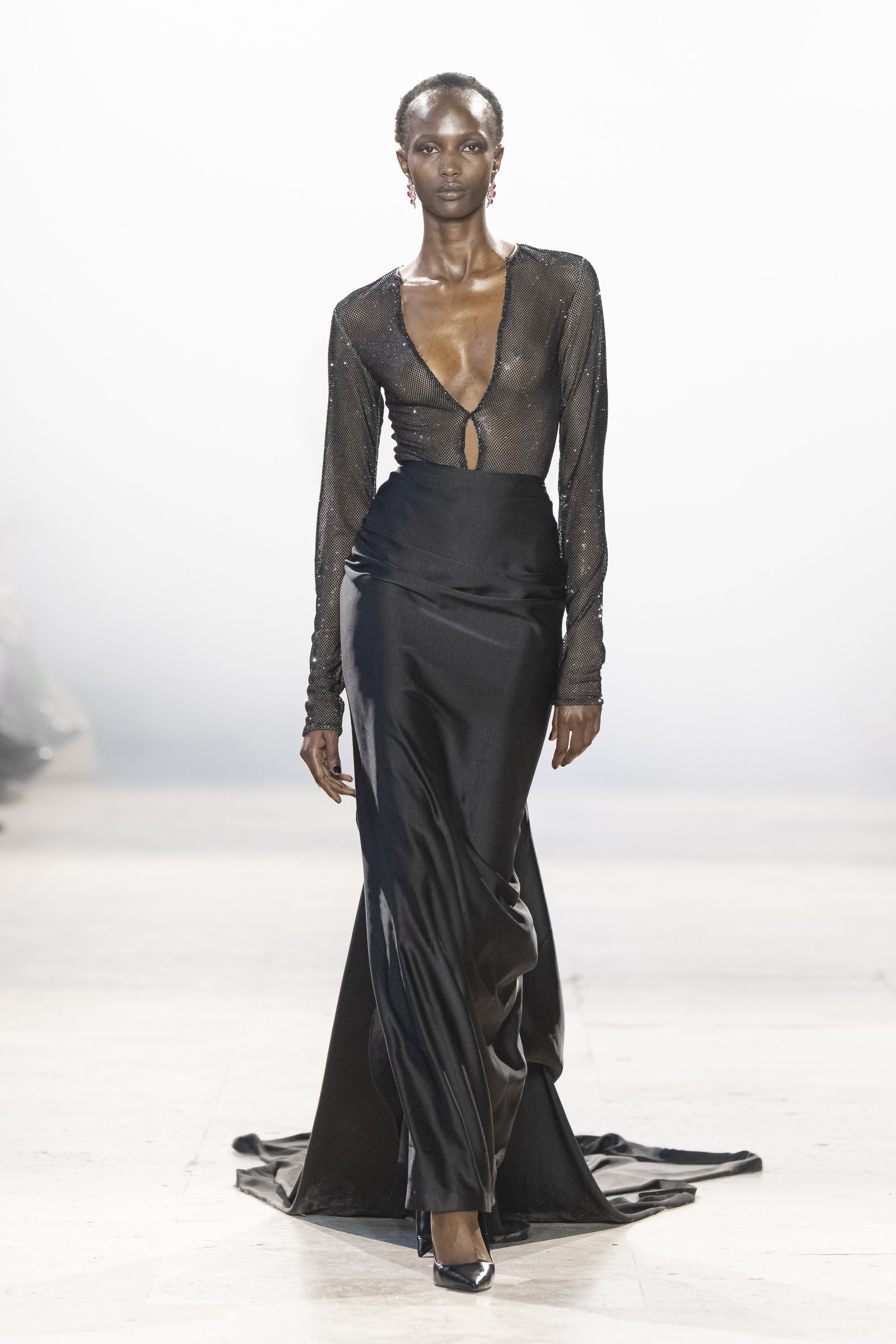
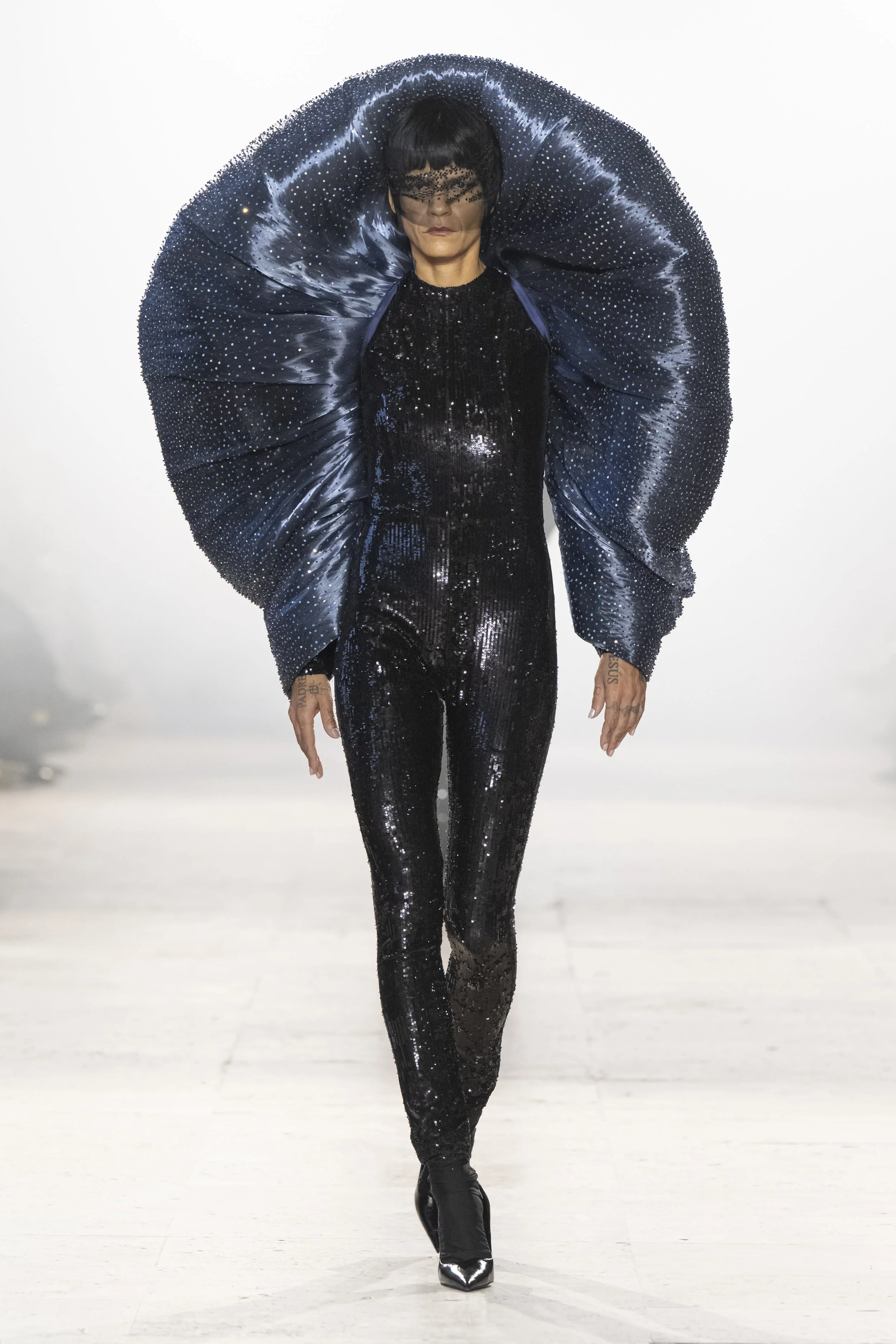
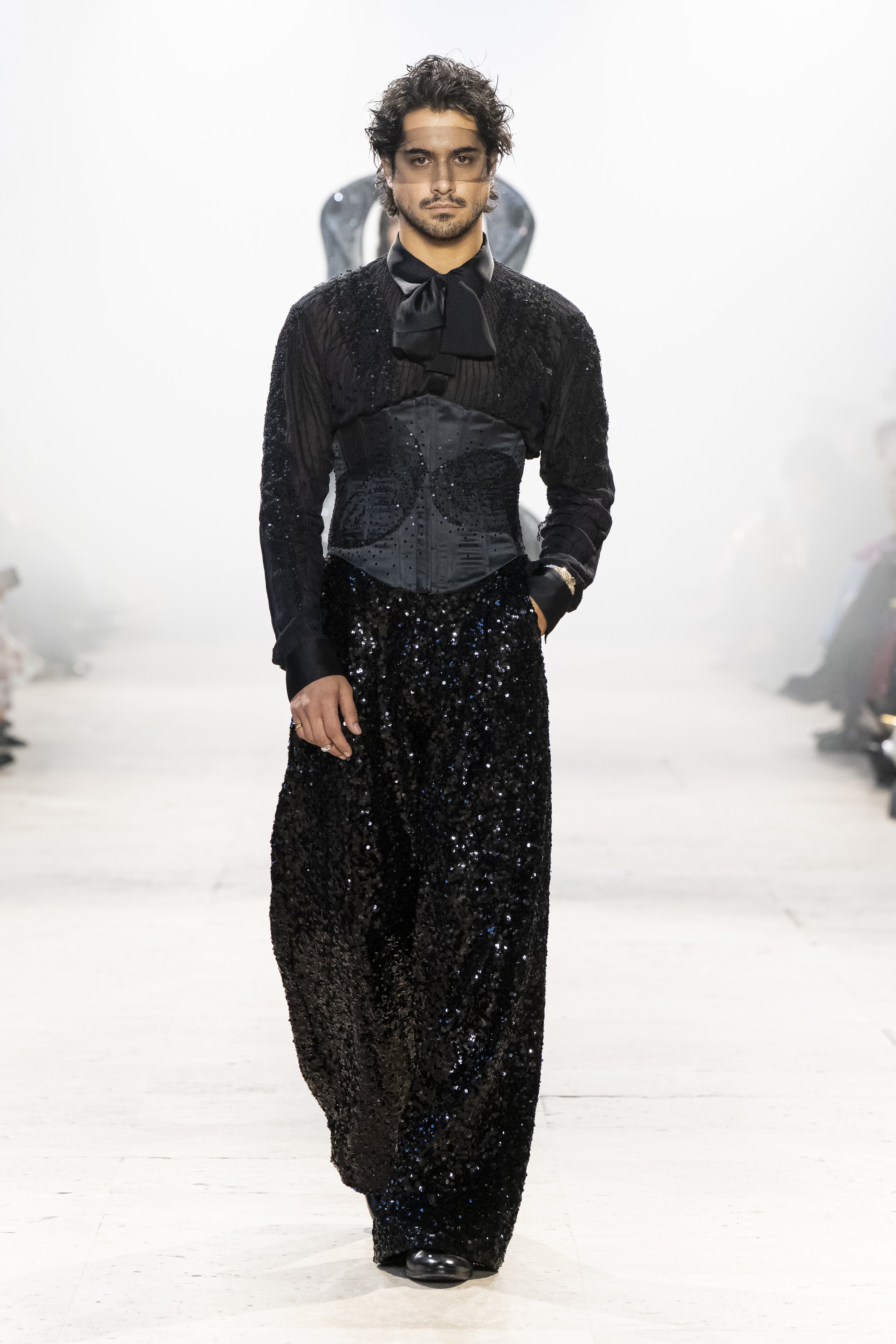
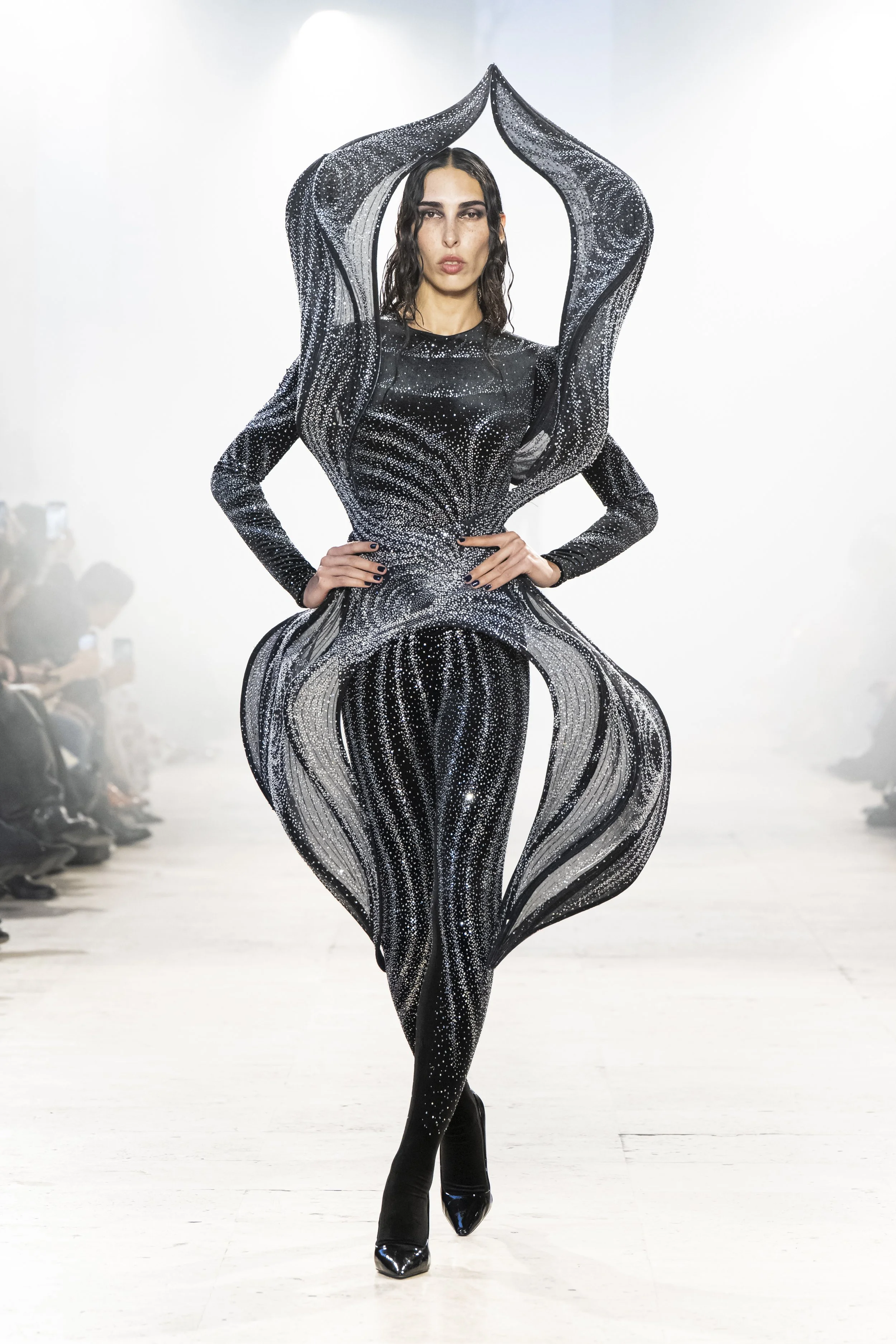
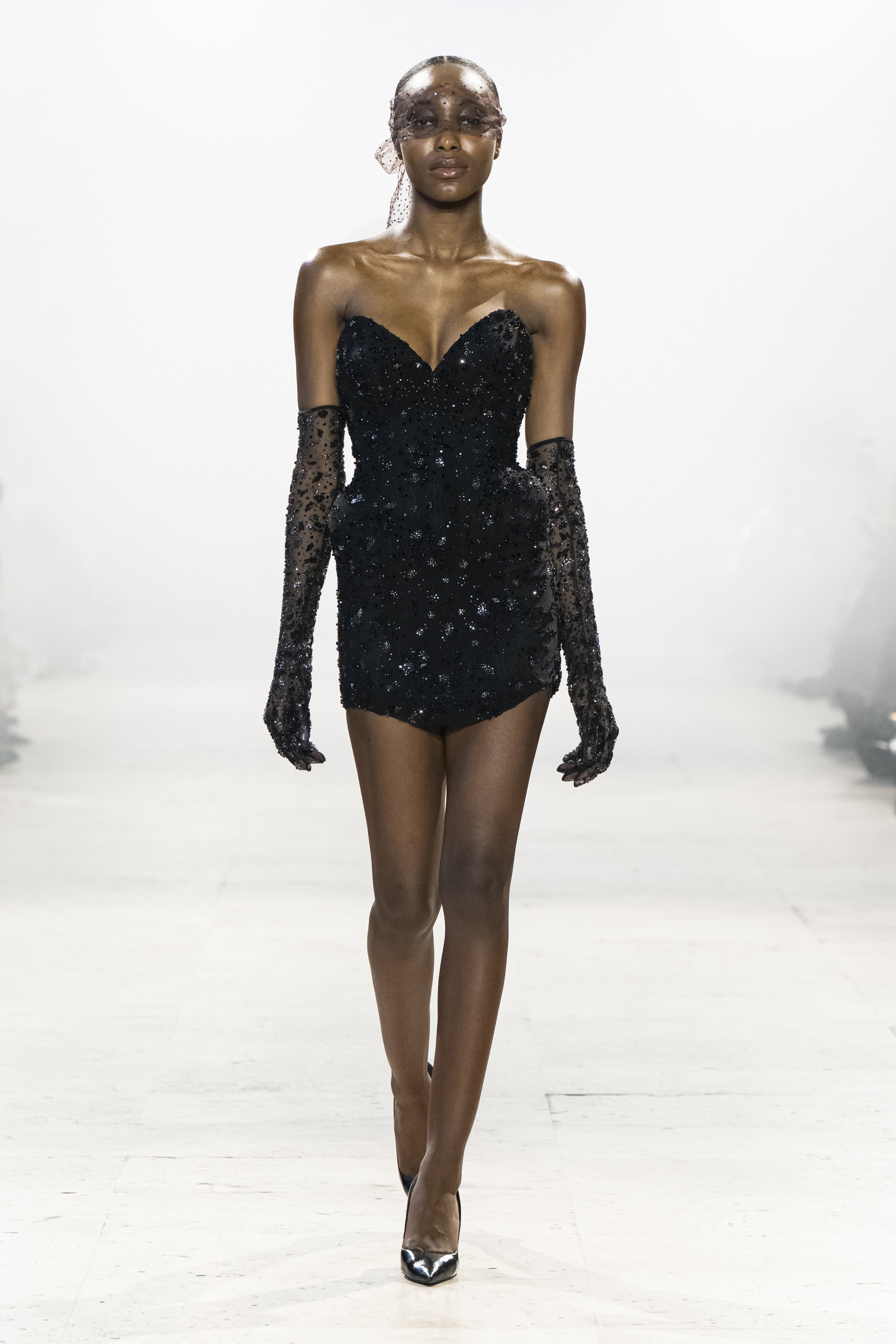
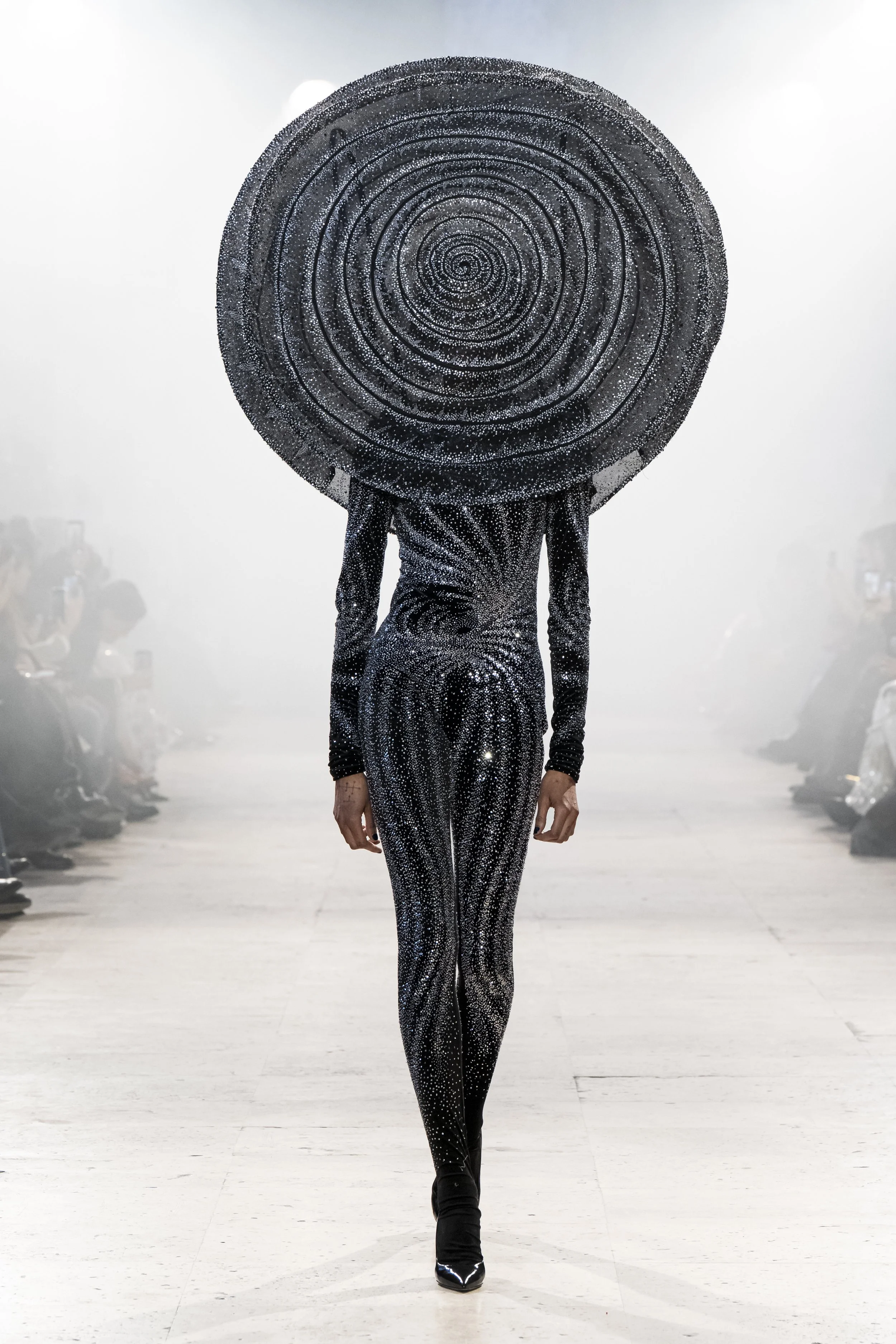
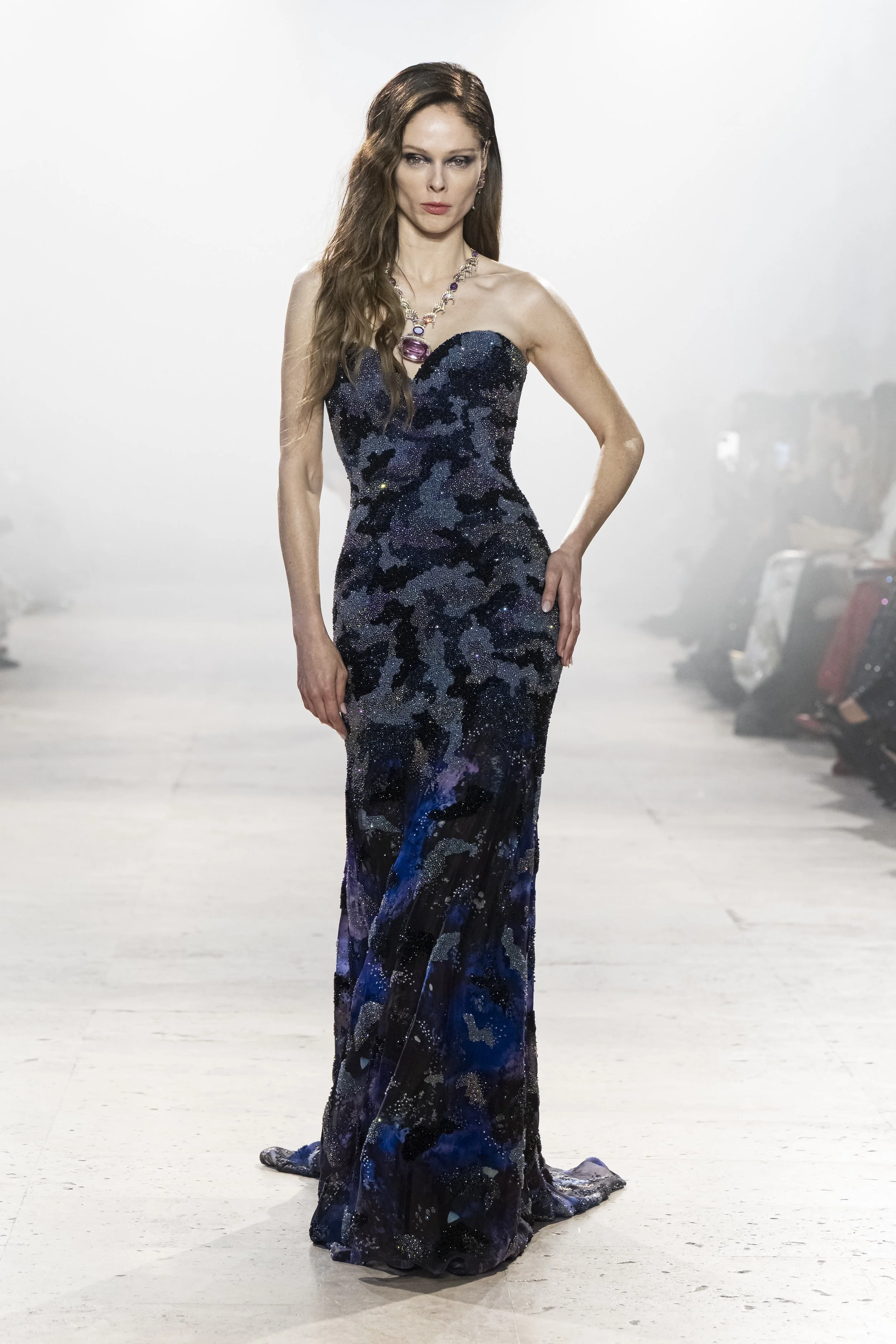
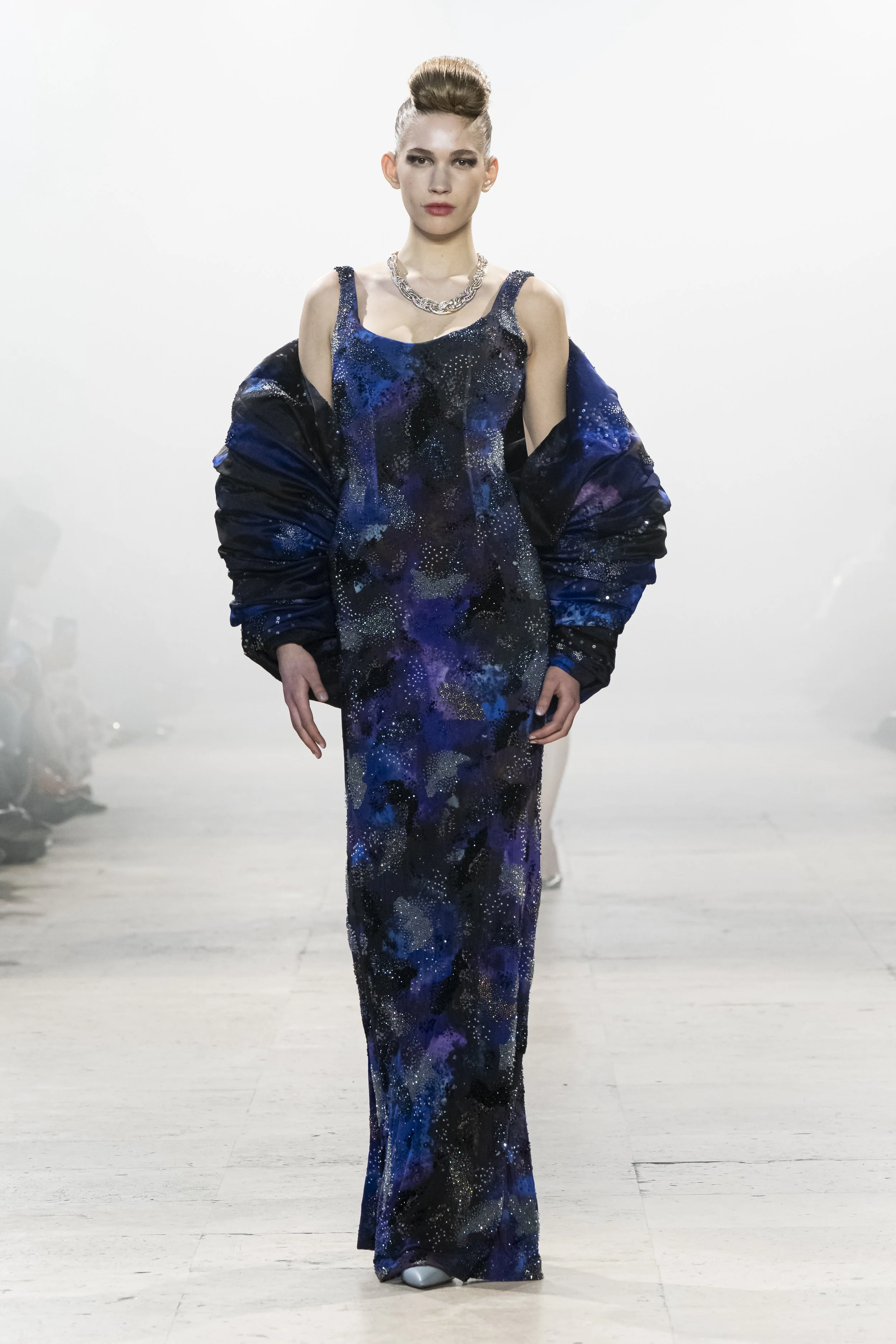
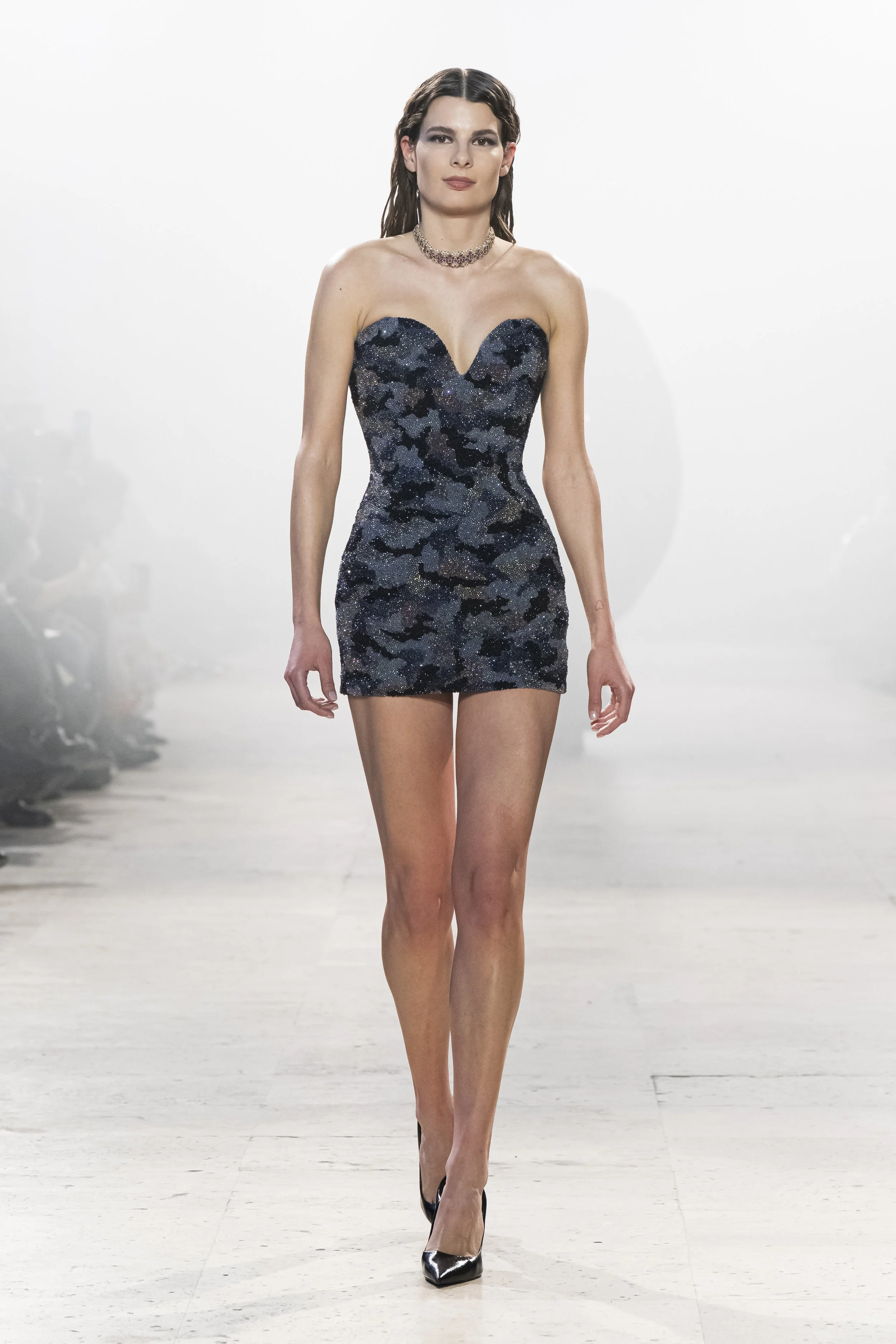
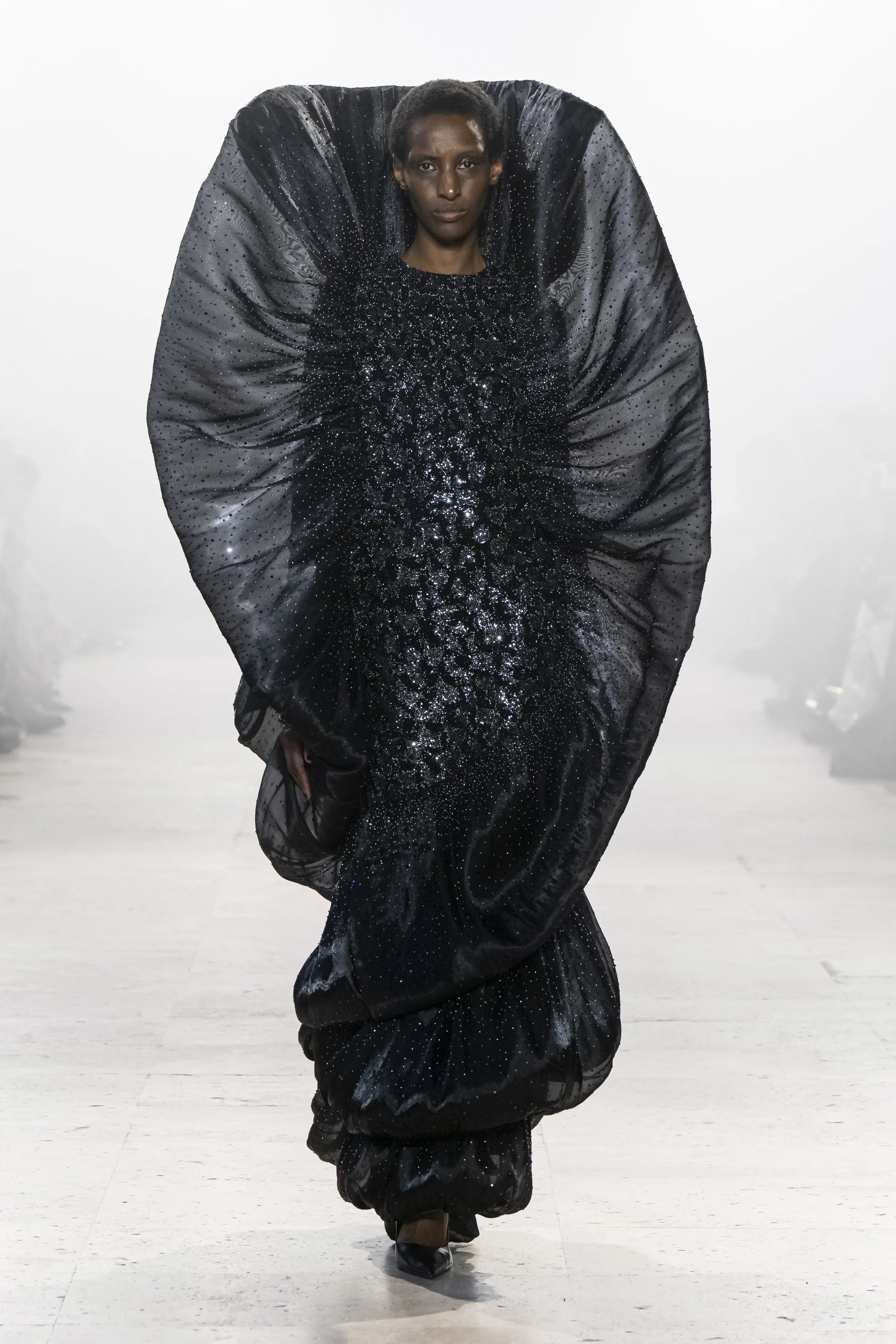
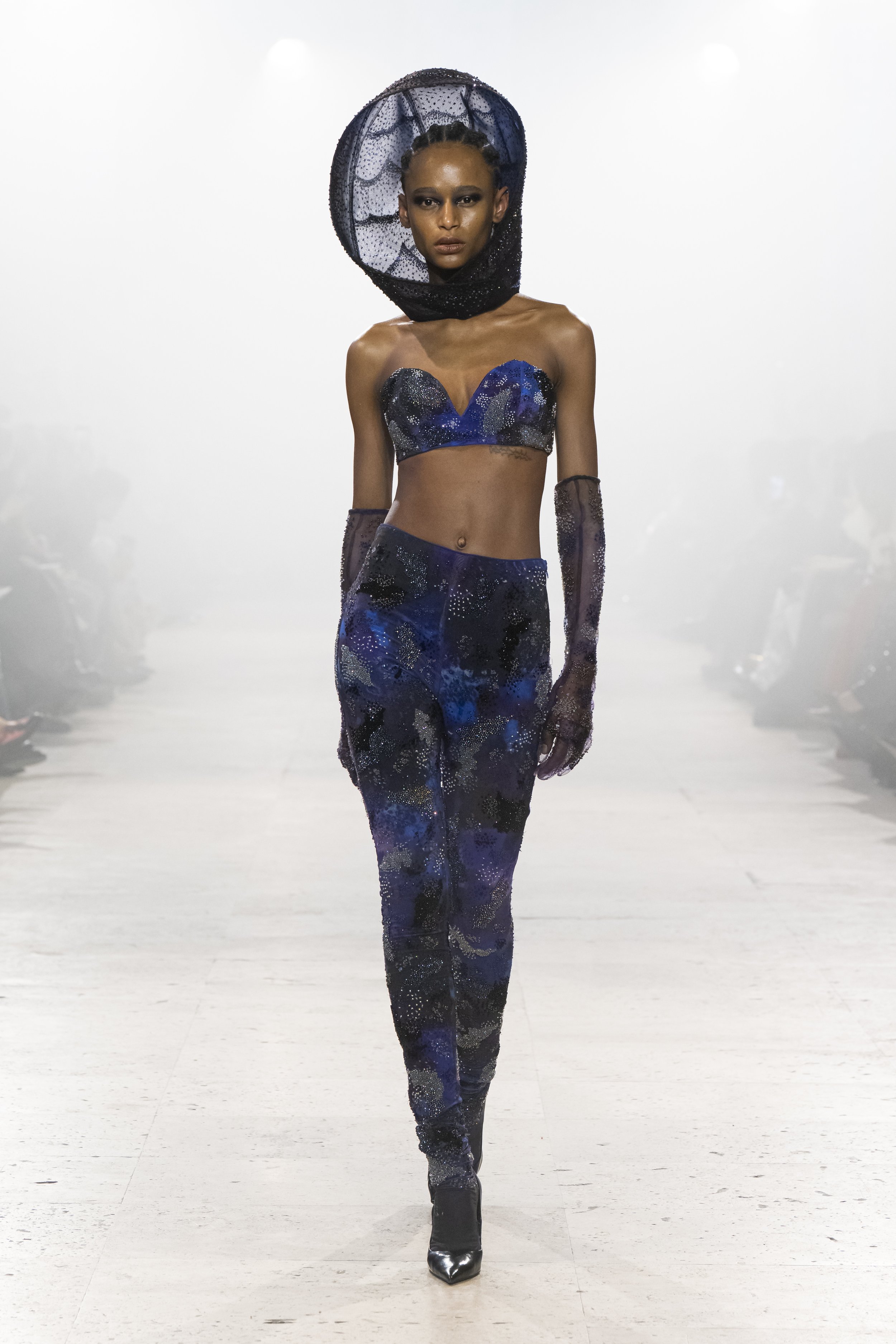
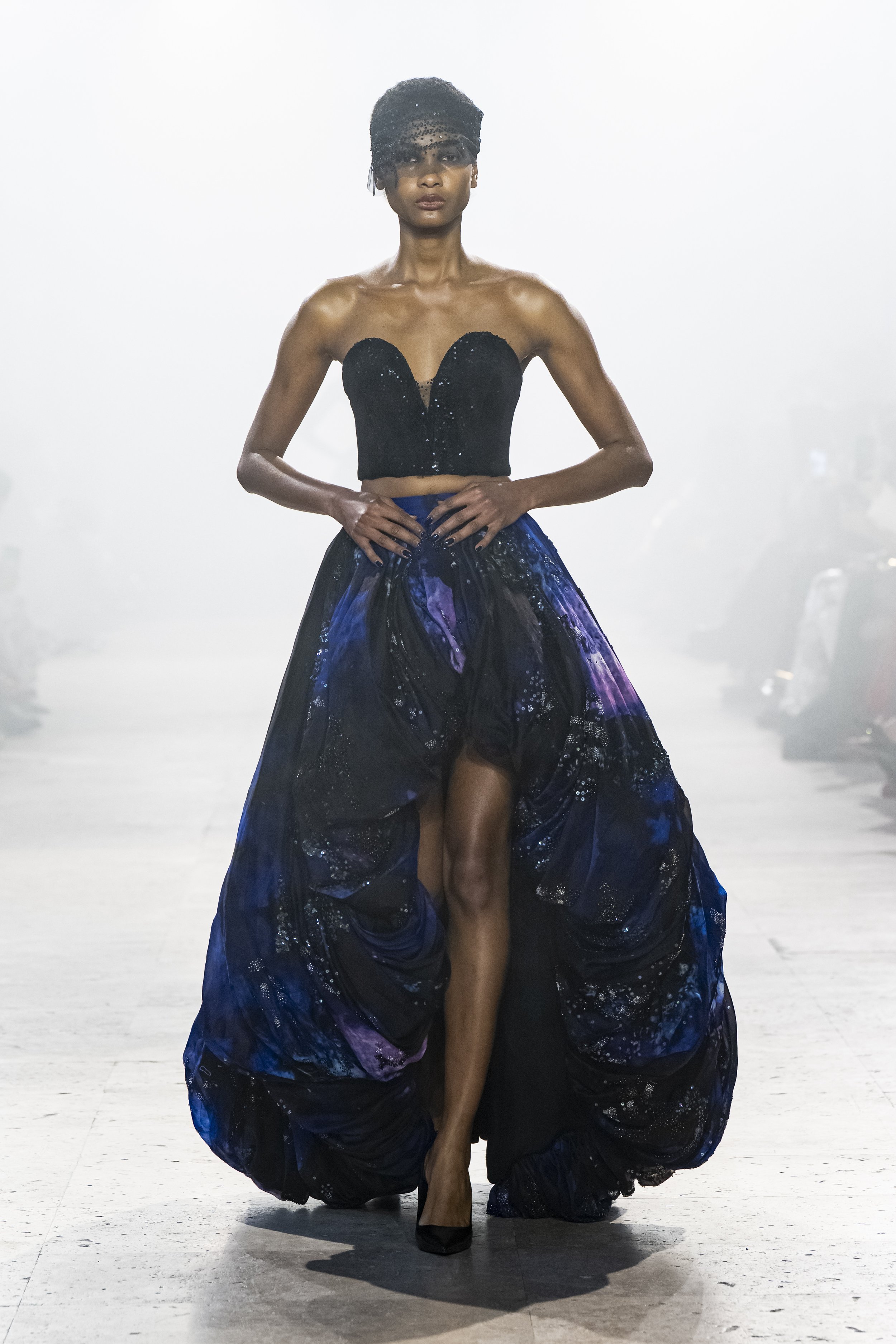
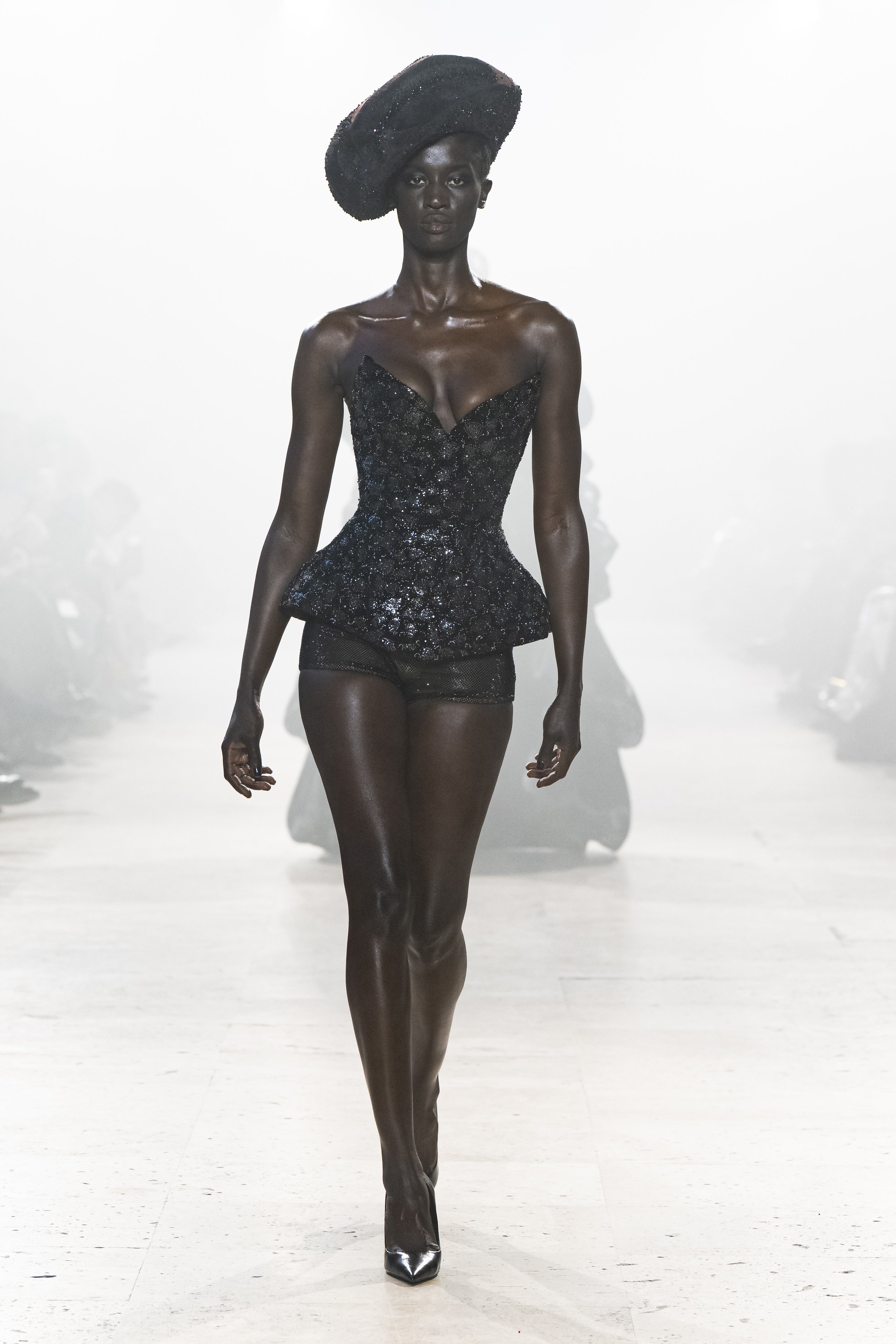
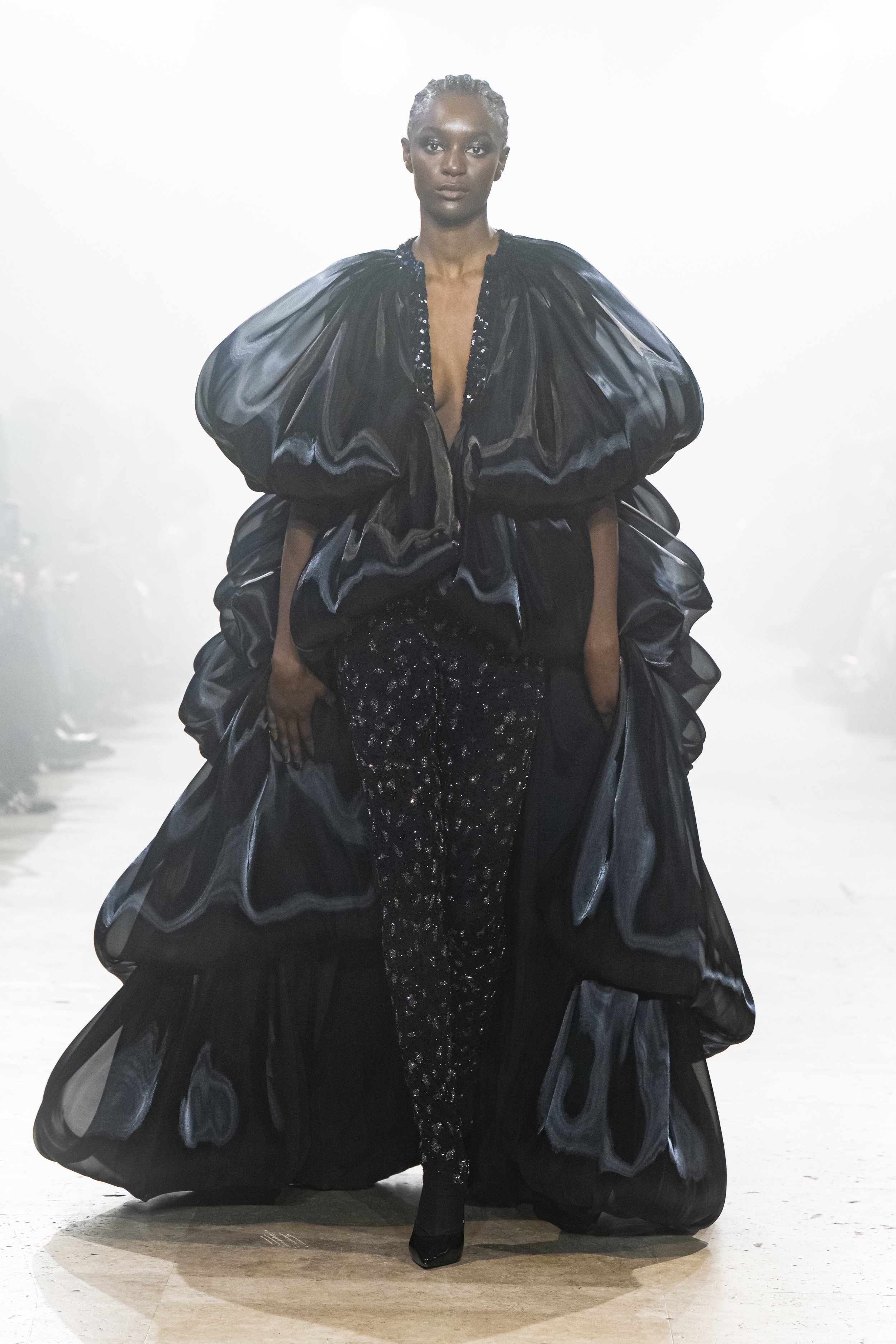
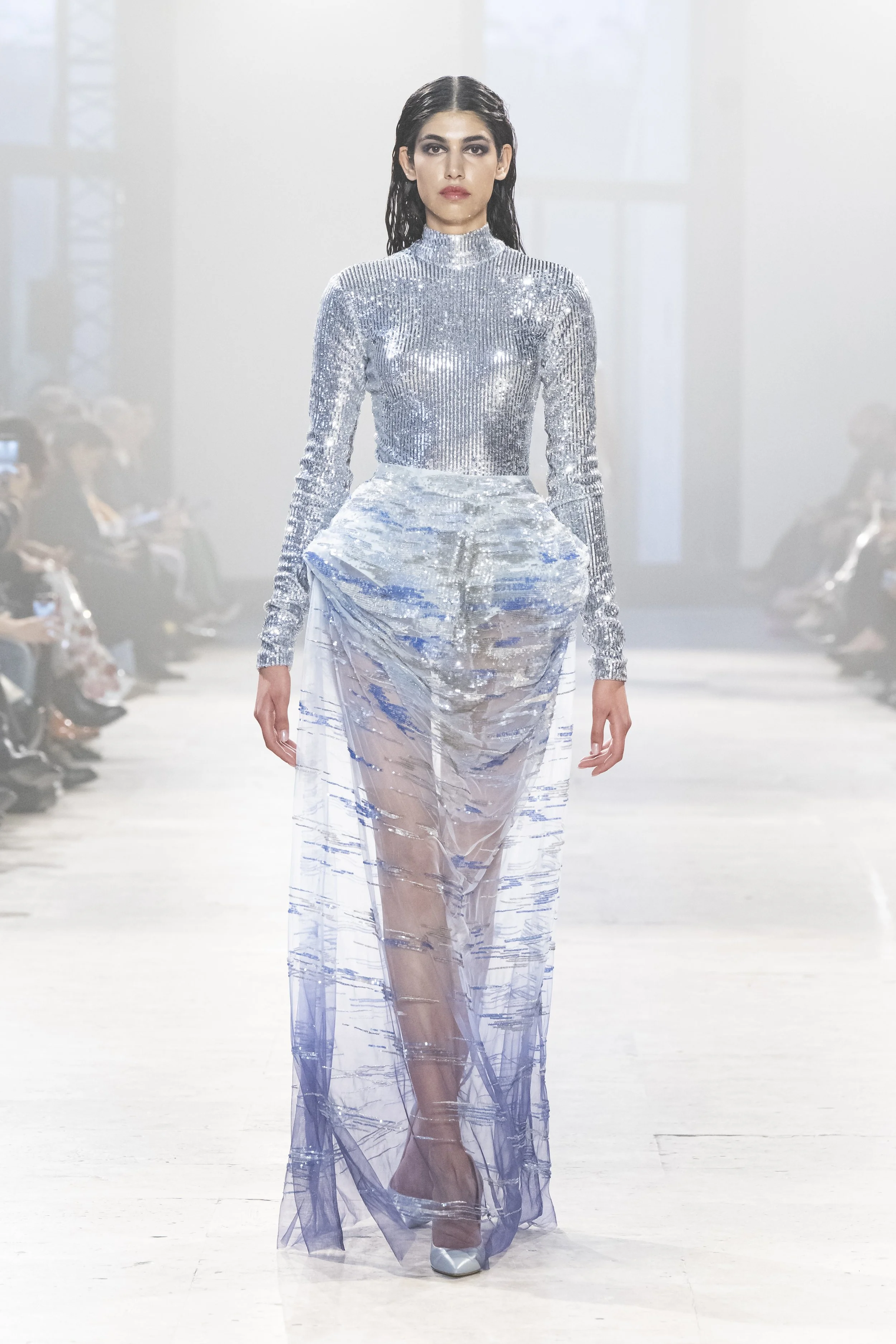
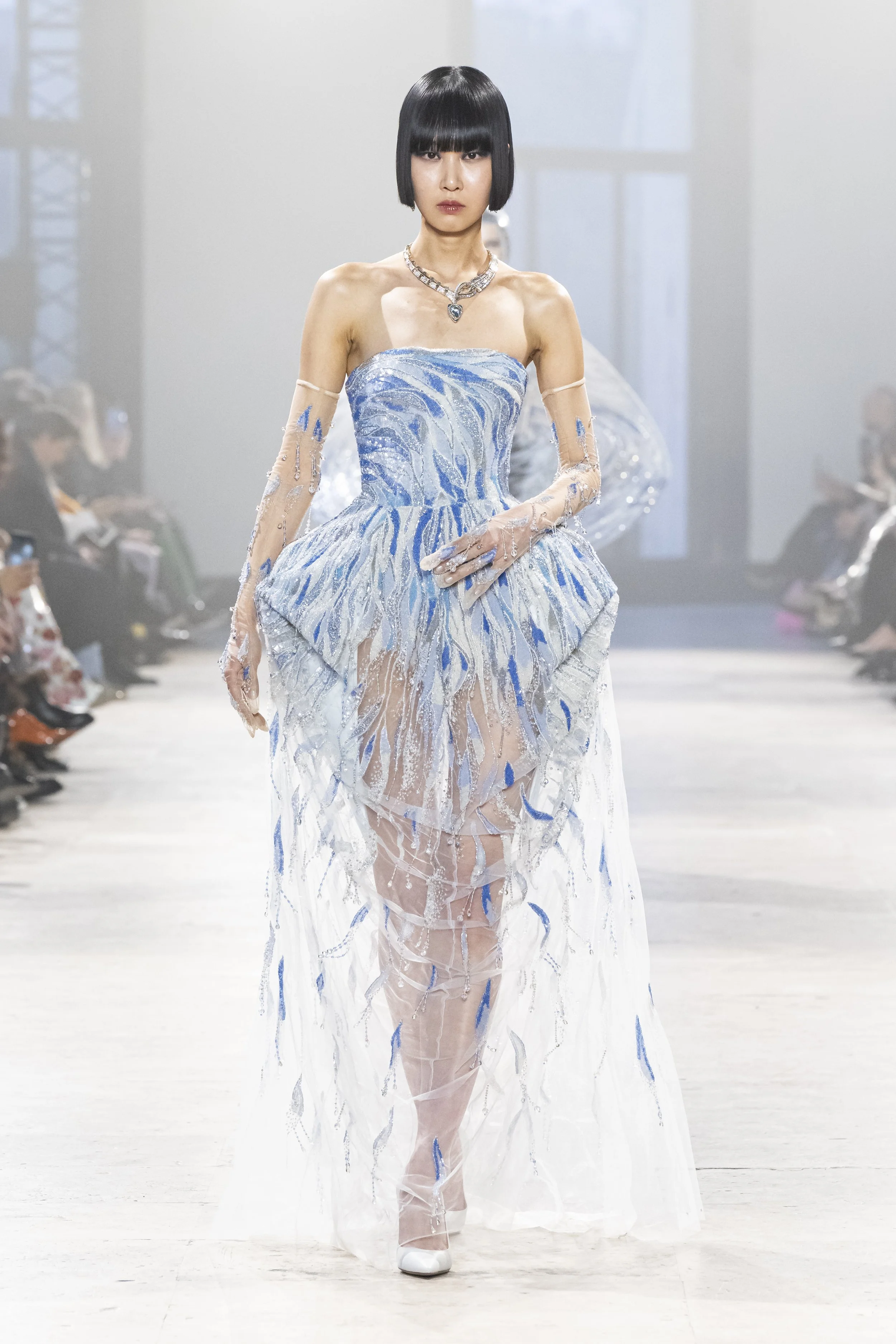
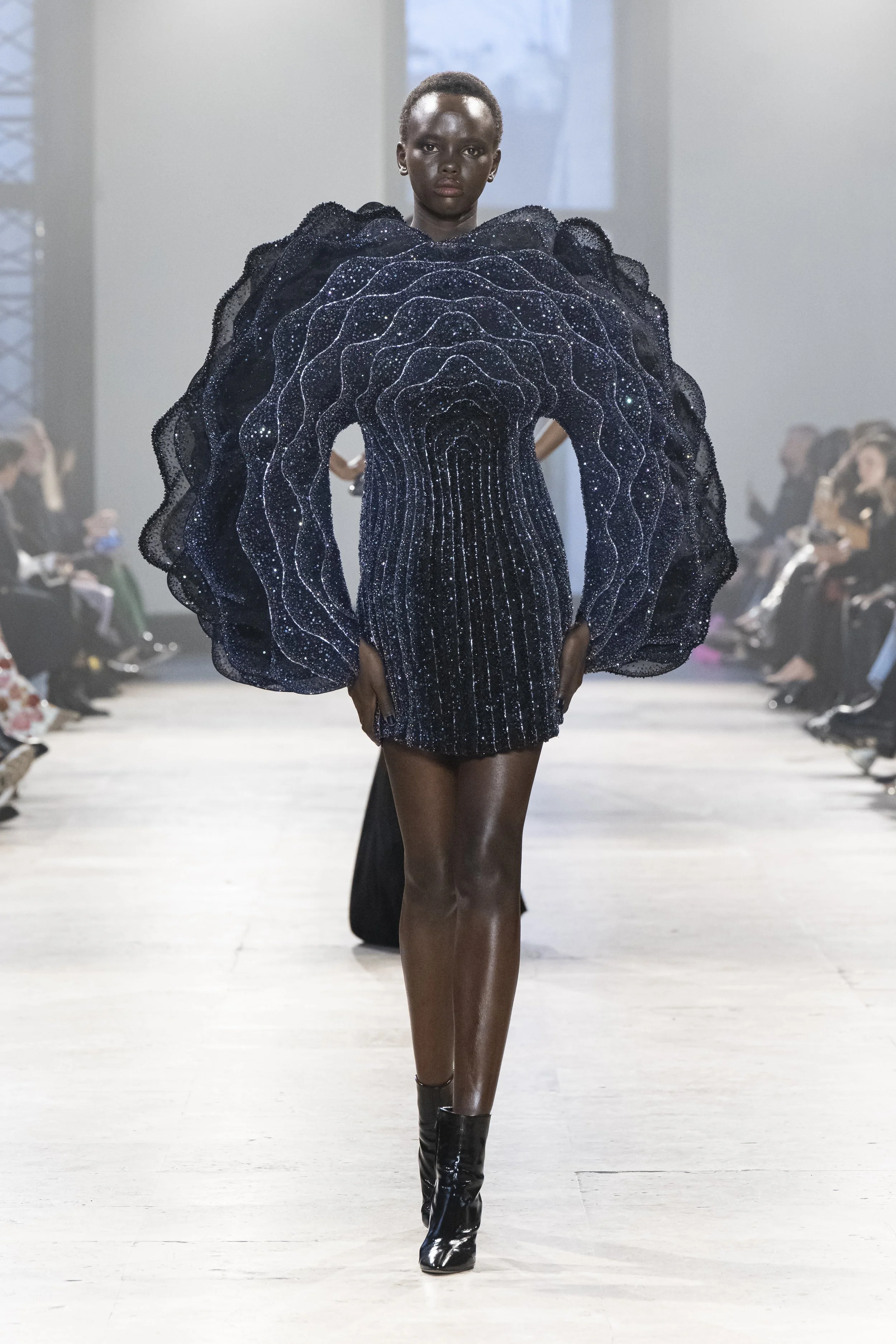
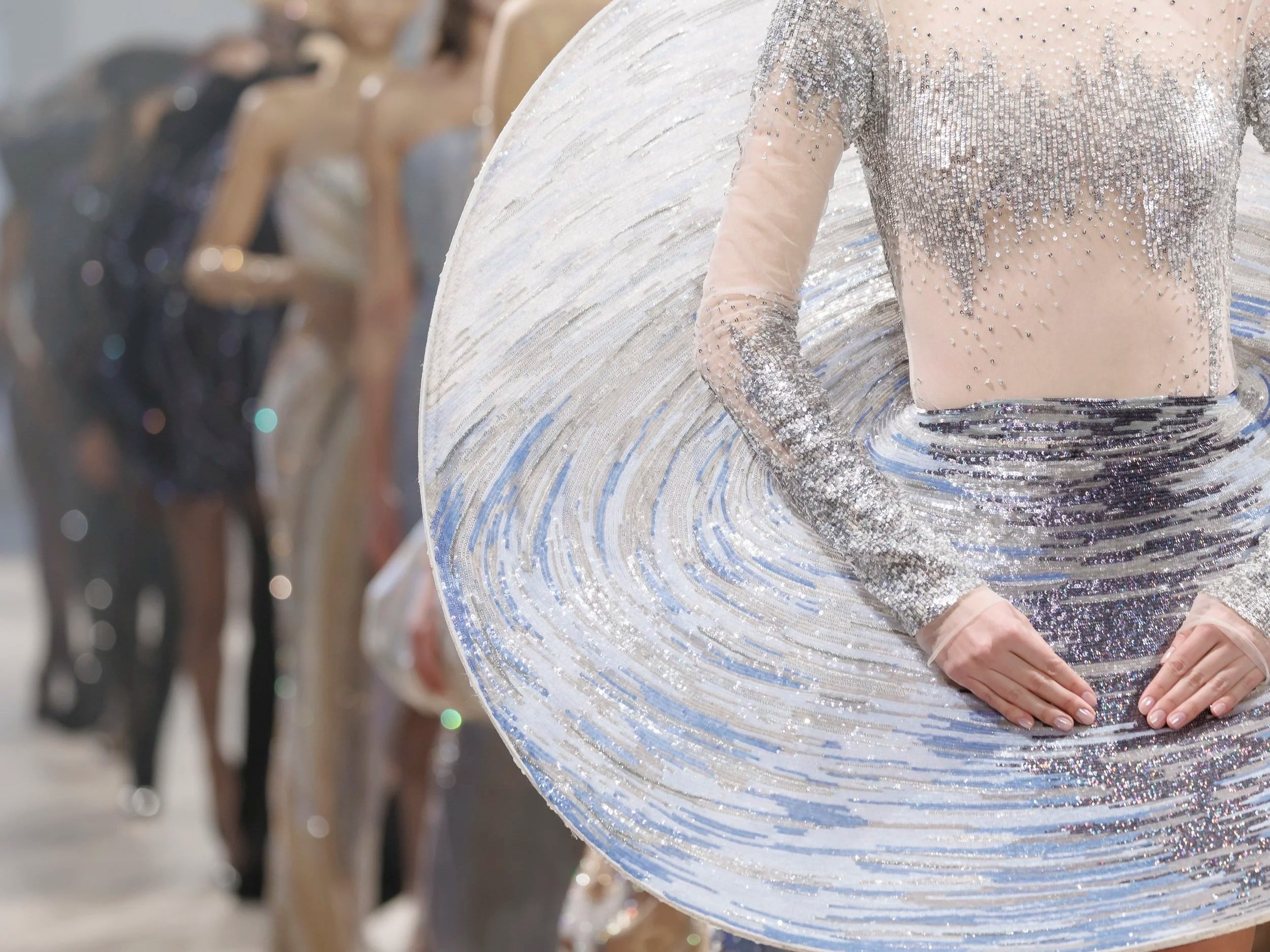
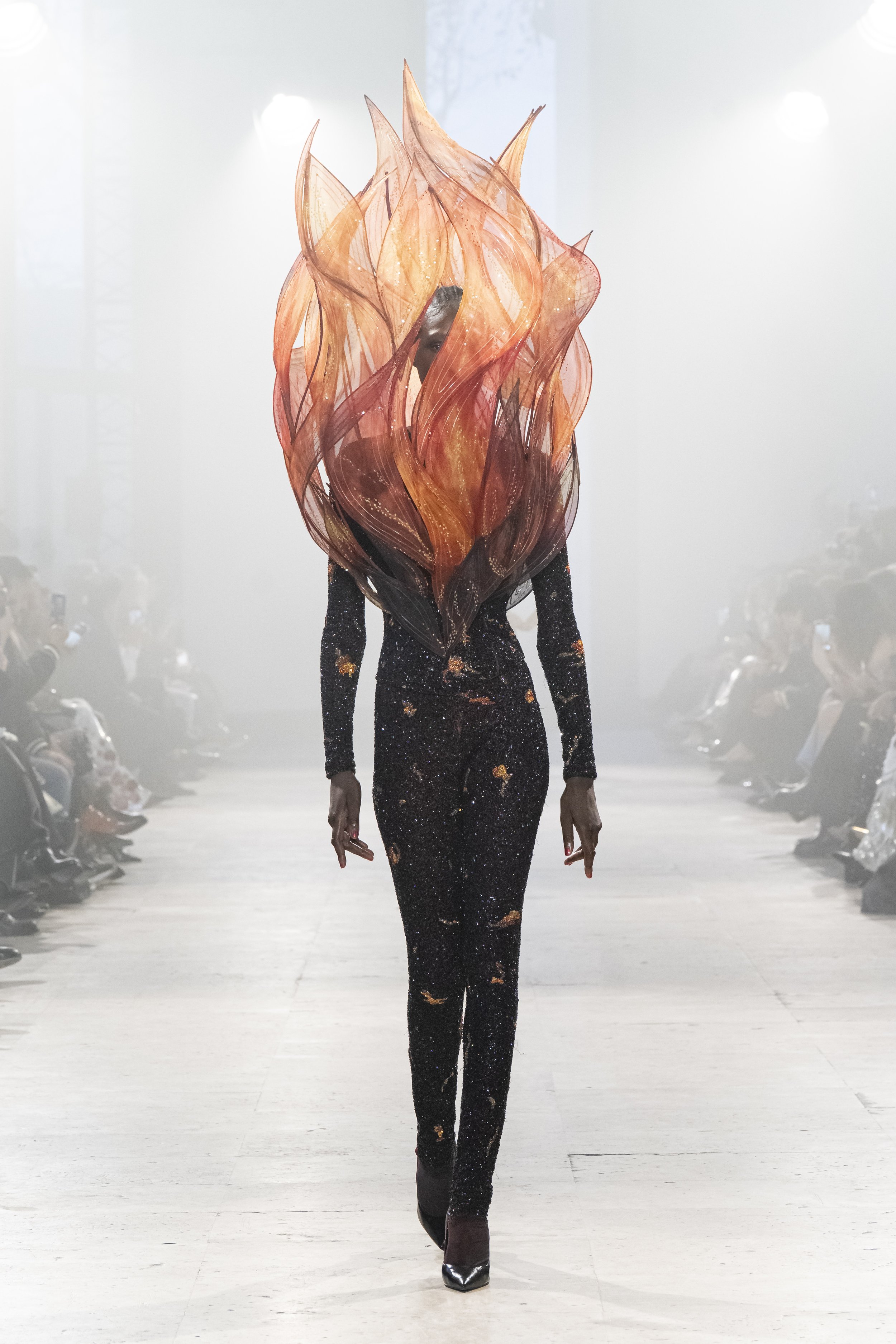
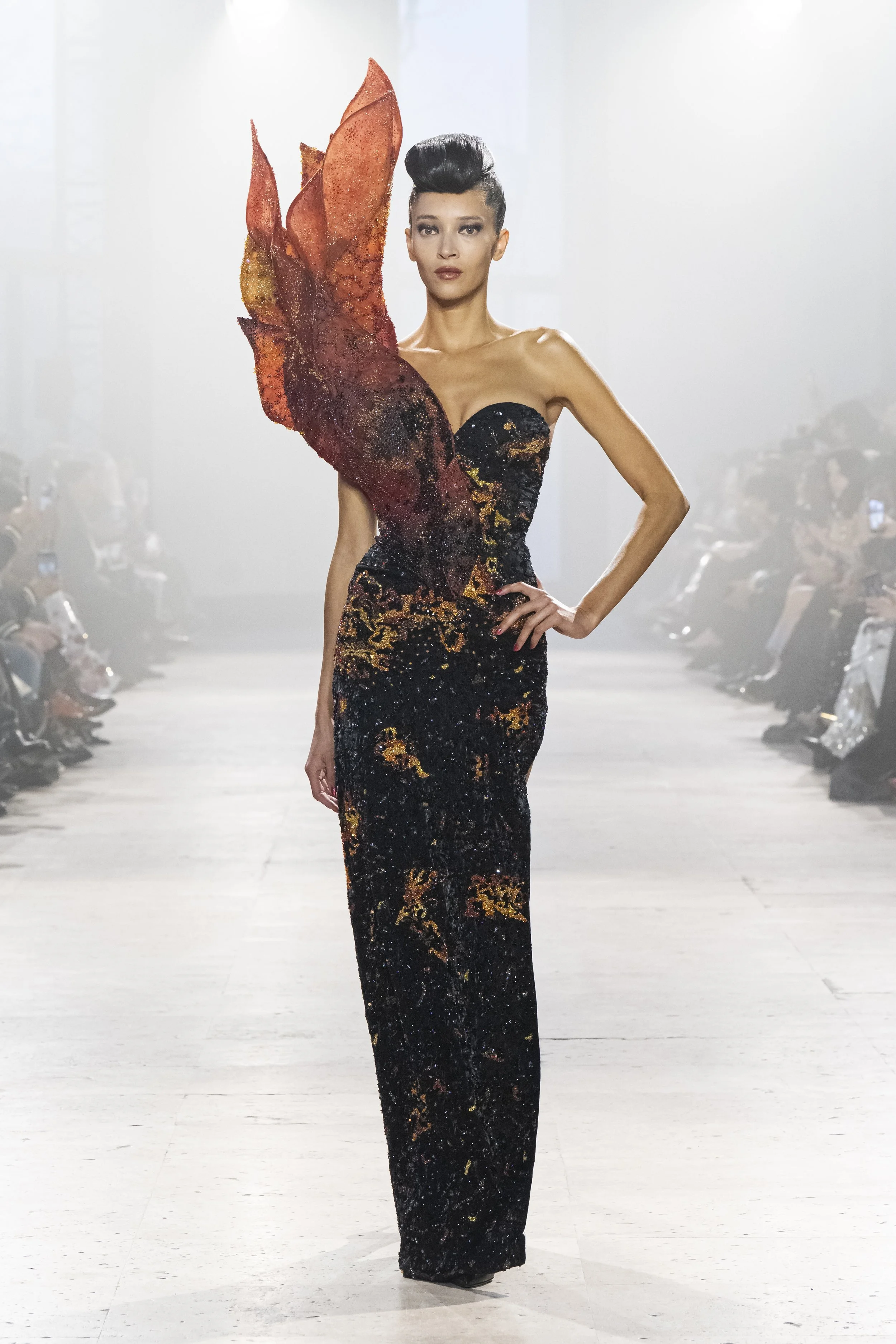
A third look interpreted water with remarkable subtlety: organza panels layered across the skirt in rippling waves, their transparency revealing the interplay of light and movement beneath. The bodice, structured yet fluid, allowed the motion to remain uninterrupted, while embroidery traced flowing lines that enhanced the sense of undulation without appearing decorative. Later, a dress suggested fire through the sharp precision of its linear embroidery, the threads taut and slightly raised, vibrating under the lights like coals glowing beneath ash. Its silhouette, slightly flared at the hem, gave the energy a contained, almost restrained urgency.
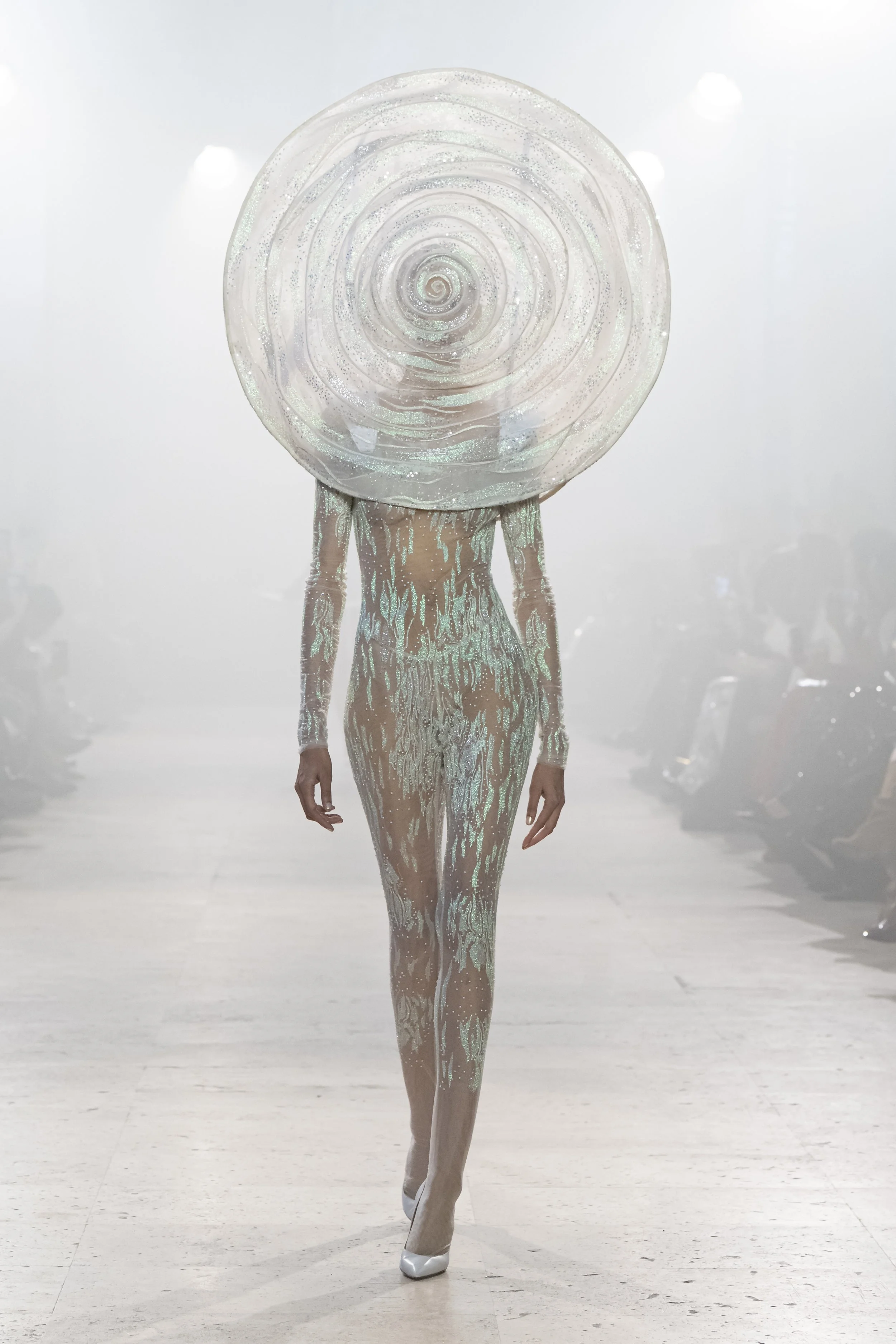
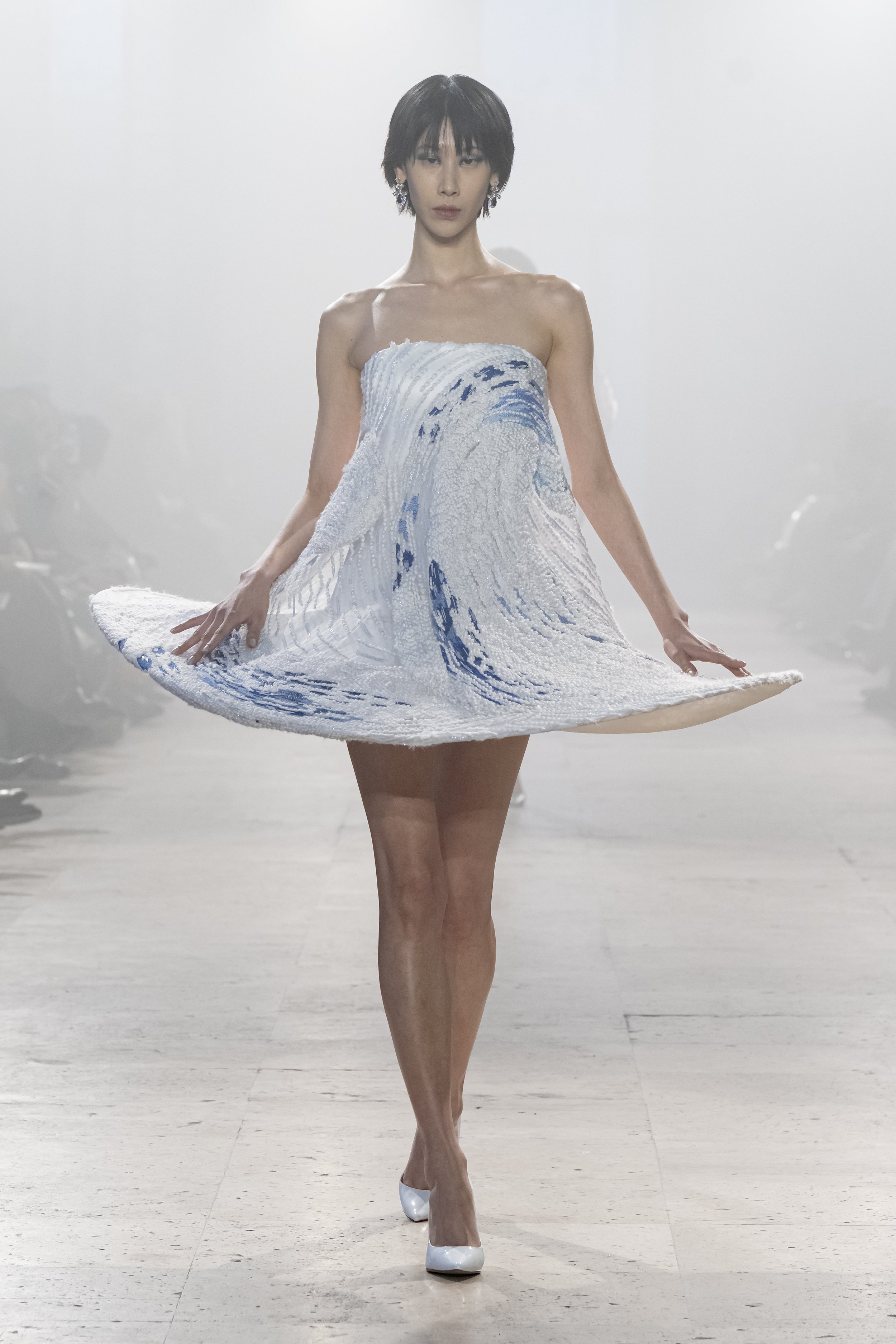
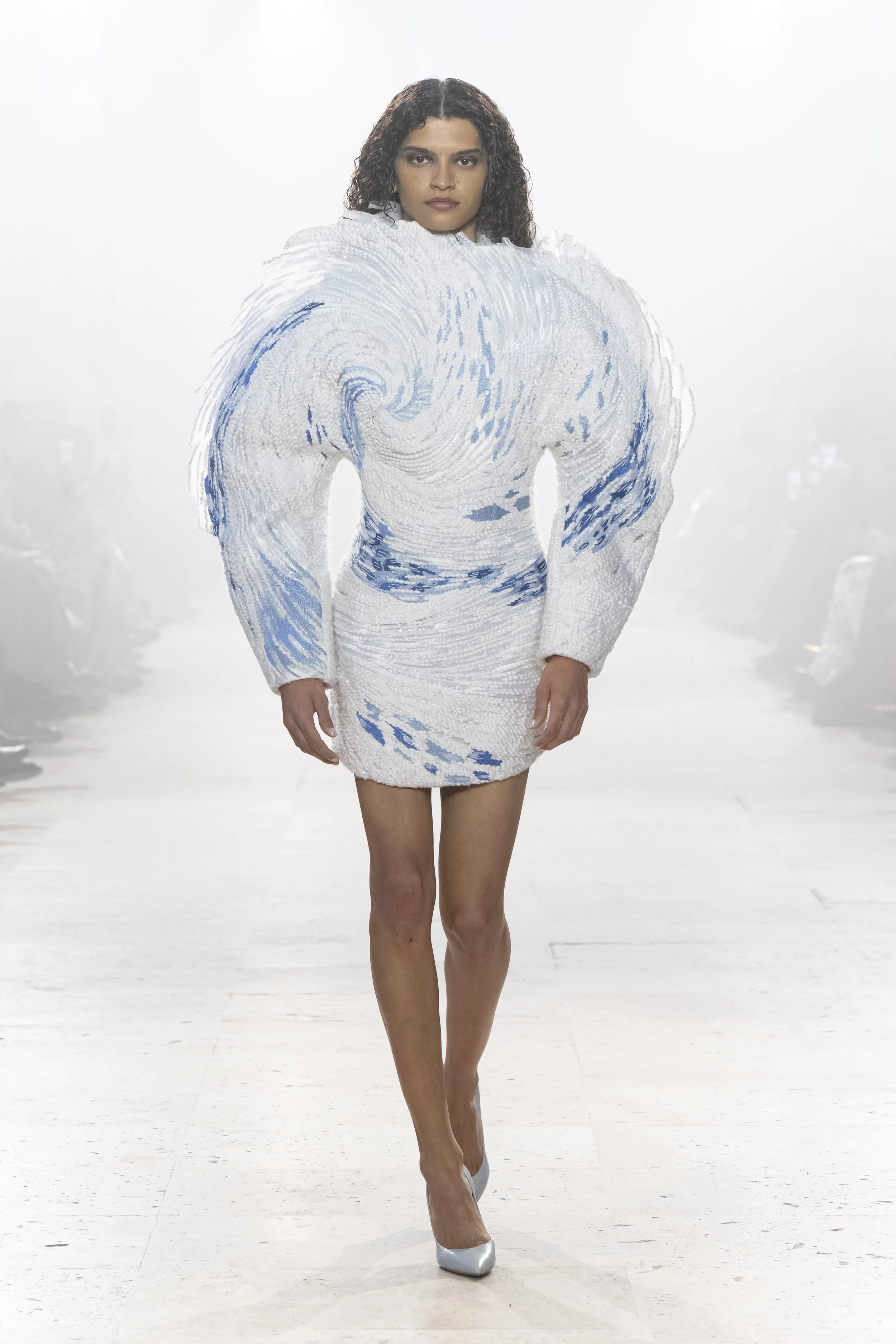
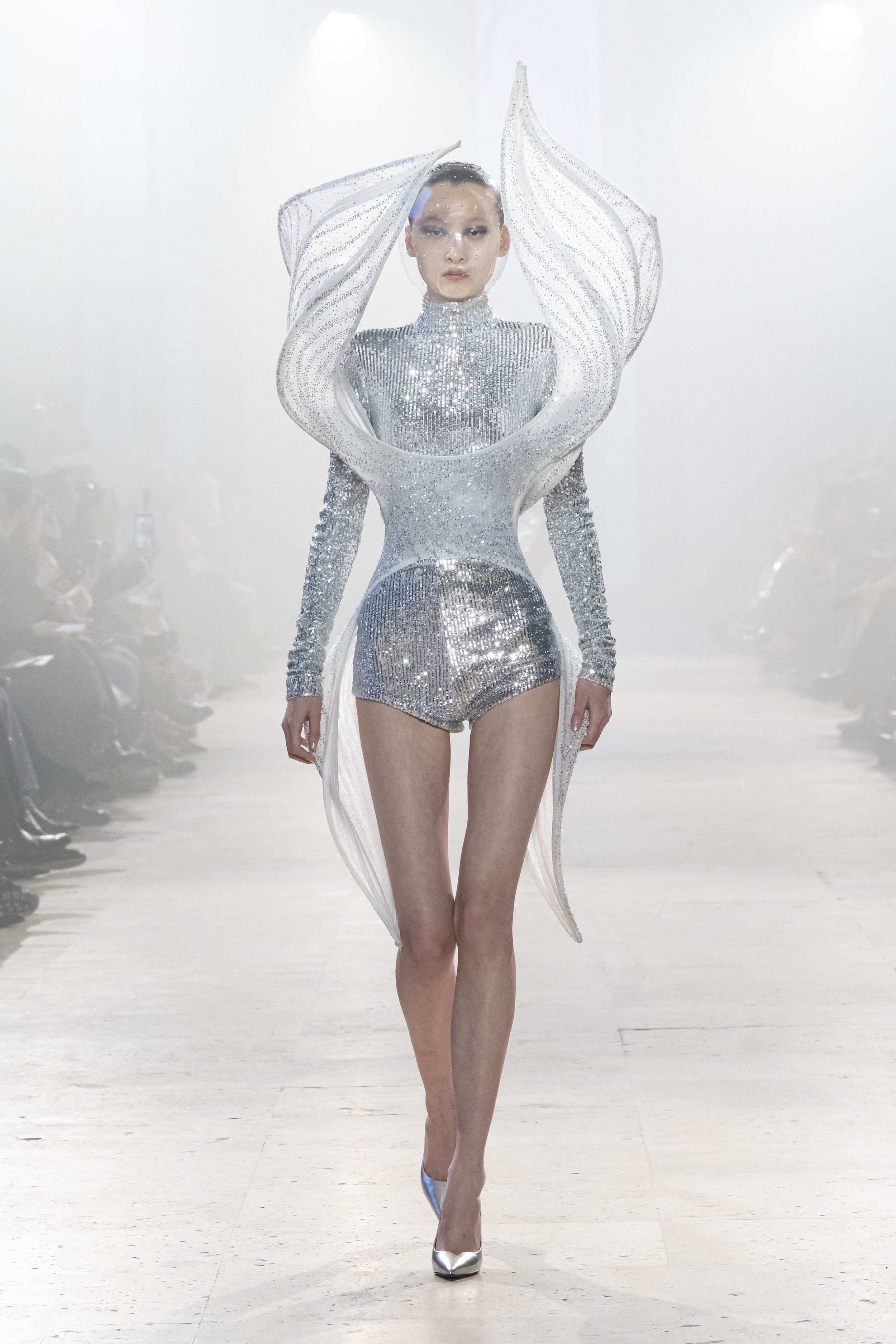
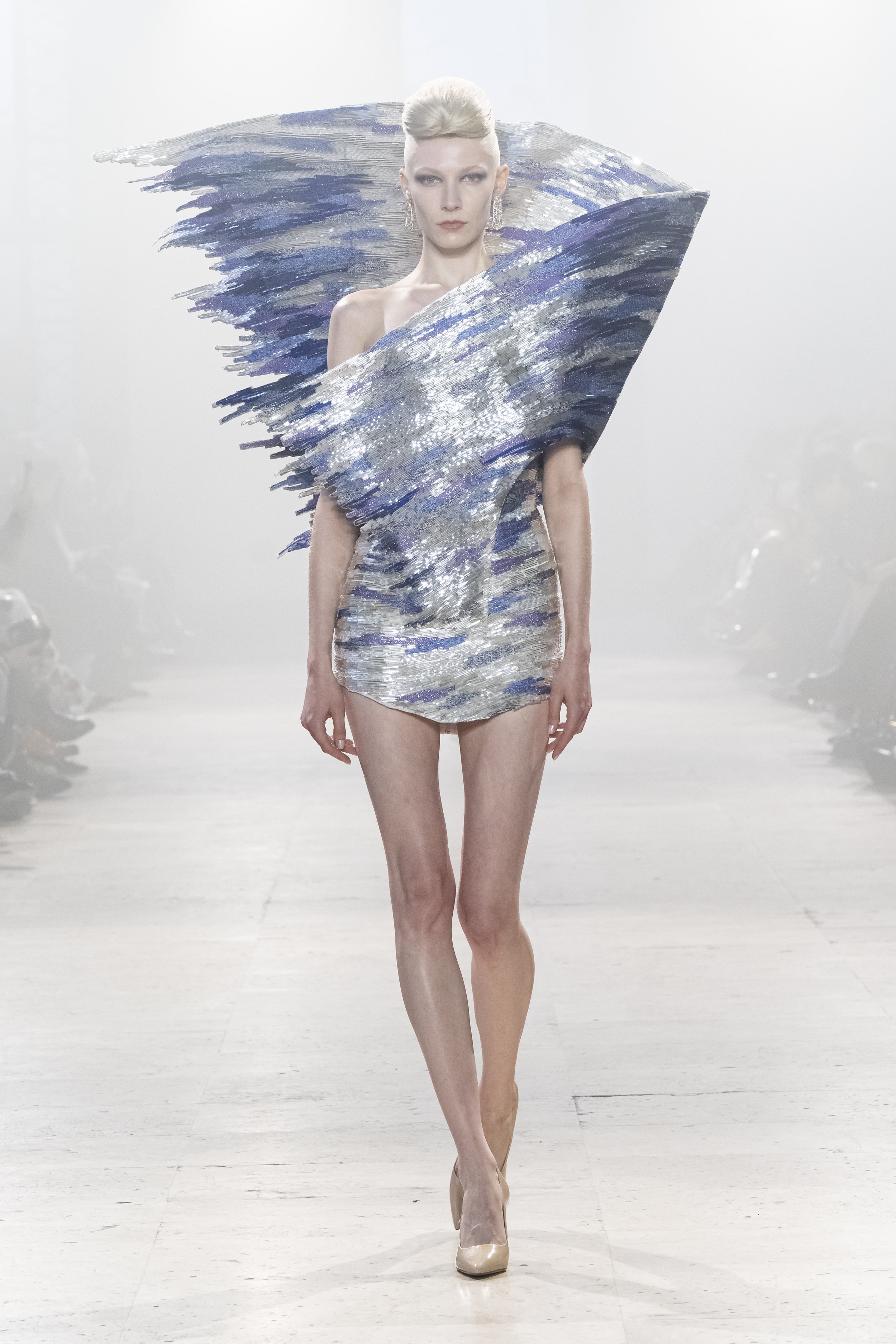
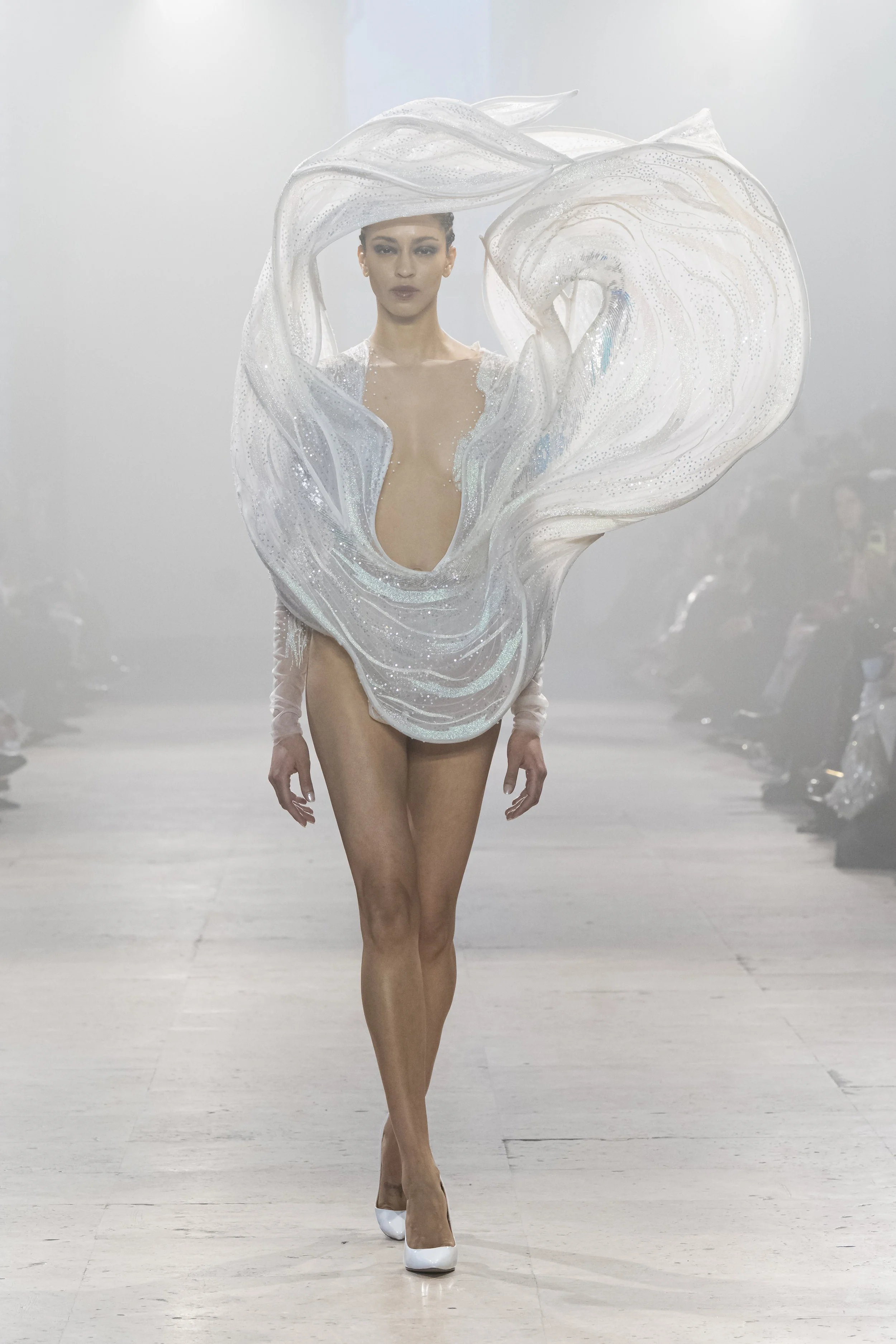
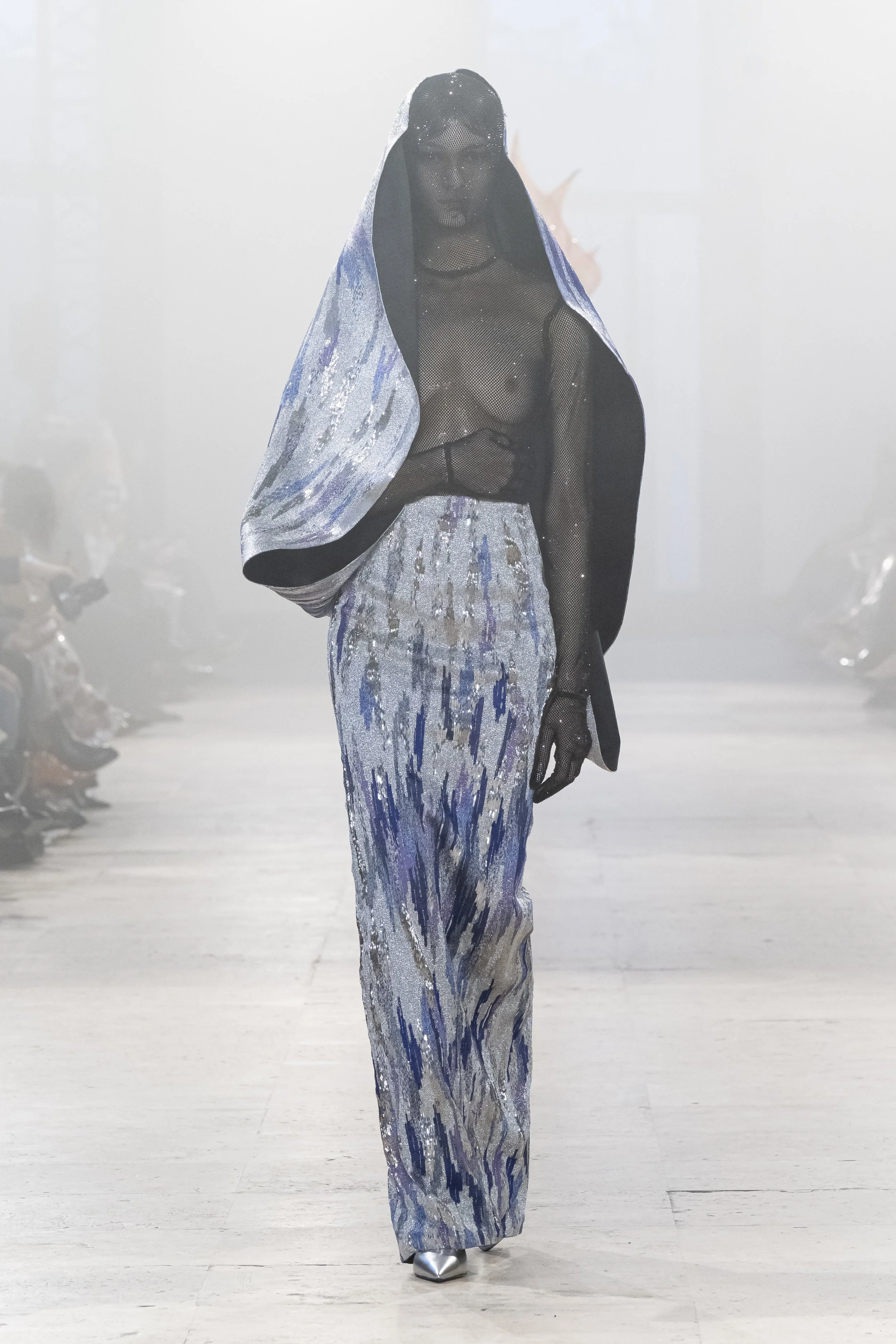
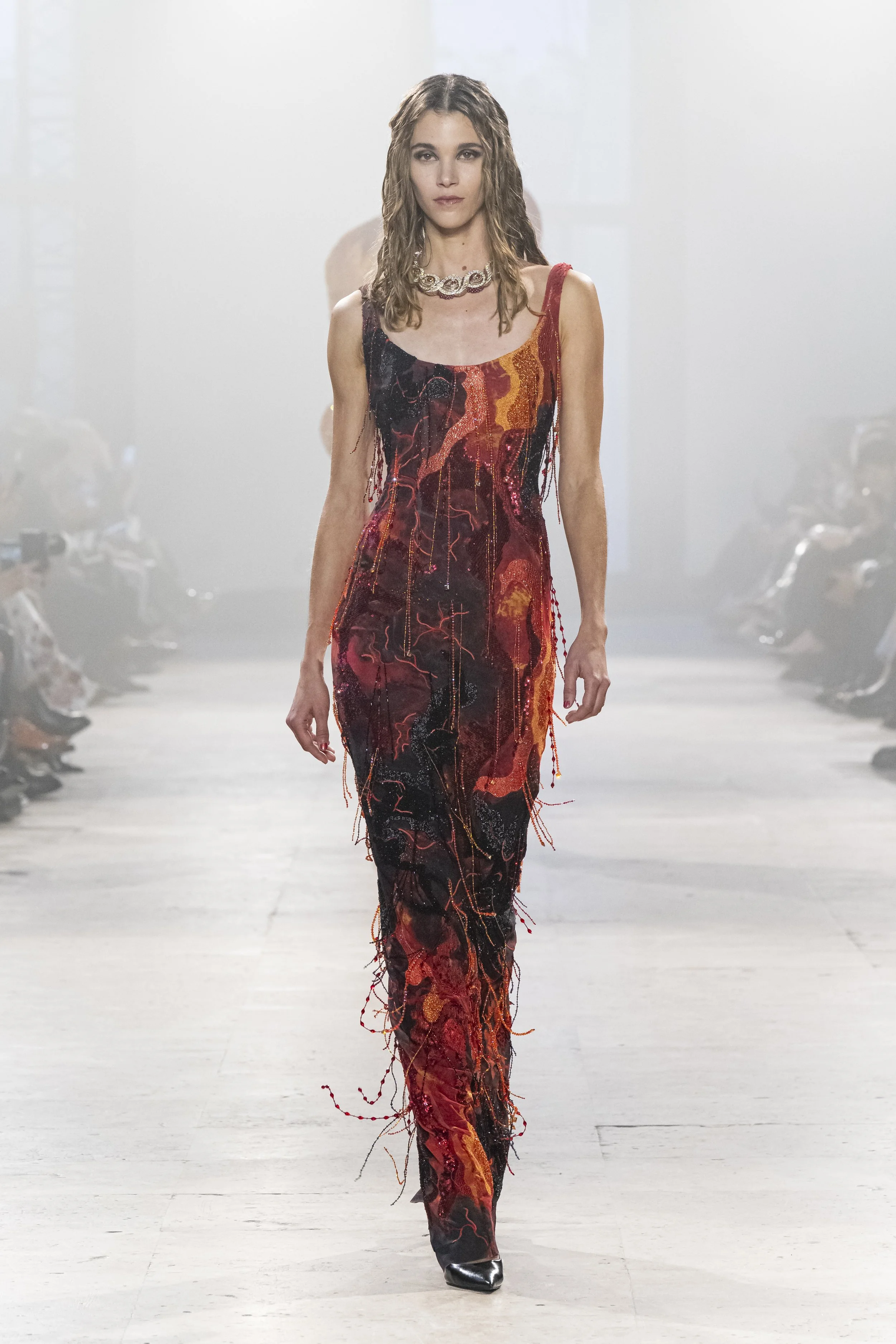
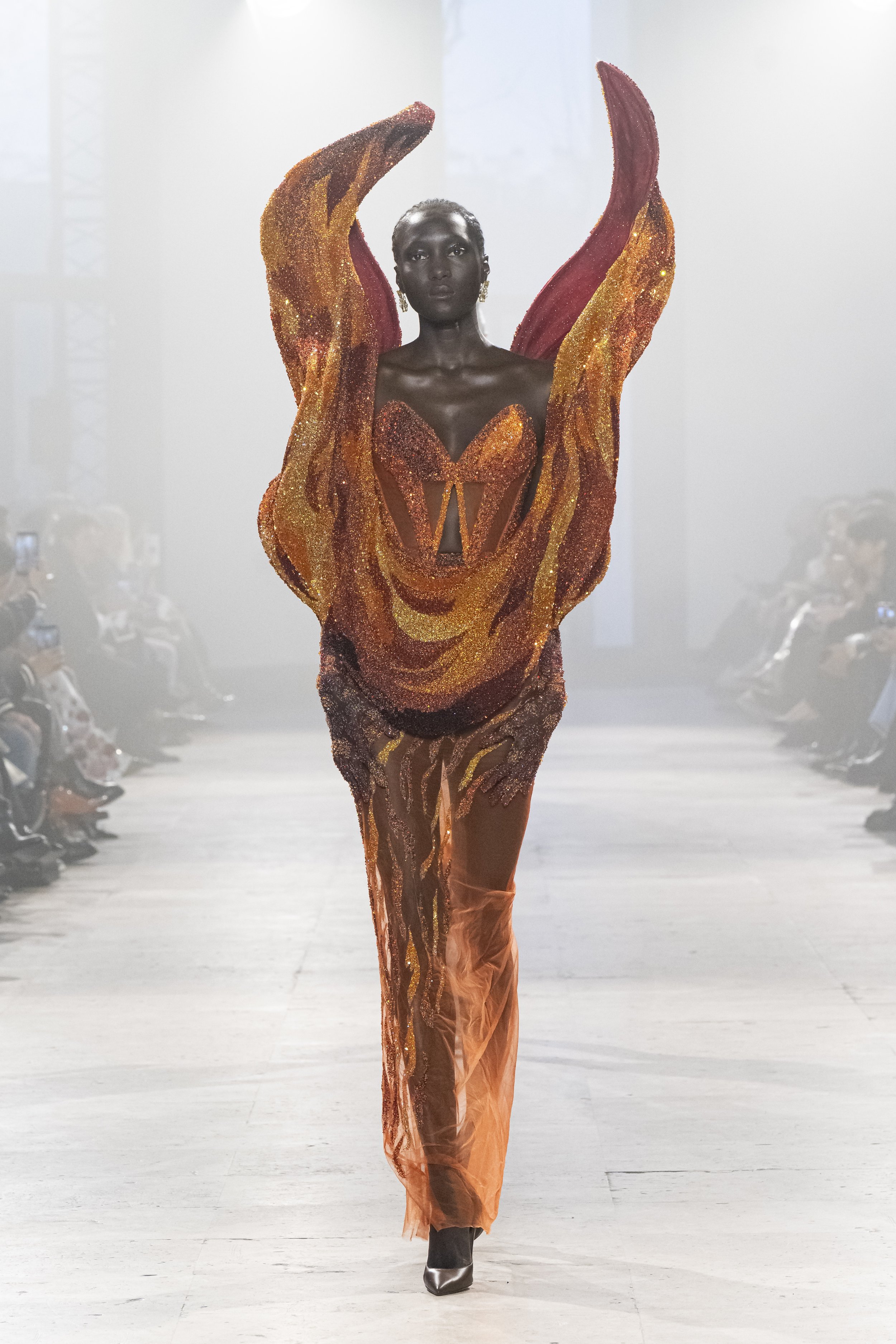
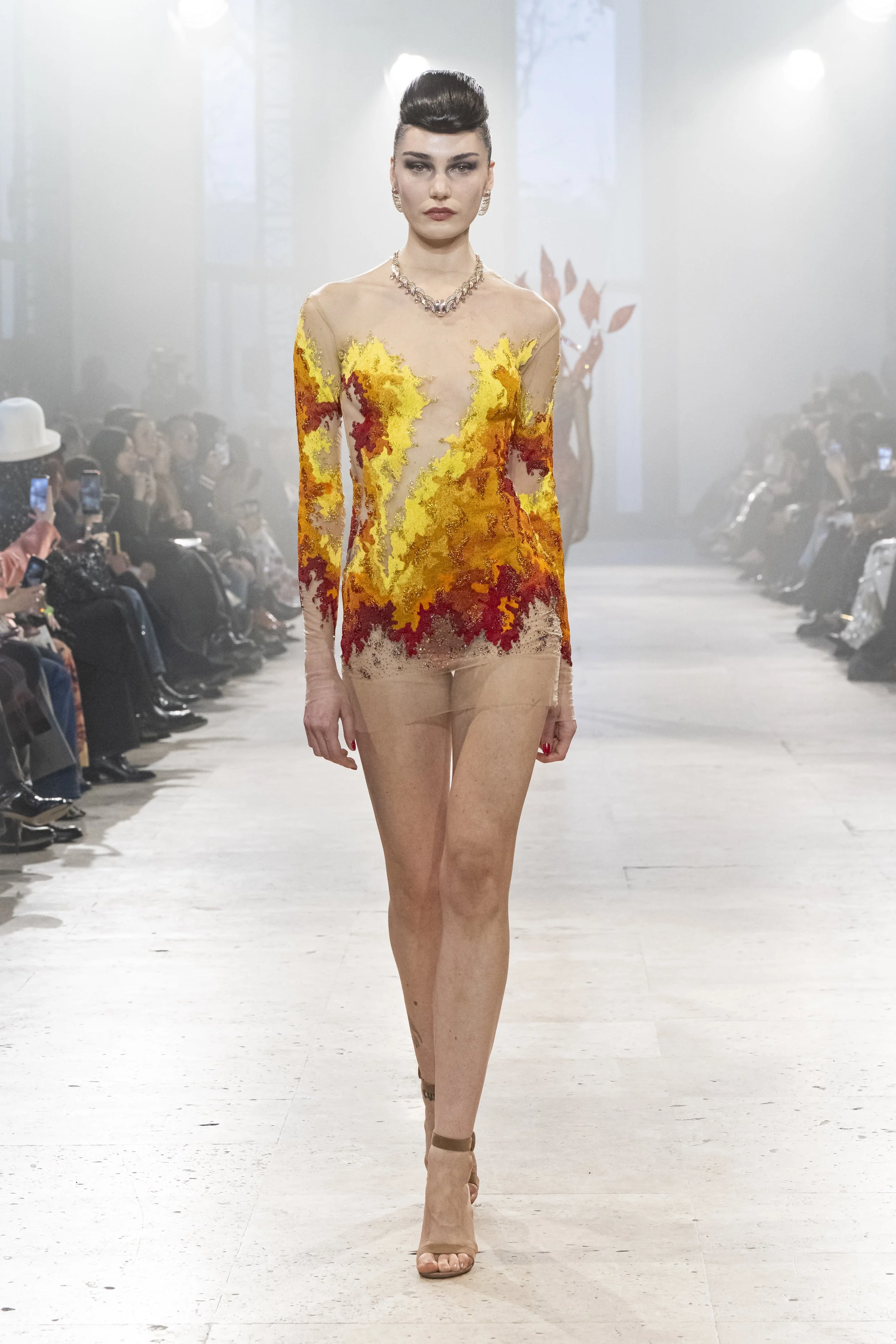
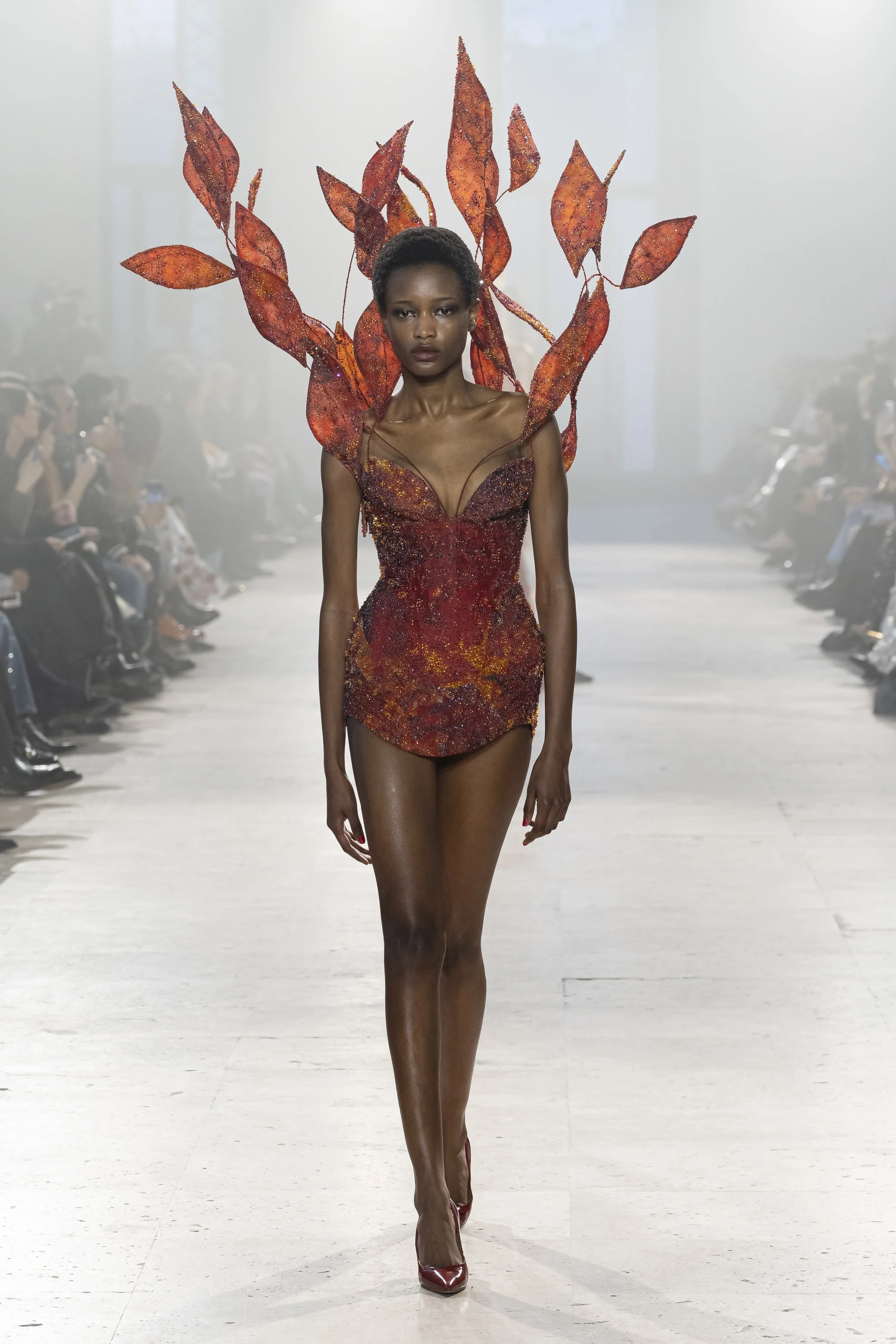
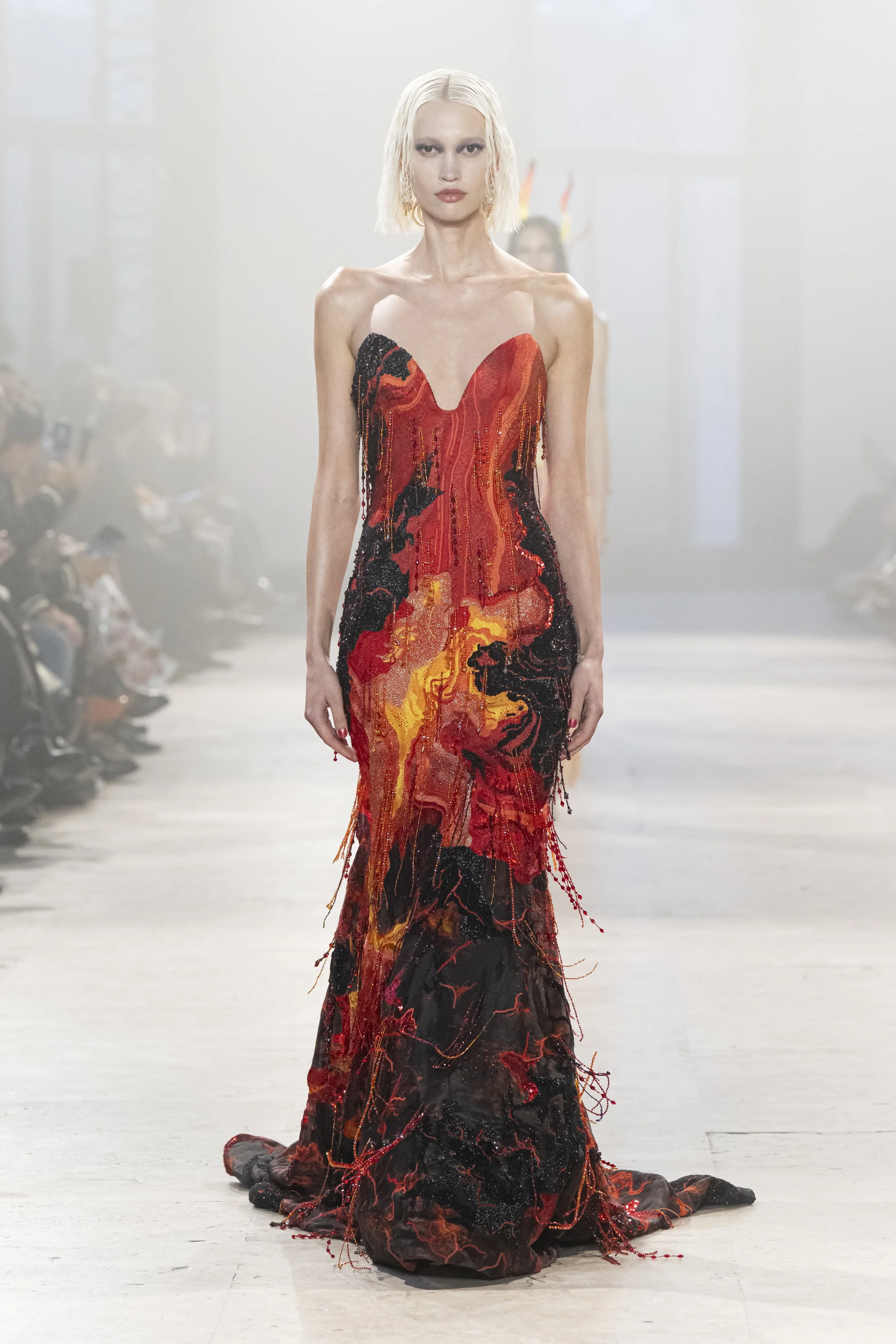
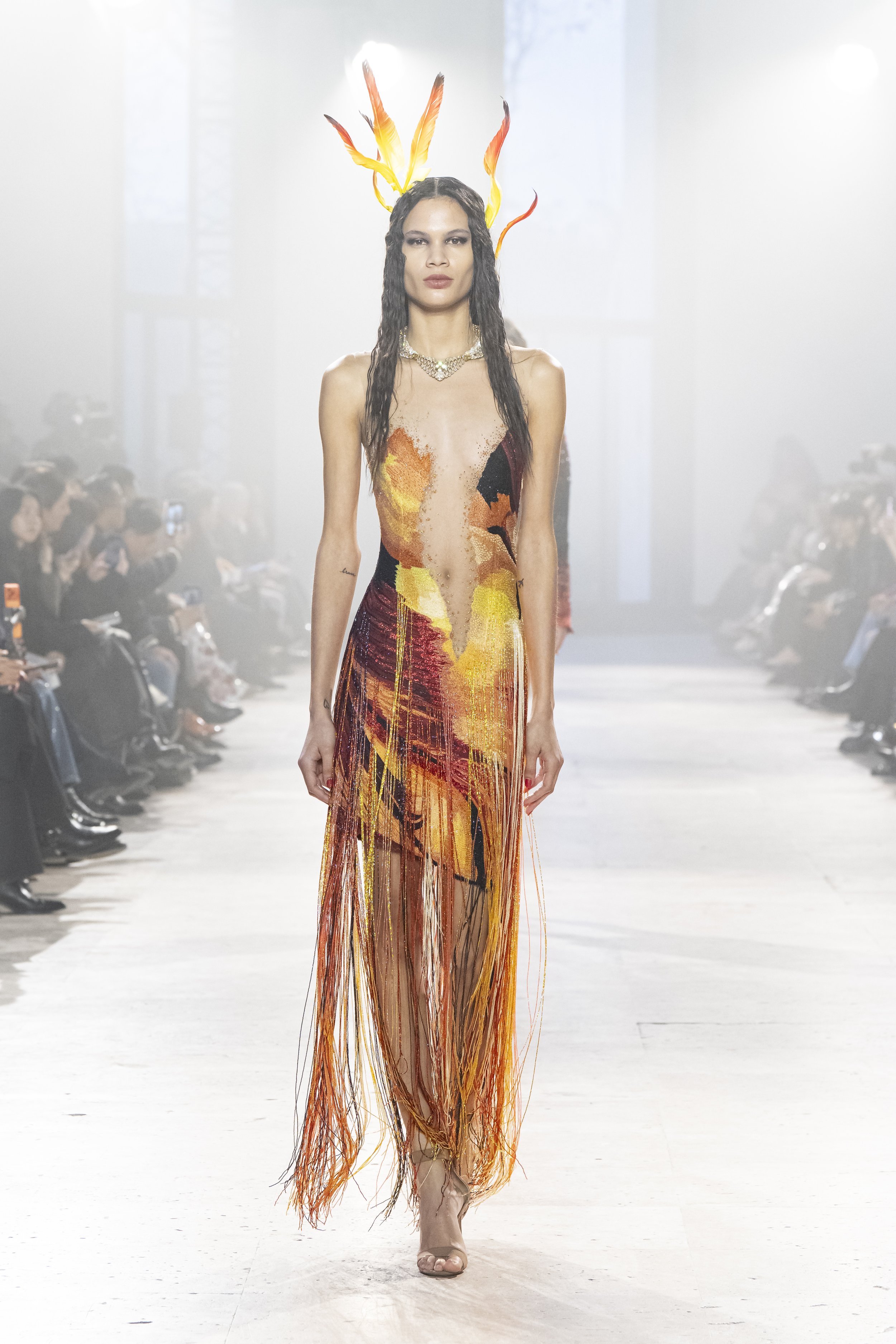
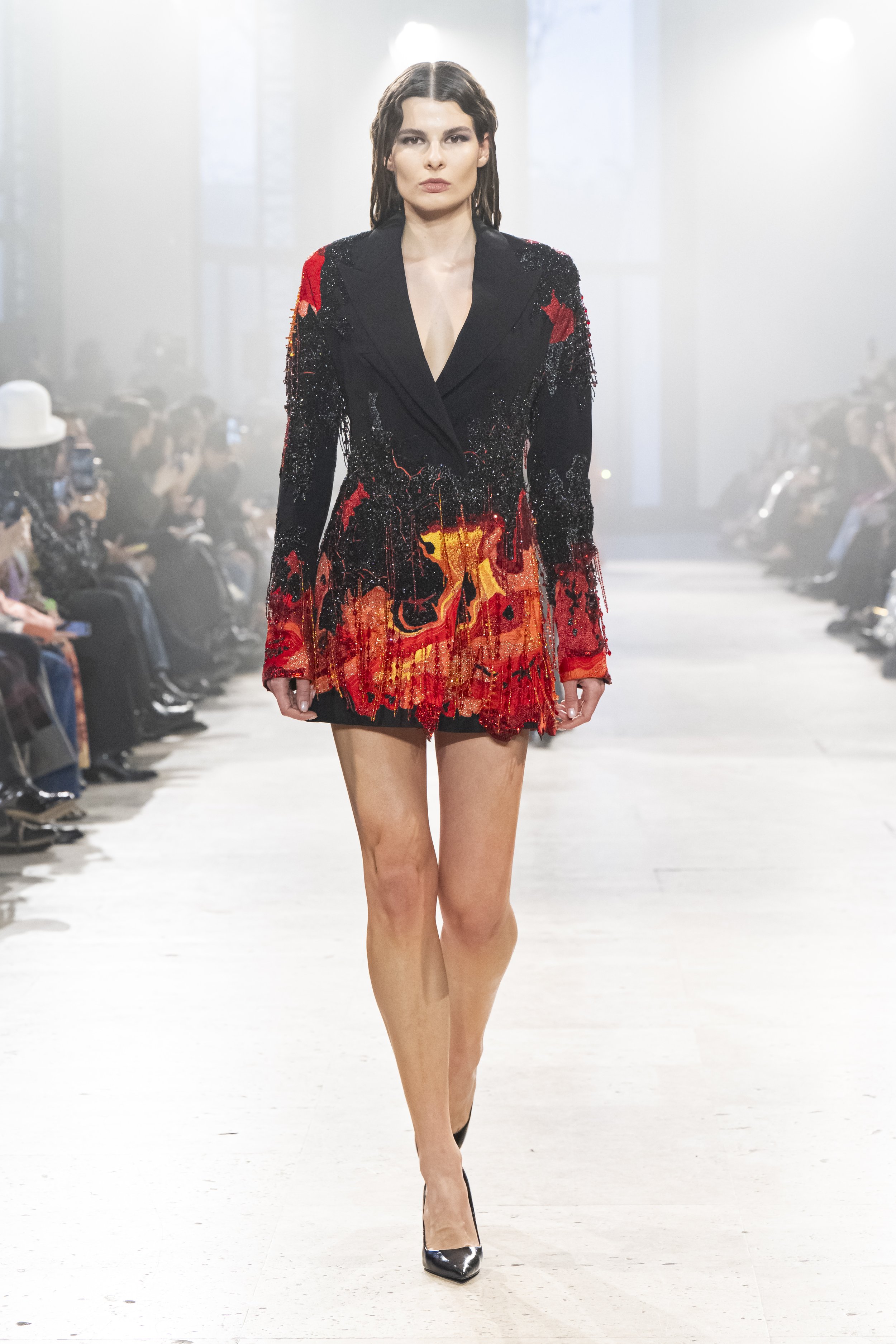
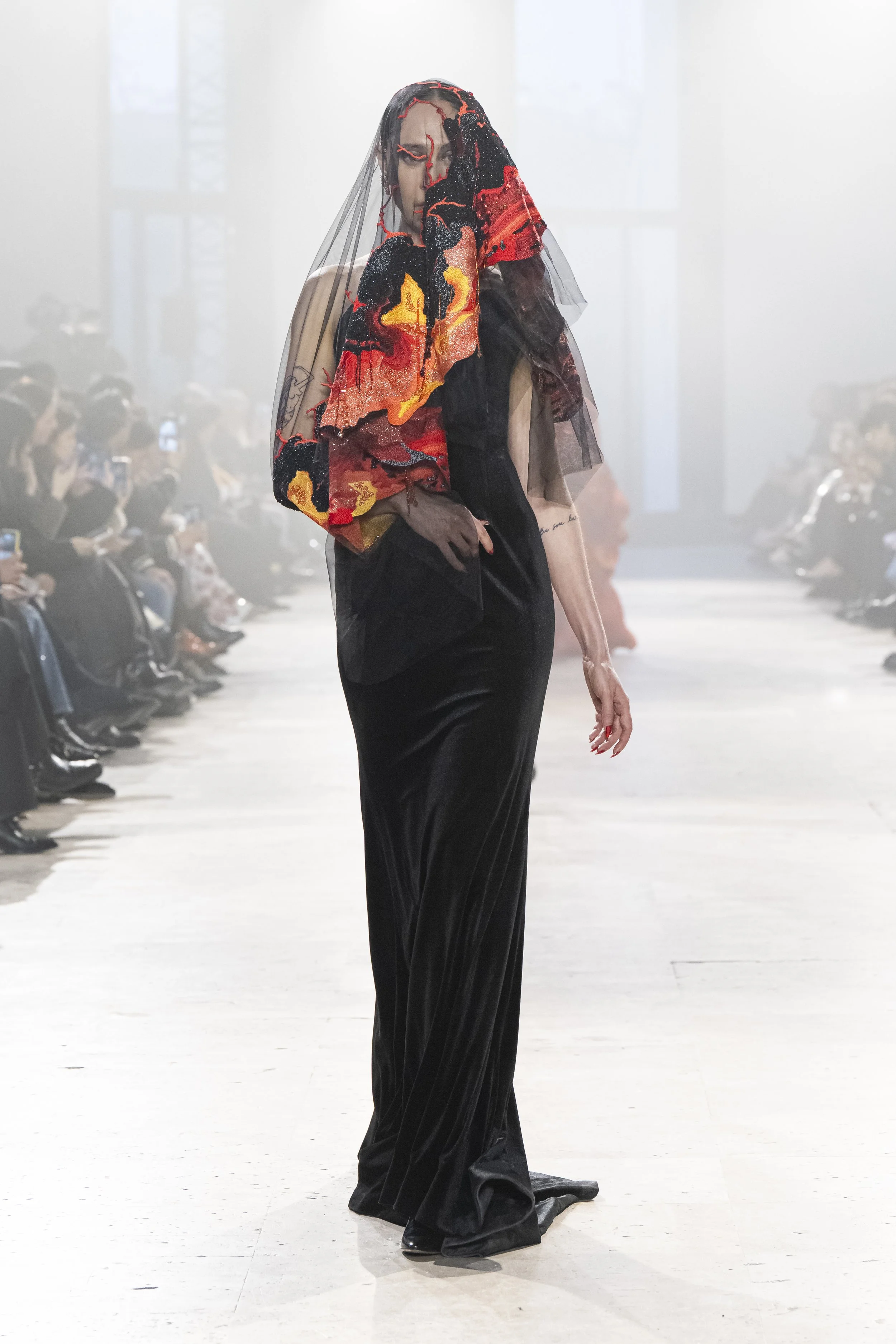
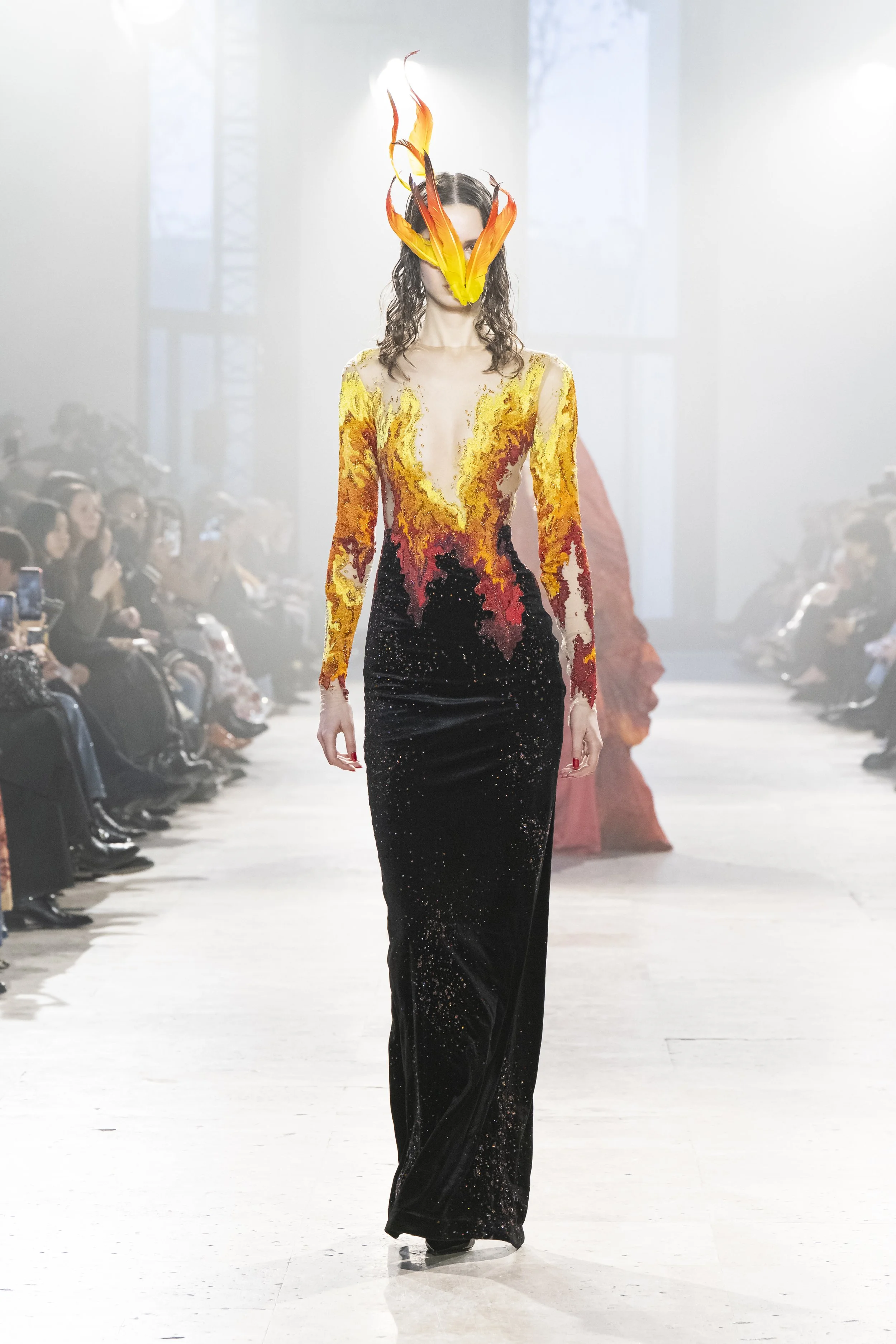
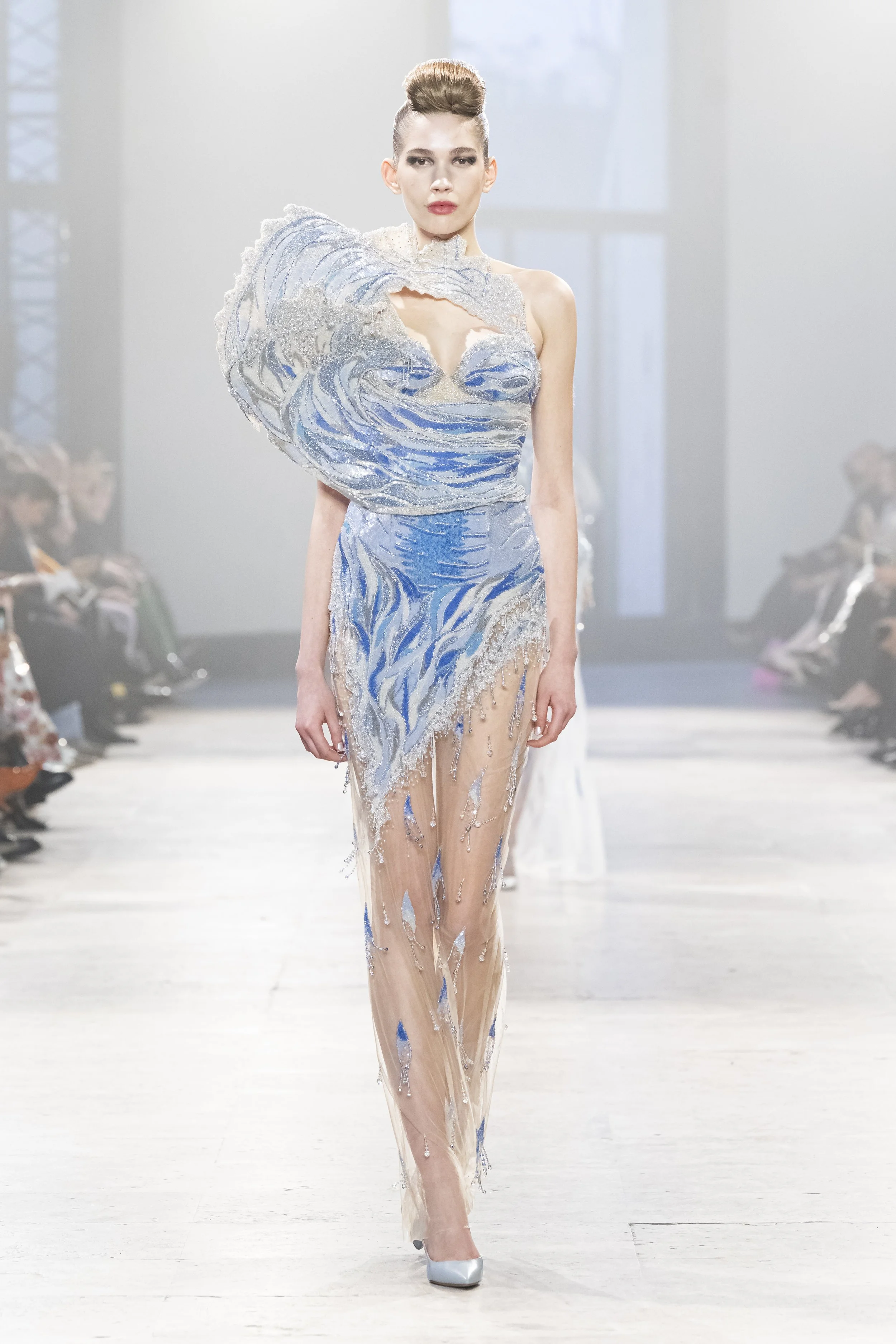
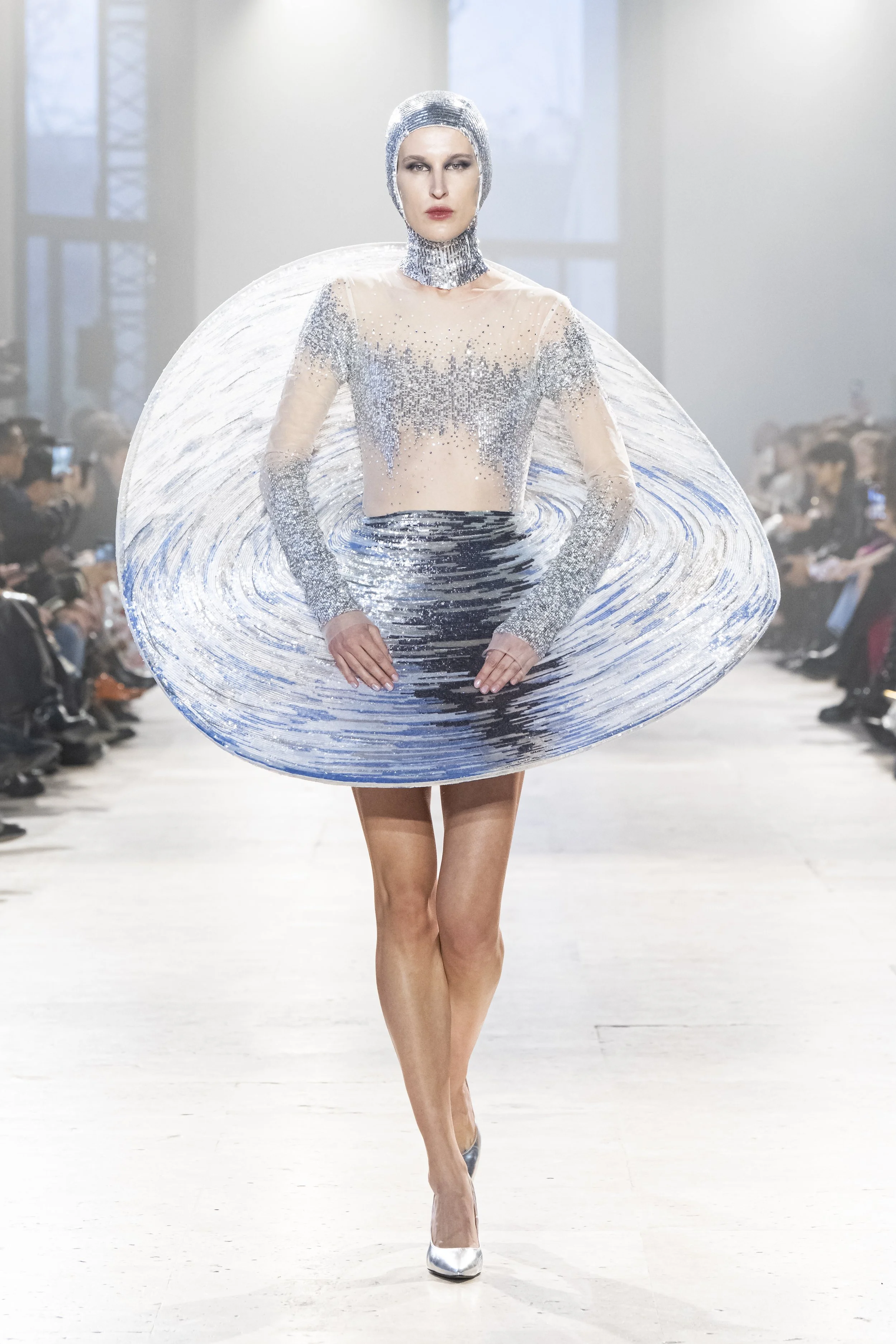
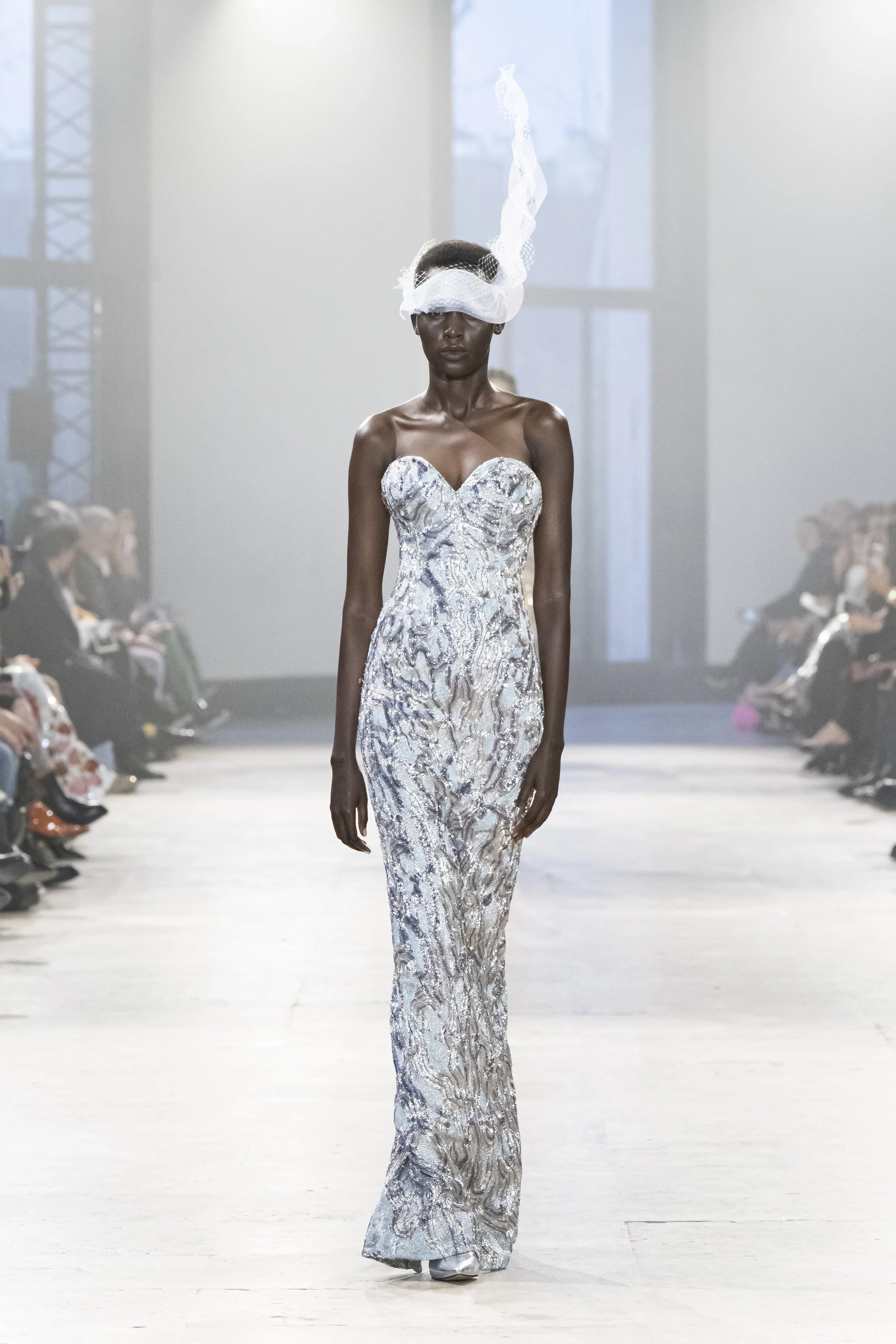
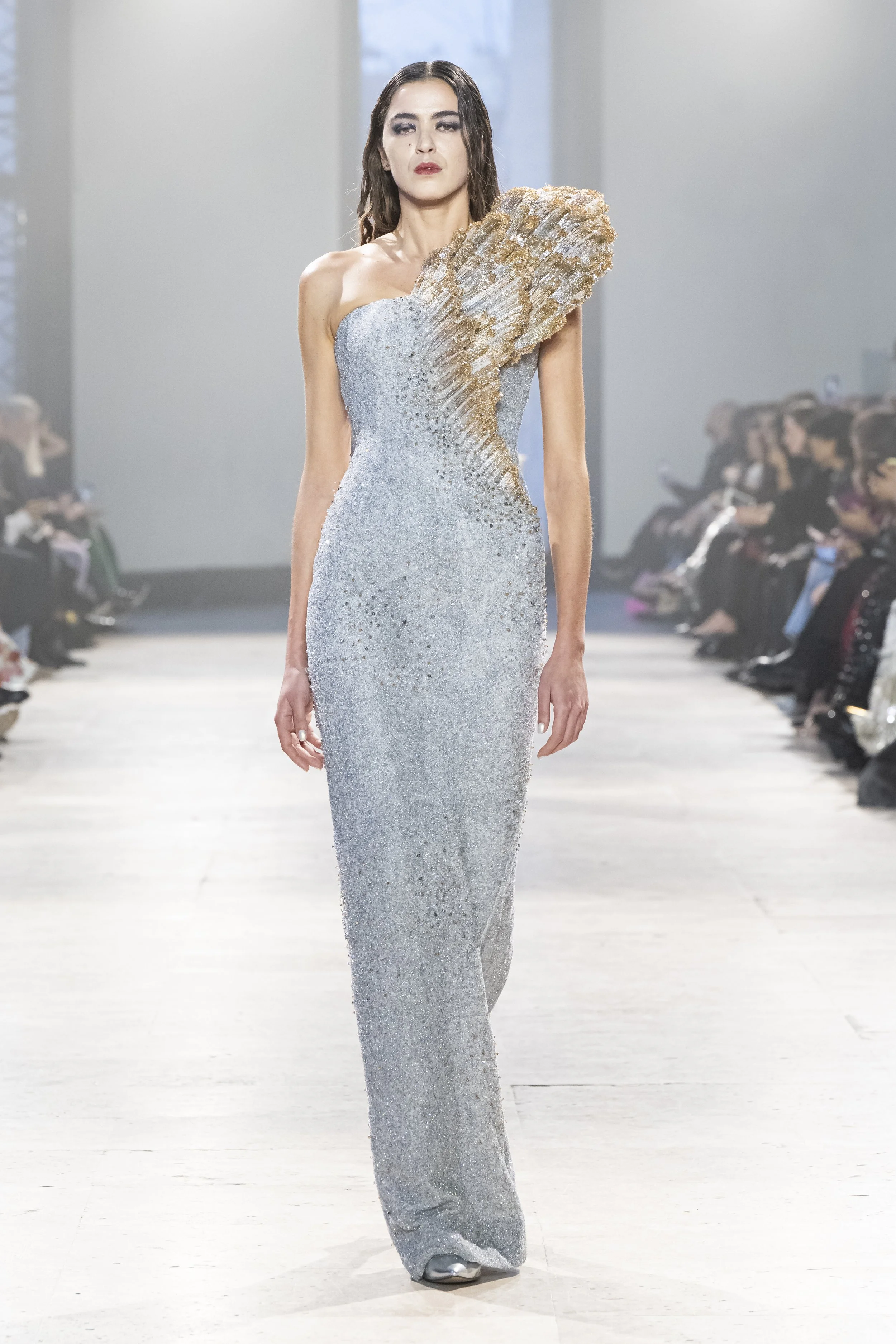
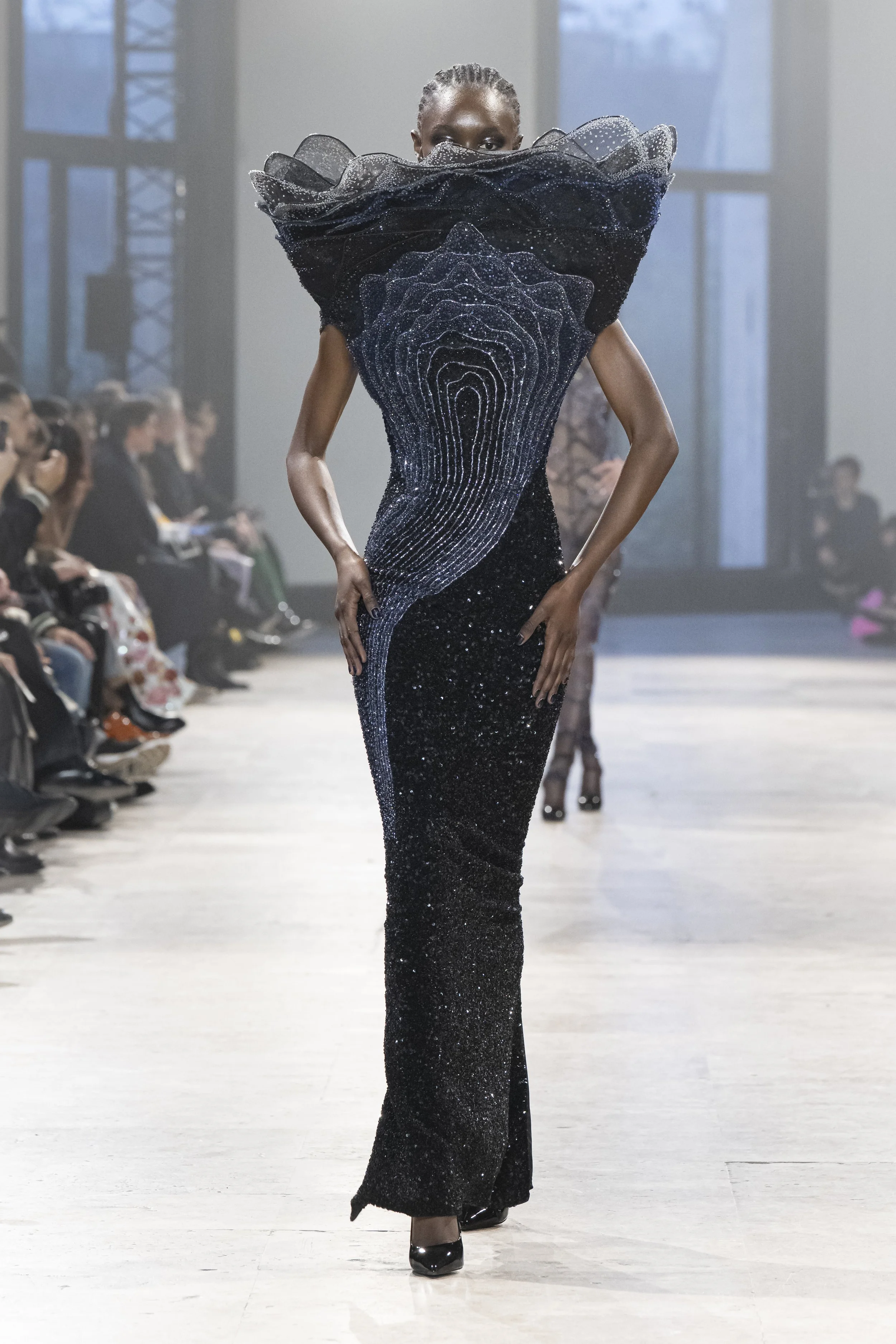
Mishra also explored air in another piece through sheer, draped silk that formed an asymmetric cascade across the shoulder, paired with a skirt that billowed gently at the step. The effect was fleeting and ethereal, the wearer almost disappearing into the fabric’s flow. Conversely, aether appeared in a more sculptural look: a gown layered with translucent silk and delicate netting, held in place by subtle stitching that suggested invisible forces shaping form. Movement here was minimal but deliberate, creating a sense of suspension, as if the body and fabric were caught between weight and weightlessness.
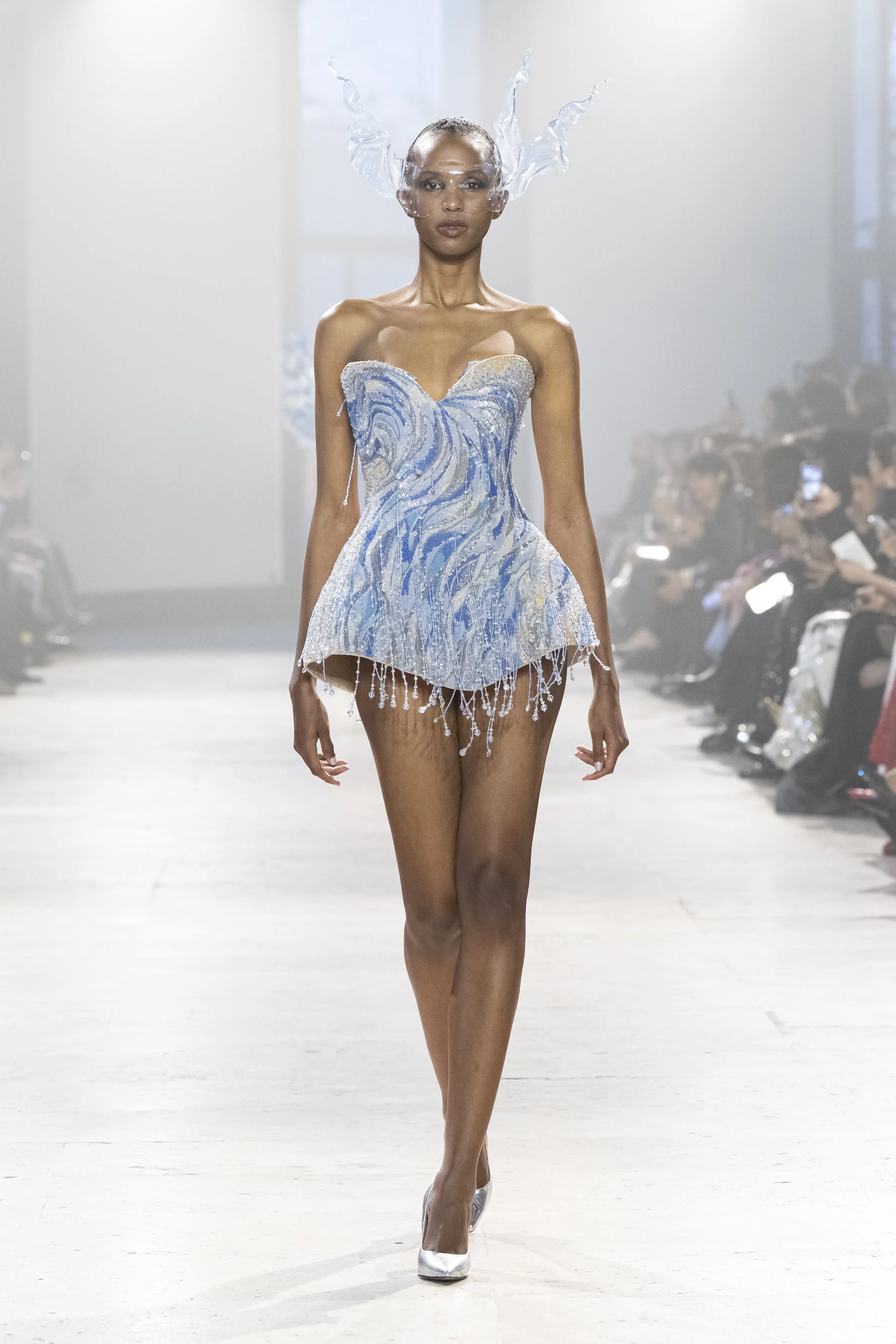
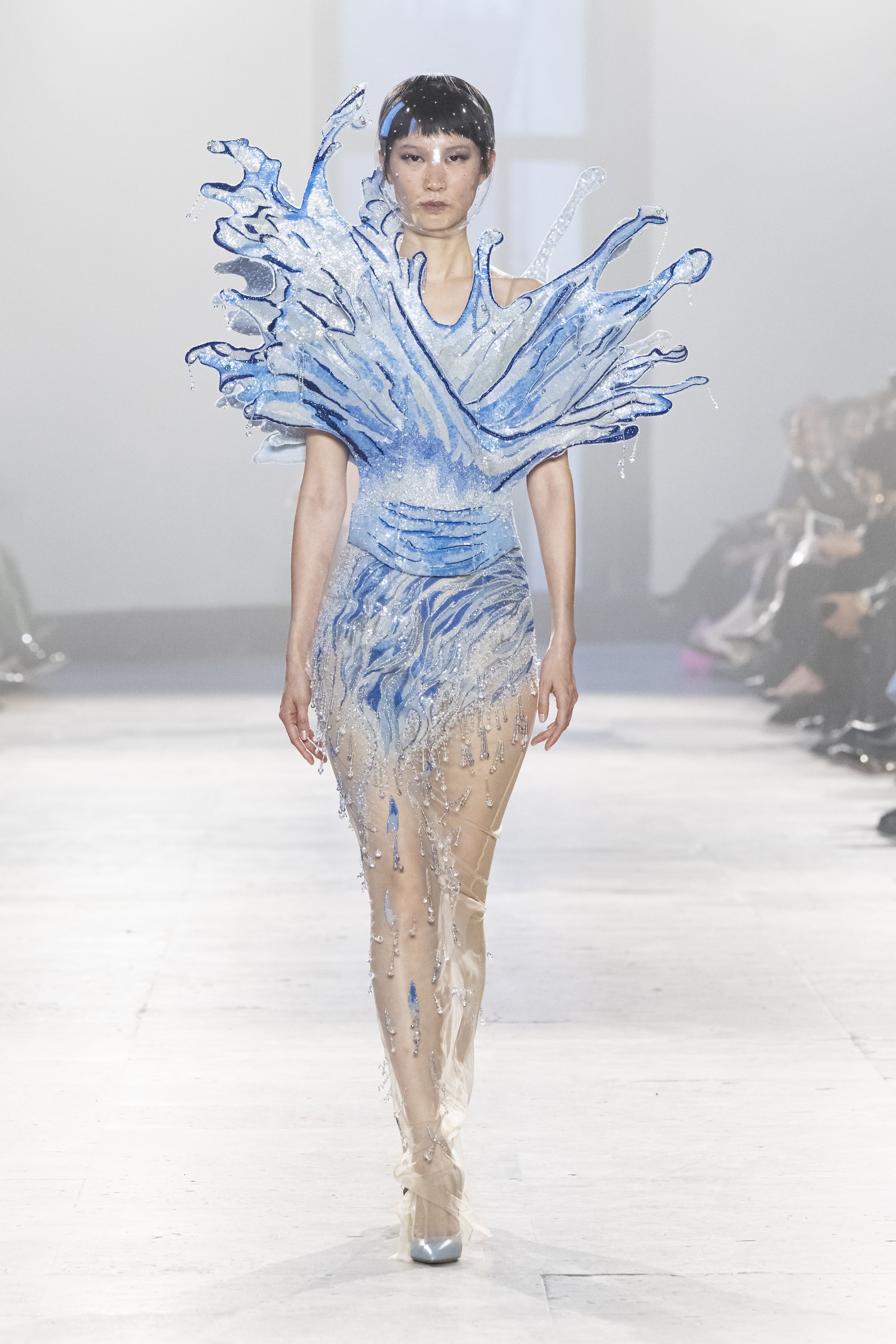
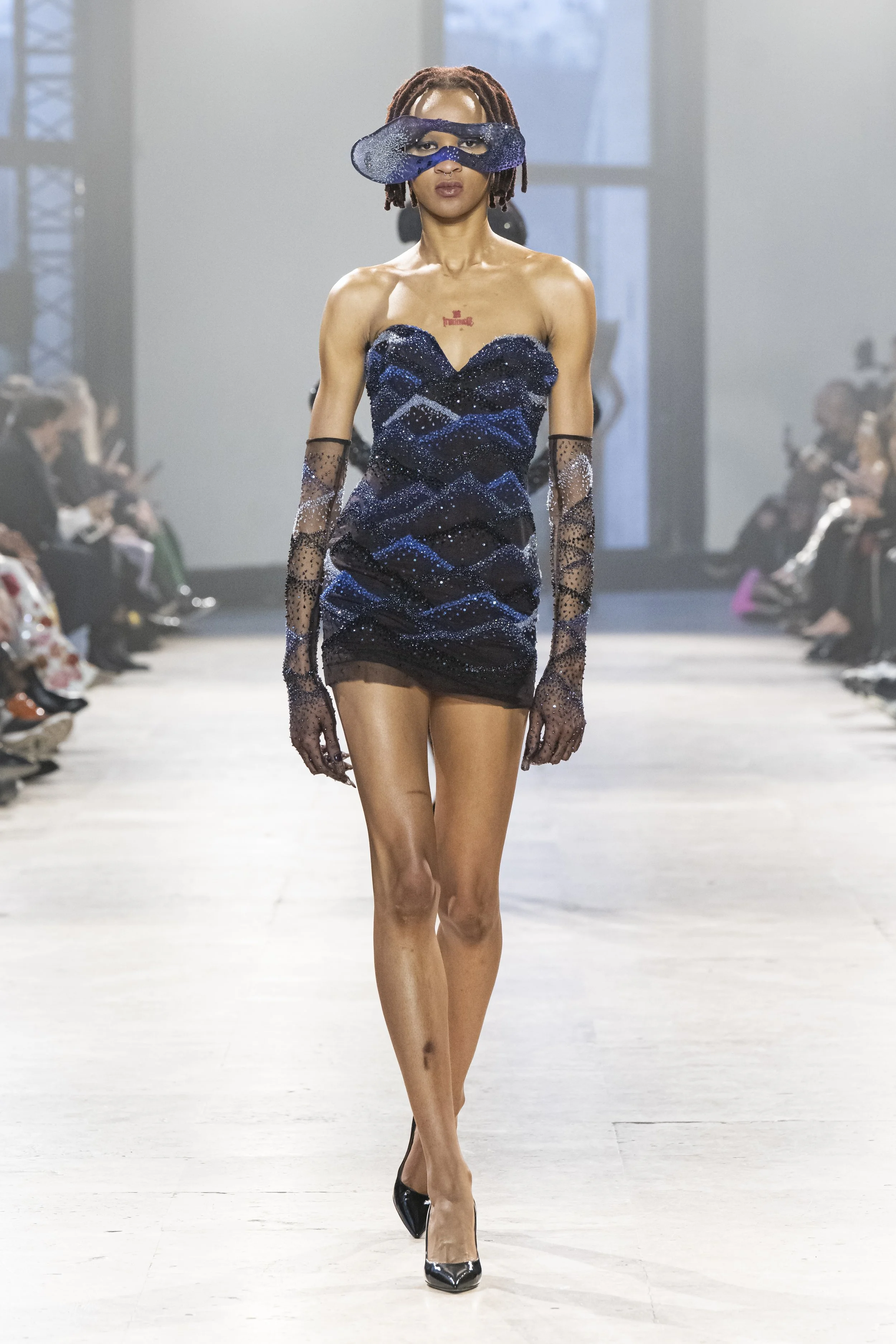
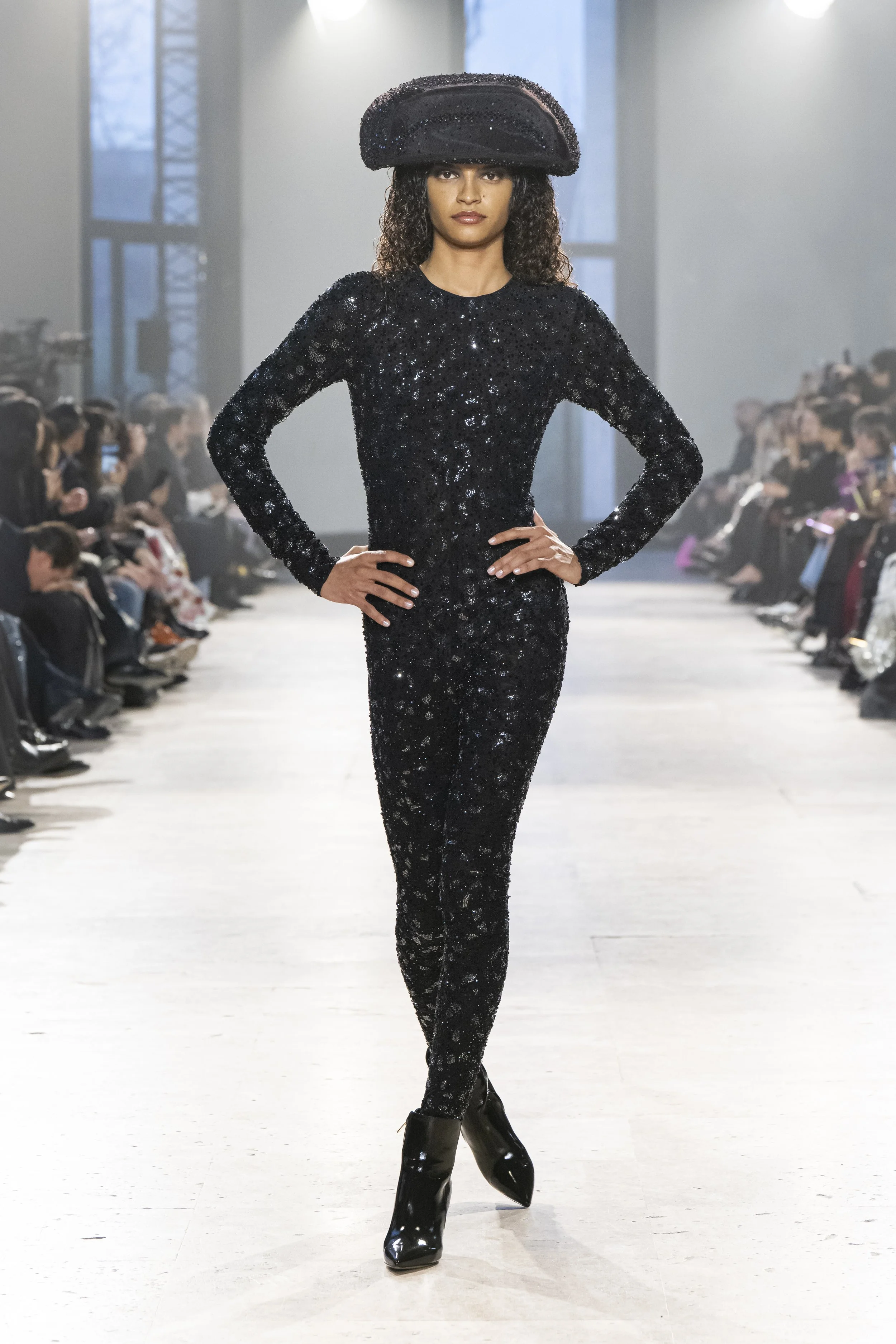
Craft remained the clarion throughout. Embroidery was never flourish but structural language: threads, beads, and sequins carefully layered to give surfaces dimensionality, catching light and shadow in ways that emphasised form rather than decoration. Accessories, including millinery, were conceived in tandem with the garments, extending silhouette and dialogue rather than interrupting it.
Seen in context with his previous work, Alchemy feels like a shift from storytelling to sensory logic. The garments do not narrate so much as register the world — how matter moves, resists, and yields. Each stitch, fold, and layer is simultaneously conceptual and technical, a quiet demonstration of couture’s capacity to translate elemental forces into material presence.