In Praise of Ma: When Fashion Became Philosophy
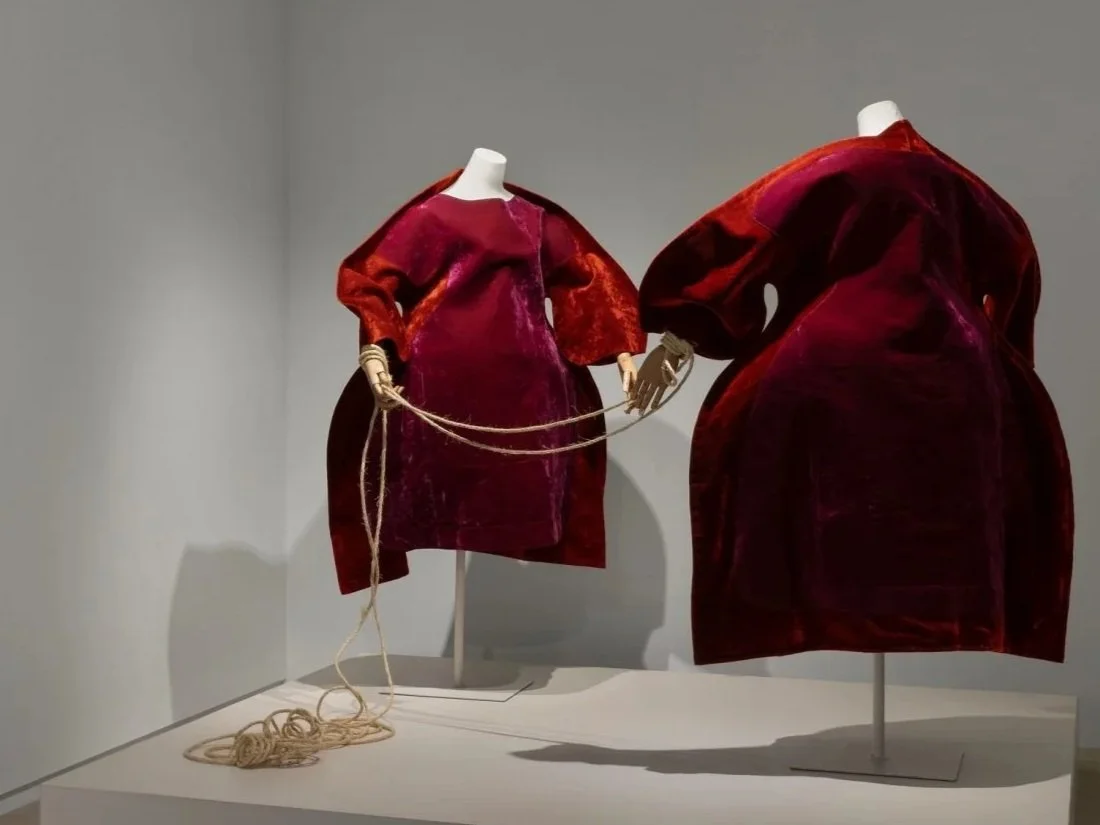
The Parodi Costume Collection’s In Praise of Ma opens with an act of subtraction. Garments are presented without bodies, freed from the choreography of wear and the distraction of styling. What remains is fabric, construction, and intent—the work of Rei Kawakubo, Issey Miyake, and Yohji Yamamoto encountered not as fashion in motion, but as matter shaped by thought.
When these designers arrived in Paris in the early 1980s, their clothes unsettled a system built on legibility and allure. Frayed hems, dominant blacks, asymmetry, and deliberate incompleteness defied the Western fashion grammar of seduction. These were garments that refused to explain themselves—and still do.
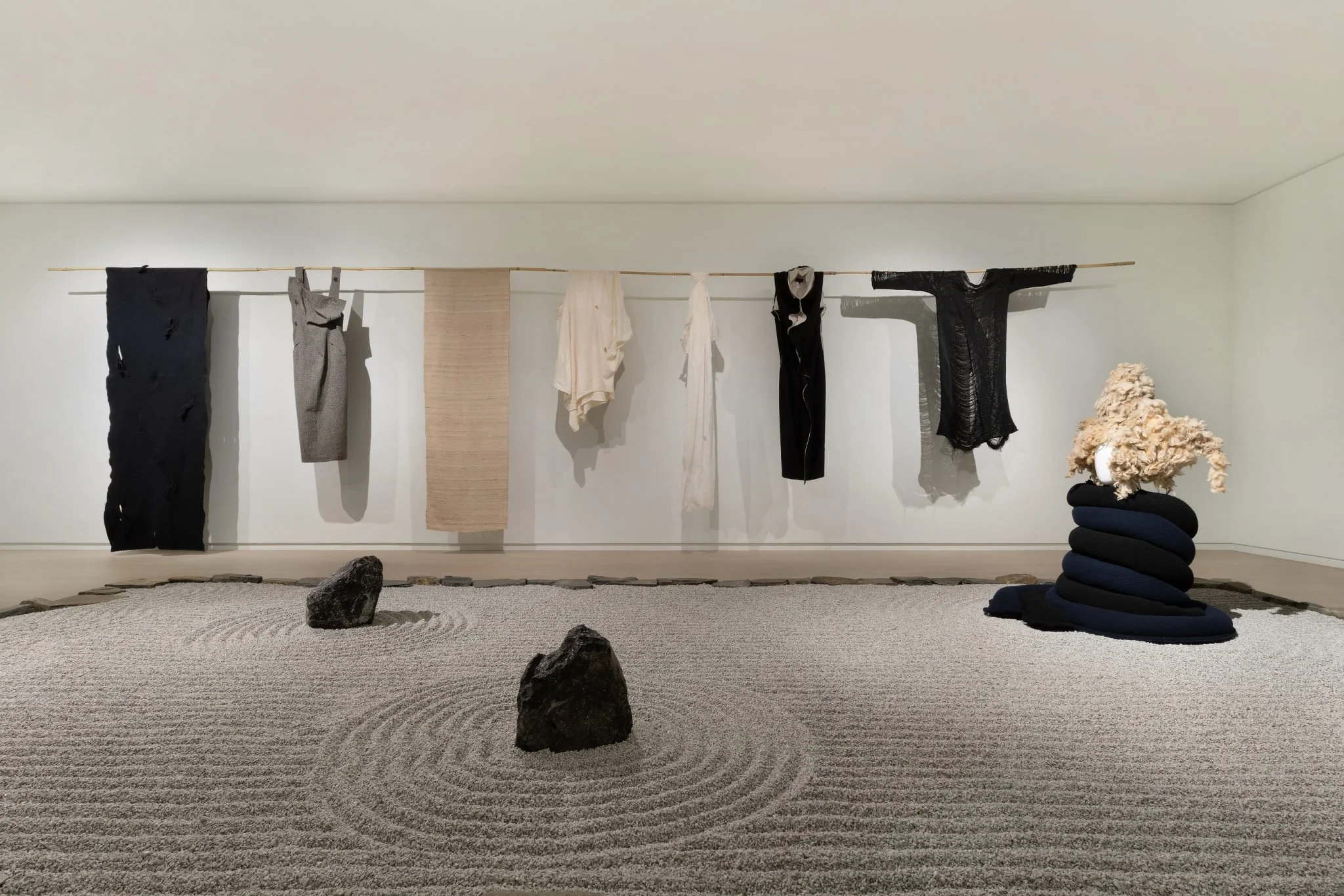
The exhibition is structured around four Japanese aesthetic principles, though they are allowed to operate more as atmospheres than lessons. Ma—the charged space between things—anchors the experience, creating room for garments to breathe. Hi draws attention to shadow and concealment, recalling Jun’ichirō Tanizaki’s belief that beauty reveals itself obliquely. So is expressed through honest materiality: seams left visible, edges left raw. Ha, the principle of rupture, introduces instability—the moment when form is allowed to break in order to evolve.
Seen off the body, the clothes sharpen rather than soften. Kawakubo’s constructions read as architectural propositions rather than provocation; Yamamoto’s exposed seams feel quietly precise, less rebellion than declaration; Miyake’s sculptural volumes become studies in air, tension, and release. Absence here is not a curatorial conceit but a strategy —what is missing clarifies what matters.
Director Gonzalo Parodi has described the exhibition as “silent music,” an apt description for installations that slow the viewer down. This is fashion that asks for duration. Naoko Ito’s 2009 sculpture Flora appears alongside the garments, extending the conversation toward fragility and impermanence without diluting the focus on craft.
There is something distinctly contemporary about encountering fashion this way. In a visual economy driven by immediacy and consumption, In Praise of Ma insists on restraint. It treats clothing not as image or product, but as a philosophical act—one rooted in time, labour, and intention.
In Praise of Ma: Emptiness and the Space Within runs until May 1, 2026.