Franck Sorbier: A Couturier at the Crossroads
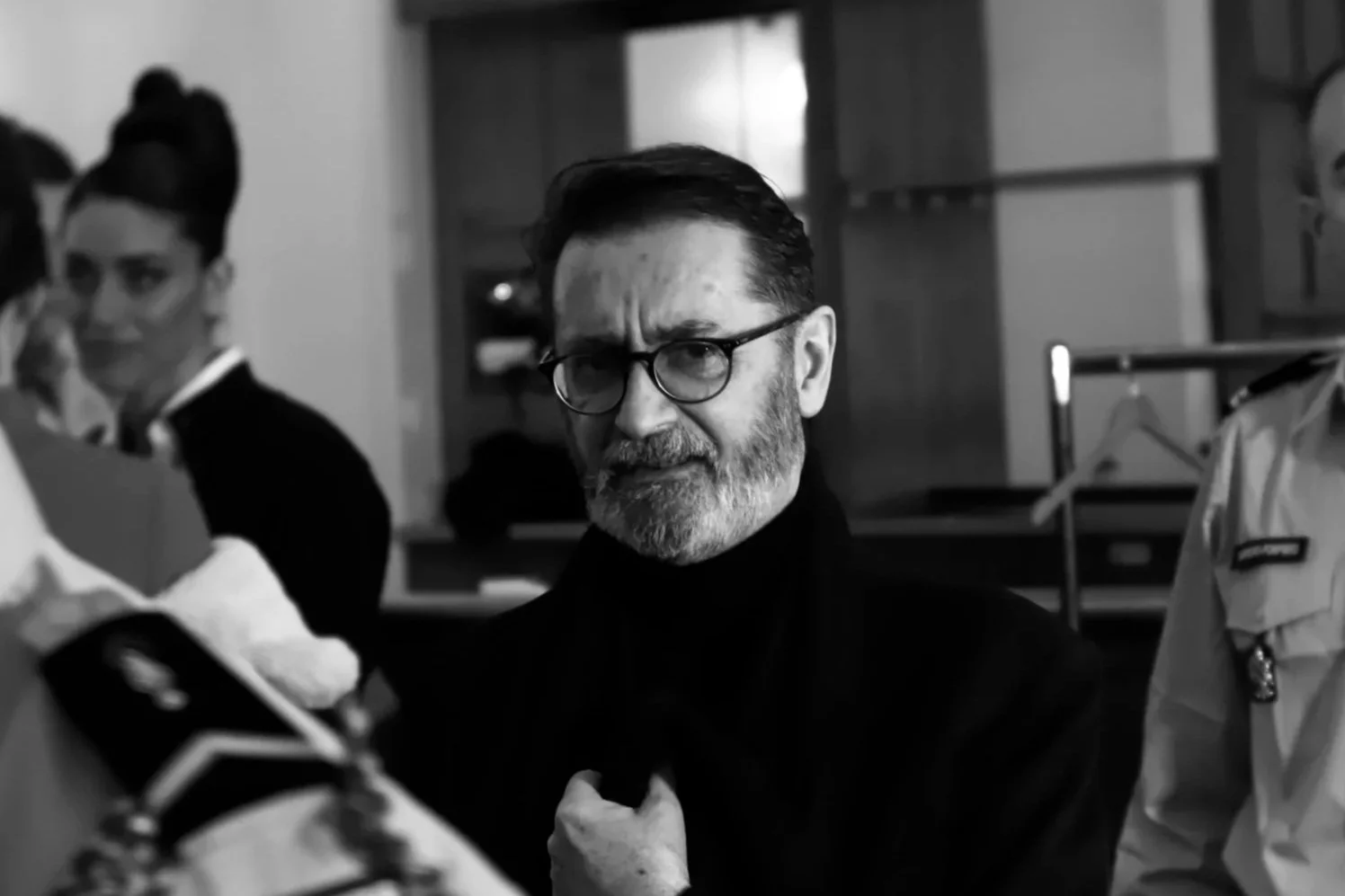
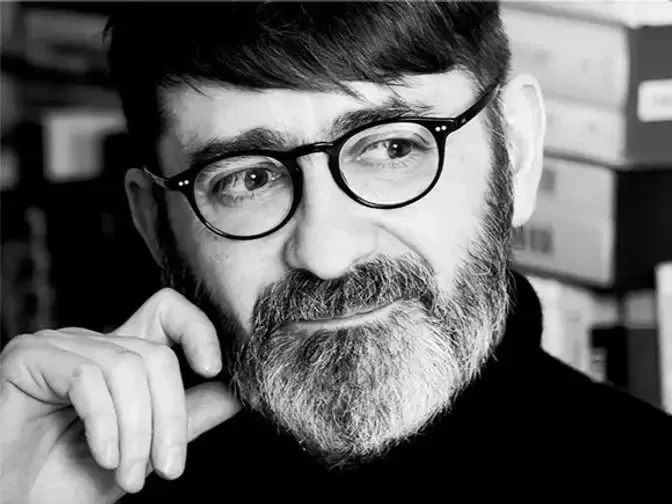
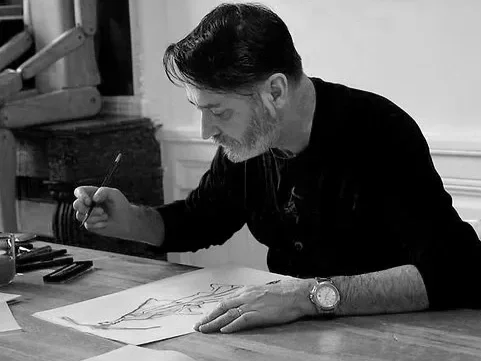
At a time when couture has become as much spectacle as craft, Franck Sorbier stands alone. "The last of the Mohicans," he calls himself — one of the few couturiers still cutting, assembling, and finishing his own garments by hand. "Designers who actually make their own models today? I don't think there are any left," he says. "The last one, it's me."
It is a position that places him firmly within the lineage of couture as craft rather than image, closer to Azzedine Alaïa or Emmanuel Ungaro than the contemporary idea of the creative director. "I've always felt more like an artisan than a couture star," he explains, pointing to his dual status as grand couturier and Maître d'Art, a title awarded by the Ministry of Culture rather than the fashion industry. "It matters to me."
Often described as a poet or a dreamer of couture, Sorbier resists the idea that his work is detached from reality. Even when collections draw on history — from ancient civilizations to cultural collisions — they remain anchored in what he calls "what surrounds us." "What's important for a creative person," he says, "is to express deeply the era we're living in — what's happening now, and what's coming."
That awareness informs his sense that couture itself is shifting. "I think couture is entering a new era," he says. "We're moving away from very show-off couture, from this frozen image of women — distant, untouchable, like divas." For couture to stay relevant, he argues, "it has to become much more cultural."
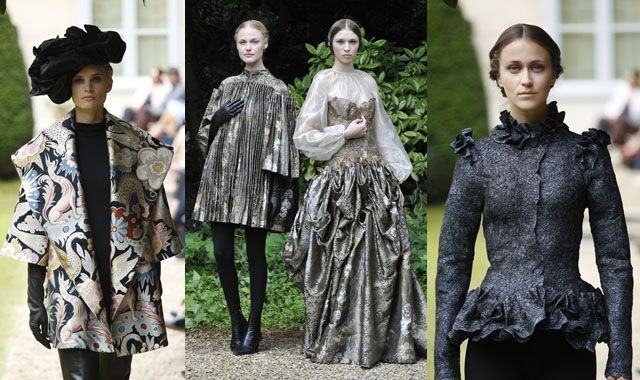
This evolution — both within couture at large and within his own practice — has shaped Sorbier's work for years. He built his reputation on compression, a highly technical process in which fabrics are worked, layered and constrained to sculpt the body, creating garments that hold tension and structure. The technique became a signature, both visually and conceptually, lending his collections a sense of rigor and gravity that often echoed their historical references. "The garments carried their themes like armor," he explains. "It was about tension, about weight. It had to hold the idea."
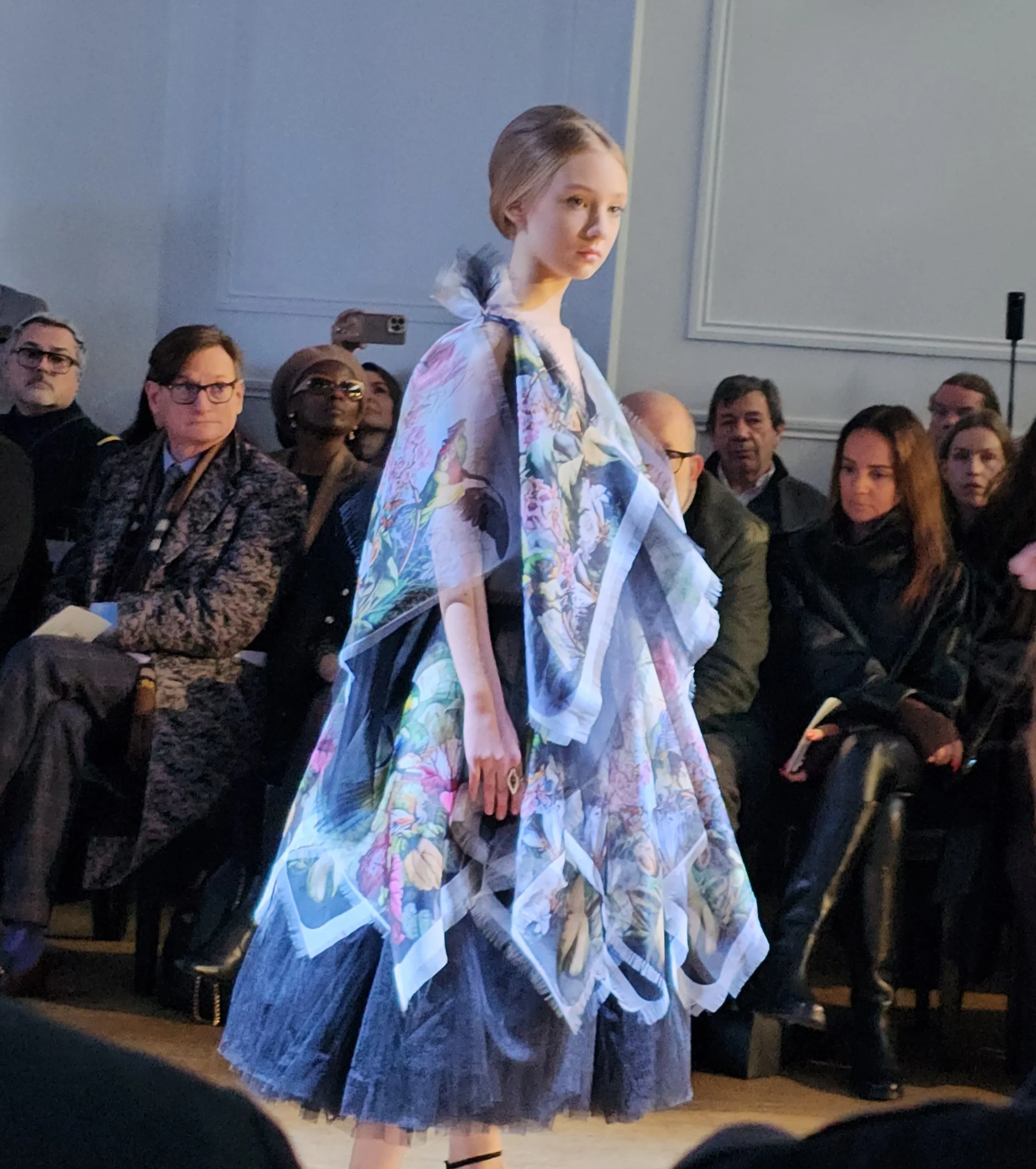
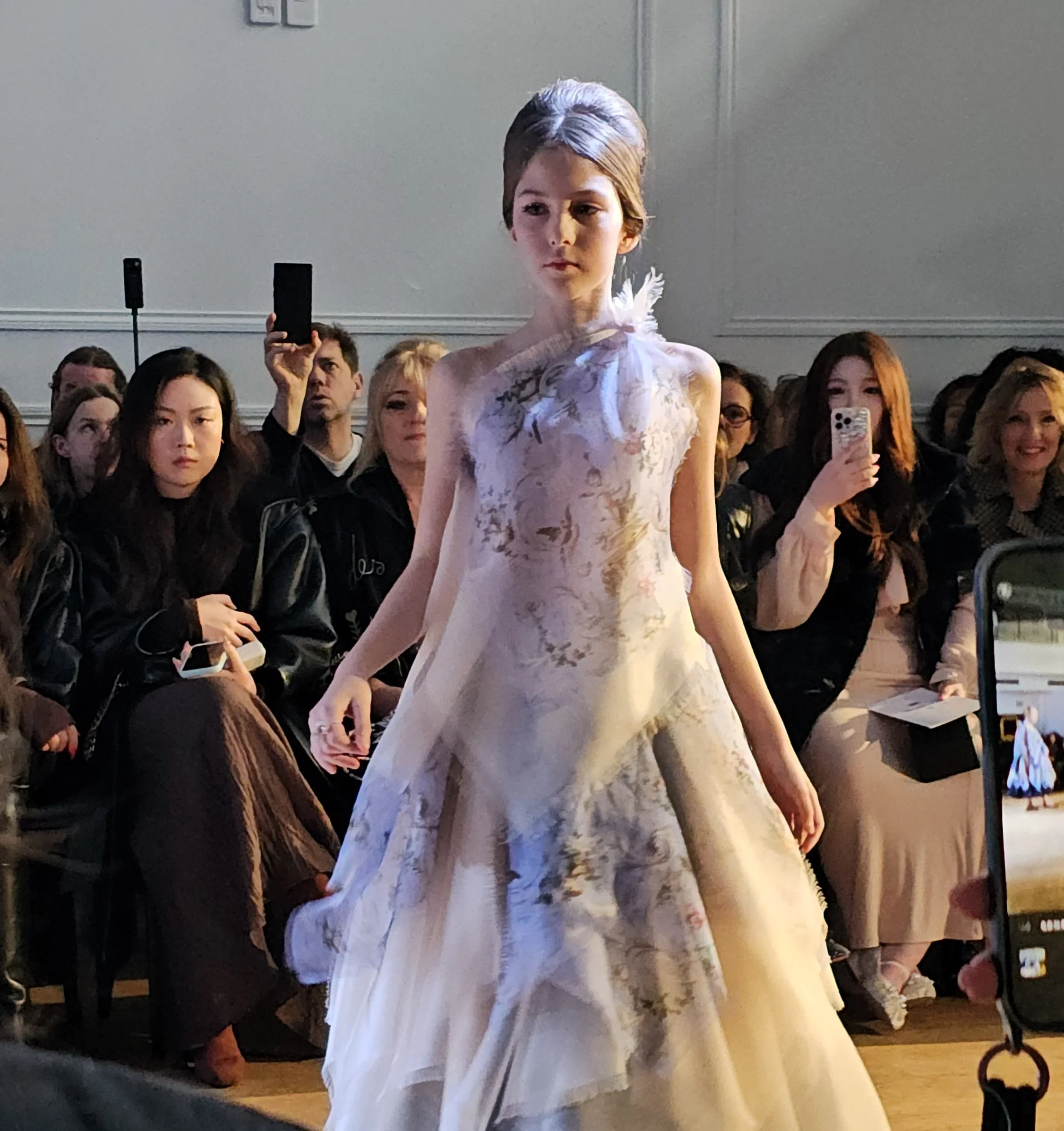
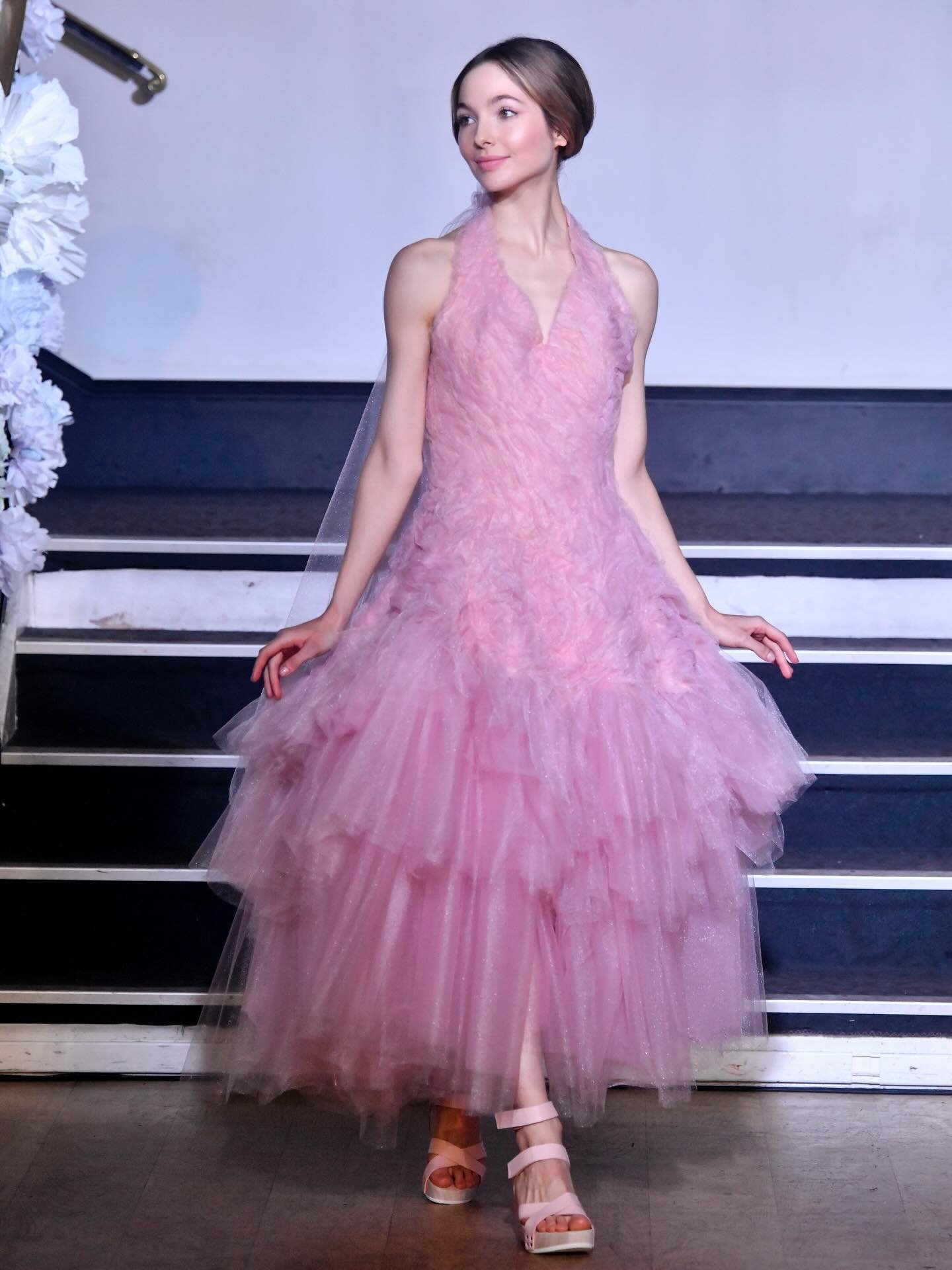
But for his latest collection, Cœur-en-Fête, the impulse was different. "I asked myself what I really wanted," he says. "I didn't want to travel. I had done two historical collections that were quite heavy. This time, I wanted something lighter." It marks a conscious tonal shift — away from introspection and toward pleasure. "It's about feeling lighter, enjoying life, being optimistic. I think that's what we need most right now — to distract ourselves a bit, to have fun, because everything around us is overwhelming."
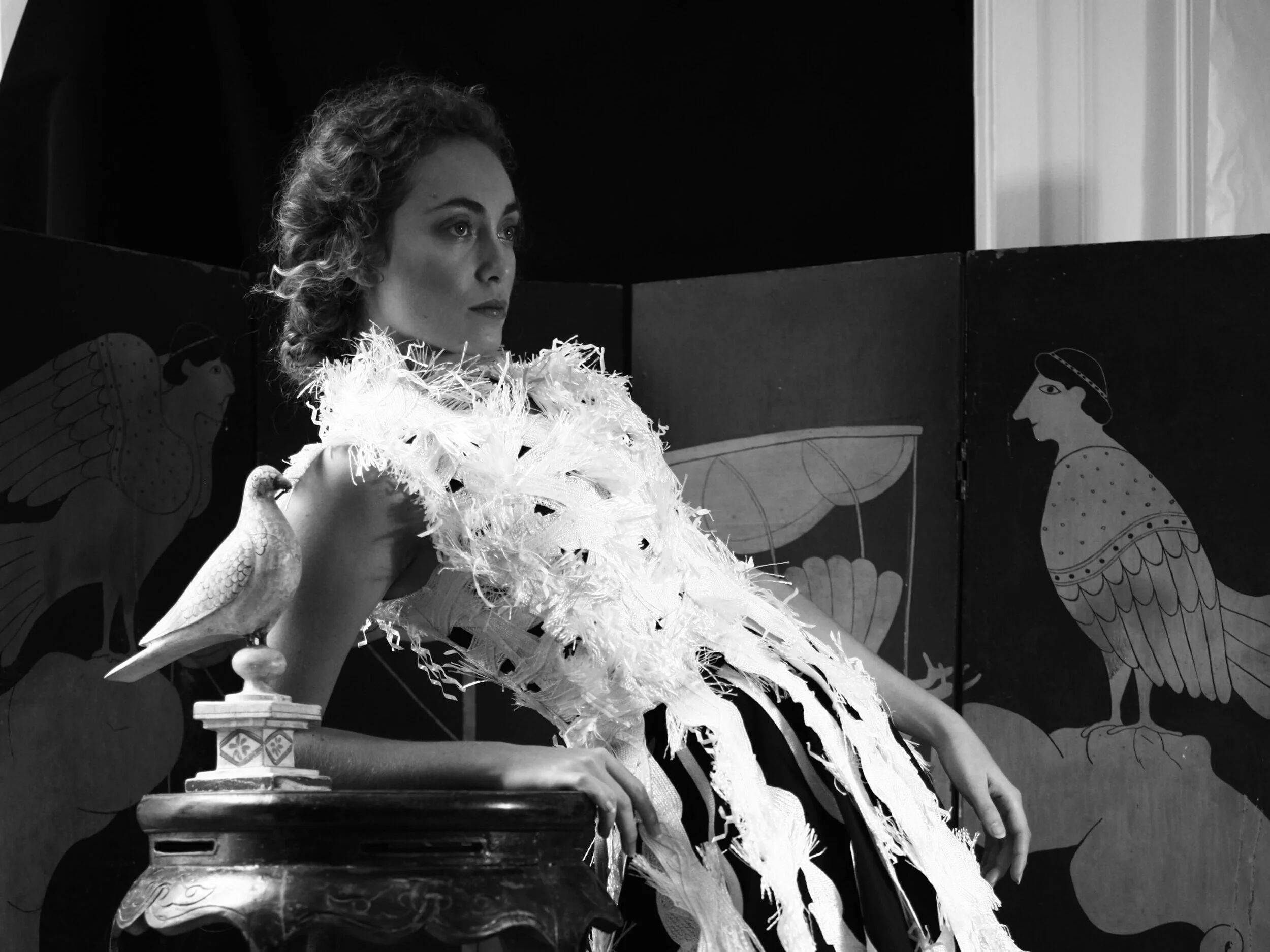
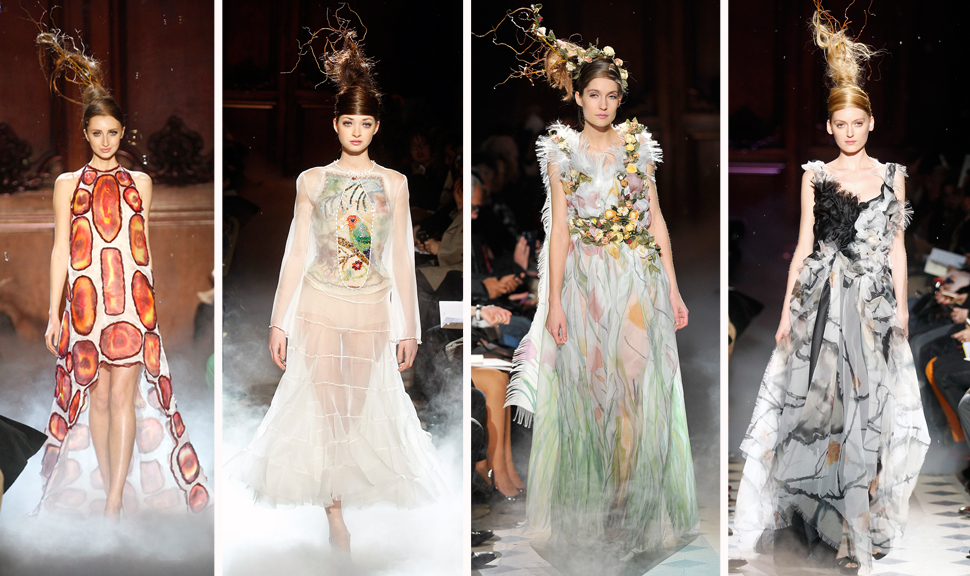
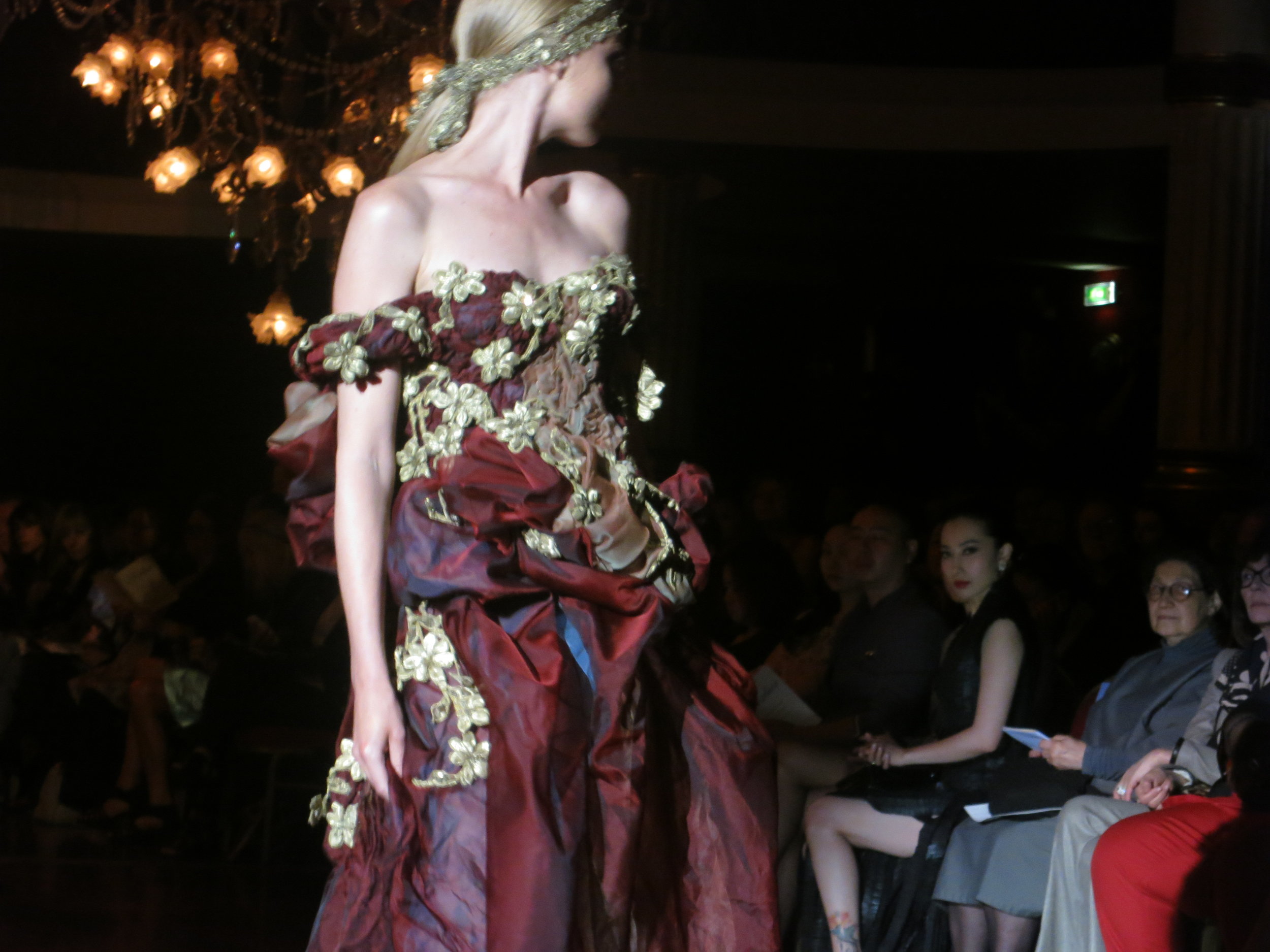
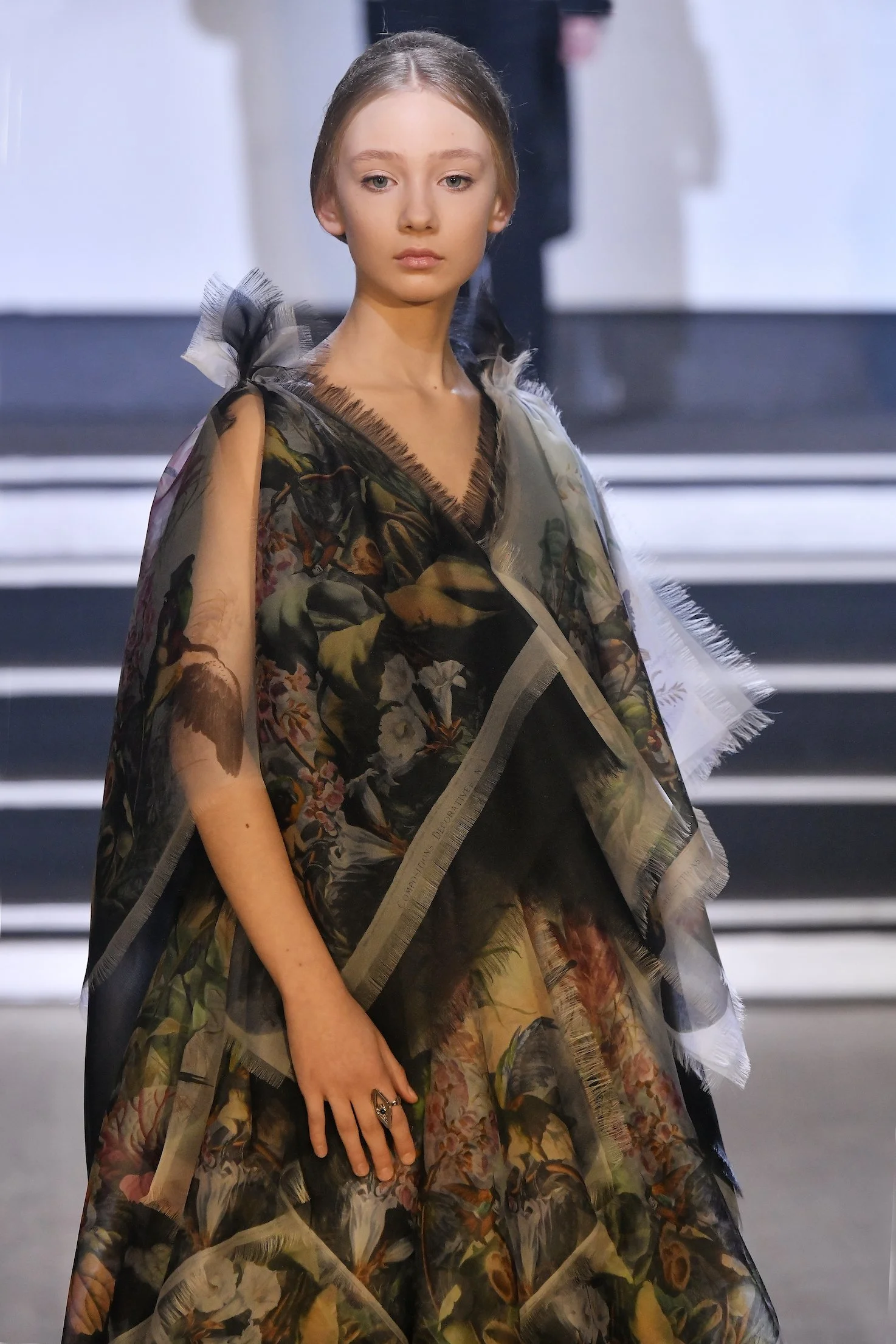
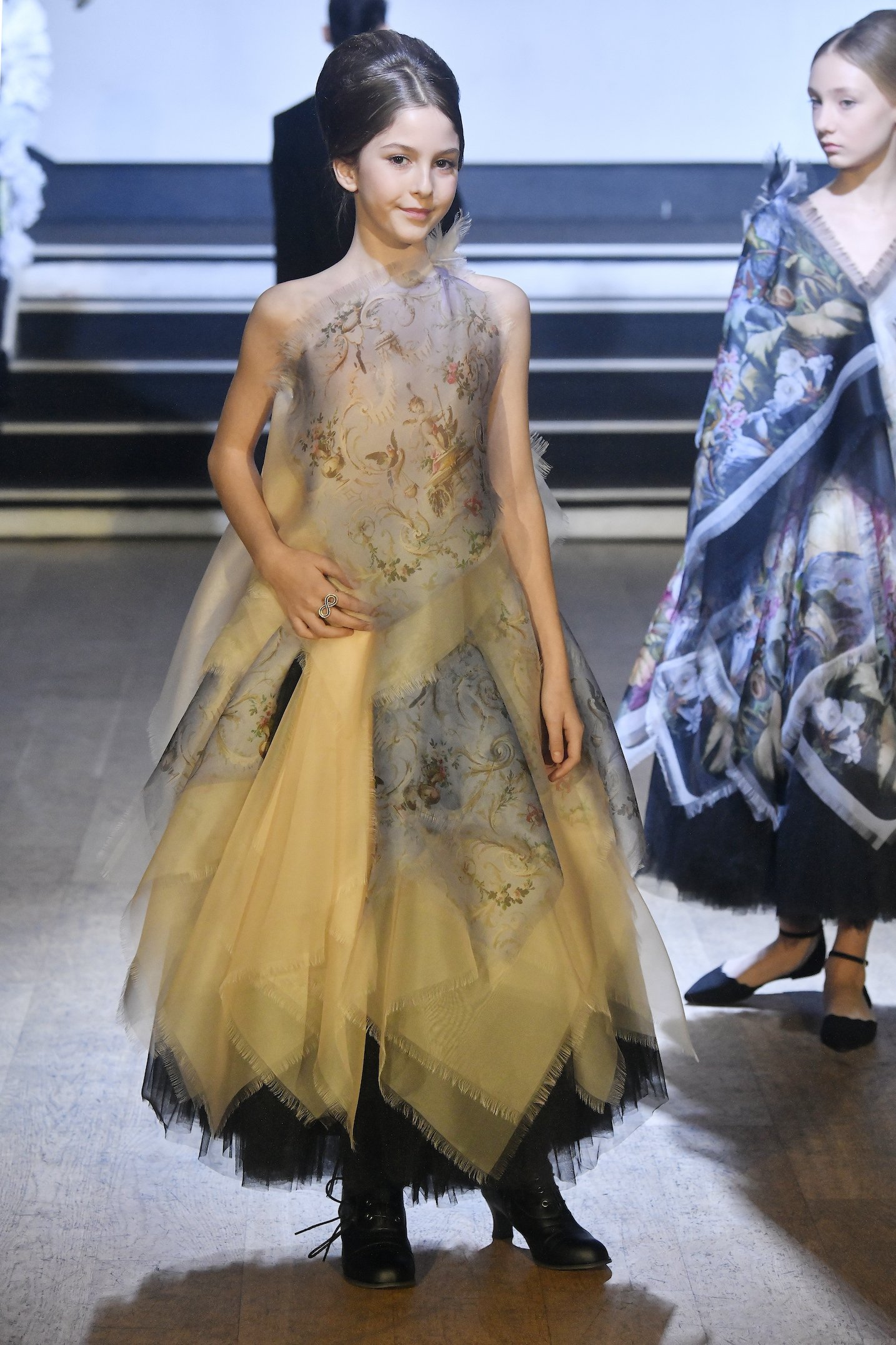
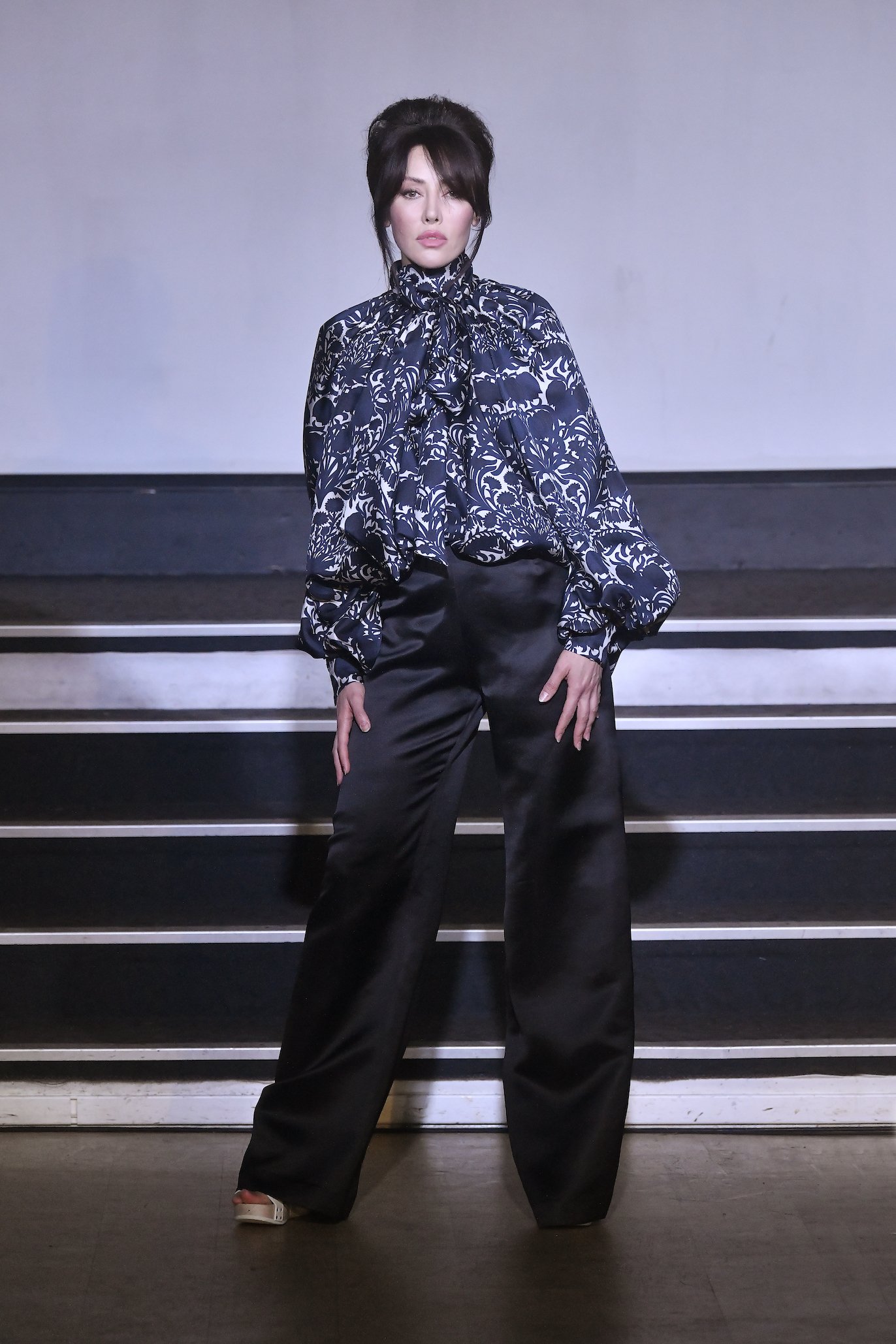
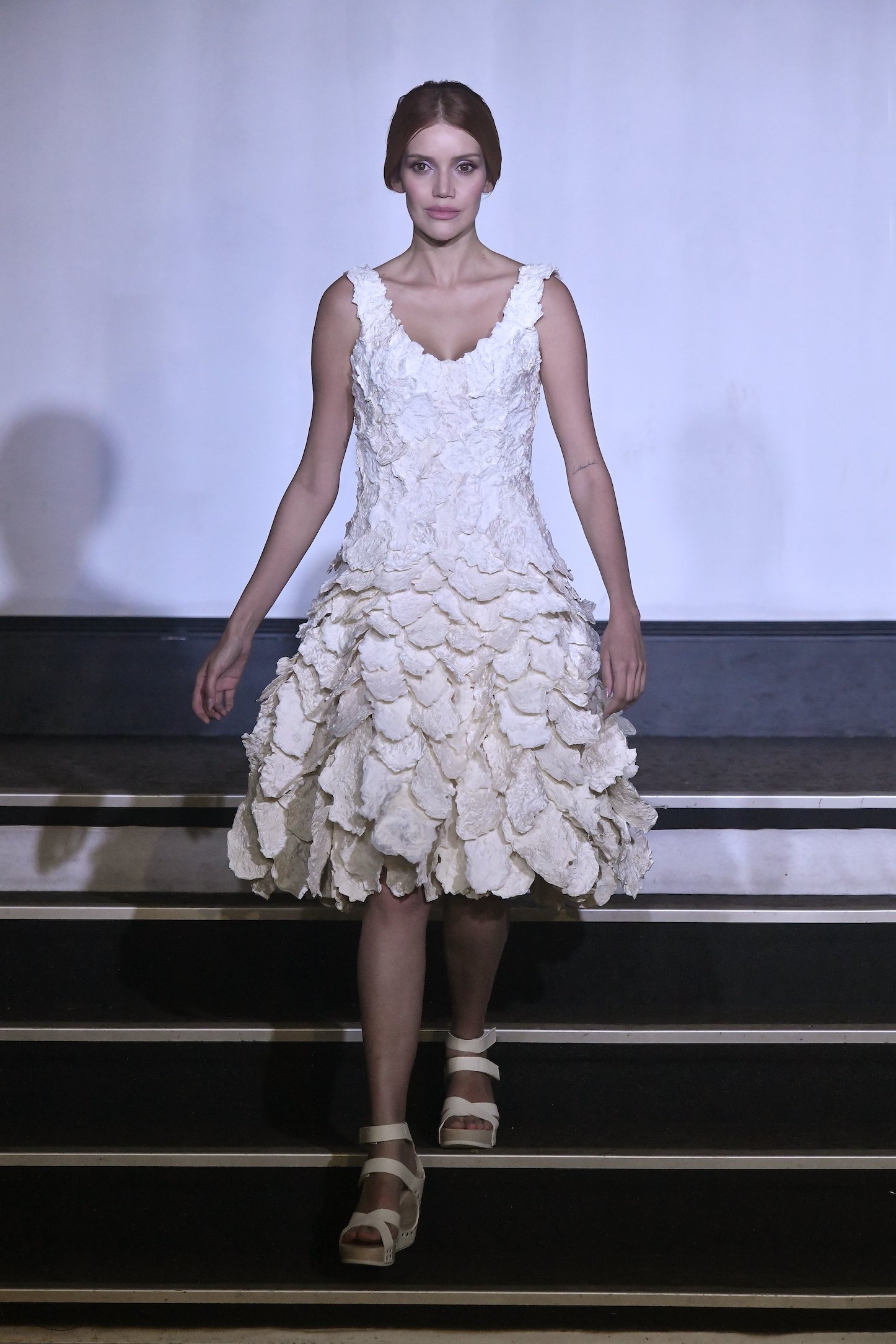
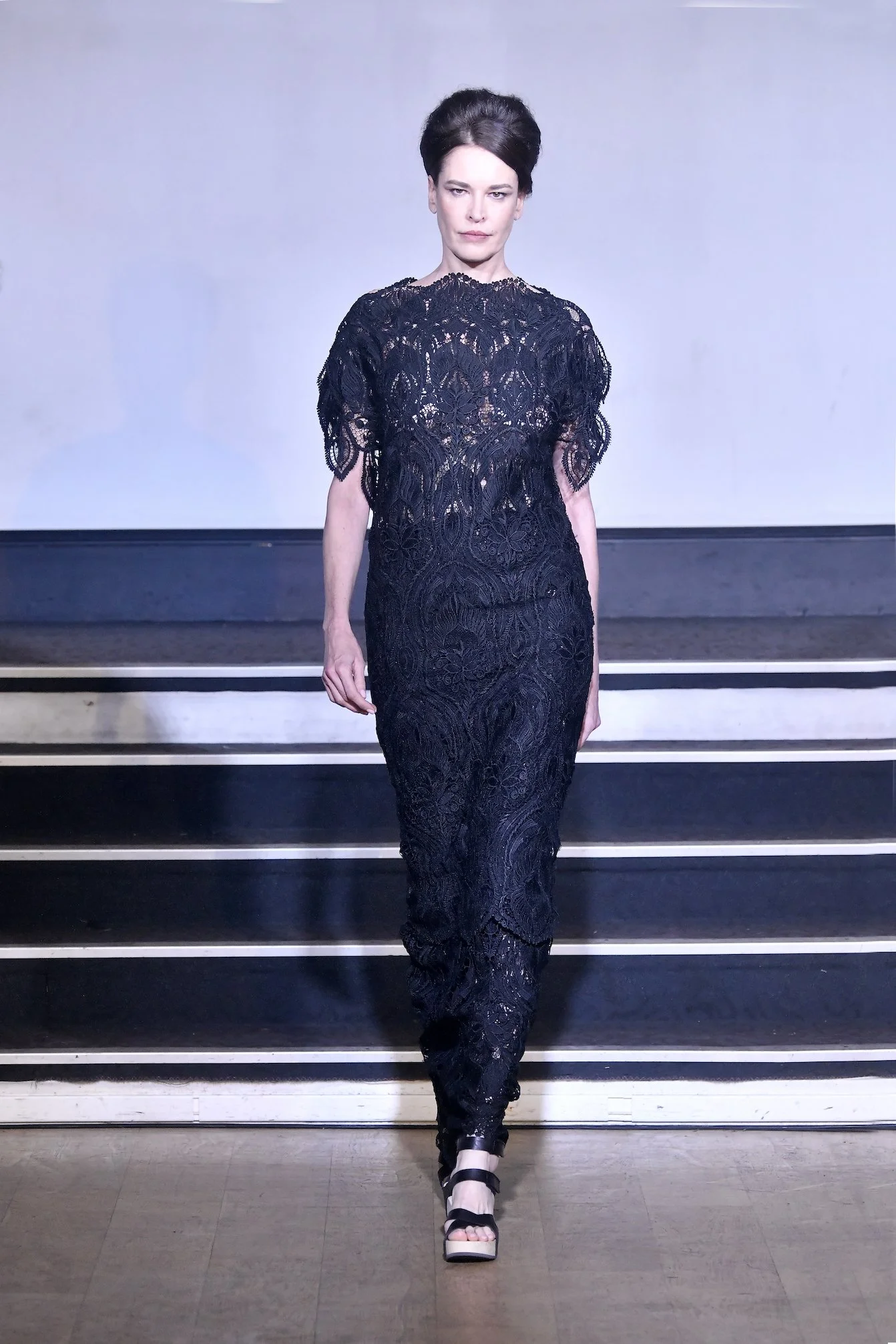
That change of mood is reflected directly in the construction. Cœur-en-Fête moves away from the rigid structures that have long defined Sorbier's work. "There's much less compression," he notes. "I forced myself to work with fluid fabrics — organza, chiffon, satin crêpe. Fabrics that move, that follow the body." Daytime dresses evoke the spirit of the late 10950s’ French New Wave, carrying a sense of freedom and rebellious lightness. Evening wear, meanwhile, recalls the romance of stage costume — pieces that might have suited the dramatic presence of Maria Callas or the theatrical vision of Luchino Visconti, according to Sorbier.
Prints drawn from eighteenth- and nineteenth-century naturalist panels — birds, plants, botanical studies — are meticulously applied to organza, a technical feat that embodies Sorbier's ongoing dialogue with nature. "It's very much a nature-inspired constant for me," he says, "but applied in a way that feels alive, contemporary."
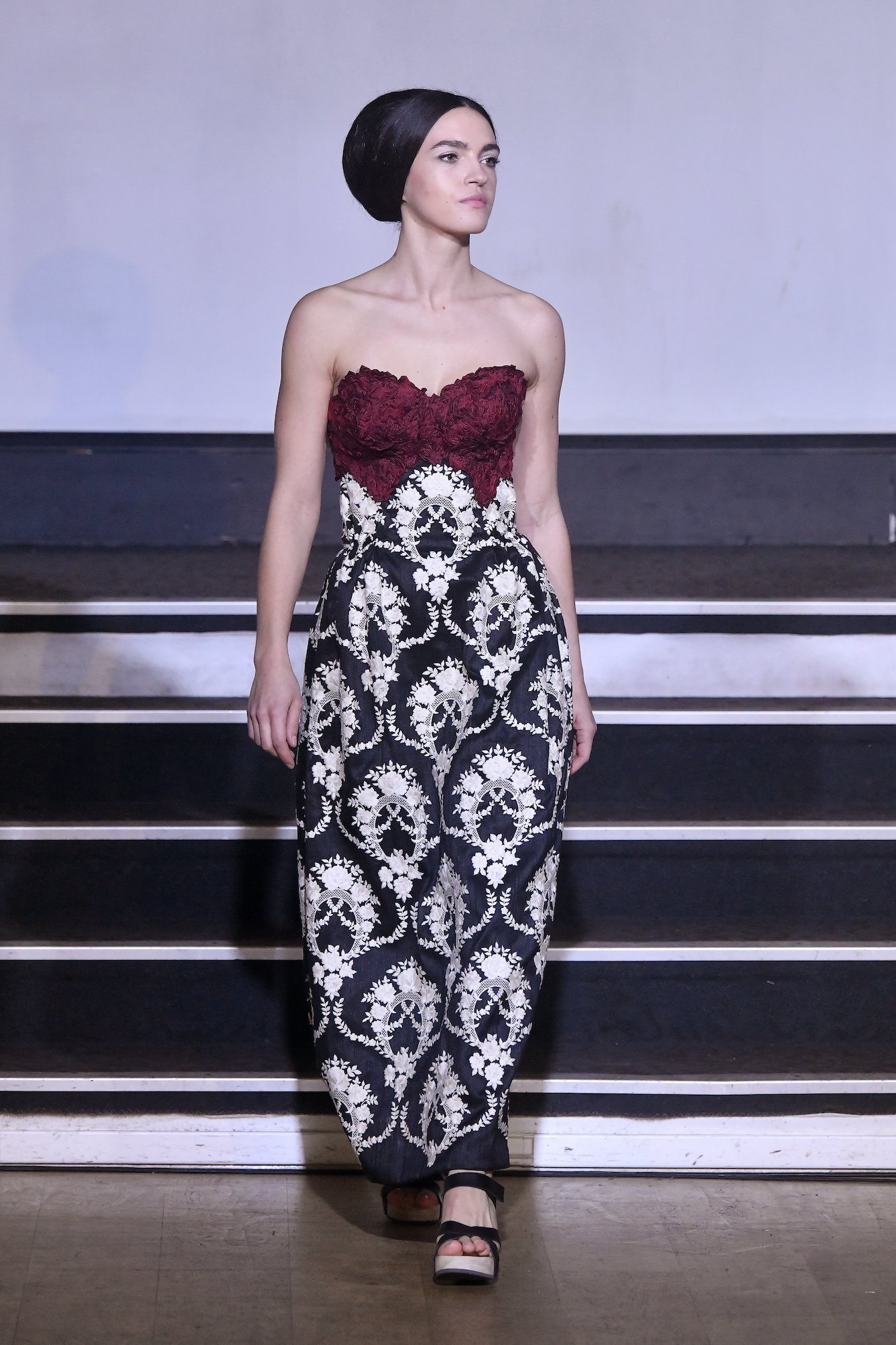
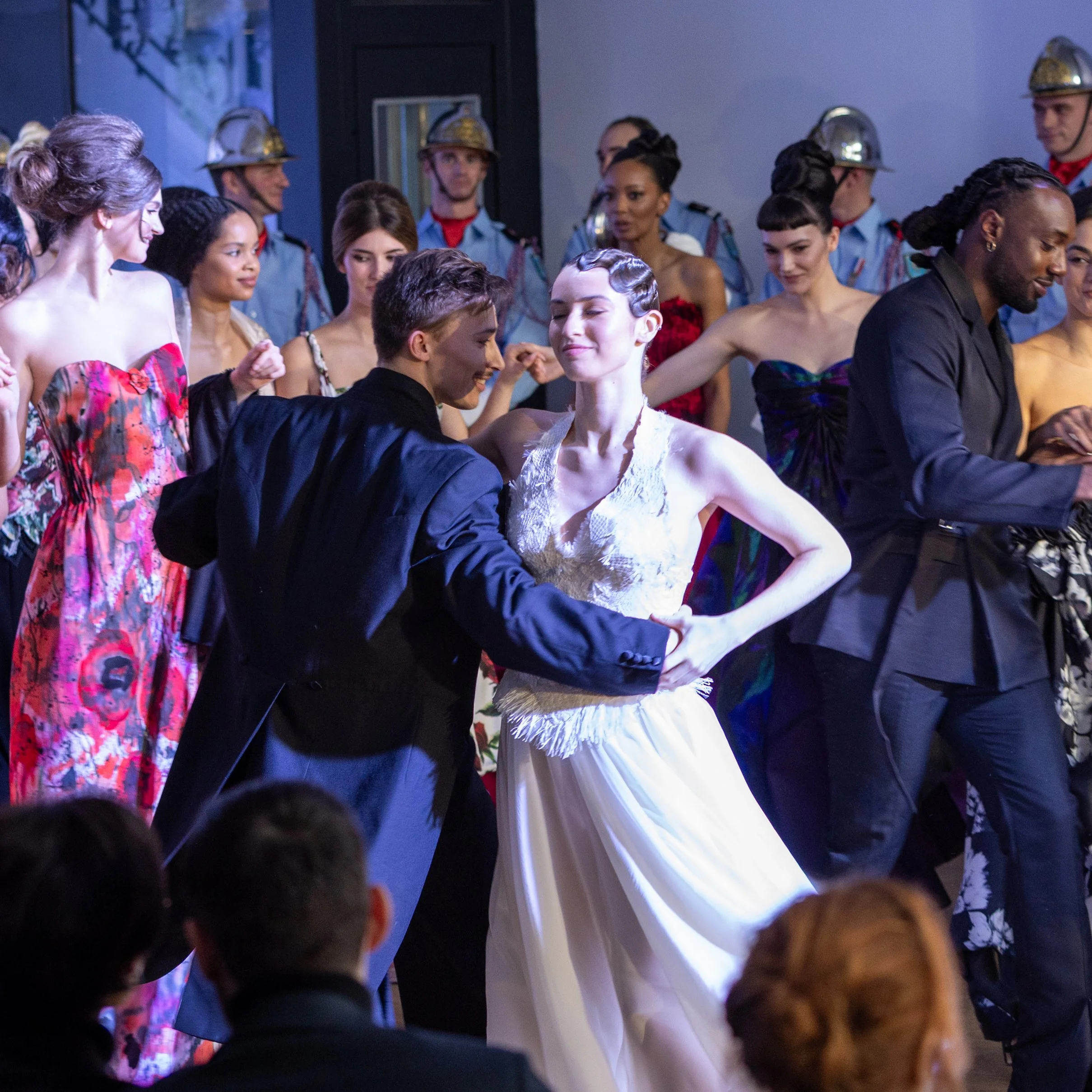
Sorbier recalls a client who once told him, "I don't want people to say 'you're wearing a beautiful dress,' I want them to say 'you look beautiful tonight.'" That sentiment has become a guiding principle. "We're more in reality than in the creator's fantasy," Sorbier reflects. "Couture is a service. It's made for someone."
He is careful to stress that this is not a rupture with his past, but an evolution. "My vision hasn't changed," he says. "But it has evolved." Certain themes — nature, humanism, attention to the world around us — remain constant. What has shifted is the balance. "We're more in wearability," he says. "Less constraint. More gentleness."
For a couturier who has spent decades mastering control, Cœur-en-Fête represents a rare loosening — technically, emotionally, philosophically. "It's a turning point," he admits. "The idea is to evolve, to change, to test new things — while keeping my signature."
DISCOVER MORE ABOUT FRANCK SORBIER