Patience and Precision: The Making of Đỗ Long
The dress worn by Teyana Taylor
At the BAFTA Tea Party in Los Angeles, Teyana Taylor arrived in a strapless column from Đỗ Long's Emerge collection. From a distance, the gown read as a sharp black–grey–white gradient; up close, the surface revealed deliberate texture — double-faced satin layered with brushed silk, catching light differently with every shift of posture. The bodice held firmly through the waist before tapering into a lean, uninterrupted line. Chiffon detailing lifted the silhouette without dissolving its precision. Commanding, but controlled.
Born in Bình Dương in 1984, Đỗ Long came to fashion by way of civil engineering — a path his family encouraged and one he pursued for three years before walking away. "I was good at engineering," he says, "but I didn't feel alive." For a self-taught designer without formal training or institutional backing, it was a decisive pivot. What followed was less reinvention than immersion: selling at fashion magazines, assisting on set, studying how garments behave under lights, under scrutiny, under pressure.
The engineering mindset never left him. "Even today, when I design a gown, I don't just think about beauty — I think about construction, balance, weight distribution, and architecture on the body. A corset is not just aesthetic; it's an engineering system. Couture, to me, is wearable architecture," he tells CoutureNotebook.
His years as a stylist sharpened something harder to teach — an understanding of posture, proportion, and the particular vulnerability that fame doesn't actually erase. "I learned to design for how a woman wants to feel. Strong. Desired. Seen. My dresses are built to empower — not just decorate."
That intention runs through everything: sculpted corsetry, cut-outs placed with intention rather than excess, high slits calibrated for movement, embellishment that follows the body's architecture instead of obscuring it. "My silhouettes are sculptural and body-conscious. I love exaggerated hips, cinched waists, elongated lines, and strong shoulders. A Đỗ Long woman is never shy. She owns the room."
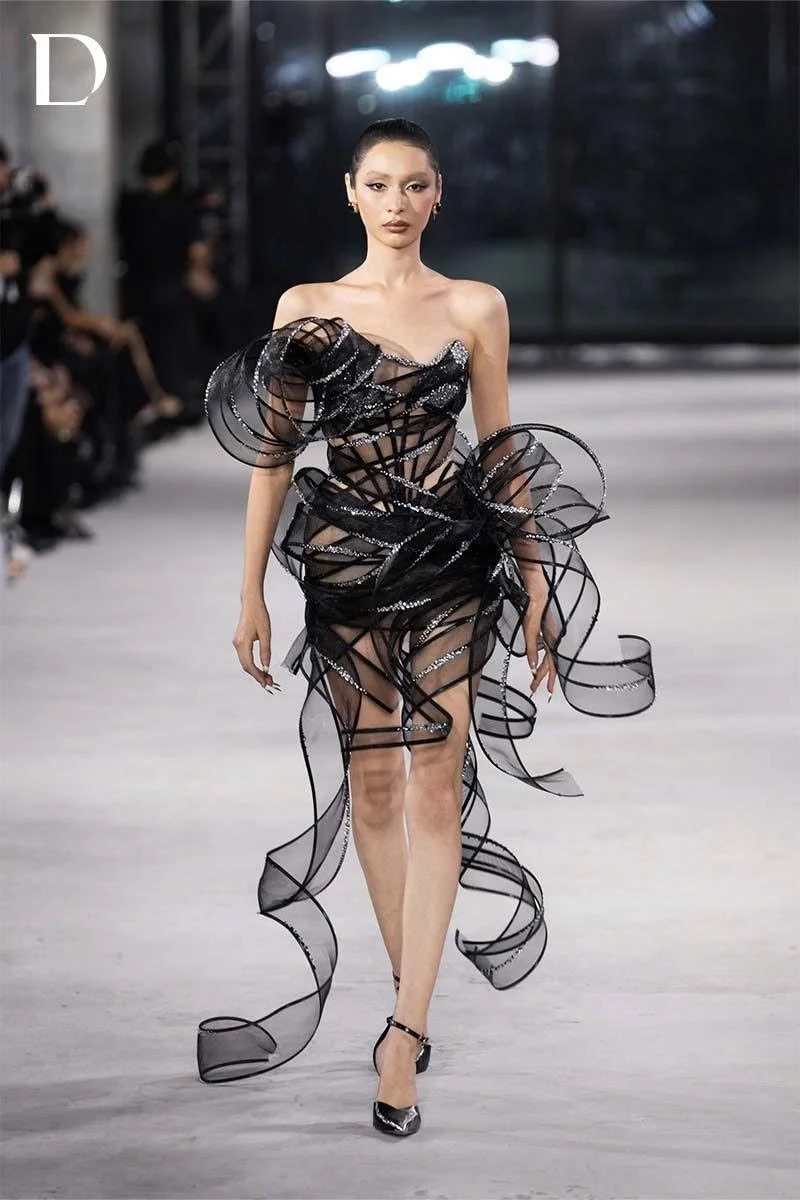
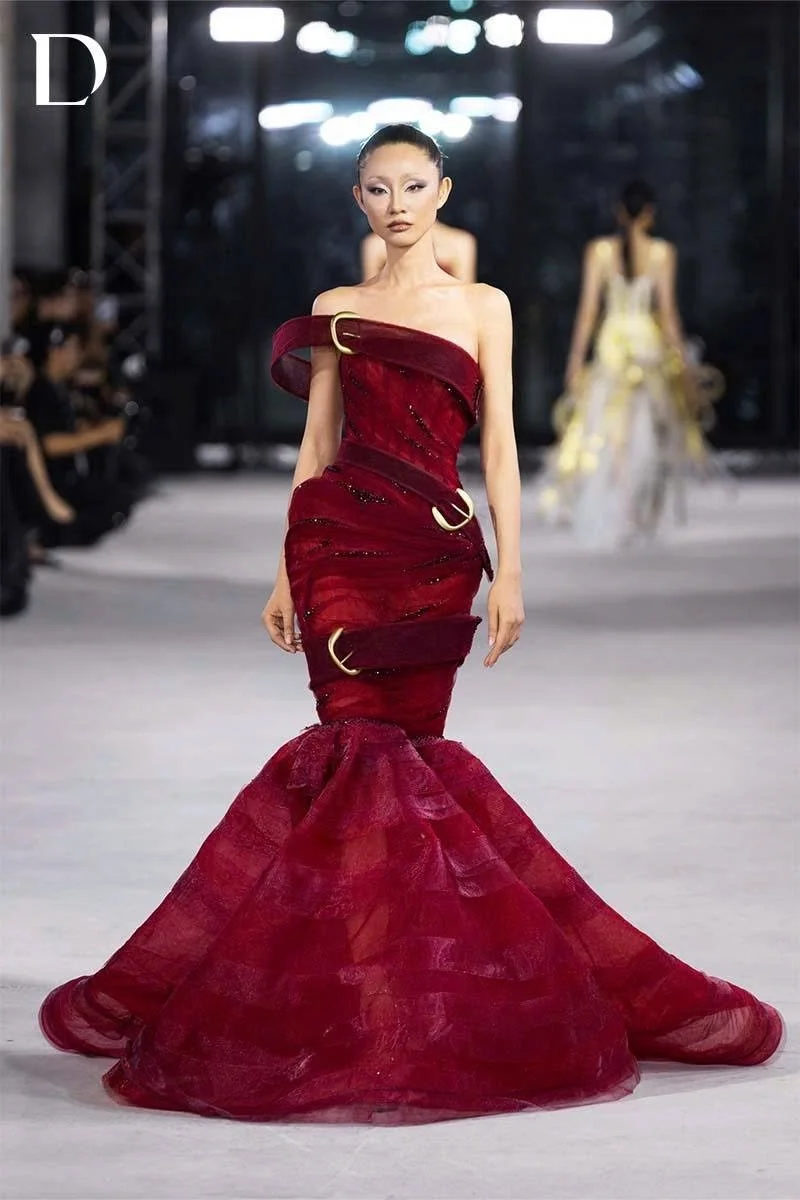
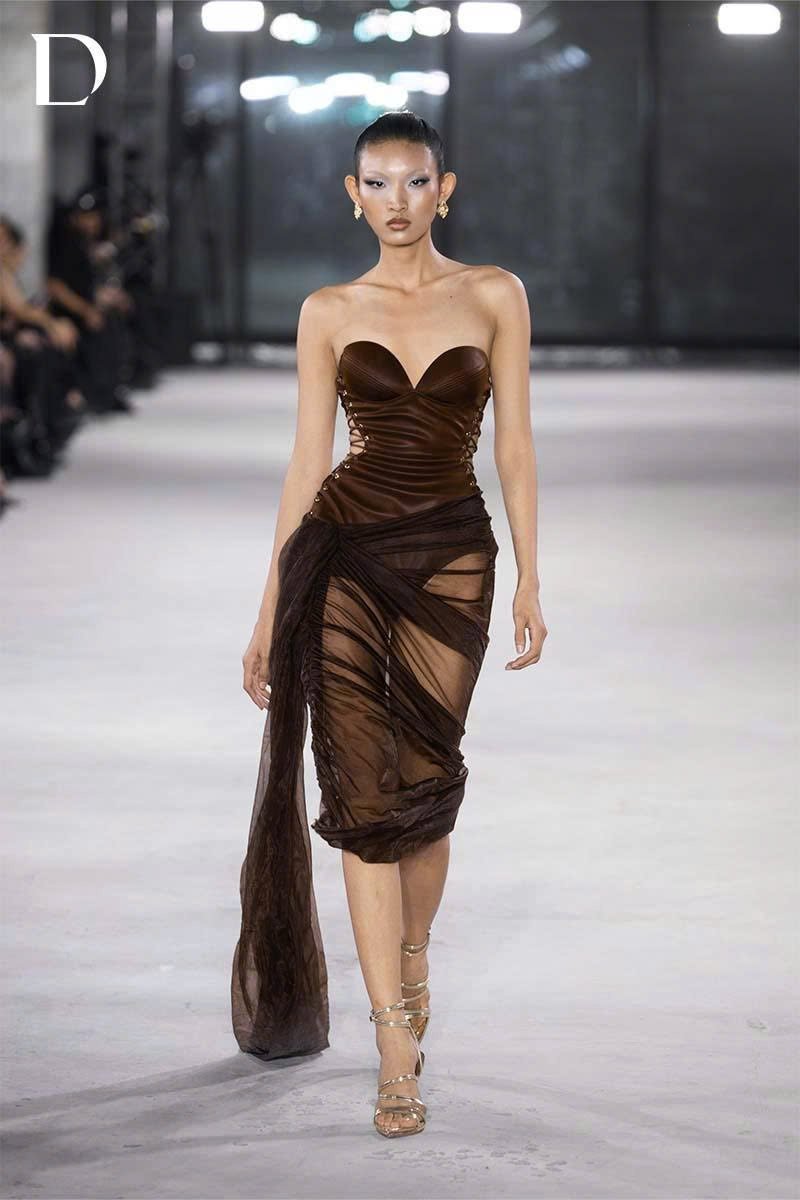
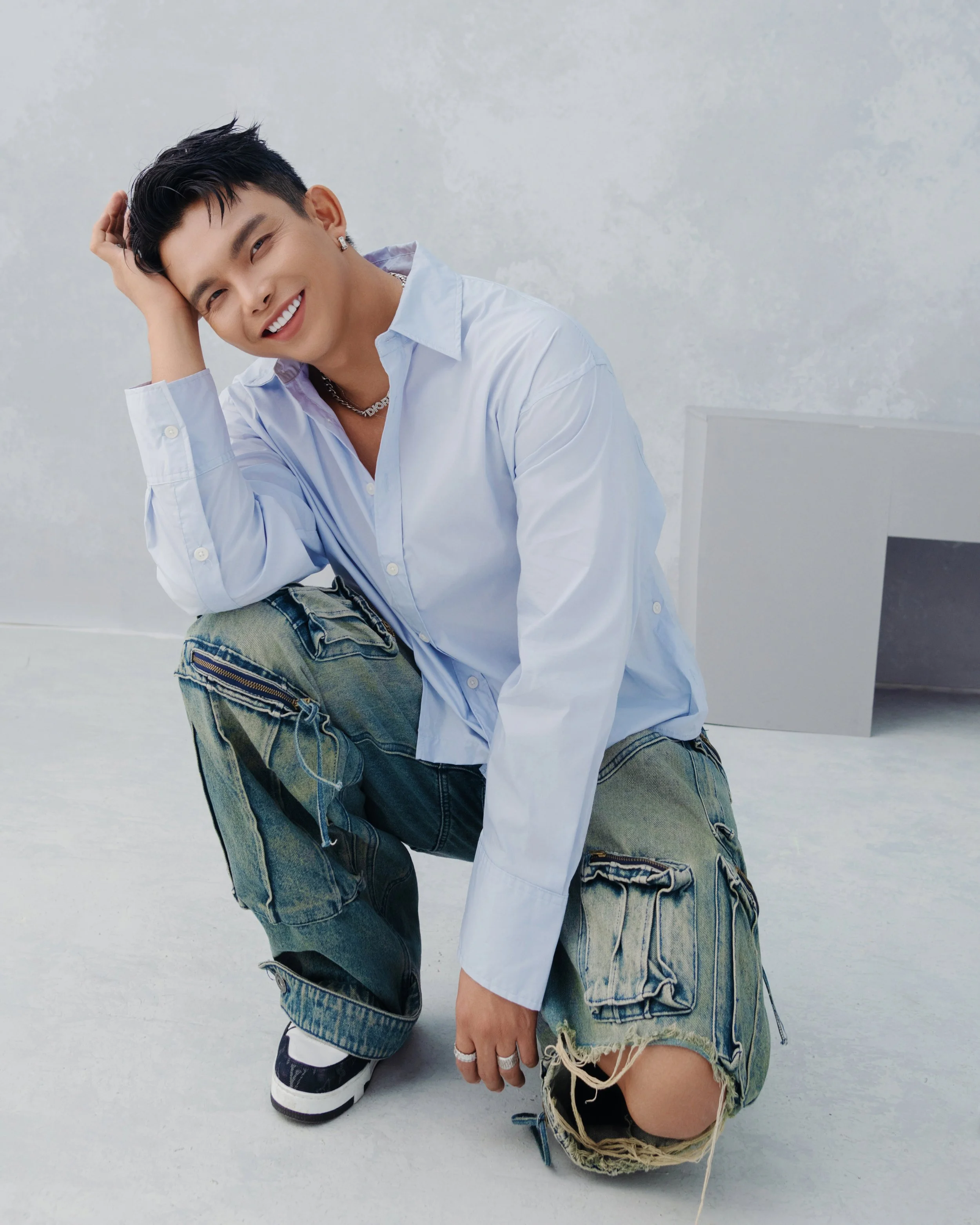
Inside his atelier, Vietnamese craftsmanship is structural, not decorative. "Many of our artisans are trained in hand-embroidery techniques passed down through generations. Even when the silhouette is modern and bold, the craftsmanship is deeply rooted in Vietnamese skill and precision."
His 2024 Giai Nhân collection did not replicate tradition — it reworked it. The áo dài silhouette was recalibrated, nacre inlay elevated into couture surface work, four-panel paintings translated into texture rather than motif. "Heritage should evolve. Not freeze in time." For Đỗ Long, being rooted and being static are two different things entirely. "Embracing Vietnamese heritage is not about being traditional — it is about being rooted."
Red carpet dressing, which began through styling, has become something more deliberate. "I've understood the power of the red carpet as a global language. It is not just marketing — it is positioning. A red carpet moment can introduce Vietnamese couture to an international audience instantly. My vision is to place Đỗ Long on the international fashion map. Not as a guest — but as a presence."
If he could offer his younger self one word, it would be patience. Build slowly. Protect integrity. Talent may open doors, but resilience keeps them open.