Cartier Lets the Stones Take Centre Stage in Le Chœur des Pierres
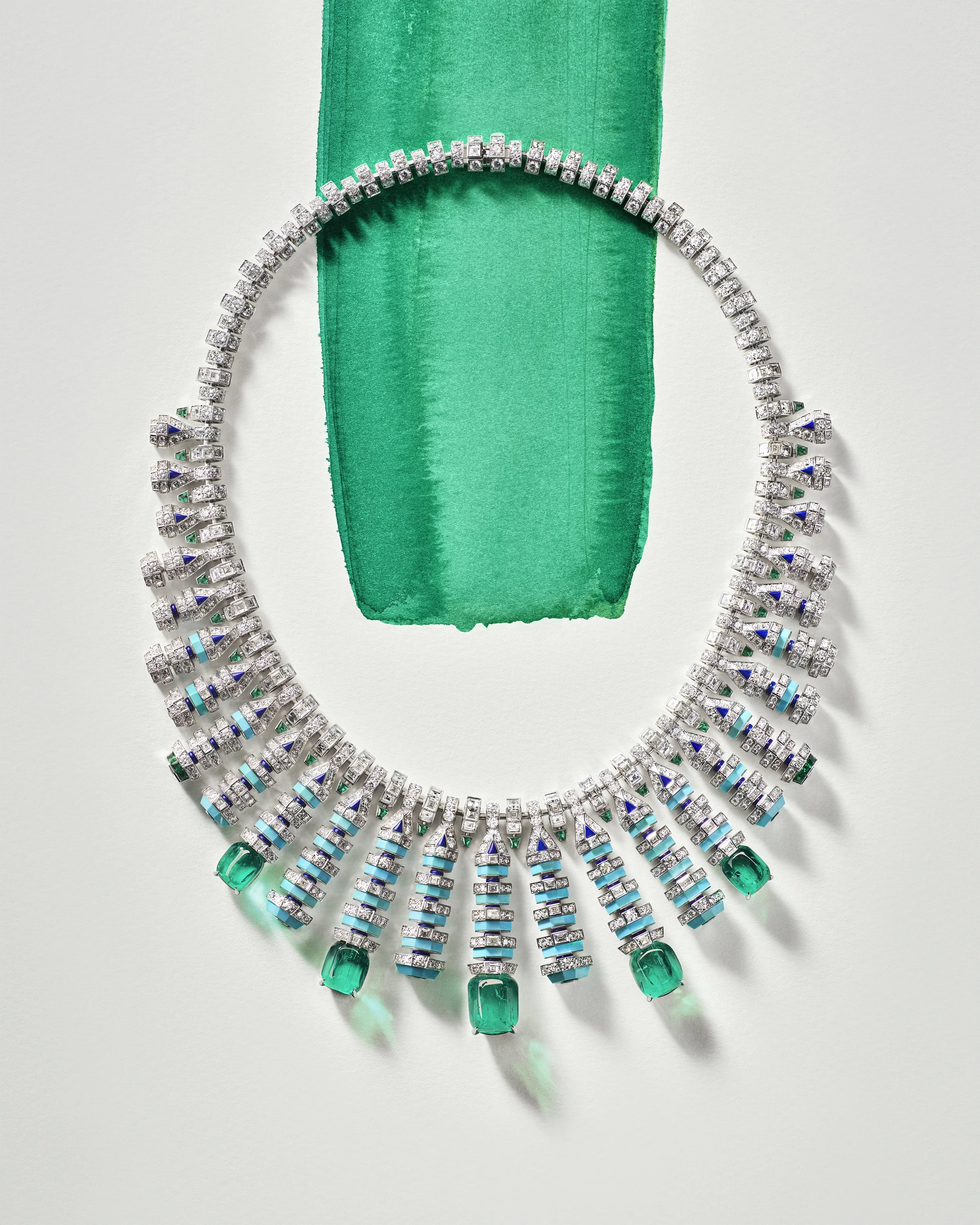
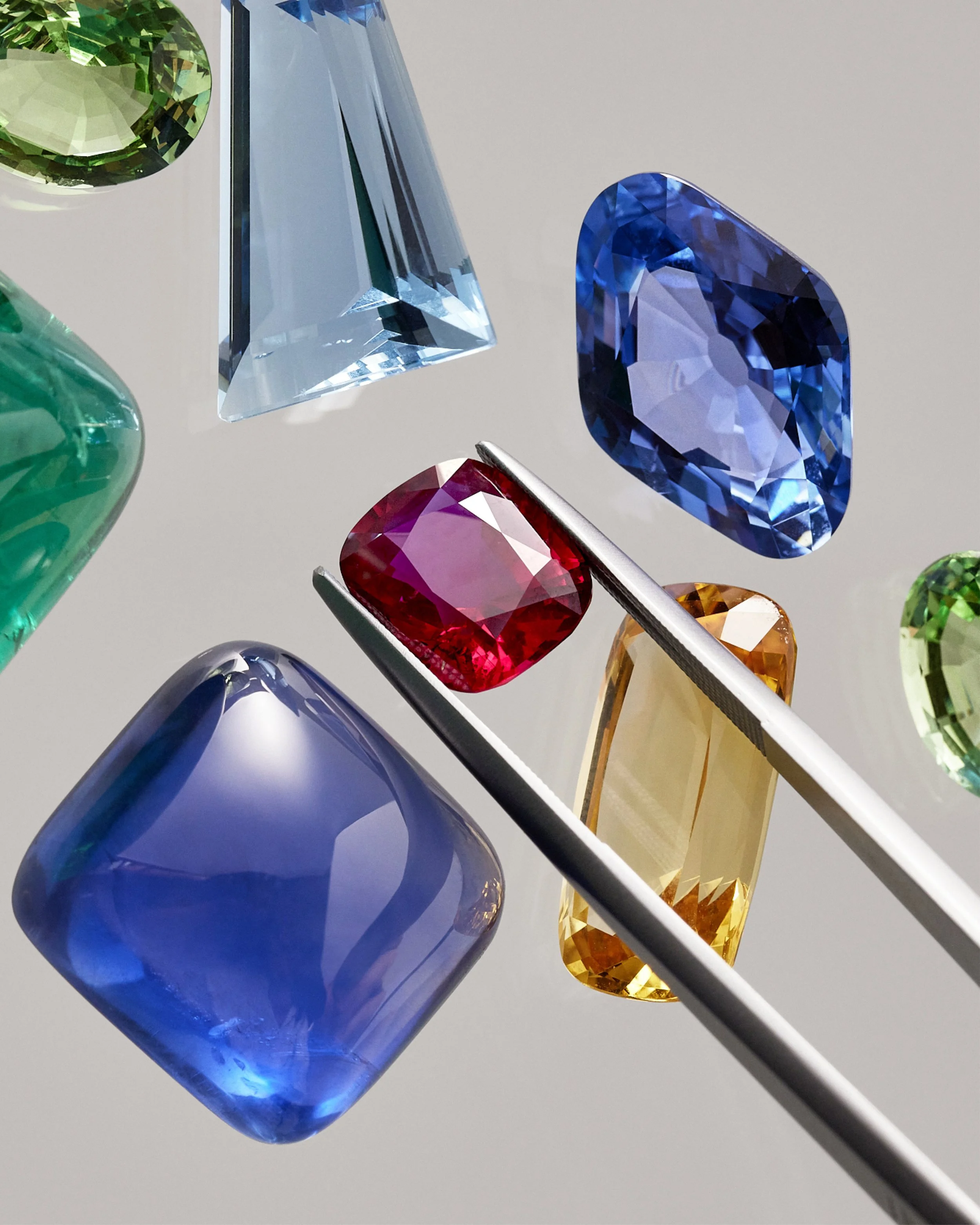
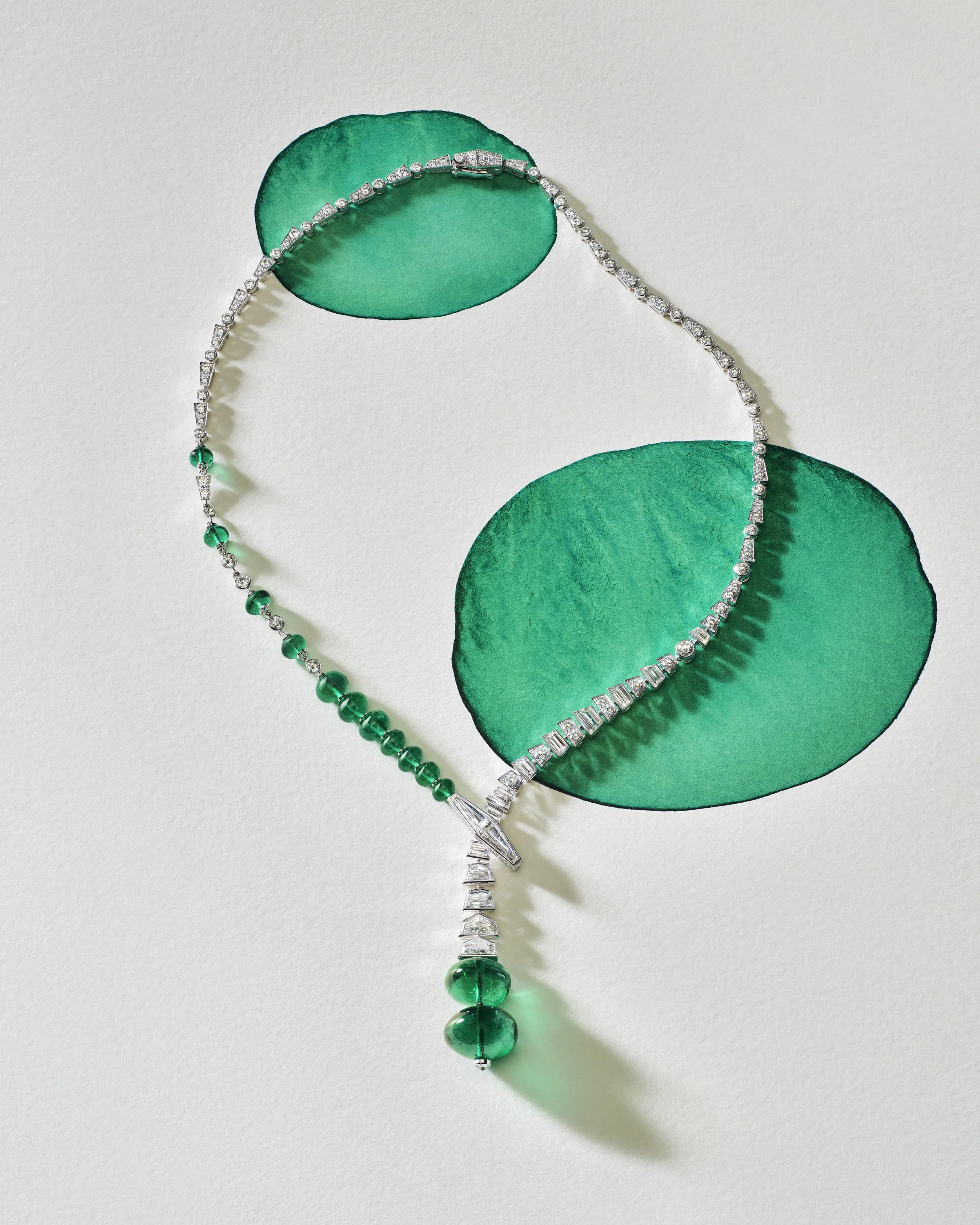
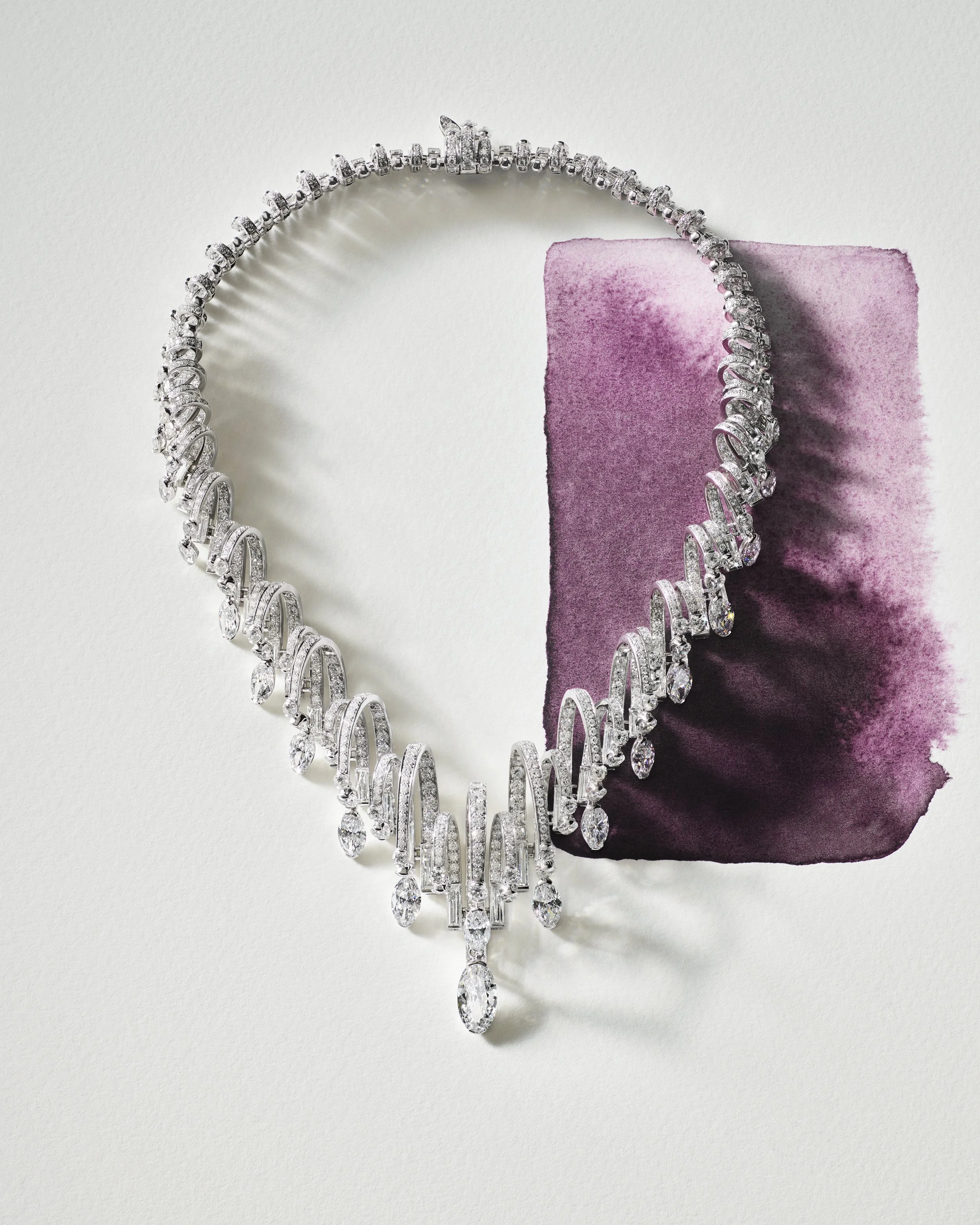
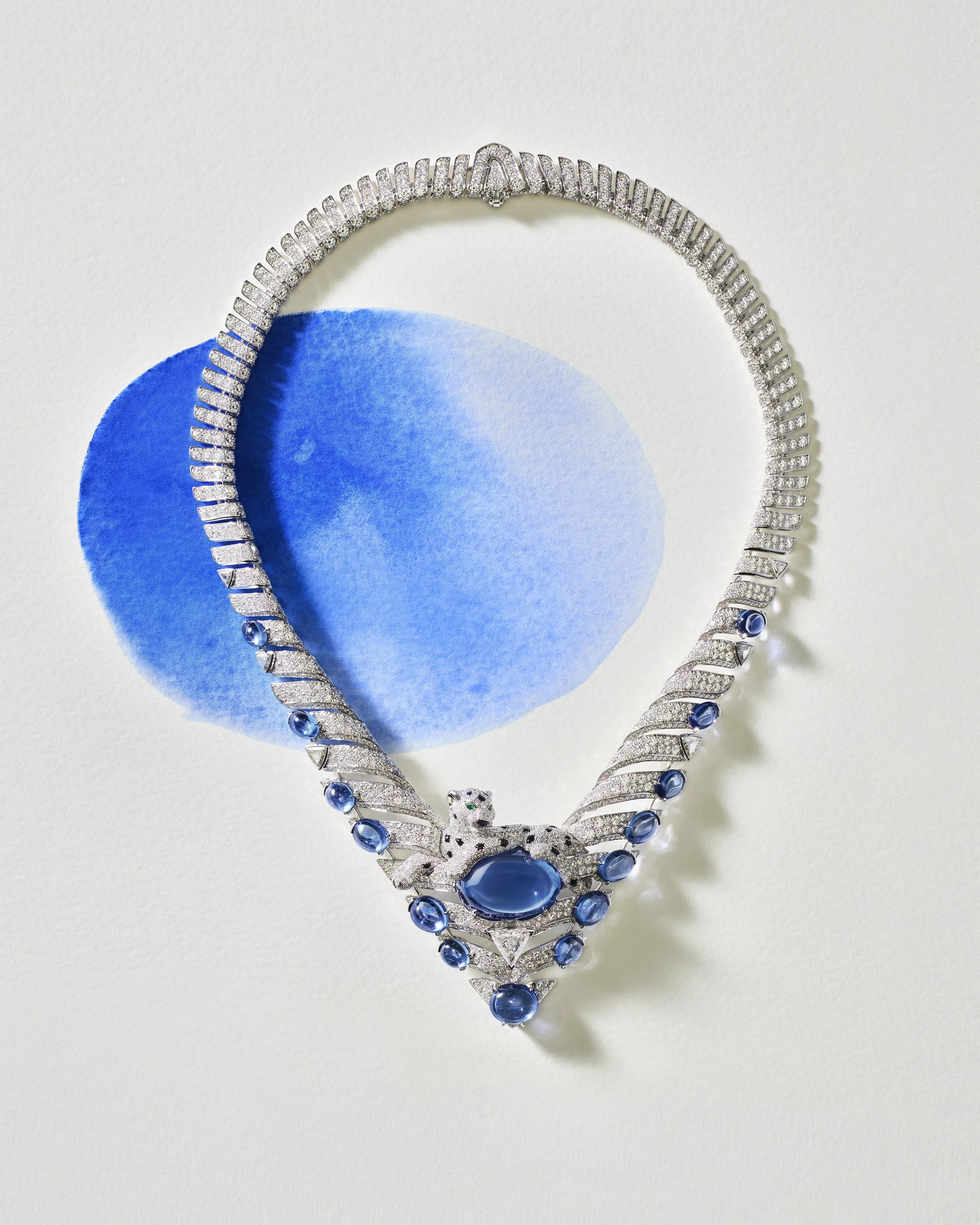
With Le Chœur des Pierres Chapter I, Cartier places the gemstone firmly at the centre of the creative process. Across more than 125 creations, the collection explores how colour, movement and articulation can emerge directly from the character of the stones themselves.
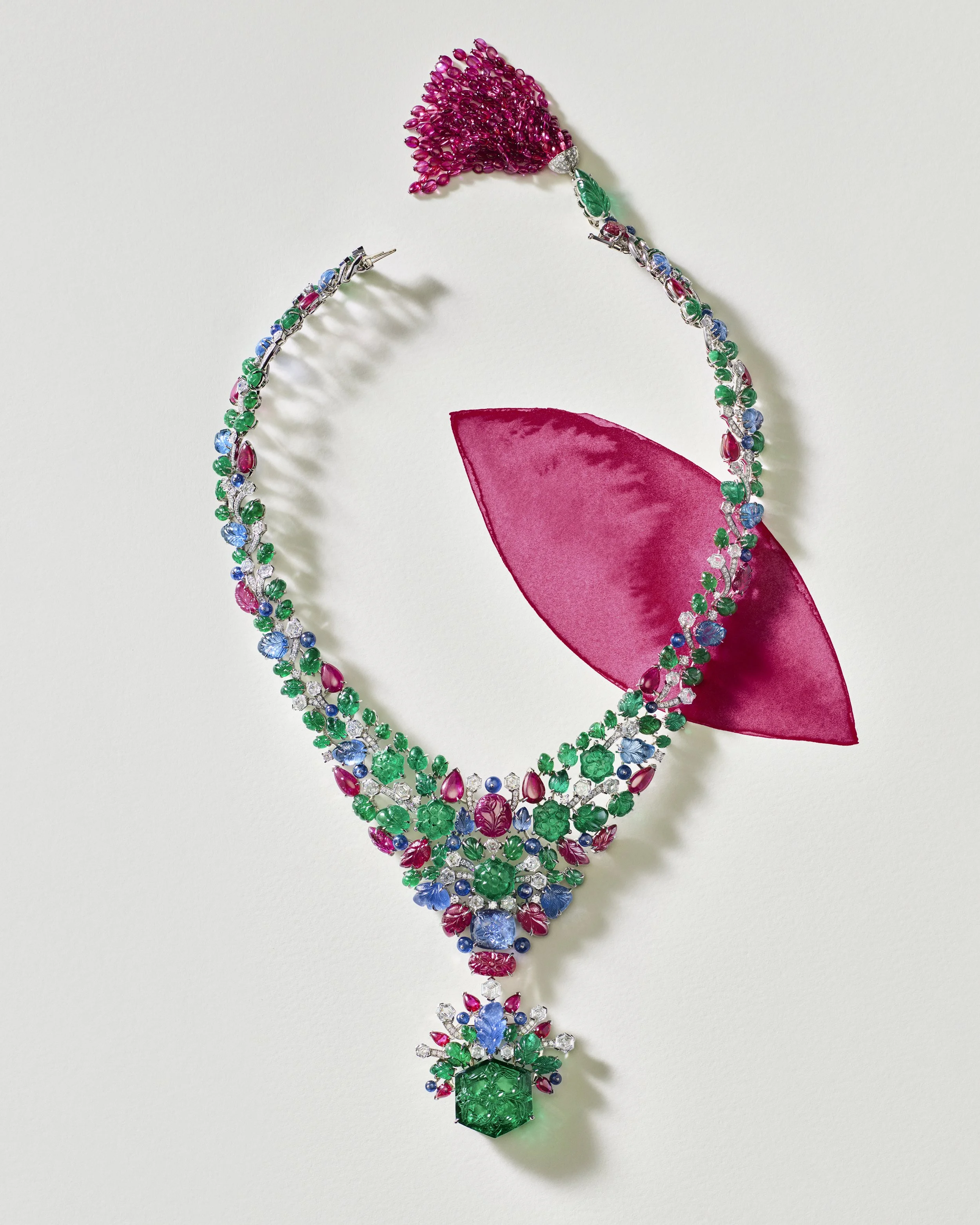
The strongest expression of that approach appears in TUTTI KANYA, a necklace that revisits Cartier’s historic Tutti Frutti vocabulary nearly a century after the style first entered the Maison’s repertoire in the mid-1920s. The aesthetic emerged in the 1920s, following Jacques Cartier’s travels to India, where the Maison encountered carved Mughal gemstones and a radically different approach to colour — red against green, blue against red-green, combinations that read as abundance rather than decoration. Cartier absorbed those influences into its own vocabulary, transforming carved emeralds, rubies and sapphires into the exuberant yet highly structured compositions that became known as Tutti Frutti. Unlike the symmetrical geometry dominating Art Deco jewellery at the time, Tutti Frutti embraced abundance, asymmetry and saturated colour. The style was never about restraint, but what gave Cartier’s compositions their lasting sophistication was the way the Maison channelled that exuberance through rhythm, balance and precise gemstone placement.
That sense of controlled exuberance remains central to TUTTI KANYA. At its centre sits a 30.33-carat engraved Zambian emerald, surrounded by carved rubies, sapphires and emeralds arranged as flowers, leaves and berries. A ruby tassel at the nape acts as a counterpoint to the dense floral composition at the front, giving the piece a structural logic that is as much about movement and how the necklace sits on the body as it is about the stones themselves. Created using the stringing technique, the tassel can also be positioned at the front when the main motif is worn as a brooch.
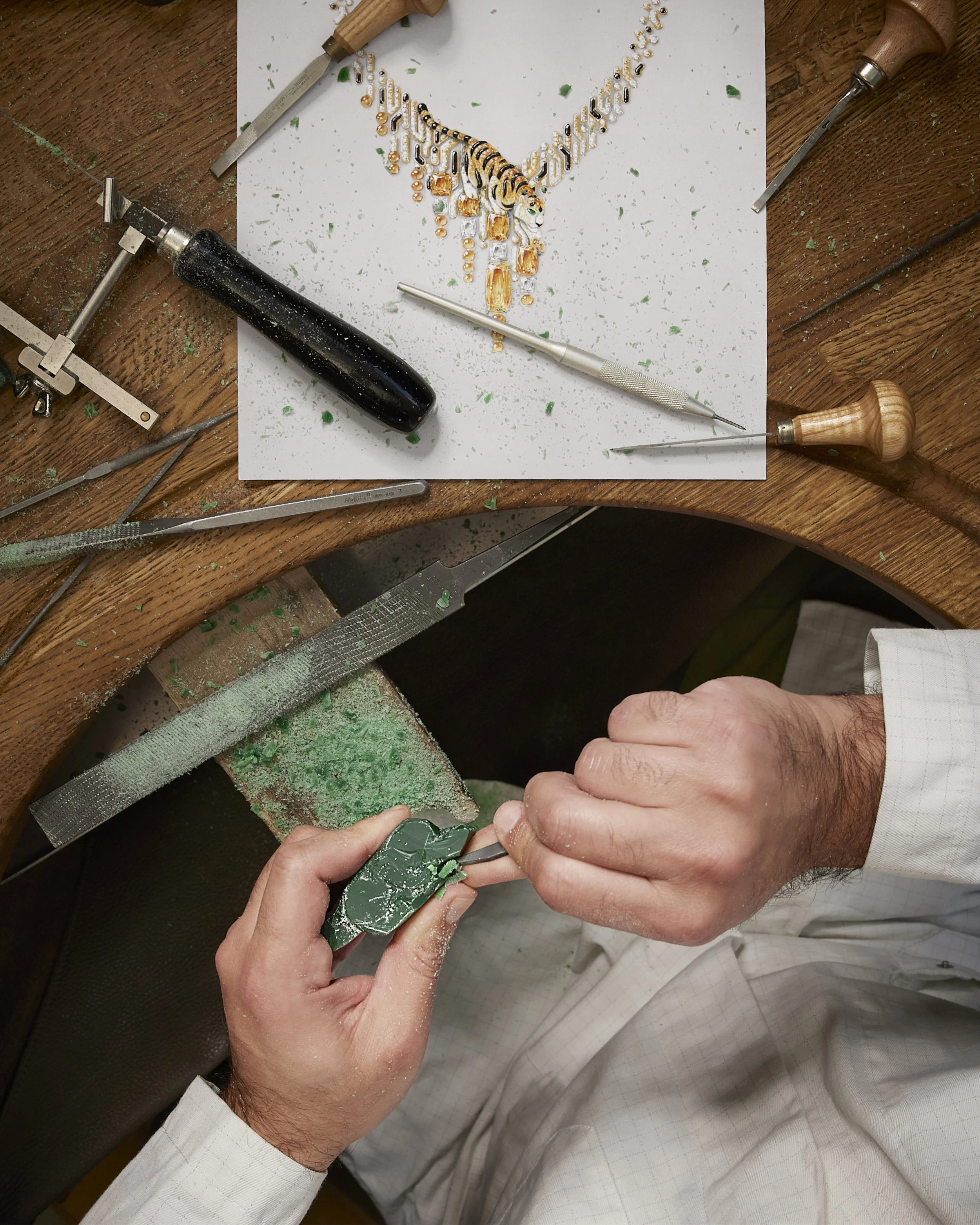
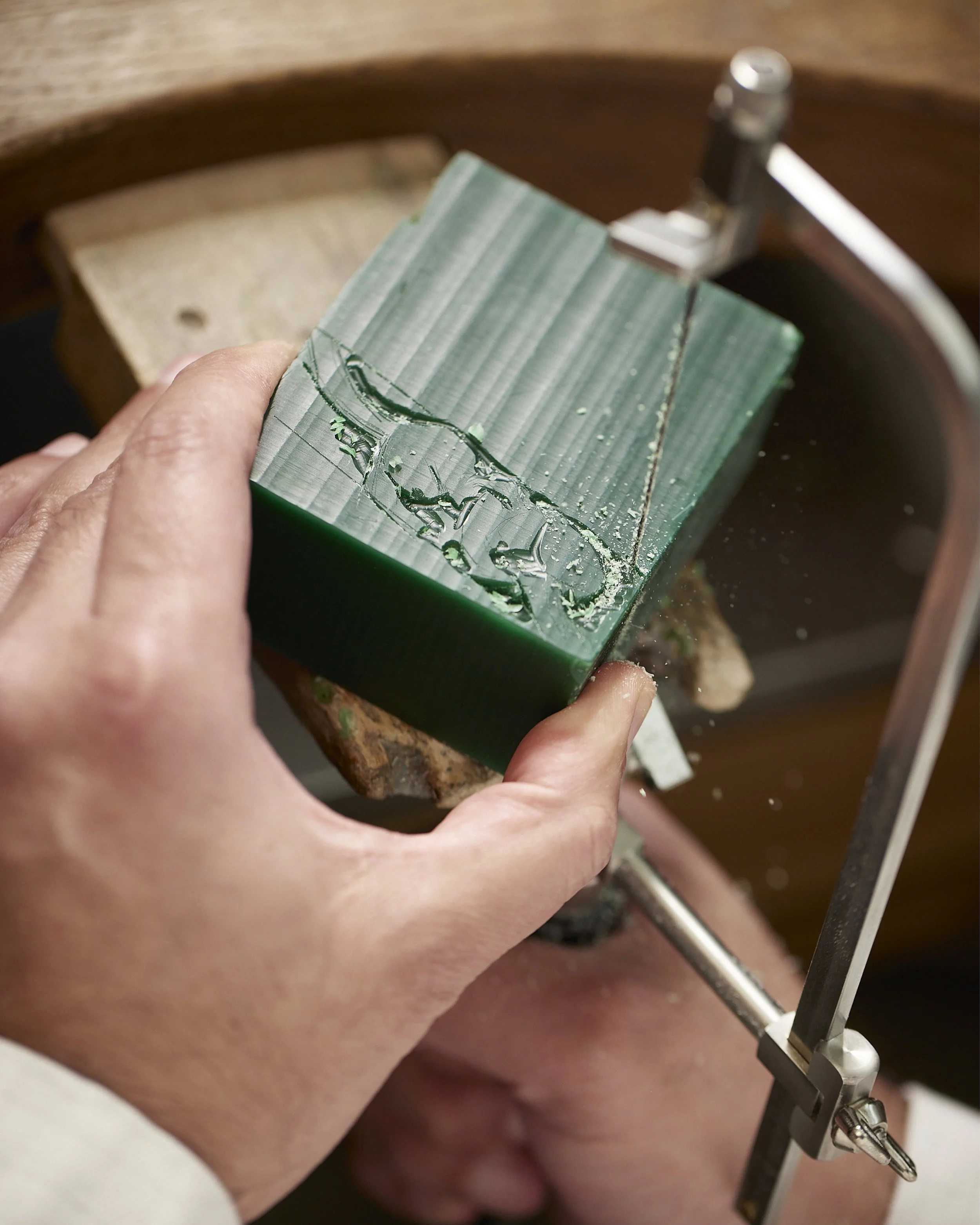
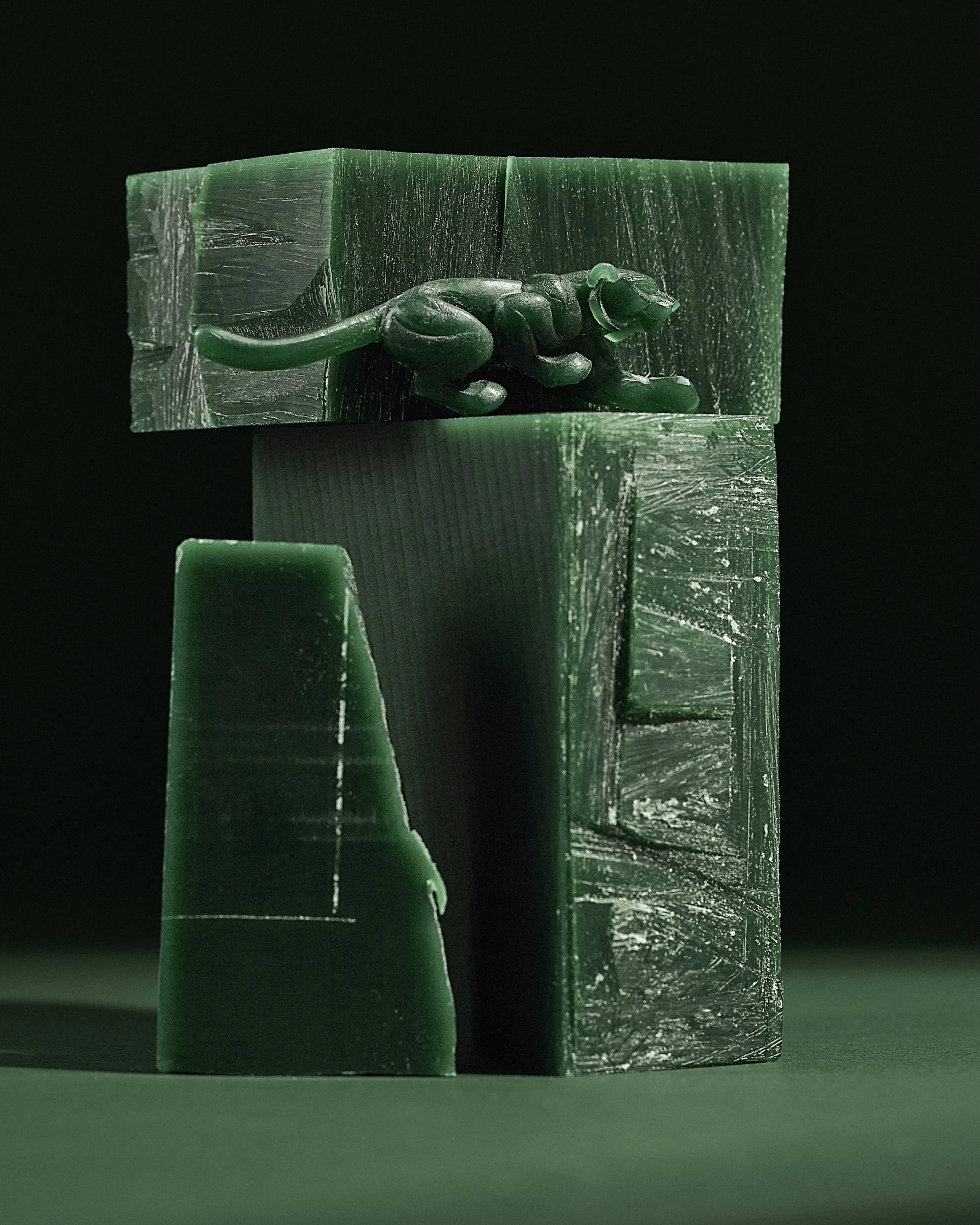
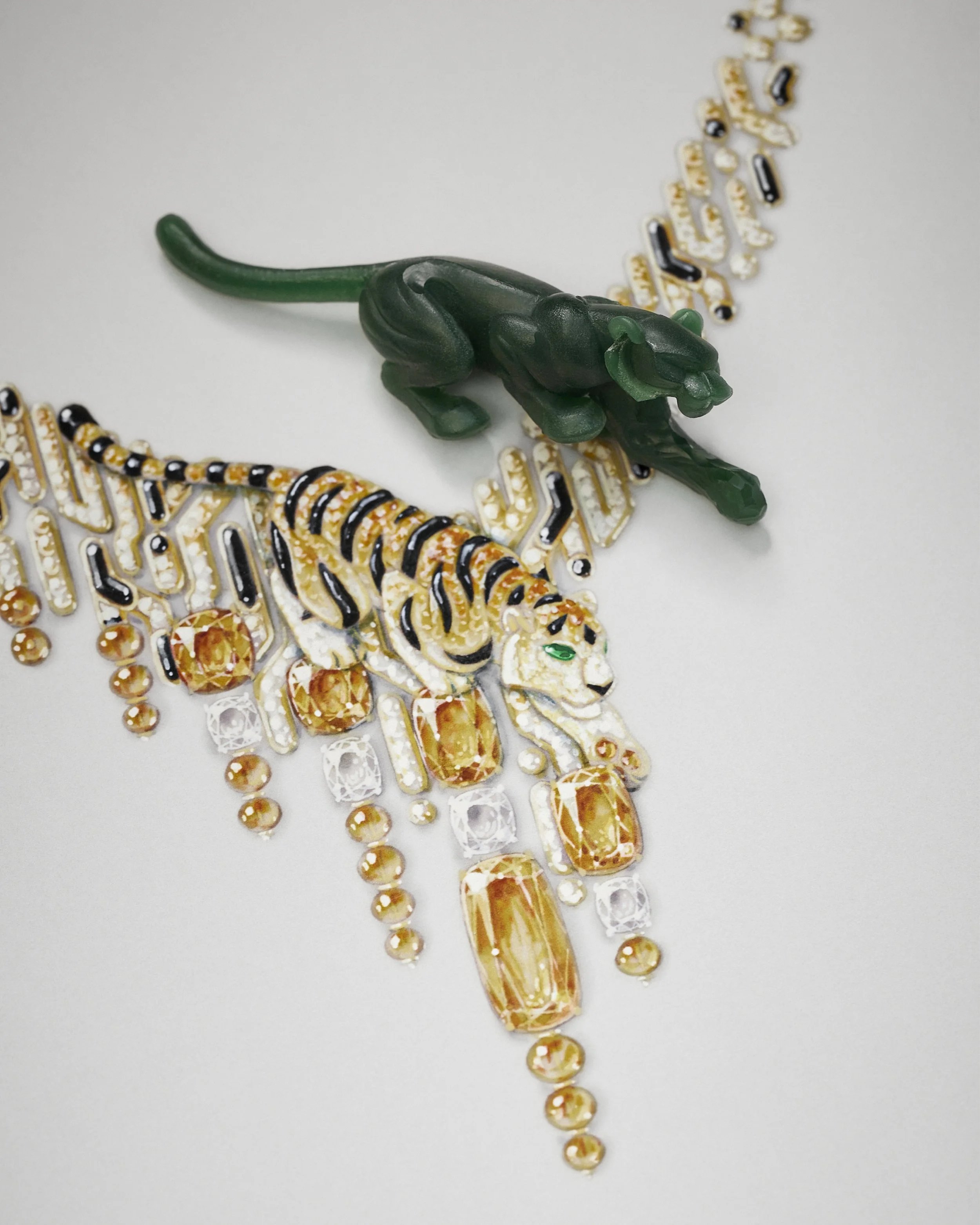
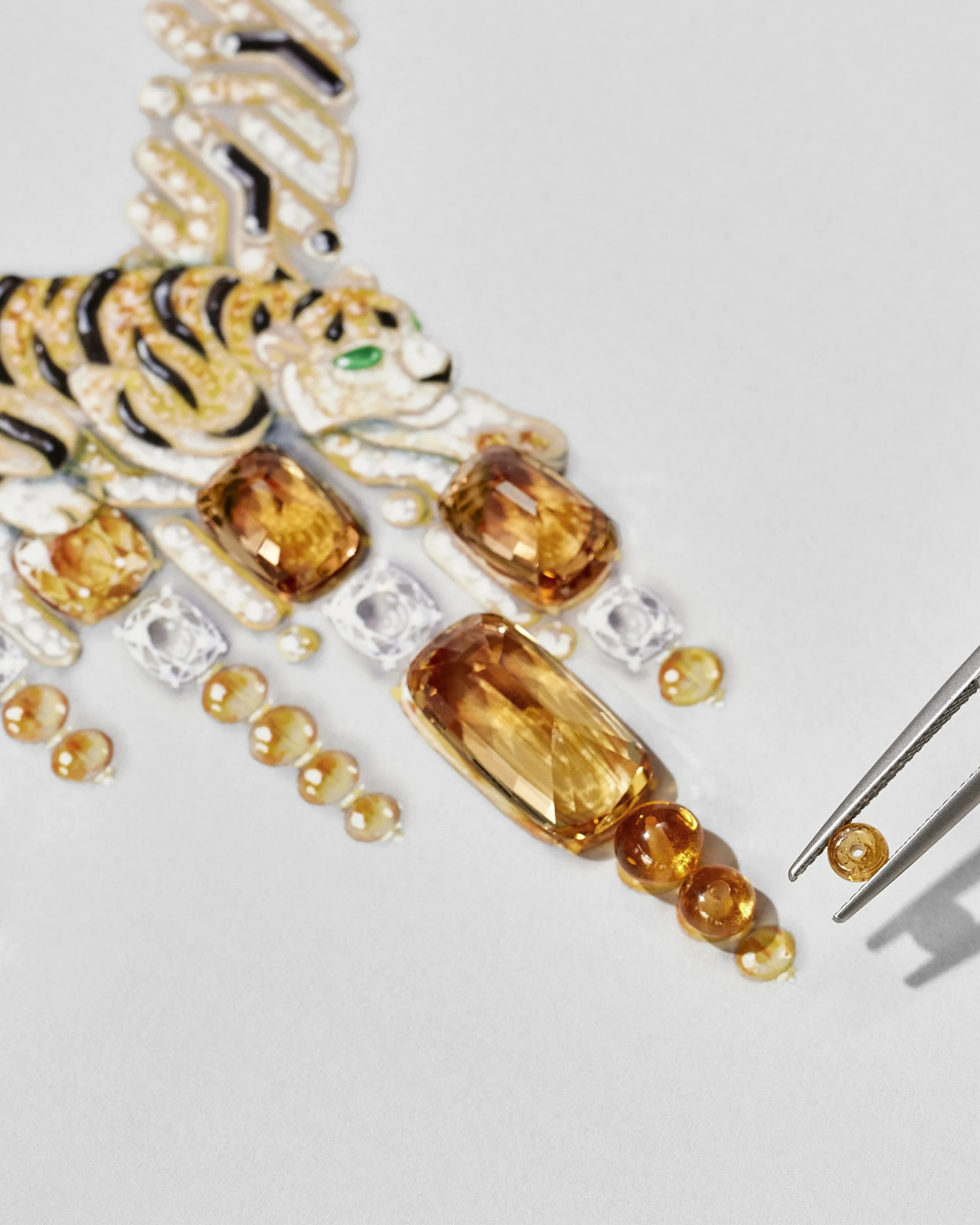
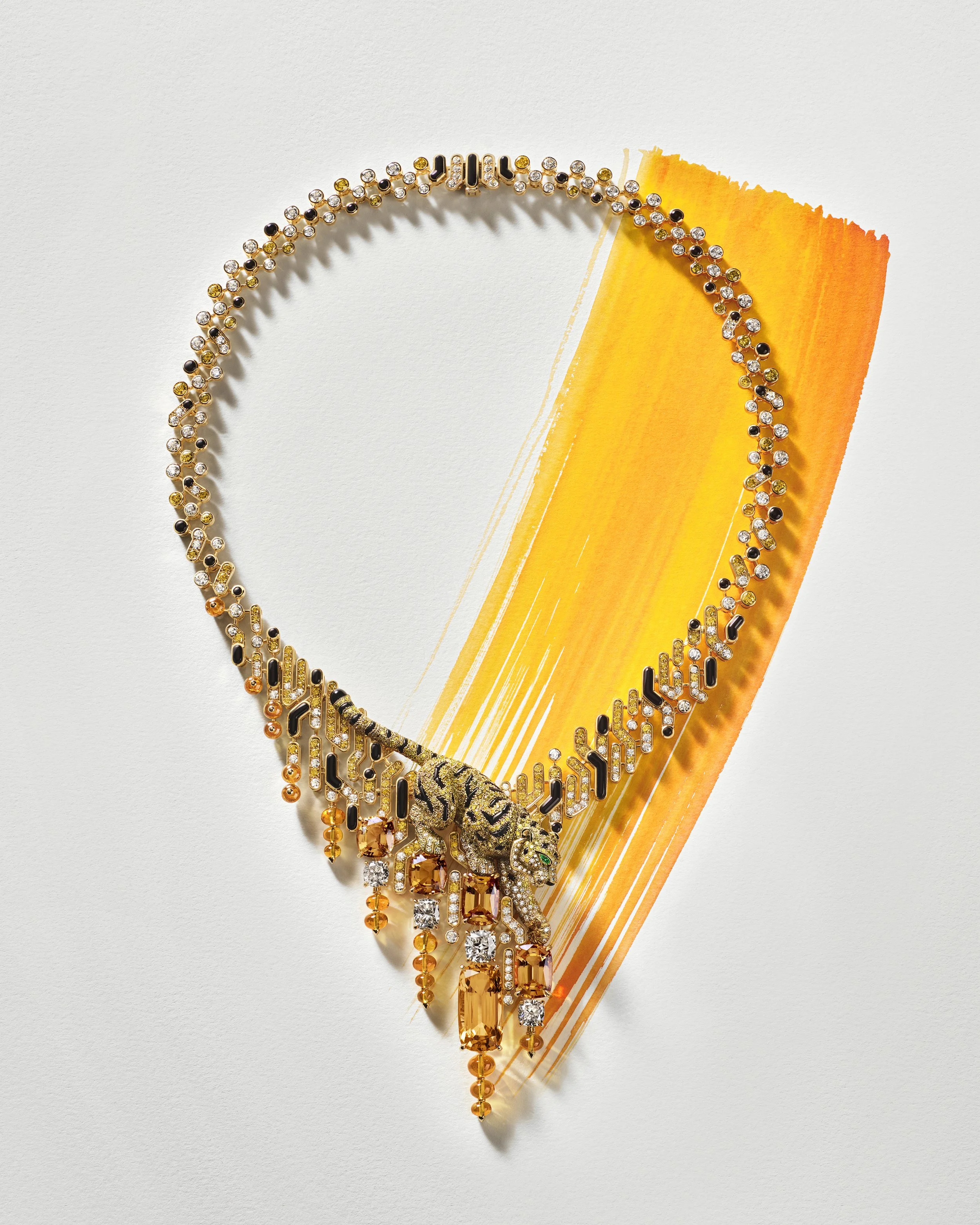
Beyond colours, movement plays an important role throughout Le Chœur des Pierres. Several pieces are fully articulated, allowing them to sit with unusual fluidity against the body. In HARYMA, a sculpted tiger appears to move across a landscape of imperial topazes and onyx through the flexibility of the necklace’s construction. Elsewhere, the transformable PYRA jewel — worn as an earring, brooch or hair ornament — continues Cartier’s long-standing fascination with modular jewellery.
“‘Le Chœur des Pierres’ plays on two different meanings evoked by the pronunciation of “chœur” in French. When written this way, it refers to the chorus of voices; without the ‘h’, it signifies the heart. Pronounced identically but with two different meanings, ‘chœur’ and ‘cœur’ both express how Cartier selects gems and designs pieces to enhance them. They represent how the designs draw on the very essence of each stone to reveal their unique and fascinating character, and how the jeweller combines materials in powerful colour compositions. This distinctive vision of High Jewellery, emblematic of Cartier’s style, is realised fully at the service of gemstones,” explains Pierre Rainero, Director of Image, Style and Heritage at Cartier.
After Chapter I, two further instalments are planned — Chapter II will be unveiled later this year in Asia, while Chapter III will be unveiler in early 2027.