Ashes to Fashion: 50 Years of Rebuilding the Ulster Museum’s Lost Collection
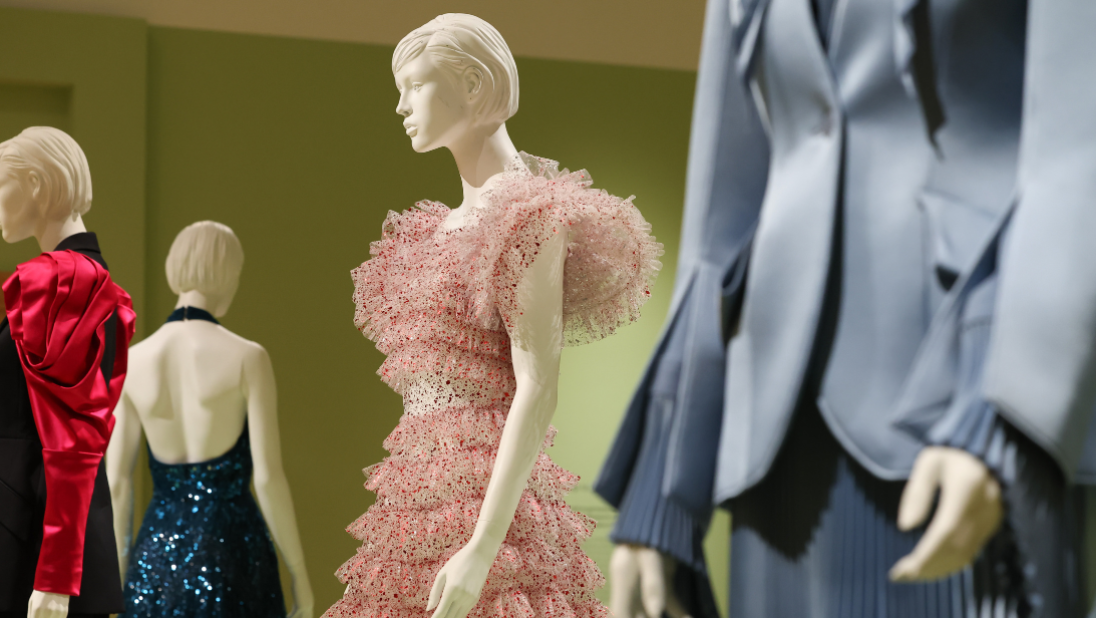
Evening dress by LA brand Rodarte, founded by sisters Kate and Laura Mulleavy
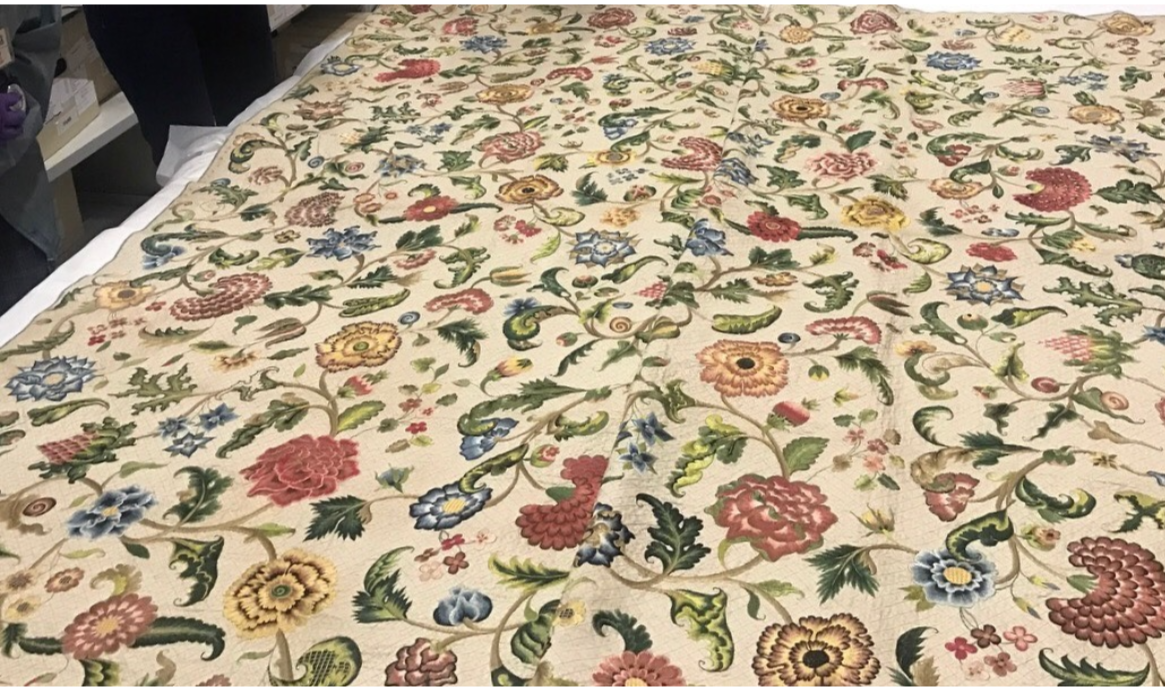
It measures six feet square and took Martha Lennox—the daughter of John Hamilton, one of the first sovereigns of Belfast—the better part of a year to complete. Every inch is hand-embroidered, dense and meticulous, alive with the patience of someone who could not have imagined her work would outlast nearly everything around it. The Lennox Quilt, dated 1712, is the sole survivor of what was once the Ulster Museum’s entire costume and textile collection.
It survived simply because it was on display in the museum on the night of 11 November 1976, while two firebombs destroyed Malone House in South Belfast, where the rest of the collection was being stored. Nearly 10,000 objects were lost: one of the world’s finest collections of linen damask, a rare Elizabethan embroidered jacket, and a near-continuous record of Irish dress spanning two centuries.
It is the kind of loss that museums rarely recover from. And yet, fifty years on, the Ulster Museum is presenting a fashion collection built entirely anew, shaped by decades of careful curation and acquisition.
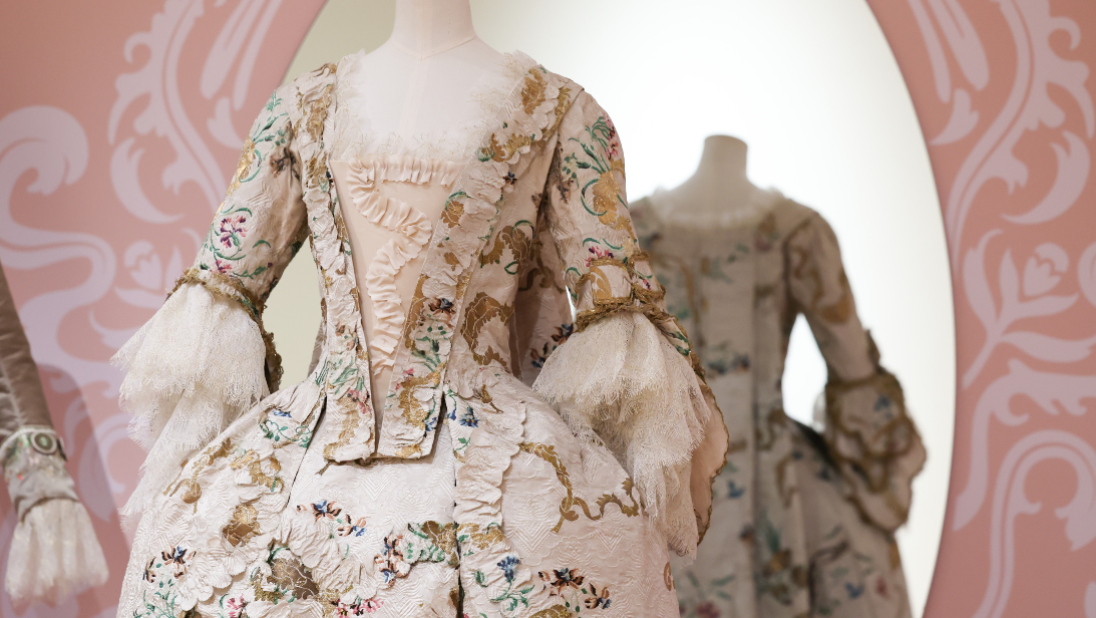
A robe à la francaise, circa 1750s-1770s
Ashes to Fashion, the museum’s first major fashion exhibition in fifteen years, begins with that fire as its point of departure—exploring the emotional and cultural weight of the loss, the fifty-year recovery that followed, and fashion’s wider role as a record of identity and craftsmanship.
As curator Charlotte McReynolds explains, the exhibition traces the journey from disaster to recovery, showing the work undertaken by a succession of curators, beginning with Elizabeth McCrum, to build a new collection from scratch.
Five decades of acquisitions and donations have produced a collection that spans five centuries, from an embroidered casket of the 1660s, recently donated by needlework specialist Lanto Synge, to work by Alexander McQueen, Carolina Herrera, and Irish designers Jonathan Anderson and Paul Costelloe, among many others.
Among the standouts is a piece by Northern Ireland–born Anderson, created for Loewe: a hoodie and jeans rendered in a pixelated print that Anderson has described as a ‘visual glitch’ in the real world—clothing that deliberately resembles a digital image in the process of breaking down.
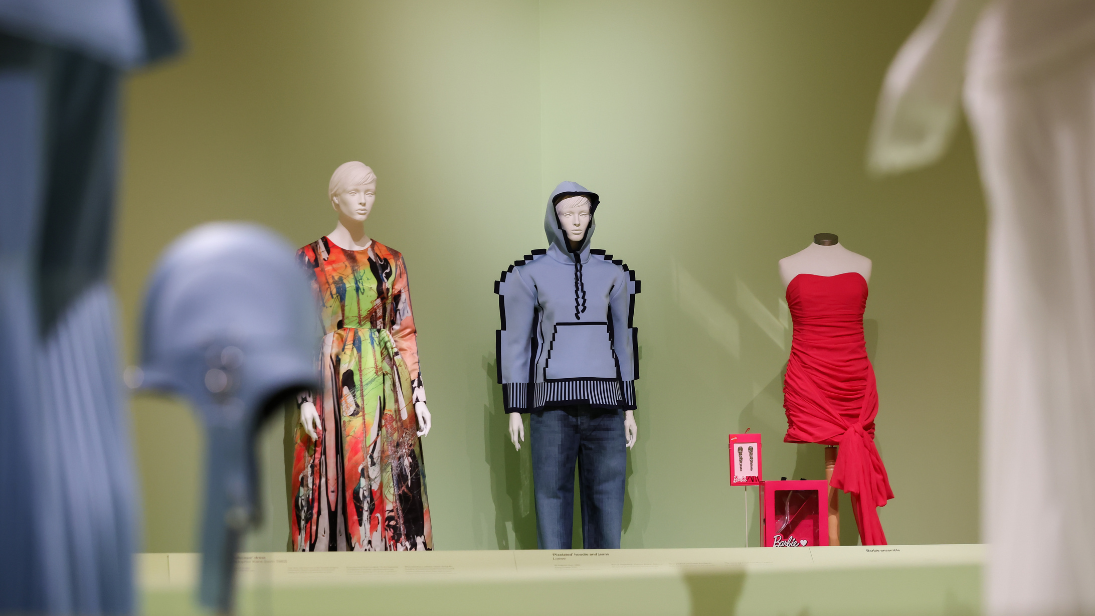
Jonathan Anderson’s pixellated hoodie for Loewe
Underlying all of it, as chief executive Kathryn Thomson notes, is a commitment to transparency: visitors are given rare insight into the realities of museum collecting and conservation, and the decisions that shape what a collection becomes over time. That clarity reshapes how you look at the works. The 18th-century gowns are not just beautiful objects; they reflect what someone thought worth acquiring after the fire. Donations are not merely generous; they are acts made by people who understood what had been lost. The collection that exists today is the product of hundreds of such choices, none inevitable.