Fall 2018 Haute Couture: Guo Pei Finds Strength in Architecture



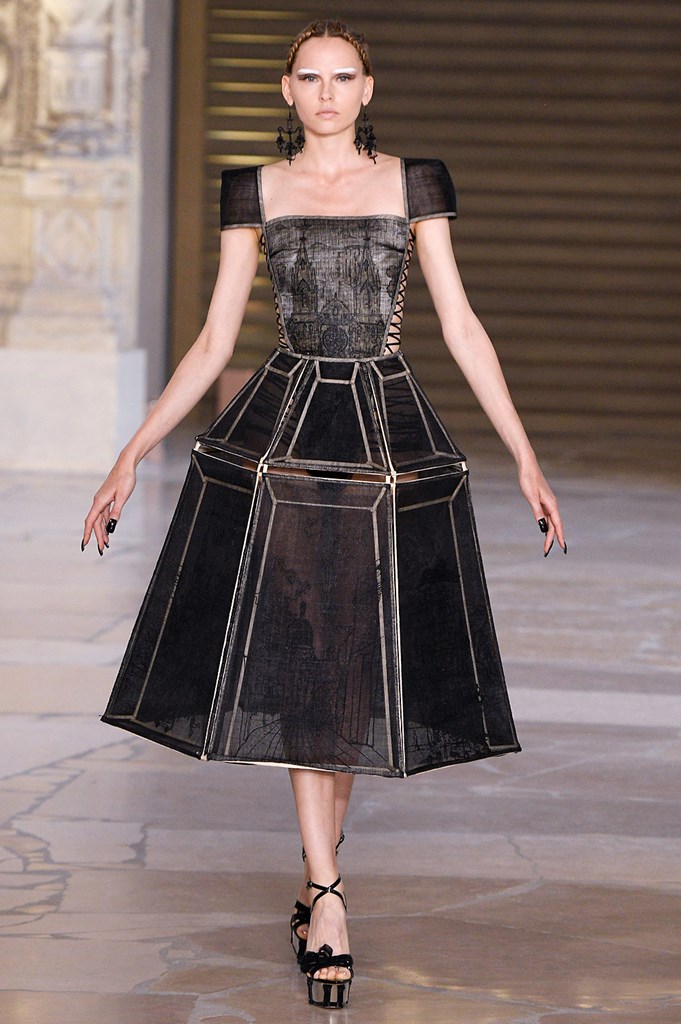


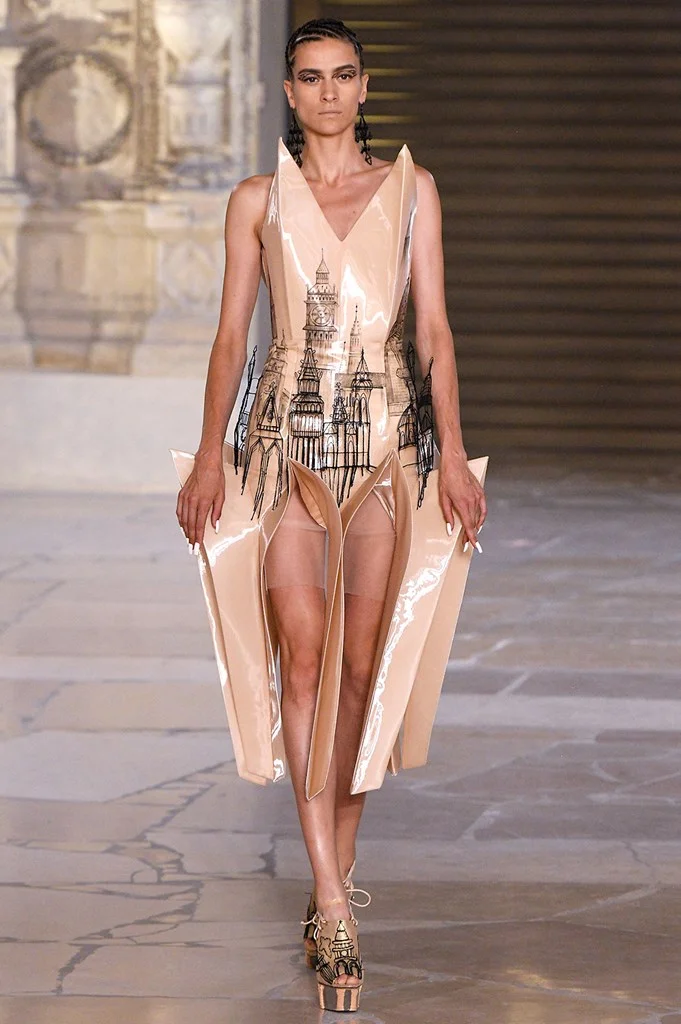


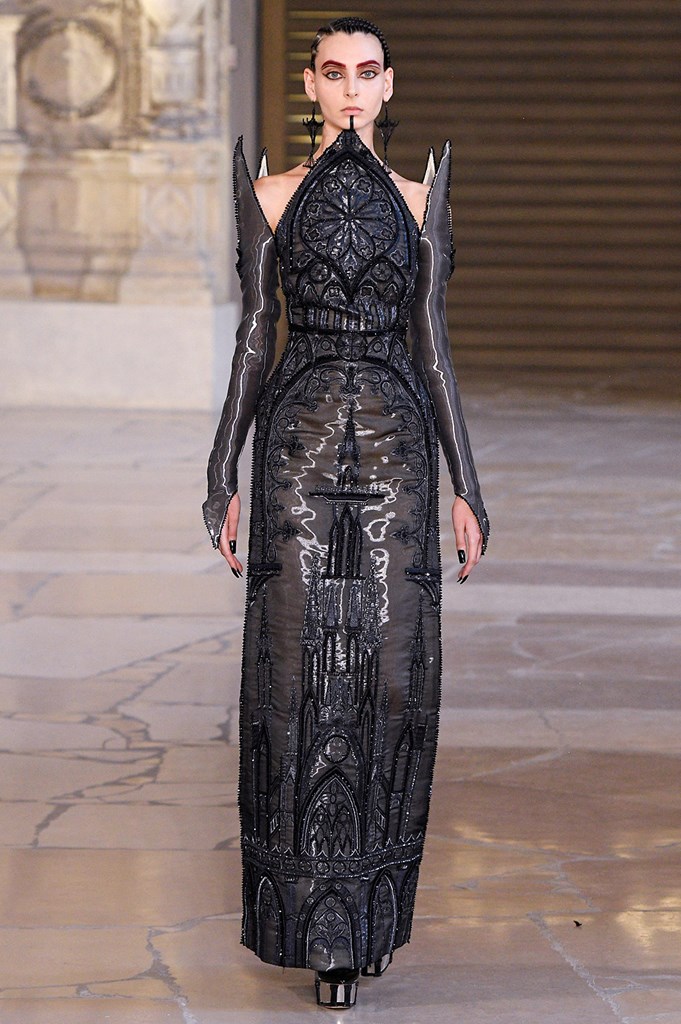


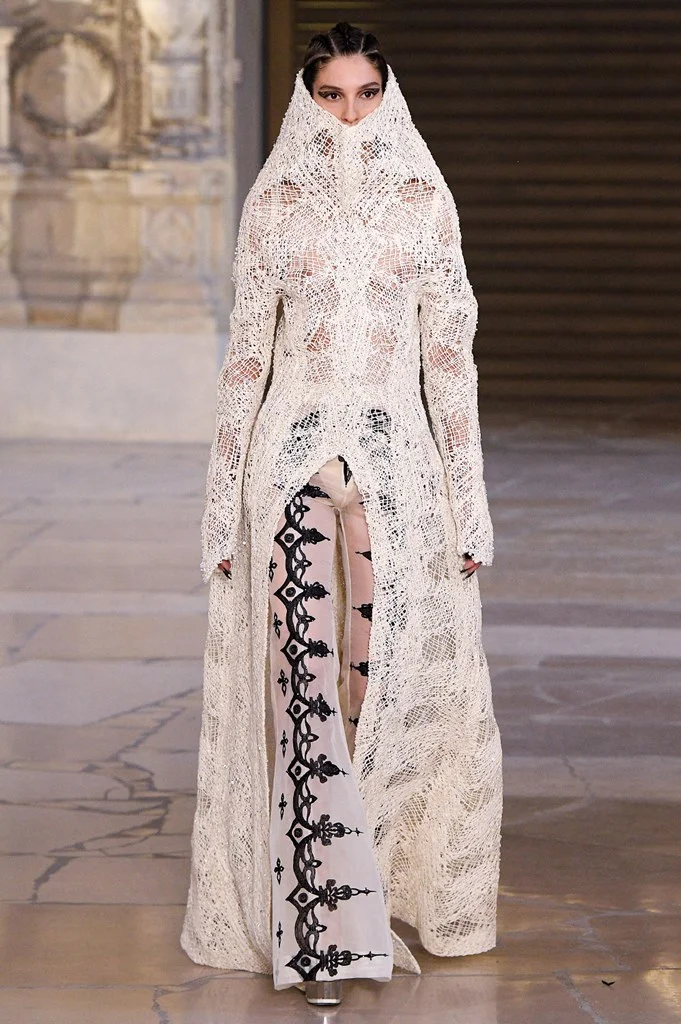


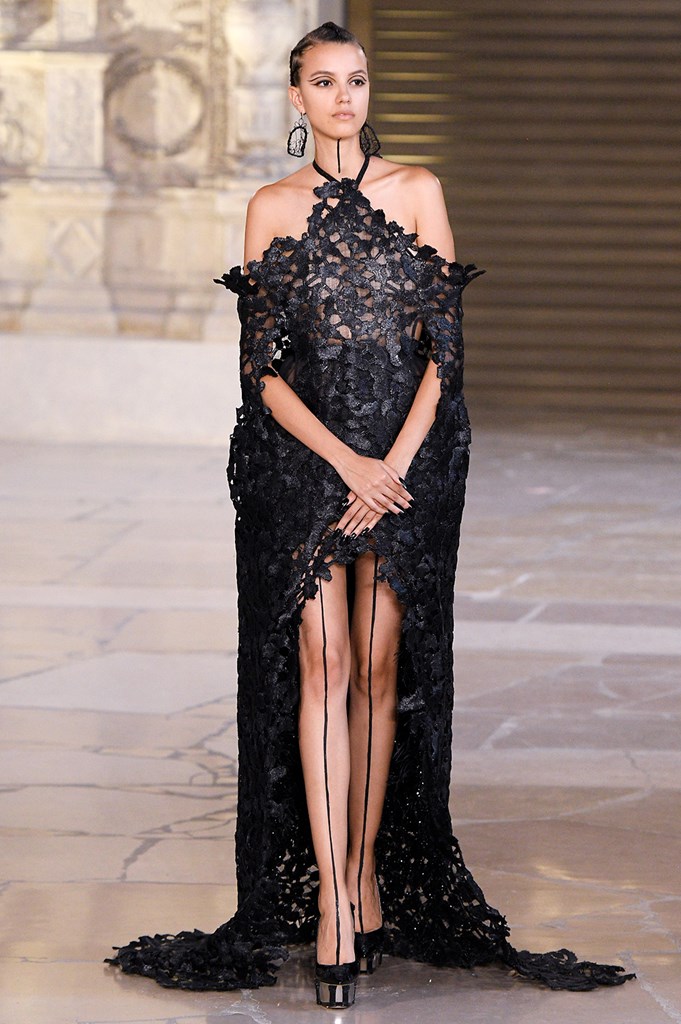


For her Fall 2018 haute couture collection, Guo Pei returned to the Cité de l’Architecture in Paris—the museum that first set the season’s idea in motion. The choice felt almost inevitable. Few designers chase sculptural ambition the way she does, and here she was showing her work in the shadow of the very monuments that shaped it. In her notes, she spoke of translating the discipline of architecture—its strength, its logic, its sense of equilibrium—into clothing. “Clothing,” she wrote, “is the body’s first built space,” and the collection treated that thought as a starting point rather than a metaphor.
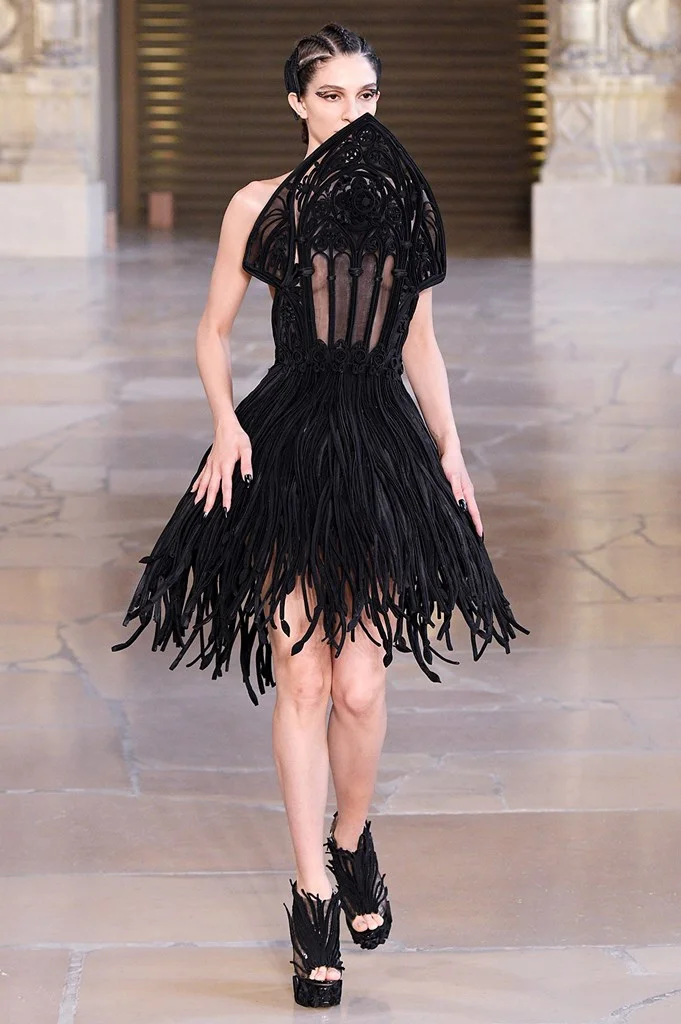
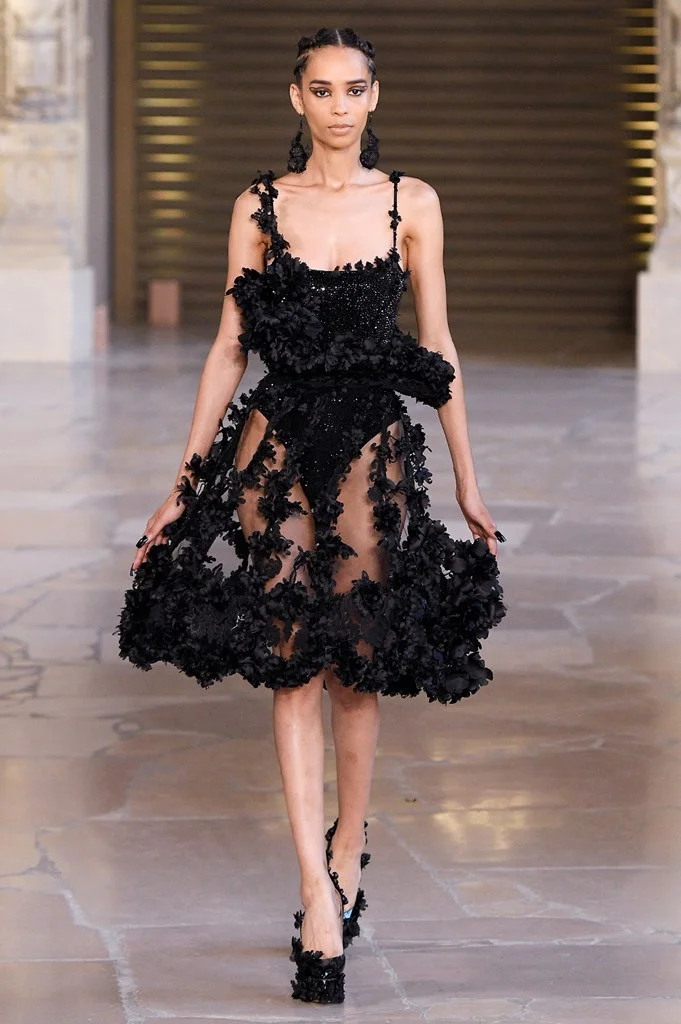
Gothic architecture anchored the narrative. Pointed towers, tapering arches, and muscular buttresses didn’t just provide visual cues; they informed how the silhouettes carried weight. The pannier served as the collection’s foundation, a structural core on which everything else could expand or twist. Guo Pei reshaped it with curved outcrops reminiscent of sweeping eaves, with stacked planes calling to mind tiered roofs, and with contouring that created a gentle sense of movement inside what could easily have been rigid. Materials varied widely—pineapple fibre next to linen, then muslin, metallic thread, feathers—each lending a slightly different tension to these experimental frames.


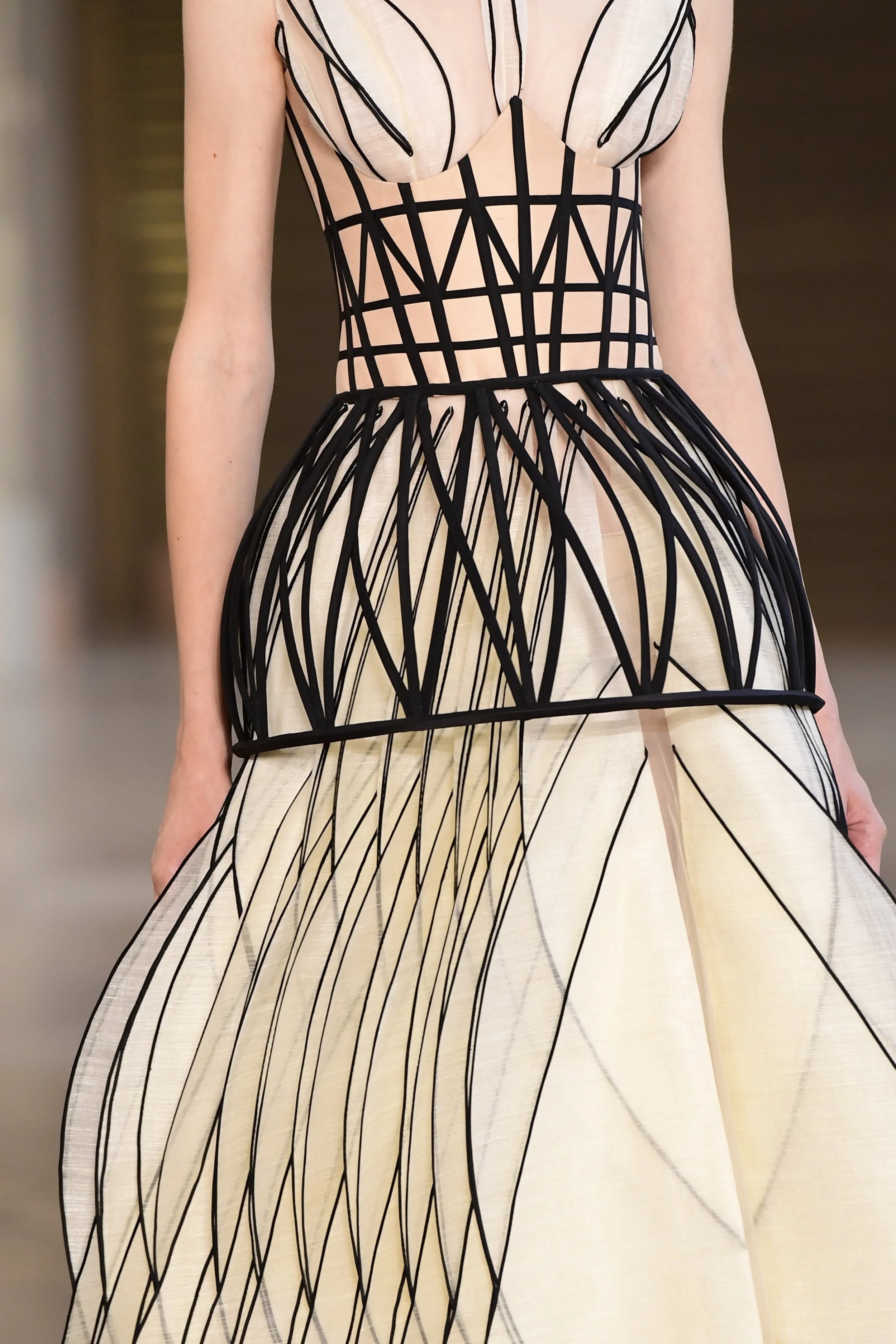


Gothic ornamentation threaded through the details. Crosses appeared in shimmering grids; scrolling florals and small blossoms unfurled like the delicate tracery found in stained glass. Yet the work never drifted entirely into Western historicism. Classical Chinese references—knot buttons, refined embroidery—softened the severity and reminded the viewer whose hand was guiding the needle.
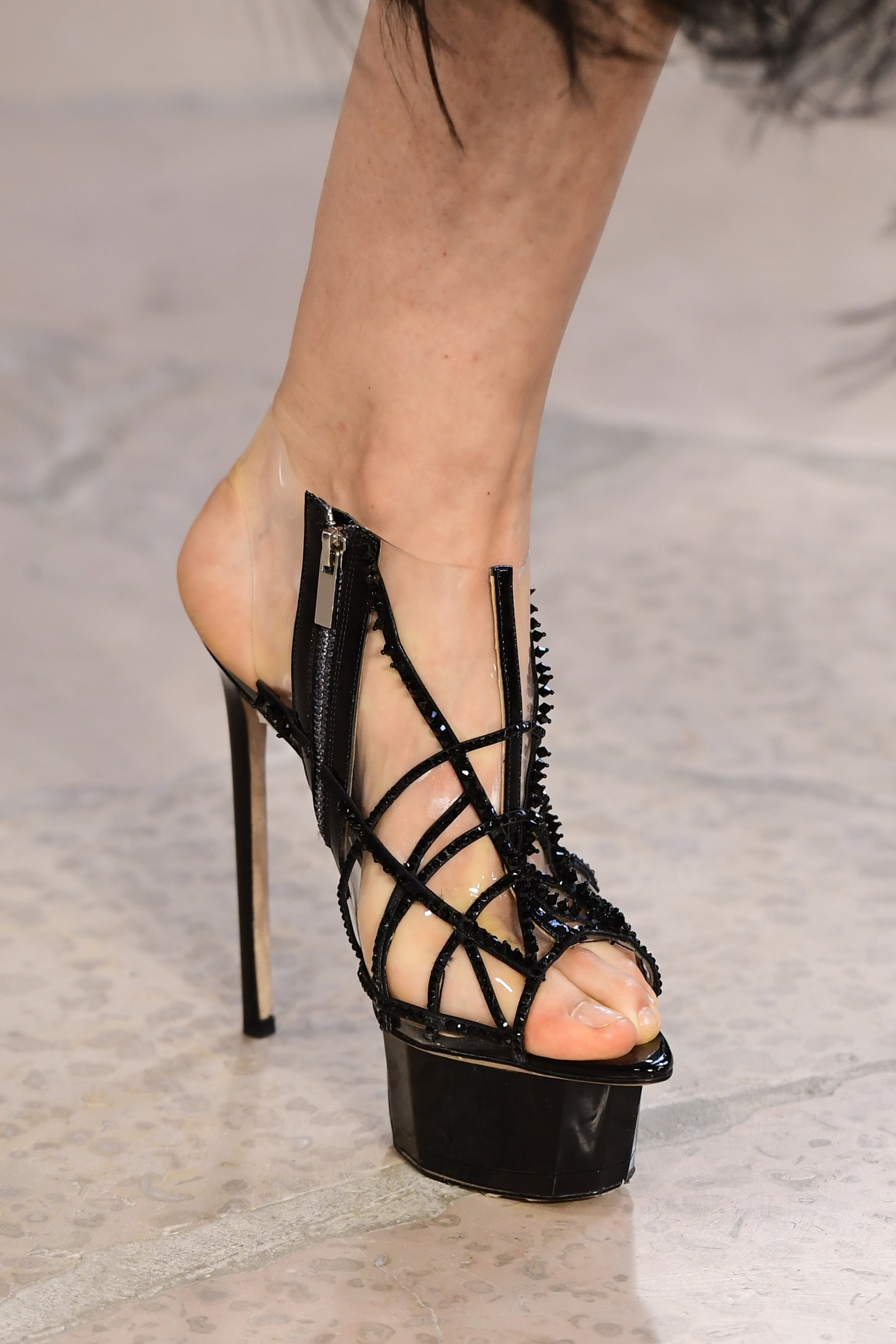
Black dominated the palette, sharpening the edges of the silhouettes and allowing the architecture of each look to read clearly. As in her previous couture outings, Guo Pei prioritised the dream over the practical. These were not garments intended to slip quietly into daily life; they were feats of construction meant to be admired, questioned, even puzzled over.
What remains to be seen is whether any of this structural rigour will filter into her more accessible designs—or whether its purpose is fulfilled simply by existing within the rarefied world of couture. For now, the collection stands as evidence of a designer who treats fashion less as adornment than as a built environment, and who isn’t afraid to push her atelier toward the improbable.